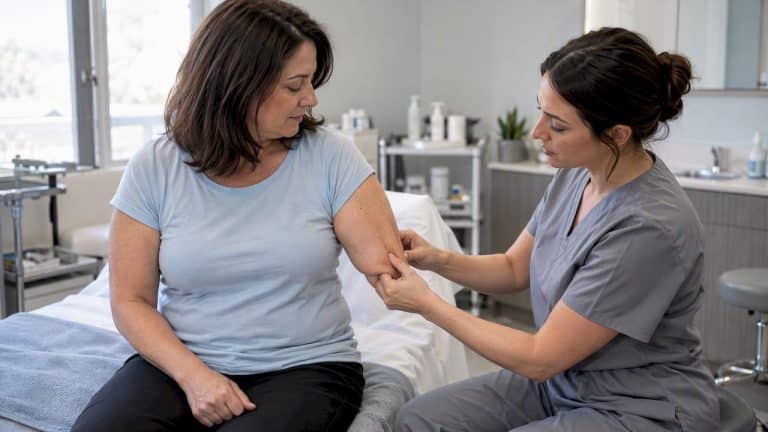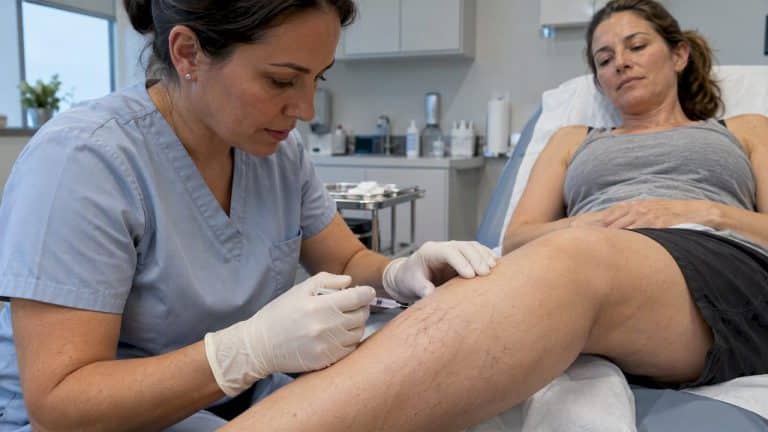
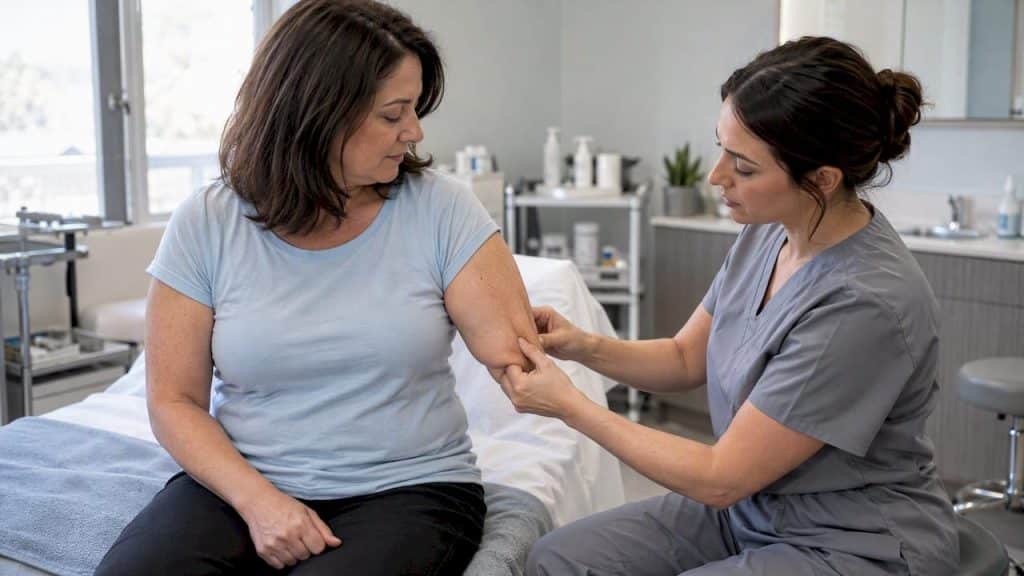
If you have lost a meaningful amount of weight and your skin has not followed, you are not doing anything wrong. Skin that has been stretched for a long time often does not fully retract. Mild to moderate looseness can improve with non-surgical treatments such as radiofrequency, laser and microneedling, usually over several months. Significant folds of excess skin generally need surgery. Below we explain how to tell which group you are in, what each option can realistically do, and what to do before you book anything.
TL;DR
- Mild to moderate laxity (crepey, softly sagging skin) can respond to radiofrequency, laser resurfacing and collagen-stimulating treatments. Visible folds or an overhanging apron of skin usually need surgery.
- Creams do not tighten significant loose skin. Retinoids can improve texture, but they will not remove excess skin.
- Results build slowly, often over a series of sessions and several months, so plan for a timeline, not a single appointment.
- A stable weight matters. If your weight is still changing, any treatment, surgical or not, may not hold.
- A consultation is the right first step, so a clinician can assess your skin in person and tell you honestly what is realistic.
Table of Contents
- Why skin stays loose after weight loss
- First, work out what kind of loose skin you have
- What does not work: creams, supplements and quick fixes
- What does help, without surgery
- Comparing the options side by side
- When surgery is the honest answer
- Our perspective: slow, honest and weight-stable
- What a consultation with us looks like
- Planning your next steps
- FAQ
- Sources
Why skin stays loose after weight loss
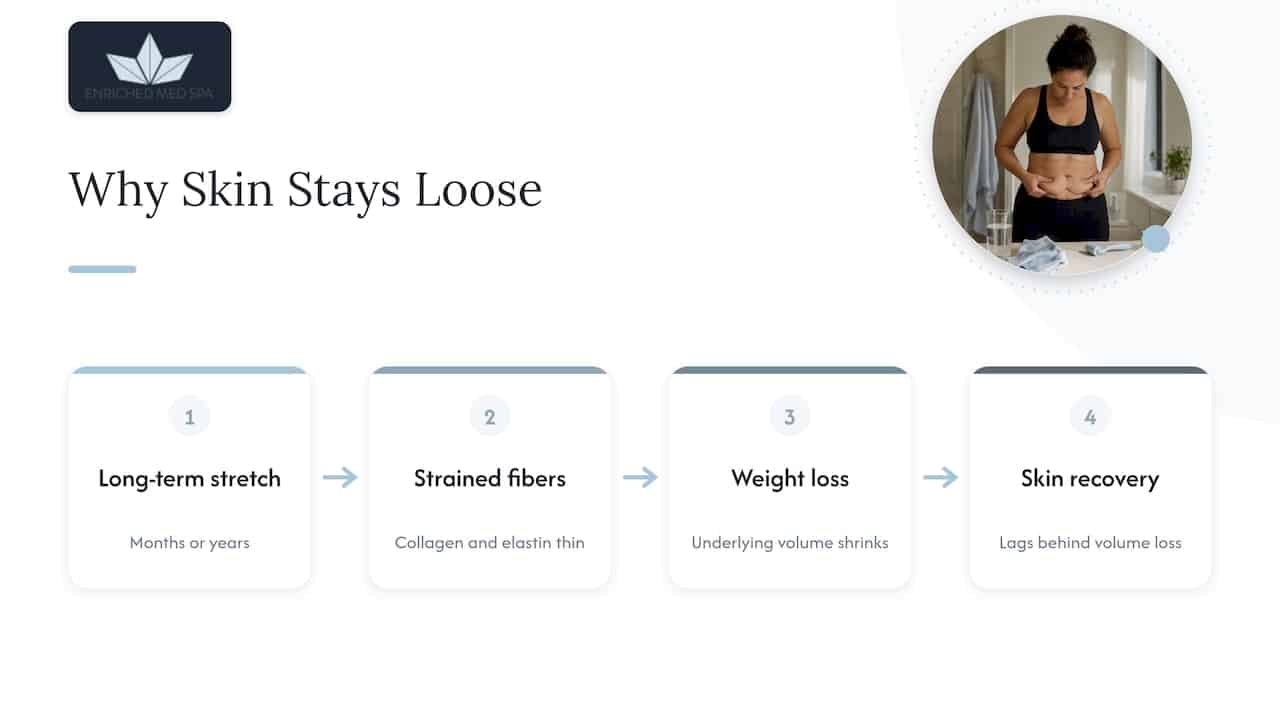
Skin is an elastic organ, but only up to a point. When it is stretched for months or years, the collagen and elastin that let it spring back are strained and thinned. After weight loss, the volume underneath shrinks faster than the skin can recover. How much it recovers depends on how much weight you lost, how quickly, how long you carried the weight, your age, your genetics, and how much sun damage your skin has had.
Many clients come to us a year or so after losing weight, pleased with the number on the scale but unhappy with the tired, crepey look of their arms, neck, stomach or inner thighs. That reaction is very common. It also has a clinical side: in a study of patients after bariatric surgery, researchers set out to measure how common excess skin is and how much functional trouble it causes, and a 2015 review notes it can bring physical and psychological strain, not just cosmetic concern.
That is worth taking seriously. If the skin is causing rashes, irritation or discomfort when you move, the goal is not only appearance. It is comfort and function, and that changes which treatment makes sense.
First, work out what kind of loose skin you have
This is the question that decides everything. In practice we think about it in three groups.
| What you see and feel | Typical description | Usual direction |
|---|---|---|
| Mild laxity | Skin looks slightly softer or crepey, pinches easily but returns, no hanging fold | Non-surgical treatments are often worth trying |
| Moderate laxity | Visible sagging and fine wrinkling, some looseness when you move or bend, no large apron | Non-surgical series may help, with realistic expectations; surgery may still be discussed |
| Significant excess | A hanging fold or apron, skin that rubs, causes rashes or sits in layers | Surgery is the standard option |
The same person can fall into different groups in different areas. Your neck and upper arms may suit non-surgical care while your lower abdomen does not. A plastic surgeon is the right professional to see if you are in the third group, and we will say so plainly in consultation rather than sell you a series that cannot deliver.
What does not work: creams, supplements and quick fixes
This is where most online advice falls short, so let us be direct.
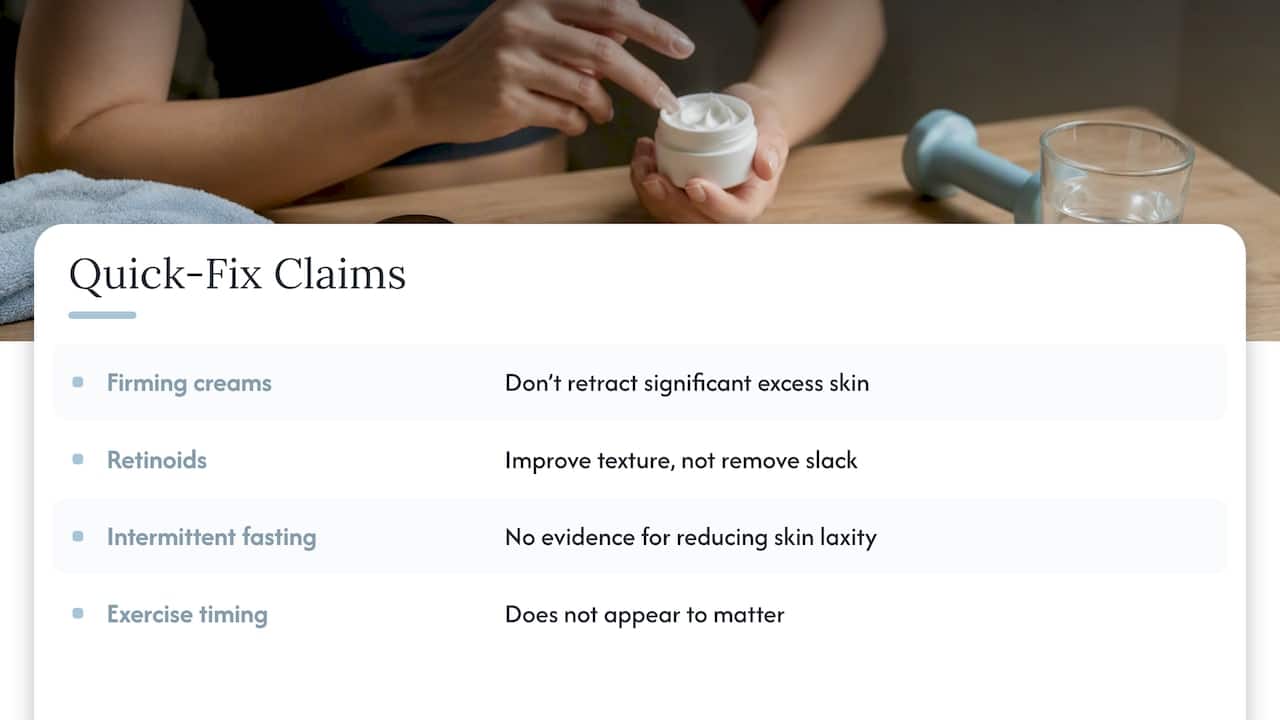
Firming creams. No topical product has been shown to meaningfully retract significant excess skin. The Canadian Dermatology Association’s guidance on photoaging supports retinoids (vitamin A derivatives) for improving texture and stimulating collagen, but that is about quality, not removing slack. A good retinoid and daily broad-spectrum SPF are still worth using as maintenance, because sun damage weakens the skin’s structure further.
Intermittent fasting. One of the common questions is whether it prevents loose skin. The Obesity Canada clinical practice guidelines do not offer evidence supporting it as a strategy for skin laxity, and the timing of exercise does not appear to matter either.
Body wraps, gadgets and “tightening” supplements. These can leave skin looking temporarily smoother from hydration, but they do not rebuild the deeper structure. If a product promises dramatic tightening without anything touching the deeper layers of the skin, be sceptical.
What does help, without surgery
Non-surgical options work by a similar principle: they deliver controlled heat or controlled injury to the skin, and the body responds by producing new collagen. That response is gradual. It is also modest compared with surgery, which is why these treatments suit mild to moderate laxity.
Radiofrequency skin tightening
Radiofrequency (RF) heats the deeper layers of the skin and the tissue just beneath it without cutting or removing anything. The heat prompts fibroblasts to make new collagen over the following weeks and months. A study of a multisource RF handpiece designed for body areas examined its efficacy and safety for exactly this kind of use. Research and clinical experience generally point to a series of sessions rather than a single one.
At our clinic, radiofrequency skin tightening is offered using TriPollar technology. We have written a plain-language explainer on how radiofrequency skin tightening works and what to expect, and another on what RF and MFU can and cannot do without surgery in Canada. If you want the full picture of the treatment journey, our step-by-step skin tightening process guide walks through it.
What to expect: warmth during treatment, mild redness afterwards that typically settles quickly, and no real downtime for most people. What not to expect: the removal of a fold of skin.
Laser resurfacing and pigment-focused laser
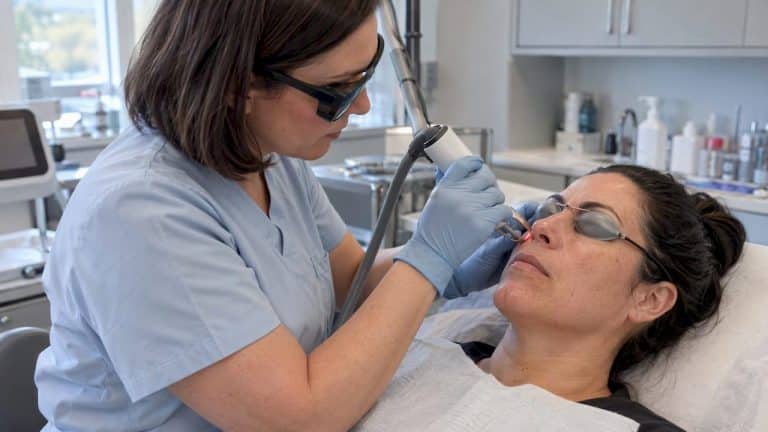
Laser resurfacing uses light to heat and injure the upper skin layers so new skin forms. HealthLink BC notes it can tighten the skin or prompt new skin growth, and it is typically used for wrinkles, brown spots and similar concerns. For post-weight-loss skin, this is most useful where the issue is fine crepey texture, stretch-related surface changes or uneven tone, rather than deep sagging. We offer CO2 laser resurfacing and MotusAZ+ treatments for skin revitalization and pigment reduction. Recovery is longer than with RF, and the right depth depends on your skin type and the area.
Microneedling
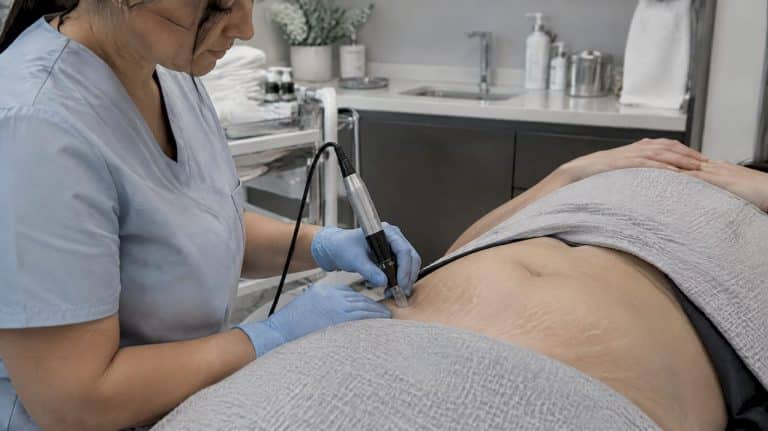
Microneedling creates tiny controlled channels in the skin, which triggers repair and collagen production. It is gentler than laser and useful for texture, fine lines and the thin, slightly crinkled quality that stretched skin can develop. At Enriched Med Spa, microneedling is $359 per session. It works best as part of a series, and it can be combined with RF so that deeper tightening and surface refinement support each other. We will tell you in consultation whether combining them suits your skin.
Peels, OxyGeneo and facials
Chemical peels, CoolPeel, OxyGeneo and DermaGlow are lighter treatments. They improve radiance, texture and tone, and they can make skin look fresher. They do not tighten in a structural sense. We include them in a plan when your skin is dull or congested, but we will not suggest they replace RF or laser for laxity. You can see everything we offer on our services page.
Where injectables fit
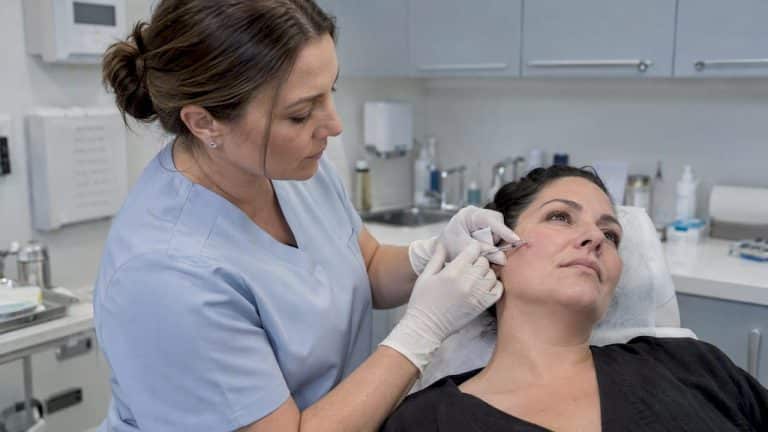
Botox and similar neuromodulators relax muscle, so they are not a tightening treatment for the body. In the face and neck, though, some people who have lost weight notice their face looks more lined or gaunt. Dermal filler can restore volume in areas like the cheeks or temples where fat loss has changed the contour. This is a different goal from tightening, and it is something we discuss when facial volume loss is part of what you see in the mirror. Our pages on dermal fillers and Botox, Nuceiva and Xeomin explain how we approach each.
Comparing the options side by side
| Option | Best for | Sessions and timeline | Downtime | Limits |
|---|---|---|---|---|
| Radiofrequency | Mild to moderate laxity on face, neck, body | A series, with results building over months | Minimal | Does not remove excess skin |
| CO2 or other laser resurfacing | Crepey texture, uneven tone, fine lines | Fewer sessions, longer healing | Several days of recovery | Needs careful skin-type assessment |
| Microneedling | Texture, early laxity, stretch-related surface changes | A series | Brief redness | Subtle on its own |
| Peels, OxyGeneo | Dullness, congestion, tone | Regular maintenance | Little to moderate | Not structural tightening |
| Surgery (body contouring) | Significant excess skin and folds | One or staged operations | Weeks | Scarring, surgical risk, wait times |
No single row is the answer for everyone. Combination plans are common, and the order matters.
When surgery is the honest answer
If you have a hanging apron, skin that overlaps, or recurring rashes under folds, a non-surgical series is unlikely to give you the relief you want. Surgical procedures such as abdominoplasty are described as the state of the art for body contouring after bariatric surgery, and they are performed by plastic surgeons, not med spas.
Two cautions apply. First, surgery is not guaranteed to be a cure for how you feel: a systematic review of body contouring in post-bariatric patients found it inconclusive whether surgery improves quality of life, even though many patients have impaired quality of life from excess skin. Second, liposuction is not a tightening treatment. HealthLink BC explains that its purpose is to reshape areas, not to reduce weight, and it will not remove cellulite or stretch marks.
Some people choose surgery for the biggest areas and come to us for the neck, arms, face and refinement afterwards. That is a sensible division of labour. If you are unsure which side of the line you are on, speak with your family doctor or a plastic surgeon first. Our team is happy to tell you where we think non-surgical care ends.
Our perspective: slow, honest and weight-stable
We see the same pattern again and again. People arrive hoping a single treatment will undo years of stretching, and the kindest thing we can do is reset that expectation on day one. Skin tightening after weight loss is a process measured in months. The treatments we offer can improve firmness, texture and tone, and for mild to moderate laxity the improvement can be real and worth having. They are not a substitute for surgery when there is a lot of excess skin, and we will say so.
Three things shape results more than any device:
- Weight stability. If your weight is still dropping or you expect to lose more, wait. Treating skin that is still changing means retreating later. Fluctuation also undermines results from surgical and non-surgical tightening alike, and the Obesity Canada guidance is clear that some weight-management medications can lead to weight regain when stopped.
- Muscle. Regular physical activity helps you keep muscle while losing fat, which supports the look of the area under the skin. The same guidelines stress muscle retention as a way to lessen the appearance of loose skin.
- Skin health. Sun protection, a retinoid if your skin tolerates it, and enough protein and hydration support how your skin repairs after treatment.
We also encourage a shift in how you measure success. The point is not to chase a perfect surface. It is to feel comfortable in your clothes and your skin, and to have treatments that fit your actual anatomy.
— Felix
What a consultation with us looks like
Before any treatment, we look at the areas you are concerned about, pinch-test and assess the skin’s recoil, ask about your weight history and whether it is stable, and review your health, medications and skin type. Treatments are performed by experienced nurse-level injectors and aestheticians. We then suggest a plan, which may include a sequence of RF, microneedling or laser, and we explain what we think is realistic and what is not.
A few practical points:
- Bring a clear timeline. Tell us about upcoming events such as a wedding or vacation. Some treatments need weeks to show change, and some need a healing window.
- Tell us everything about your health. Recent surgery, pregnancy or breastfeeding, implants, skin conditions, and medications can all affect what is safe.
- Expect pre- and post-care instructions. Sun avoidance, skincare adjustments and hydration make a real difference.
- Expect an honest no. If we think surgery is the better path, we will tell you.
Prices vary by area and treatment. We publish microneedling at $359, and for RF skin tightening and laser treatments we quote after assessing you, since the number of sessions and areas differ for everyone.
Planning your next steps
If your skin feels mildly to moderately loose and your weight has been steady for a few months, a consultation is a good place to begin. You can explore our radiofrequency skin tightening and our full list of treatments, or read about non-invasive body contouring treatments in the Vaughan area. When you are ready, reach us through Enriched Med Spa and we will find a time to talk through your skin, unhurried. We serve Woodbridge, Vaughan and East Gwillimbury.
One safety note on devices: Health Canada has raised concerns about some radiofrequency uses, and we cover clinic protocols in our piece on radiofrequency for jowls. Whatever clinic you choose, ask who performs the treatment, what device is used, and what their training is.
FAQ
How do I tighten skin after weight loss?
For mild to moderate looseness, a combination of steady weight, strength training, sun protection and professional treatments such as radiofrequency, laser or microneedling can improve firmness over months. Significant folds of excess skin usually need surgery. A clinical assessment tells you which group you are in.
Is there non-surgical skin tightening after weight loss that really works?
For mild to moderate laxity, yes, with realistic expectations. Radiofrequency and laser stimulate collagen, so results build gradually, and a series of treatments is typical. They will not remove hanging skin the way surgery does.
Do firming creams help loose skin?
Not meaningfully for significant laxity. Retinoids can improve texture and support collagen as part of long-term care, but no cream has been shown to retract a fold of excess skin. Creams are a supporting step, not the treatment.
How long should I wait after weight loss before treating loose skin?
Wait until your weight has been stable, which many clinicians suggest means several months without major change. Treating while weight is still shifting risks needing to repeat the work. Your doctor or surgeon can advise on timing, especially after bariatric surgery.
Sources
- Physical discomfort due to redundant skin in post-bariatric surgery patients (PubMed)
- Plastic surgery after bariatric surgery (PubMed)
- Canadian Dermatology Association: Photoaging
- Obesity Canada: Adult Obesity Clinical Practice Guideline, Pharmacotherapy 2025 update
- Body Contouring and Skin Tightening Using a Multisource Radiofrequency Method (PMC)
- HealthLink BC: Cosmetic Surgery and Procedures
- Post-Bariatric Plastic Surgery: Abdominoplasty (PubMed)
- Systematic review of body contouring surgery in post-bariatric patients (PubMed)
- HealthLink BC: Liposuction