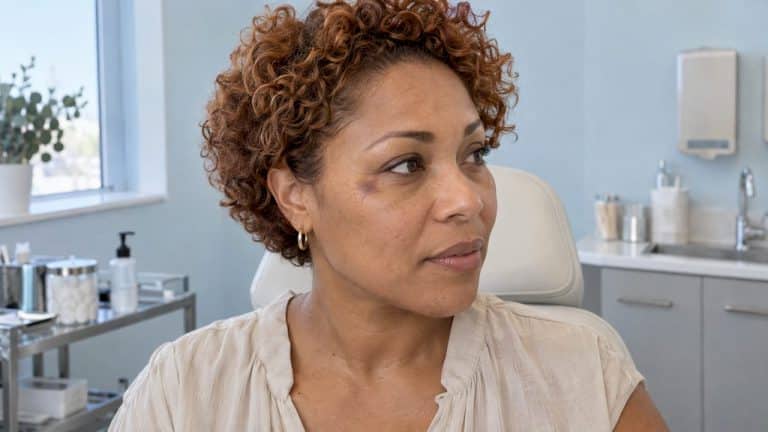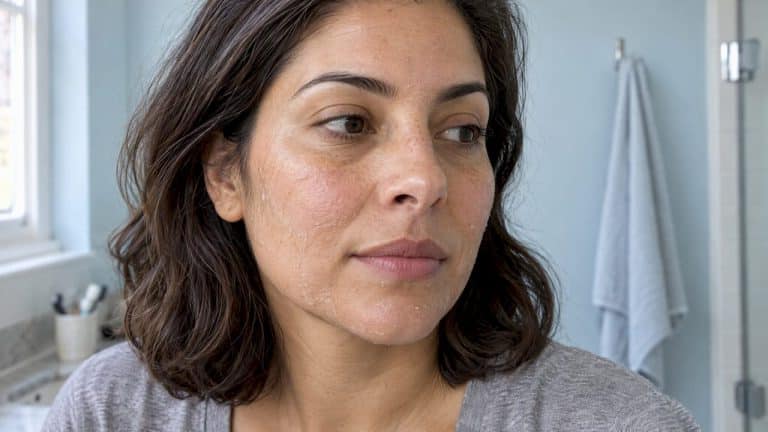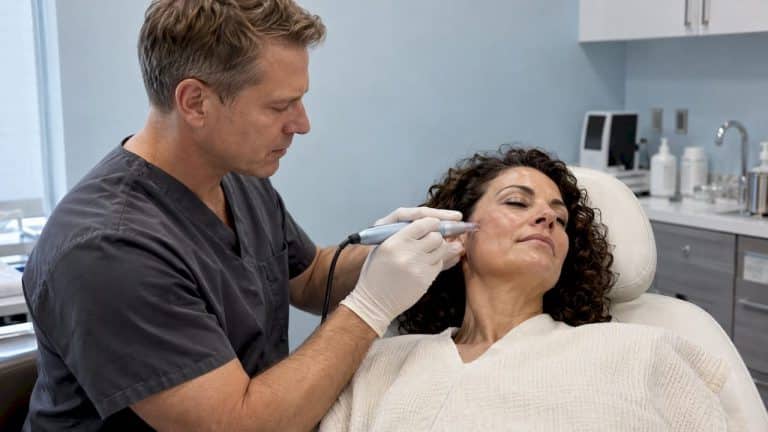
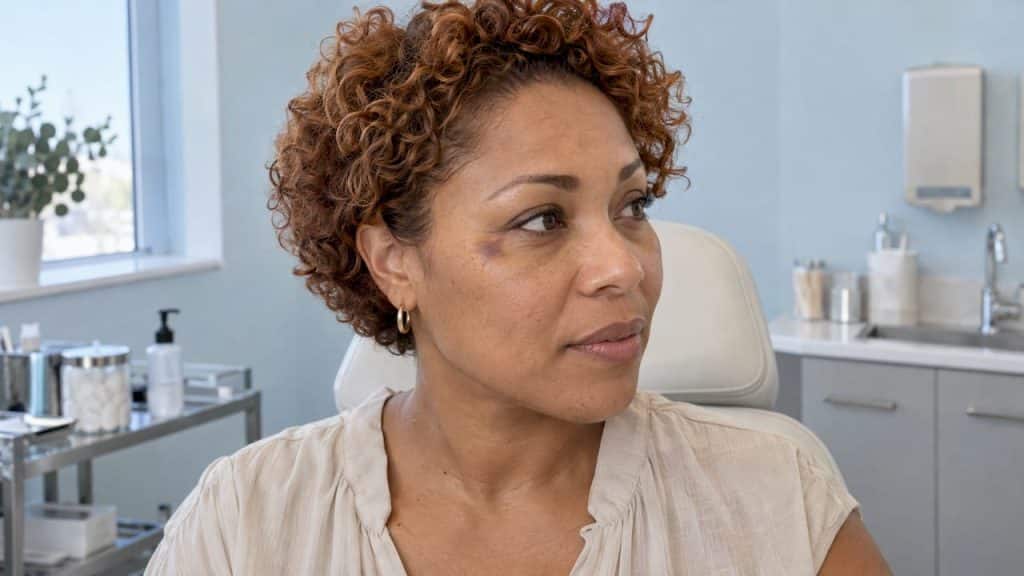
A small bruise after Botox is common, usually minor, and tends to fade on its own within about a week. What helps most is acting in the first hours: a cool compress wrapped in a cloth, no rubbing, no hard workouts and no anti-inflammatory pain relievers unless your doctor has told you to take them. This guide covers what to do right away, what the evidence says about arnica and other remedies, how to cover a bruise, and the few signs that mean you should seek care.
If you are reading this with a fresh mark on your forehead or beside your eye, take a breath. Bruising is a procedural effect, not a sign that the treatment went wrong. The American Academy of Dermatology notes that the injections rather than the botulinum toxin itself cause most mild side effects, bruising included.
TL;DR
- Bruising happens when a needle nicks a tiny vein. It is a known, usually temporary side effect, and when it occurs it typically lasts about a week.
- In the first hours, apply a cool compress wrapped in a towel for about 10 minutes at a time. Do not press hard, rub or massage the area.
- Skip vigorous exercise for the first 24 hours and avoid NSAIDs such as ibuprofen and aspirin unless your doctor has prescribed them.
- Never stop a prescribed blood thinner on your own. Tell your injector about every medication before treatment.
- Contact a clinician right away for trouble swallowing, speaking or breathing, and get a check-up if a bruise spreads or does not improve.
Table of Contents
- Why Botox sometimes leaves a bruise
- What to do in the first hours
- How long a Botox bruise lasts
- Remedies: what is worth using
- What not to do
- Reducing the chance of a bruise next time
- Blood thinners and other medicines
- When a bruise needs a clinician
- Our perspective
- Botox with a plan for you
- FAQ
- Sources
Why Botox sometimes leaves a bruise
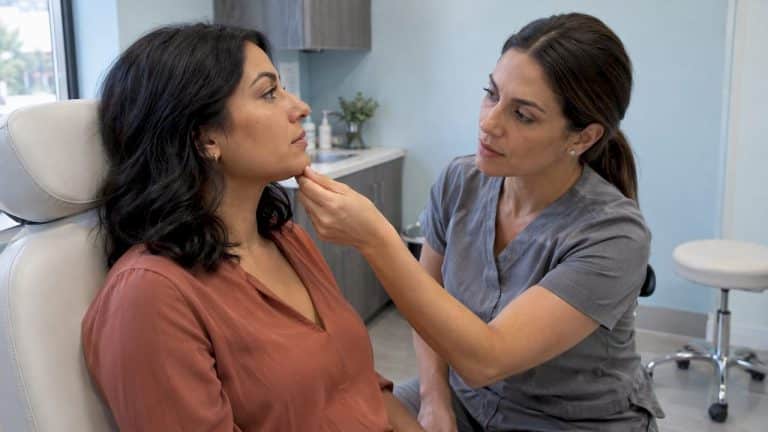
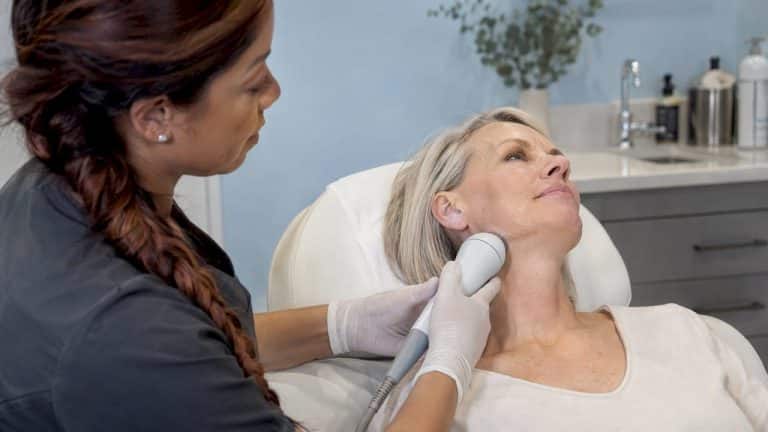
Botox is placed with a very fine needle into small facial muscles. The face is full of tiny blood vessels, many of them too small to see. Cleveland Clinic explains that a bruise appears when the needle happens to hit a minor vein, allowing a little blood to leak under the skin.
That is why two people can have the same treatment with different outcomes. Skin thickness, the area treated, the medications you take and even how you slept can all play a part. The area around the eyes has thin skin and a rich blood supply, so a mark there shows more easily than one on the forehead.
It also explains why the bruise does not mean the Botox has “gone wrong”. The product does its work in the muscle, while the bruise sits in the skin and the tissue just beneath it. Health Canada lists pain or bruising at the injection site among the adverse reactions of Botox Cosmetic, and the Canadian product monograph, revised in April 2025, likewise lists pain, tenderness and bruising at the injection site as expected side effects.
What to do in the first hours
The first few hours matter most. Small vessels are still leaking, and your goal is to calm them down and avoid anything that raises blood flow to the face.
- Use a cool compress. Wrap an ice pack or a cold gel pack in a clean towel and hold it gently over the area for about 10 minutes at a time, as Cleveland Clinic advises. Never place ice directly on the skin. Let the cold do the work, and do not press hard.
- Do not rub or massage. Alberta Health Services says not to rub the treated area. Rubbing can push blood further into the tissues and, with Botox, is best avoided for the first 12 hours.
- Stay upright. Cleveland Clinic recommends staying upright for 3 to 4 hours after treatment, so no lying down for a nap straight after your appointment.
- Take it easy. The same Alberta page suggests taking it easy for the first 2 to 3 hours. The American Academy of Dermatology says to wait about two hours before strenuous physical activity, and a 2017 clinical review of bruising advises avoiding vigorous exercise for the first 24 hours because exercise raises blood pressure and can worsen a developing bruise. Choosing the longer window is the safer plan.
- Mind your pain relief. Cleveland Clinic notes that NSAIDs such as aspirin, ibuprofen and naproxen can promote bruising. If you need something for a headache, speak with your doctor or pharmacist about what suits you.
OHSU’s dermatology after-care instructions also mention that you can expect some swelling at the injection site for about an hour, and that bruising may occur. Small bumps from the injection itself settle quickly. A bruise takes longer.
We have also set out more detail in our Botox aftercare guide and our list of things to avoid after Botox.
How long a Botox bruise lasts
Most people want a timeline, so here is a realistic one. Individual healing varies, and the figures below are from the sources linked in each row.
| Stage | What you may see | Source |
|---|---|---|
| First hour | Mild swelling and small raised bumps at the injection points | OHSU |
| First 1 to 2 days | A red, purple or blue mark may appear and look darkest | Clinical review, 2017 |
| About 1 week | A Botox bruise, if one forms, usually lasts about a week | American Academy of Dermatology |
| 10 to 14 days | Bruises from non-surgical cosmetic treatments usually resolve in healthy people | Clinical review, 2017 |
As a bruise heals, its colour changes from purple or blue toward green and yellow. That shift is normal and is the body clearing the blood. Because the bruise often appears a day later than the treatment, do not be surprised if you look fine when you leave and see a mark the next morning.
Separately from the bruise, your Botox results build over days. Alberta Health Services says effects appear in 3 to 4 days, with the full effect up to one week. A bruise does not change how the Botox works, and the timing for your wrinkles is the same whether or not you bruised.
Remedies: what is worth using
There is no need for an elaborate routine. The most useful remedies are simple, and the evidence for them comes mostly from a 2017 review in a peer-reviewed journal on managing bruising after non-surgical cosmetic treatment.
Cold, then gentle warmth
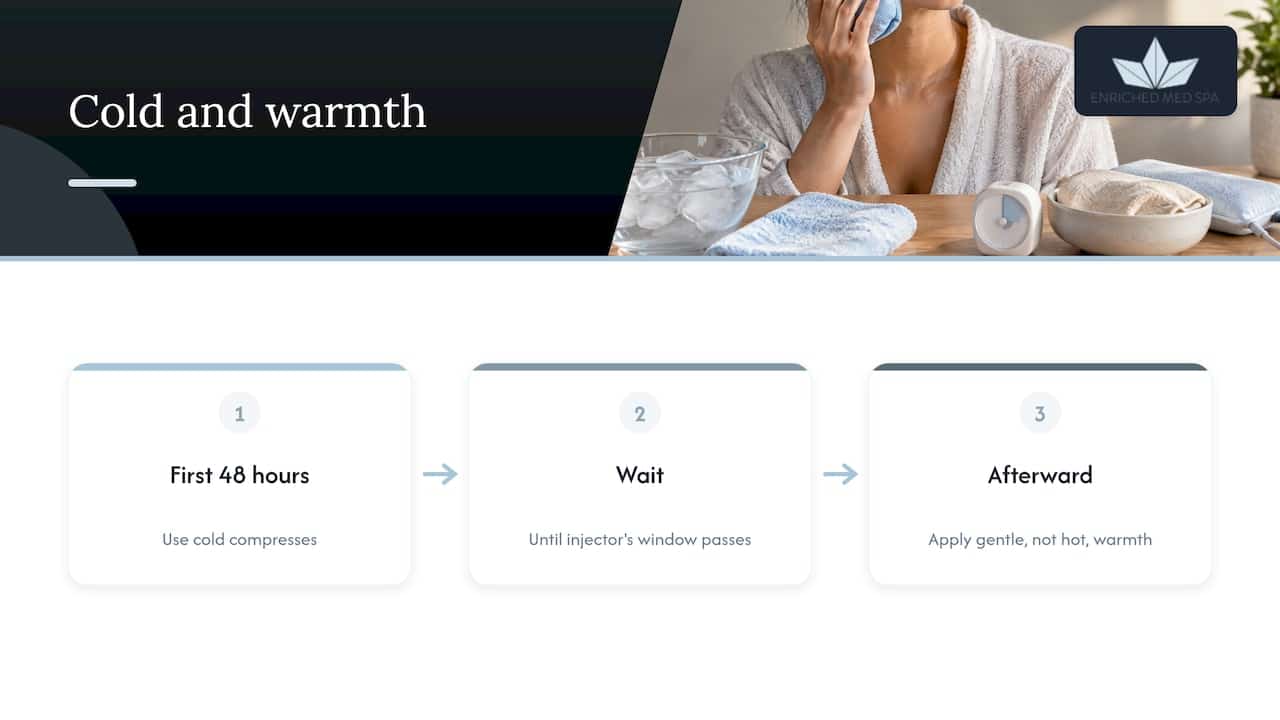
The review states that cold compresses and local compression after injection reduce the risk of bruising by encouraging blood vessels to narrow. It also describes cold packs in the first 48 hours, followed by heat, as a way to help a bruise resolve. In practice, that means cold compresses on day one and day two, then a warm (not hot) cloth held lightly against the area afterwards. Wait until your injector’s aftercare window has passed before applying heat, and keep it gentle.
Arnica, vitamin K and bromelain
The same review says topical arnica, topical vitamin K and bromelain (a pineapple-derived enzyme) can reduce bruise development and may speed resolution. These are the three options most often discussed:
- Arnica gel or cream: applied to unbroken skin only. Many people like it because it is easy to use. Keep it away from the eyes.
- Vitamin K cream: a topical product, sometimes found in post-procedure skincare. Apply as directed on the label.
- Bromelain: the review quotes 200 to 400 mg three times daily. It is an oral supplement, so speak with your doctor or pharmacist first, especially if you take any prescribed medication or blood thinner.
We suggest a modest approach: pick one topical, use it as directed, and let time do the rest. Our guide to post-treatment care products lists what we like to use around Botox.
Covering a bruise
For a work meeting, a wedding or photos, makeup can help once the skin is intact and the first day or two have passed. Dab concealer on gently with a clean finger or sponge rather than rubbing or pressing hard, because Alberta Health Services advises against rubbing the treated area. Remove it gently at the end of the day. If you have an event coming up, plan your Botox for a couple of weeks before it, which lines up with the 10 to 14 days a bruise can take to clear.
Light-based treatment for stubborn marks
In rare cases a bruise lingers or leaves a brownish stain called hemosiderin staining. The review mentions that persistent marks may respond to pulsed dye or KTP laser. That is a conversation to have in person, not something to try at home.
What not to do
Some habits make bruises larger or slower to heal:
- Hard workouts, hot yoga and saunas for the first 24 hours. They raise blood pressure and flush the face.
- Rubbing, massaging or leaning on the area, including tight hats, face-down massage cradles and pillows pressed against the face.
- Aspirin, ibuprofen and naproxen unless prescribed for you. Cleveland Clinic lists them as bruising promoters.
- Alcohol on the evening of treatment, which widens blood vessels. Many injectors also ask you to pause it for a few days beforehand.
- Lying down straight after treatment for the first 3 to 4 hours.
If you are planning a trip, our article on flying after Botox explains how to time it.
Reducing the chance of a bruise next time
You cannot control everything, but you can improve your odds.
Before your appointment
- Tell your injector about every medication, vitamin and supplement you take. Fish oil, vitamin E, ginkgo and turmeric are examples people often forget. Ask your injector whether any of them should be paused.
- Plan appointments for a quiet day, not before a big event. Leave at least two weeks if you have a wedding, photoshoot or trip.
- Skip the pre-treatment workout and avoid alcohol the day before.
During the appointment
- A thorough consultation, good lighting and a careful technique reduce the chance of hitting a vessel. At Enriched Med Spa, treatments are performed by experienced, nurse-level injectors, and we start every plan with a comprehensive consultation.
- Mention if you bruise easily. Your injector can adjust the plan, for example by treating in a calm, unhurried way and applying gentle pressure afterwards.
After the appointment
- Follow the first-hours steps above, and ask for written aftercare if you did not receive it.
- Keep your skin routine simple for 24 hours: gentle cleanser, moisturizer and sunscreen.
You may also find our guide on what to expect before and after Botox useful for the full timeline of results.
Blood thinners and other medicines
This is the question that worries people most. If your doctor has prescribed a blood thinner such as warfarin, apixaban or rivaroxaban, do not stop or change it because of a cosmetic appointment. Only the doctor who prescribed it should decide that. Tell your injector at the consultation, so your plan can be shaped around your health, and speak with your prescriber if you have questions about timing.
Over-the-counter products are different. Aspirin, ibuprofen, naproxen, fish oil and some herbal supplements can increase bruising. Before you stop any of them, ask your doctor or pharmacist, particularly if you take them for a medical reason such as heart health or arthritis. If you are unsure, bring the list to your consultation and we will go through it with you.
When a bruise needs a clinician
Most Botox bruises are cosmetic annoyances. A few signs are not.
Seek immediate medical care if you have difficulty swallowing, speaking or breathing after Botox. Health Canada also lists rare serious signs of the toxin spreading beyond the injection site, including muscle weakness away from where you were treated and pneumonia, on its cosmetic injections page. Call 911 or go to the nearest emergency department for breathing or swallowing trouble.
Arrange a check-up with your injector or your family doctor if:
- the bruise keeps growing or gets worse after the first couple of days;
- it has not improved after about a week or fades much slower than the 10 to 14 days described above;
- you have increasing pain, marked swelling, warmth, redness or fever, which can point to infection;
- you notice bruising elsewhere on your body without a reason.
The 2017 review advises that bruising that fails to resolve or worsens over time should be assessed by a general practitioner, as it may signal an underlying medical condition. Health Canada also notes that these injection-site reactions are generally temporary, though they could last several months in some cases, and that Botox Cosmetic should only be given by a qualified health care provider no more often than every two months, according to the product monograph.
If you are in Woodbridge, Vaughan or East Gwillimbury and a bruise worries you, contact us. We would rather look at it than have you wonder.
Our perspective
Bruising is one of the most common worries we hear before a first Botox appointment, and it is also one of the easiest to talk through. A small mark is not a verdict on your results. It is a reminder that the face is delicate, and that careful technique and good aftercare matter.
Our approach starts with a consultation: your goals, your medications, your history of bruising, and any event on your calendar. We believe in natural-looking, conservative plans, and timing is part of that. If you have a wedding in three weeks, we plan around it.
Our Botox, Nuceiva and Xeomin treatments are performed by experienced, nurse-level injectors, and we give you clear pre- and post-care guidance so you know what to do in the first hours, when it matters most. That guidance is designed to help you feel confident, not worried.
If you do bruise, keep the routine simple: a cool compress, no rubbing, a gentle day, and patience. And if anything feels off, call us.
Felix
Botox with a plan for you
If you are considering Botox, Nuceiva or Xeomin, we begin with a conversation about what you would like to change, how you bruise and what your calendar looks like. You can read about the treatments on our Botox, Nuceiva and Xeomin page and reach out from there to book a consultation at our Woodbridge and East Gwillimbury clinic. For a wider view of what the treatment involves, see our Botox cosmetic treatment overview and our guide to side effects and how to address them.
FAQ
How do I heal a bruise from Botox quickly?
Use a cool compress wrapped in a towel for about 10 minutes at a time in the first day or two, avoid rubbing, and skip hard exercise for 24 hours. After about 48 hours, gentle warmth can help the bruise clear, according to a 2017 clinical review. Topical arnica or vitamin K may also help. Most bruises fade within one to two weeks.
How long does bruising after Botox last?
The American Academy of Dermatology says a Botox bruise lasts about a week. A clinical review puts resolution for healthy people at 10 to 14 days. Colours shift from purple to green to yellow as it heals, which is normal.
Can I cover a Botox bruise with makeup?
Yes, once the skin is intact and the first day or two have passed. Dab concealer on gently and avoid rubbing or pressing hard on the area. Remove it softly at the end of the day, and if you have a big event, book your Botox at least two weeks ahead.
Is bruising after Botox dangerous?
Bruising alone is a known, usually temporary side effect. Difficulty swallowing, speaking or breathing, or weakness away from the injection site, needs immediate medical care, as Health Canada explains. Call your injector or family doctor if a bruise spreads, worsens or does not improve after about a week.
Should I stop my blood thinner before Botox?
No, not on your own. Prescribed medication such as warfarin, apixaban or rivaroxaban should only be changed on the instruction of the doctor who prescribed it. Tell your injector about it at the consultation so your plan can be adjusted.
Sources
- Botox Aftercare: The Dos and Don’ts, Cleveland Clinic
- Botulinum toxin therapy: FAQs, American Academy of Dermatology
- Cosmetic After Care Instructions, OHSU
- Botulinum Toxin (Botox), Alberta Health Services
- Cosmetic injections, Health Canada
- The Management of Bruising following Nonsurgical Cosmetic Treatment, 2017
- Botox Cosmetic product monograph, Health Canada, revised April 2025