Yes, you can tighten and lift a softening jawline without surgery, as long as the goal is a gradual, natural improvement and the treatment matches the cause. Jowls can come from loose skin, lost volume, fullness under the chin or a combination, and each one responds to something different. Many clients come to us noticing that their lower face looks heavier or less defined than it did a few years ago. Below we explain the main options, what the research says, and how we think about planning a non-surgical jawline lift.
TL;DR
- Jawline changes usually come from a mix of skin laxity, volume loss and fat, so the right plan starts with an assessment, not a device.
- Energy-based treatments (radiofrequency, ultrasound, laser, RF microneedling) stimulate collagen and work gradually over about three to six months.
- Fillers add structure and definition; neuromodulators can soften pulling muscles and neck bands. Often a combination works best.
- Non-surgical results suit mild to moderate laxity, and they are maintained with periodic repeat treatments and good skin care.
- Treatment should be done by trained clinicians who screen you first for suitability and safety.
Table of Contents
- Why the jawline softens
- The main non-surgical options compared
- Radiofrequency and ultrasound: tightening from within
- Does microneedling help sagging jowls?
- Fillers and neuromodulators: shaping and balancing
- What about fullness under the chin?
- Realistic results, timelines and maintenance
- Safety, side effects and recovery
- A typical plan, step by step
- Our perspective
- Starting with microneedling at Enriched Med Spa
- FAQ
- Sources
Why the jawline softens
A jawline does not blur because of one thing. A 2023 review of chin and jawline rejuvenation describes how, with age, the jawbone recedes, the chin becomes shorter and more forward, and fat in the lower face shrinks while the supporting septum weakens. That combination is what forms jowls.
Skin itself matters as well. Collagen and elastin decline, so skin that once sat snugly over the jaw begins to settle. Add a little fullness under the chin or visible bands in the neck, and the whole lower face can look heavier.
This is why we ask what you actually see in the mirror before we suggest anything. Three patterns come up most often:
- Looser skin with little volume loss: the contour is blurred but the face is not hollow.
- Skin laxity with volume loss: the cheeks and jaw have flattened, and the skin has dropped as a result.
- Fullness under the chin or neck bands: the jaw line is hidden rather than lost.
A 2023 guideline in the Journal of Cosmetic Dermatology follows the same logic. It suggests assessing the skin and the superficial facial layers first. If laxity comes with loss of volume, collagen stimulators are recommended. If there is no noticeable fat loss, the focus shifts to skin texture and energy-based devices.
The main non-surgical options compared
A dermatology review from 2026 groups non-surgical neck and jawline options into injectables (neuromodulators, fillers, deoxycholic acid, thread lifts), energy-based devices (lasers, radiofrequency, cryolipolysis, ultrasound) and mechanical stimulation (microneedling and RF microneedling). Here is how those categories line up against the concerns we hear most.
| Concern | Approach | How it works | Typical timeline |
|---|---|---|---|
| Mild skin looseness | Radiofrequency skin tightening | Controlled heat in the skin encourages collagen remodelling | Gradual, over months, with a series of sessions |
| Texture, early laxity | Microneedling | Tiny channels trigger the skin’s repair response | Skin looks fresher within weeks, firmer over months |
| Flattened jaw or chin, early jowls | Dermal filler | Adds structural support and definition | Visible right away |
| Visible neck bands, downward pull | Botox, Nuceiva or Xeomin | Relaxes muscles that pull the lower face down | Starts in days, settles in about two weeks |
| Square, bulky jaw | Masseter neuromodulator | Softens the masseter muscle over time | Builds over about three months |
| Wrinkled, uneven skin | Laser resurfacing, peels | Removes or remodels damaged skin layers | Depends on depth, from days to about a week of downtime |
Not every option is right for every face, and we do not offer every device on the market. We recommend from what we offer, and only when it suits what we see.
Radiofrequency and ultrasound: tightening from within
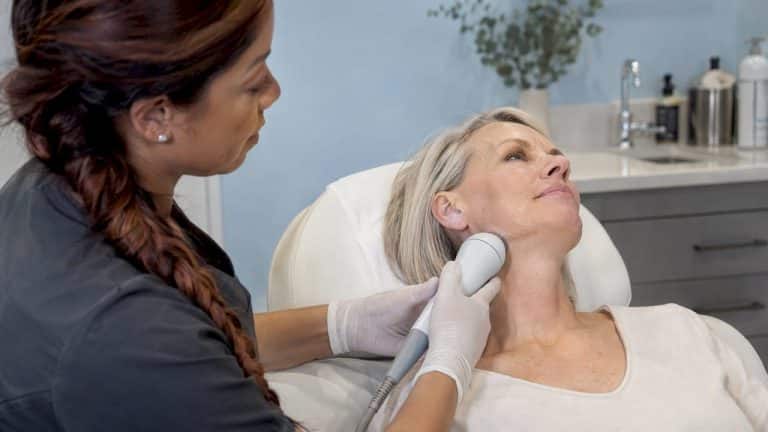
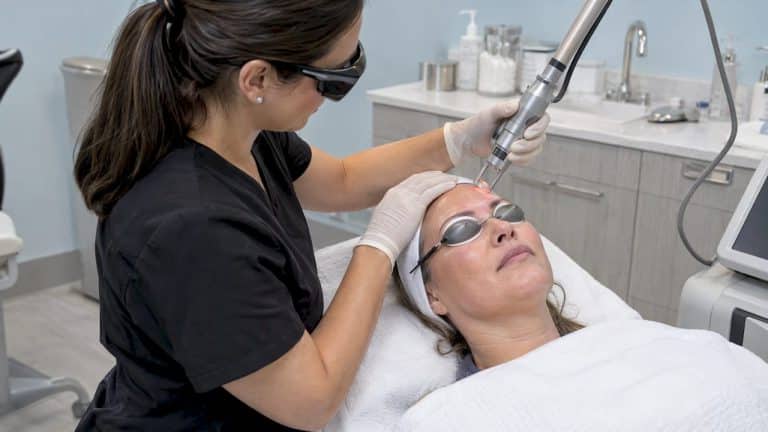
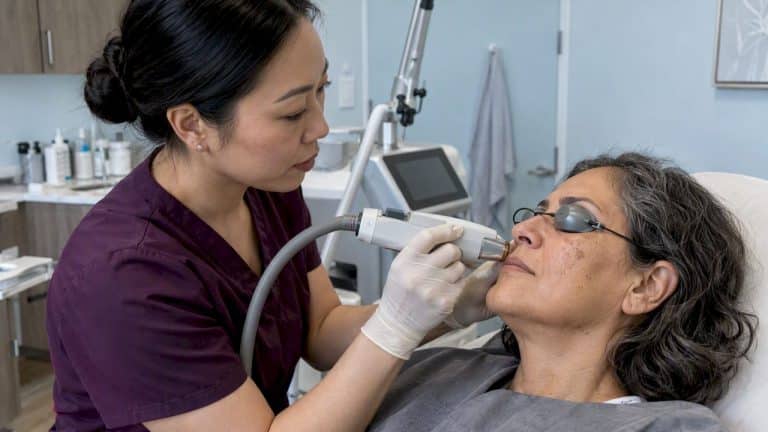
These devices deliver energy below the skin surface. The Journal of Cosmetic Dermatology guideline explains that energy-based devices, including focused ultrasound, lasers and RF microneedling, create tiny controlled injuries that stimulate collagen and elastin, and that this is what improves sagging.
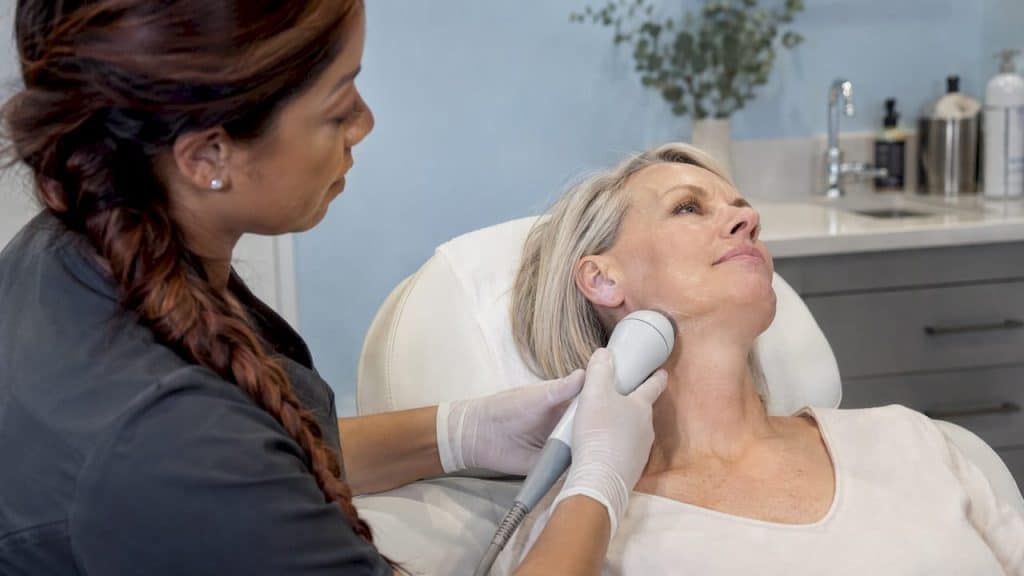
The evidence for jawline specifically is encouraging. In a 2024 randomized trial of 51 people, microfocused ultrasound improved jawline laxity at six months, with 74% of the standard group and 77% of the custom group gaining at least one point on the Merz Jawline Scale.
What this tells you is that improvement is real but measured in grades, not in dramatic transformations. A one-point change on a validated scale is the kind of result you notice as “my jaw looks cleaner”, not “I look like a different person”.
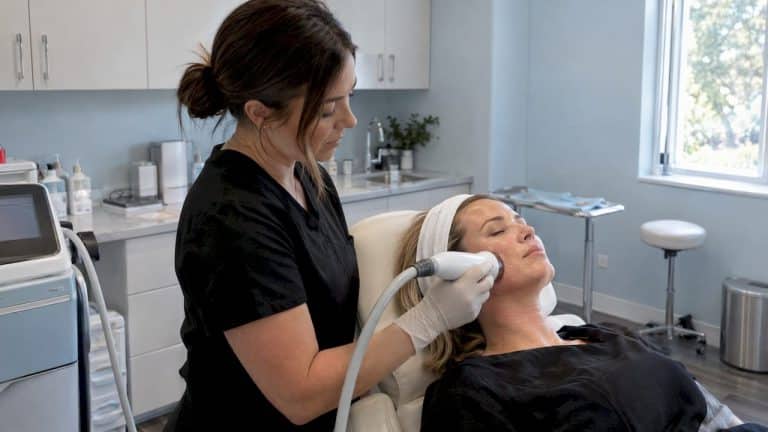
At our clinic, radiofrequency skin tightening is delivered with TriPollar technology. We have written separately about radiofrequency for jowls and our clinic protocols, including how Health Canada licensing applies to these devices.
Does microneedling help sagging jowls?
It can, within limits. Standard microneedling is best known for texture, acne scarring and fine lines, and it supports early, mild laxity by stimulating the skin’s natural repair. Adding radiofrequency to the needles goes deeper.
Some of the data on RF microneedling:
- A prospective study of 30 patients treated on the lower face, jawline and neck found a mean reduction in submental volume of 4.72 cm³, with improved ratings from physicians, blinded investigators and patients, and no relevant downtime beyond slight swelling and redness.
- In a smaller study of nine patients with jowl and neck laxity, marked improvement appeared in 33% at three months and 56% at six months, with no adverse events.
- The American Academy of Dermatology notes that RF microneedling results usually show in about a month, with gradual tightening and lifting continuing for close to a year in some studies.
The small sample sizes matter, and we would rather say so than oversell. Microneedling at our clinic is a skin-quality treatment first. For many clients, it is a sensible starting point when the main concerns are texture, early looseness and overall skin health, and it fits well alongside other jawline treatments. You can read how it works on the skin before booking.
Fillers and neuromodulators: shaping and balancing
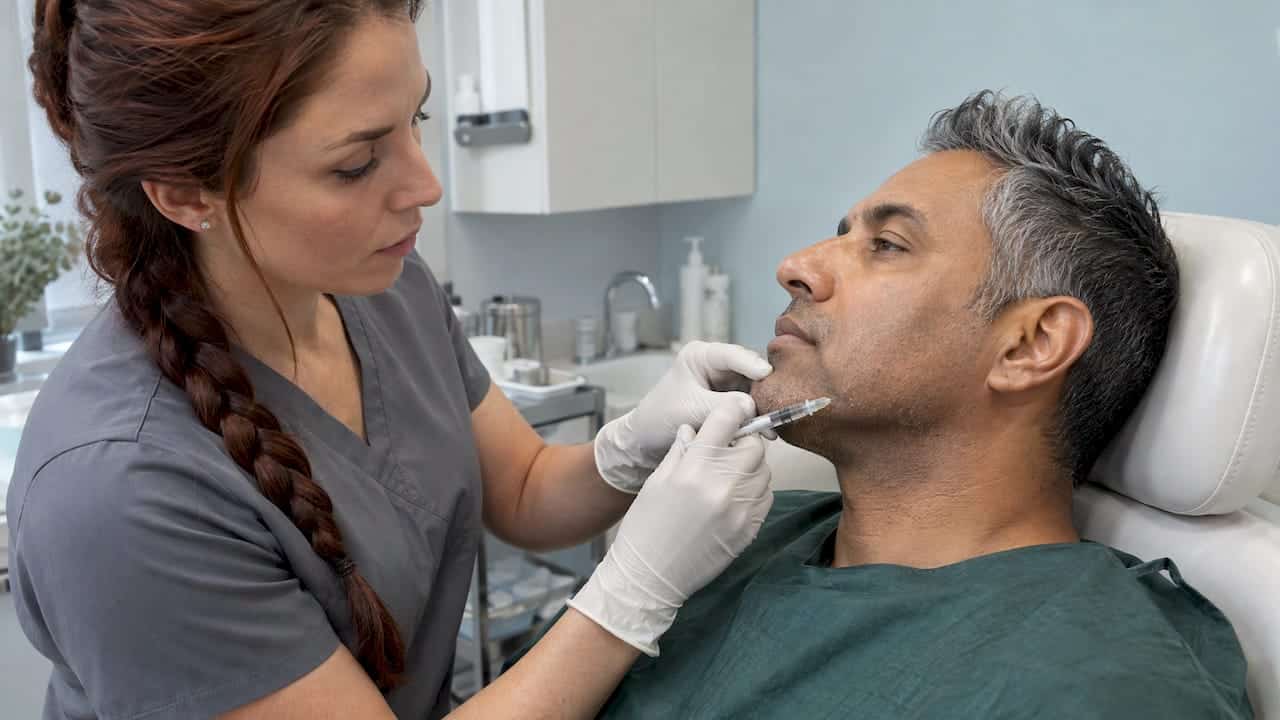
When the jawline looks softer because structure has been lost, tightening the skin alone rarely gives the whole picture. Dermal filler placed along the jaw, chin and sometimes cheeks restores support, so the skin has something to drape over. We find that staged treatment, in small steps rather than all at once, tends to look most natural. Our article on why staged treatment works for chin and jawline filler explains the reasoning, and men looking for a stronger line can see how we approach jawline filler for men.
The cheeks hold up the lower face, too. Sometimes lifting the midface softens jowls with less product near the jaw, which is why we look at cheek filler for lift as part of a plan. More on the filler categories is on our dermal filler page.
Neuromodulators play a different role. Botox, Nuceiva and Xeomin relax muscles, and that can help in two ways around the jaw:
- Neck bands: relaxing the platysma can soften vertical bands and reduce the downward pull on the lower face. See our look at Botox for neck bands.
- A wide, square lower face: treating the masseter can gradually slim the jaw. We cover this in masseter Botox for a slimmer jaw and how Botox reduces jaw size.
Our Botox, Nuceiva and Xeomin page lists what we offer.
What about fullness under the chin?
A fuller area beneath the chin is a separate issue from loose skin. Injectable deoxycholic acid is one approved option for this concern. Health Canada approved Belkyra in 2015 for moderate to severe submental fullness in adults, and the product monograph says it should not be used where there is excessive skin laxity, prominent platysmal bands or other conditions where removing fat could give an undesirable outcome.
That is a useful lesson even if you never consider it: removing fat from a face with loose skin can make the area look looser. It shows why diagnosis comes before treatment. If your concern is mainly under-chin fullness, we will talk through whether it is the right route for you, or whether skin tightening, filler or muscle relaxing may serve your jawline better.
Realistic results, timelines and maintenance
We want you to leave a consultation with expectations that match reality. Here is what the evidence and our experience support:
- Results are gradual. A 2021 review of non-surgical skin tightening found it is effective for mild to moderate laxity, with maximal results appearing over three to six months. The authors stress that patient selection and expectation setting are crucial.
- Improvement is subtle and cumulative. Most people show mild to moderate improvement. The aim is a firmer, cleaner contour, not a different face.
- Maintenance matters. The same review suggests repeating skin-tightening procedures every one to two years, for prevention as well as correction. Fillers and neuromodulators follow their own schedules, and we will set these out with you at your visit.
- Skin tone is rarely a barrier. The American Academy of Dermatology says non-invasive tightening is safe for all skin colours, and a systematic review of RF microneedling reported it can be used in all skin types, including darker skin, with minimal risk of adverse events.
If your laxity is significant, and you want a dramatic change, we will tell you honestly that some results fall outside what non-surgical care can offer. A surgeon consultation is a reasonable step in that case. For mild to moderate changes, though, a well-planned programme can make a visible difference.
Safety, side effects and recovery
Most non-invasive tightening leaves the skin intact. The AAD describes little or no downtime, gradual results and side effects that are usually temporary redness and swelling. Laser resurfacing is more intensive: the same page says tightening shows within two weeks of healing, but it needs five to seven days of downtime and carries a higher risk of side effects such as scarring.
Injectables carry their own risks. The Health Canada product monograph for a submental injectable lists injection-site pain, bruising, numbness, swelling, redness, hardness and nodules among the most frequent reactions, and notes that nerve injury and trouble swallowing were also reported and lasted several months in some cases. That is the reason Health Canada restricted that product to trained professionals. Anatomy around the jaw and neck is complex, and skill is the biggest safety factor you control.
Practical ways to treat safely:
- Choose a clinic where trained nurse-level injectors and aestheticians perform treatment.
- Share your full medical history, medications and supplements, and any recent cosmetic procedures.
- Tell us if you are pregnant or breastfeeding, have active skin infection, or have a history of scarring.
- Follow pre- and post-care instructions closely, including sun protection with a broad-spectrum SPF.
- Report anything unusual, such as persistent lumps, spreading redness or new numbness, to your provider promptly.
Screening for contraindications is standard for any light- or energy-based treatment. If you want a general sense of how that works, this overview of red light therapy contraindications shows the kinds of conditions that call for caution before treatment.
A typical plan, step by step
No two jawlines are alike, but a consultation with us usually follows this order:
- Assessment. We look at your face at rest and in movement, and ask what bothers you most.
- Diagnosis of the pattern. Is it skin laxity, volume loss, muscle pull, or a mix?
- Foundation first. Skin quality and collagen support, for example with microneedling or radiofrequency, give later treatments a better canvas.
- Structure and balance. If support is missing, we discuss filler, placed conservatively and in stages.
- Muscle balance. If neck bands or a strong masseter are part of it, we discuss neuromodulators.
- Review and maintenance. We schedule check-ins and set out how often each treatment is usually repeated.
This follows the idea in a 2023 review of lower face assessment: evaluate by anatomical layer and start with treatments that add structural support. The same review is candid that the lower face and neck are among the hardest areas to assess and treat, which is why an organized approach and expert guidance matter.
Our perspective
When someone asks us about jawline tightening, we hear a question about confidence, not just anatomy. Most people do not want a sharper, overdone face. They want to look like themselves on a good day.
That is why we resist one-size-fits-all packages. A jawline that needs skin support is treated differently from one that needs structure, and a face with strong neck bands needs a third approach. We would rather do less, see how your skin responds, and add a step when it is clearly useful.
We also believe in saying plainly what each treatment can and cannot do. Skin tightening takes months. Filler shows at once but should be placed with restraint. Neuromodulators balance muscles, and microneedling improves the skin the rest of your plan sits on. Together, within a careful, staged programme, these can give a lifted, rested look that does not announce itself.
Felix
Starting with microneedling at Enriched Med Spa
For many first-time clients, microneedling is a gentle way to begin improving firmness and skin quality along the jaw and lower face. Our microneedling treatment is $359 per session. We perform it at our Woodbridge clinic, serving Vaughan and East Gwillimbury, and your consultation will cover whether it should be paired with radiofrequency, filler or neuromodulators. You can also browse all our skin and injectable services to see how the options fit together.
FAQ
How do I fix sagging jowls without surgery?
The right answer depends on the cause. Loose skin responds to energy-based treatments such as radiofrequency or RF microneedling, volume loss to filler, and muscle pull to neuromodulators. Many people need a combination, planned in stages after an in-person assessment.
Does microneedling help sagging jowls?
It can help with mild laxity and skin quality, and RF microneedling has shown measurable improvement along the jawline and neck in small studies. Results build over several months rather than days. More pronounced sagging usually calls for deeper tightening treatments or filler support.
How long do non-surgical jawline results last?
It varies by treatment. Collagen-building treatments develop over three to six months, and a 2021 review suggests repeating skin tightening every one to two years. Filler and neuromodulator timelines are different, and we will outline them for the specific products in your plan.
Is there downtime?
Most non-invasive options have little to none beyond temporary redness or swelling. Laser resurfacing is the exception, with about five to seven days of recovery according to the American Academy of Dermatology. We will explain what to expect before each treatment.
Sources
- Chin and jawline rejuvenation with injectable fillers (PMC, 2023)
- Revitalizing the lower face, Journal of Cosmetic Dermatology
- A Dermatologist’s Guide to Nonsurgical Rejuvenation of the Neck and Jawline
- Microfocused ultrasound jawline trial, 2024
- Radiofrequency microneedling for skin tightening of the lower face (PubMed)
- RFAL with RF microneedling for jowl and neck laxity, 2021
- American Academy of Dermatology: Many ways to firm sagging skin
- Systematic review of RF microneedling studies (MDedge)
- Health Canada regulatory decision summary for Belkyra
- Health Canada product monograph
- Non-surgical skin tightening, Open Access in Dermatology (2021)
- Assessment and treatment strategies for the aesthetic lower face and neck (PMC, 2023)
- Red light therapy contraindications