Good post peel care comes down to four habits: cleanse gently, moisturize, keep your skin out of the sun, and leave the peeling alone. How long you follow them depends on how deep your peel was, and the people who performed it are the best ones to tell you exactly what your skin needs. At Enriched Med Spa in Woodbridge, thorough pre and post care guidance is part of every treatment, so you leave knowing what to do at home.
This guide walks you through what your skin will look like, what to put on it, when makeup is fine, and which signs mean you should call.
TL;DR
- Healing time follows peel depth: light peels settle in about 1 to 7 days, medium peels in 7 to 14, and deep peels in 14 to 21.
- Cleanse gently, moisturize daily, and never pick or scratch flaking skin.
- Avoid sun until peeling has stopped, then wear sunscreen every day.
- Makeup can usually go on right away after a light peel, after 5 to 7 days for a medium peel, and after at least 14 days for a deep peel.
- Burning, itching or swelling that is not settling is a reason to contact your provider.
Table of Contents
- What your skin does after a peel
- Your post peel care routine
- Sun protection is not optional
- Exercise, heat and the first 72 hours
- Makeup after a chemical peel
- What is normal and when to call
- Aftercare when you have pigment concerns
- Setting realistic expectations
- Our perspective
- Peels at Enriched Med Spa
- FAQ
- Sources
What your skin does after a peel
A chemical peel removes the damaged outer layers so fresher skin can come through. That is the point of the treatment, and it is also why your skin needs a little extra care for a while. Alberta’s health information service explains that healing time depends on the kind of peel and how deep it went, and that proper aftercare speeds healing, helps results last, lowers infection risk and prevents colour changes from sun exposure.
Many clients come in expecting a dramatic change overnight, or fearing they will look “burned” for weeks. The reality sits in between, and it is mostly predictable once you know your peel’s depth.
Timelines by peel depth
The American Academy of Dermatology describes recovery by depth like this:
| Peel depth | Typical healing | What you will notice | Makeup |
|---|---|---|---|
| Refreshing or “lunchtime” | 1 to 7 days | Redness, then scaling for about 3 to 7 days | Usually right away, sometimes the next day |
| Medium | 7 to 14 days | Redness, swelling, possible blisters, crusting, peeling for 7 to 14 days | After 5 to 7 days |
| Deep | 14 to 21 days | Bandaged area, very strict sun avoidance for months | After at least 14 days |
Most people reading this have had, or are about to have, a light or superficial peel. If you want a fuller picture of what each depth feels like in real life, our guide to chemical peel downtime at each depth goes into more detail.
What days 1 to 7 usually look like
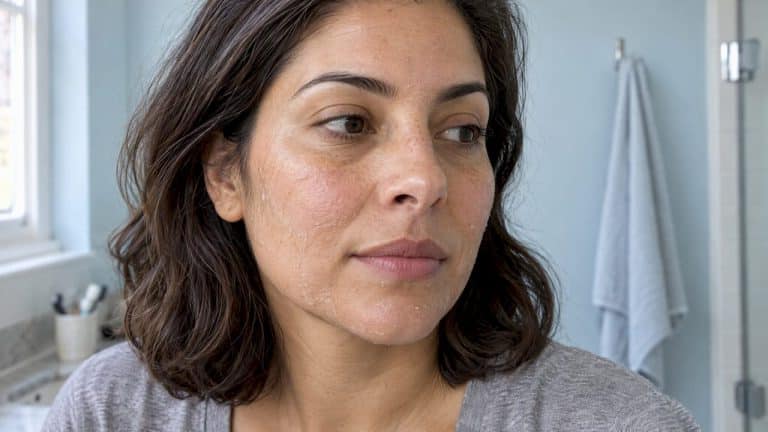
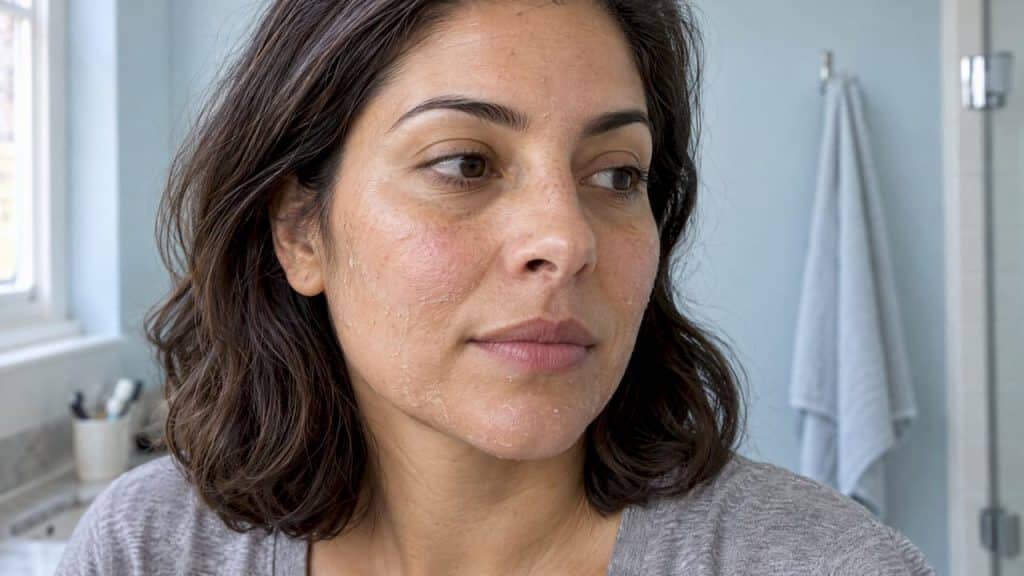
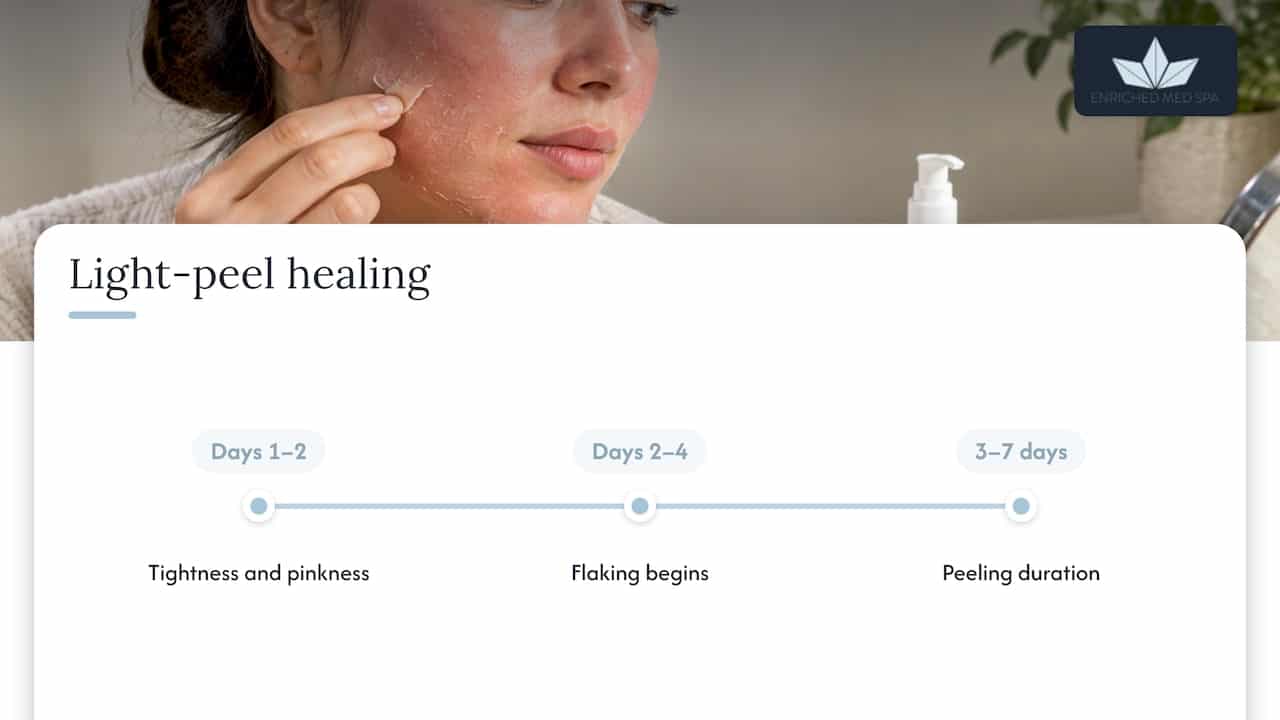
With a lighter peel, you can expect your skin to feel tight and look pink for the first day or two. Flaking tends to start somewhere between day two and day four, often around the mouth, nose and chin first, where skin moves most. It looks worse than it feels, and it passes. Peeling that lasts about 3 to 7 days after a refreshing peel is in line with the AAD’s description above.
If you are asking what your face looks like three days after a peel: typically dry, slightly pink or tan-toned, and in the middle of flaking. That is a normal stage, not a sign something went wrong.
Your post peel care routine
The exact products depend on your peel, your skin type and the instructions you were given. Follow those written instructions first. The principles below are what almost every routine shares.
Cleanse gently
Use cool or lukewarm water and a mild, fragrance-free cleanser, patting dry with a clean towel instead of rubbing. Hot water, scrubs, cleansing brushes and textured washcloths all work against you while your skin is healing. Alberta’s guidance on aftercare lists cleaning the skin as directed as a core step, so if your provider gave you a specific cleansing schedule, that is the one to follow.
Moisturize daily
Moisturizer is what keeps tightness and flaking comfortable. Choose a simple, fragrance-free, non-comedogenic formula and apply it as often as your skin feels dry. Skin that stays hydrated tends to shed more evenly, which is what you want. For medium and deep peels, you will also be changing a dressing or applying an ointment, as Alberta’s guidance describes.
Do not pick, peel or scratch
This is the rule most people struggle with. Pulling at flakes can leave marks, pigment changes or scars, and the AAD notes that rubbing or scratching can cause infection. Let the skin come off by itself. If a flake is catching on something, a gentle moisturizer is far better than fingernails.
If scarring is a worry for you in general, you can read an overview of peptides and scar research in Canada. For peels, the practical protection is simply leaving the skin alone while it heals.
Which products to hold off on
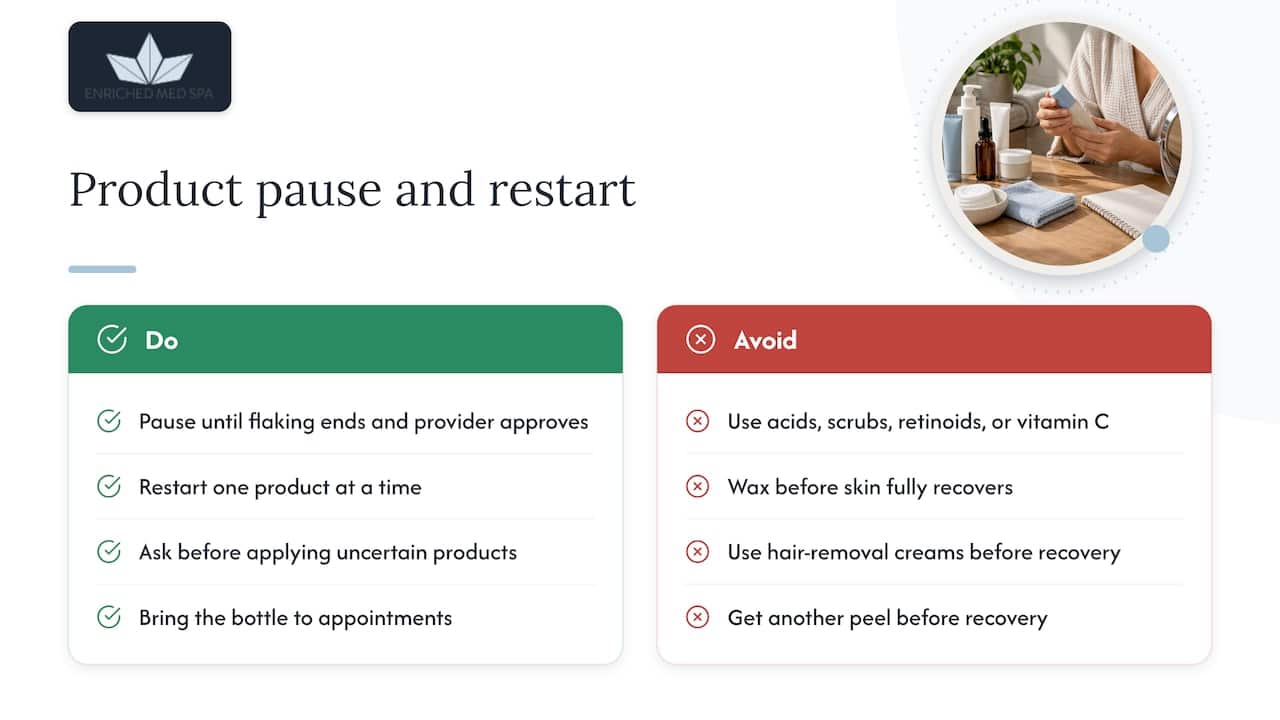
Your regular routine is likely to include things that are too strong for freshly peeled skin: exfoliating acids, scrubs, retinoids and vitamin C serums among them. Our general approach is to pause these until the flaking has finished and your provider says you can restart. Restarting slowly, one product at a time, makes it easy to see what your skin tolerates. If you are unsure about a specific product, bring the bottle to your appointment or ask before you apply it.
The same logic applies to other treatments. Waxing, hair removal creams and other peels should wait until your skin has fully recovered. Our guide on what to avoid after a facial covers the shared ground between facials and peels.
Sun protection is not optional
New skin is more vulnerable to sun. Alberta’s health guidance is plain: avoid sun exposure until peeling has stopped, and once it has, use sunscreen every day because the new skin is more likely to be damaged. Skipping this step is the quickest route to dark patches that last longer than the peel itself.
Here is what that looks like in practice:
- Wear a broad-spectrum sunscreen of at least SPF 30 daily, not only on sunny days, and reapply after swimming or heavy exertion, as the Canadian Dermatology Association recommends.
- Seek shade, and cover up with clothing and a broad-brimmed hat, which the CDA also advises.
- Avoid tanning of any kind, indoor or outdoor.
- Remember winter. Reflected light from snow and the window of your car still reach your face, and Ontario peel season often runs through the colder months for exactly this reason.
While your skin is still raw or flaking, sunscreen can sting. In that window, staying indoors or in full shade is the better plan, then you start sunscreen once your provider says the skin can take it.
Exercise, heat and the first 72 hours
Sweat and heat can irritate freshly peeled skin. Depending on how strong your peel was, many providers advise holding off on intense workouts for somewhere between one and three days. Saunas, steam rooms, hot yoga and long hot showers are worth skipping for the same reason. Swimming pools add chlorine to the mix, so hold off on them until the skin has settled.
Sleep on a clean pillowcase, and if you can, sleep with your head slightly elevated for the first night after a deeper peel to keep swelling down. Swelling after a peel shows up mainly around the eyes, according to Alberta’s list of expected effects.
Makeup after a chemical peel
The question comes up in almost every consultation, usually because of a wedding, a photoshoot or a work event. The AAD’s timing again follows depth: makeup is usually fine immediately after a refreshing peel, sometimes the next day, after 5 to 7 days for a medium peel, and after at least 14 days for a deep peel. The delay for deeper peels exists because makeup can interfere with healing and raise infection risk.
When you do put makeup back on:
- Start with clean hands and clean brushes or sponges. Old products and dirty tools are an easy way to introduce bacteria.
- Keep it light. Mineral or lightweight, non-comedogenic formulas are kinder than heavy full-coverage products while skin is still flaking.
- Press and pat rather than rub. Powder can cling to dry patches, so a bit of moisturizer underneath helps.
- Remove it gently at night with your mild cleanser, not wipes that tug or scrub.
If you have an event, plan your peel with enough runway. A lighter peel one to two weeks ahead usually leaves time for flaking to finish and your skin to look even. For a similar question after another treatment, see can you wear makeup after a facial.
What is normal and when to call
The AAD describes redness and scaling after refreshing peels; redness, swelling, possible blisters and crusting after medium peels; and bandaging after deep peels. These are part of the process. Alberta’s guidance lists the wider range of possible effects: redness, colour changes, crusting, swelling, scarring, allergic reaction and infection, along with increased sun sensitivity. It also notes that people with a history of cold sores may be more likely to have a herpes outbreak, so tell your provider about that before your peel.
Contact your treating provider, or a dermatologist, if:
- The skin burns, itches or swells and it is not improving, as the AAD advises.
- You see signs of infection such as increasing pain, pus, or spreading redness.
- Blisters or crusting appear after a peel that was not expected to cause them.
- Dark or light patches are developing.
If you feel unwell, have a fever, or the reaction is severe, seek urgent medical care rather than waiting for an appointment.
Aftercare when you have pigment concerns
If your peel is aimed at pigmentation or melasma, aftercare matters even more, because sun and inflammation can bring the colour back. Deeper skin tones are more prone to post-inflammatory pigment changes, which is why preparation and gentle aftercare go together. We cover that preparation in our article on priming for melasma chemical peels. The short version: the calmer your skin stays during healing, the better the outcome.
Setting realistic expectations
A peel is not a one-time fix. Light peels are often done as a series, and results build with each one. Smoother texture and a brighter tone are common goals, but the pace varies from person to person, and it depends on your skin, your sun habits and how closely you follow aftercare. Nothing about a peel is guaranteed, and a good provider will tell you that up front.
Maintenance is simple: daily sunscreen, a gentle routine and a plan for follow-up treatments if you want to keep progressing. Our article on chemical peel benefits explains what a peel can and cannot do, and our page on types of medical grade peels will help you compare depths.
Our perspective
Aftercare is where a good peel is made. The treatment itself takes a short time. What happens over the next week or two decides how smooth, even and comfortable your results are.
We prefer to match the peel to your skin and your calendar, not the other way around. That means a proper consultation, an honest conversation about downtime, and written care instructions you can actually follow at home. Lighter, well-chosen peels done on a schedule often serve people better than one aggressive treatment they dread recovering from.
Our treatments are performed by experienced nurse-level injectors and aestheticians, and we would always rather you ask a small question before you apply a product than guess. If you are unsure about anything on your skin in the days after a peel, that is exactly the time to reach out.
Felix
Peels at Enriched Med Spa
We offer a range of peels in Woodbridge, including CoolPeel and the Herbs2Peel B Peel and C Peel. You can read about the Herbs2Peel chemical peel or see everything on our services page. A consultation is the best place to decide on depth, timing around your events and the aftercare plan that suits your skin. If you are preparing for a wedding, vacation or shoot, tell us the date and we will plan backward from it.
FAQ
How long should I wait to wear makeup after a chemical peel?
After a refreshing or lunchtime peel, makeup is usually fine right away or the next day. After a medium peel, wait about 5 to 7 days, and after a deep peel at least 14 days, according to the AAD. Your provider may adjust this for your skin.
What helps a chemical peel heal faster?
Gentle cleansing, regular moisturizer, strict sun avoidance and keeping your hands off the flaking skin all help. Alberta’s guidance says proper care speeds healing and reduces infection risk. Follow your written instructions closely.
When can I go back to my normal skincare routine?
Usually once peeling has completely stopped and your provider has given the go-ahead. Restart one product at a time, and bring back exfoliating acids and other strong actives last.
Is it normal for my skin to peel for several days?
Yes. After a refreshing peel, scaling often lasts about 3 to 7 days, and after a medium peel peeling can last 7 to 14 days, as the AAD describes. Contact your provider if you have burning, itching or swelling that is not settling.
Do I need sunscreen if I stay indoors?
Daily sunscreen is the safest habit. The Canadian Dermatology Association recommends broad-spectrum SPF 30 or higher every day, not only during sun exposure, and that matters more on healing skin.
Sources
- Chemical Peel, Alberta Health (myhealth.alberta.ca)
- Chemical peels: FAQs, American Academy of Dermatology
- Photoaging, Canadian Dermatology Association