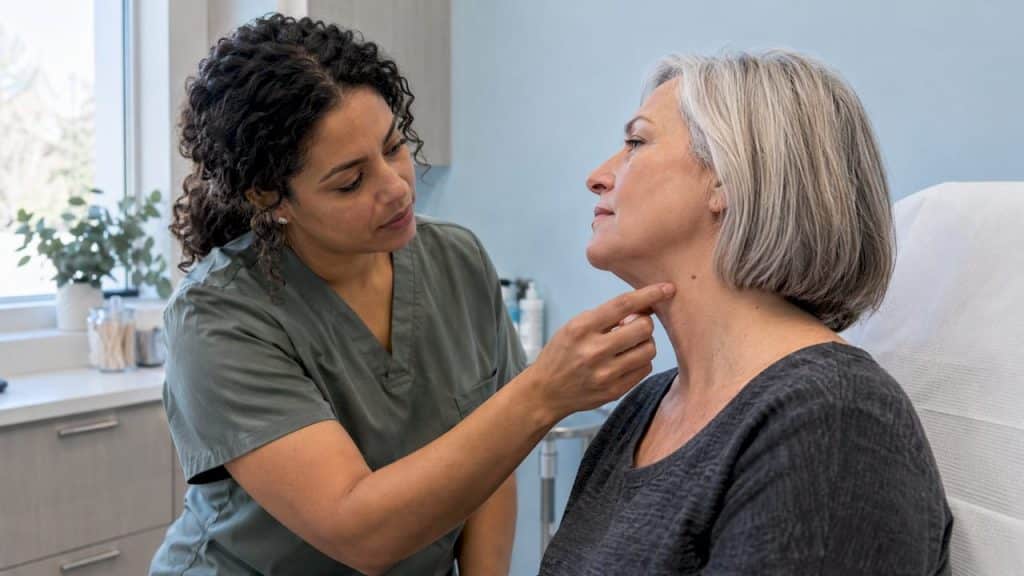
Skin tag removal in East Gwillimbury is priced by the number of tags, where they sit and the method used. It is almost always paid out of pocket, because Ontario’s public plan generally treats it as cosmetic. We don’t publish a fixed fee for skin tag removal, because the honest figure depends on a short assessment of what you have. This guide explains what moves the price, what a fair quote should include and when a growth should be looked at before anyone removes it. If you would like a quote, our skin tag removal service is the place to start.
TL;DR
- Cost depends on three things: how many tags you have, where they are (eyelids, neck and underarms need more care) and the removal method.
- OHIP generally does not cover cosmetic skin tag removal, so plan on paying privately. A tag that is painful, bleeding or irritated is a different conversation, best had with your doctor.
- A growth should be assessed before it is removed. Skin tags can be confused with warts, moles or, rarely, skin cancers.
- Home removal with clippers, lotions or wart remover can cause bleeding, infection and scarring.
- We assess first and quote after, so the price you hear matches the tags we have actually seen.
Table of Contents
- Why there is no single price for skin tag removal
- What changes the cost
- Does OHIP cover skin tag removal?
- Before any removal: is it really a skin tag?
- Why not do it at home?
- What a visit looks like
- Realistic expectations: results and recurrence
- How to compare quotes in East Gwillimbury, Newmarket and Vaughan
- Combining visits: when other treatments make sense
- Our perspective
- Book a skin tag assessment
- FAQ
- Sources
Why there is no single price for skin tag removal
Search for the cost of skin tag removal in Ontario and you will see numbers that range from a few dozen dollars for one small tag to several hundred dollars for a visit. That spread is real, and it is not a sign that someone is overcharging. It reflects different ways of pricing the same short procedure.
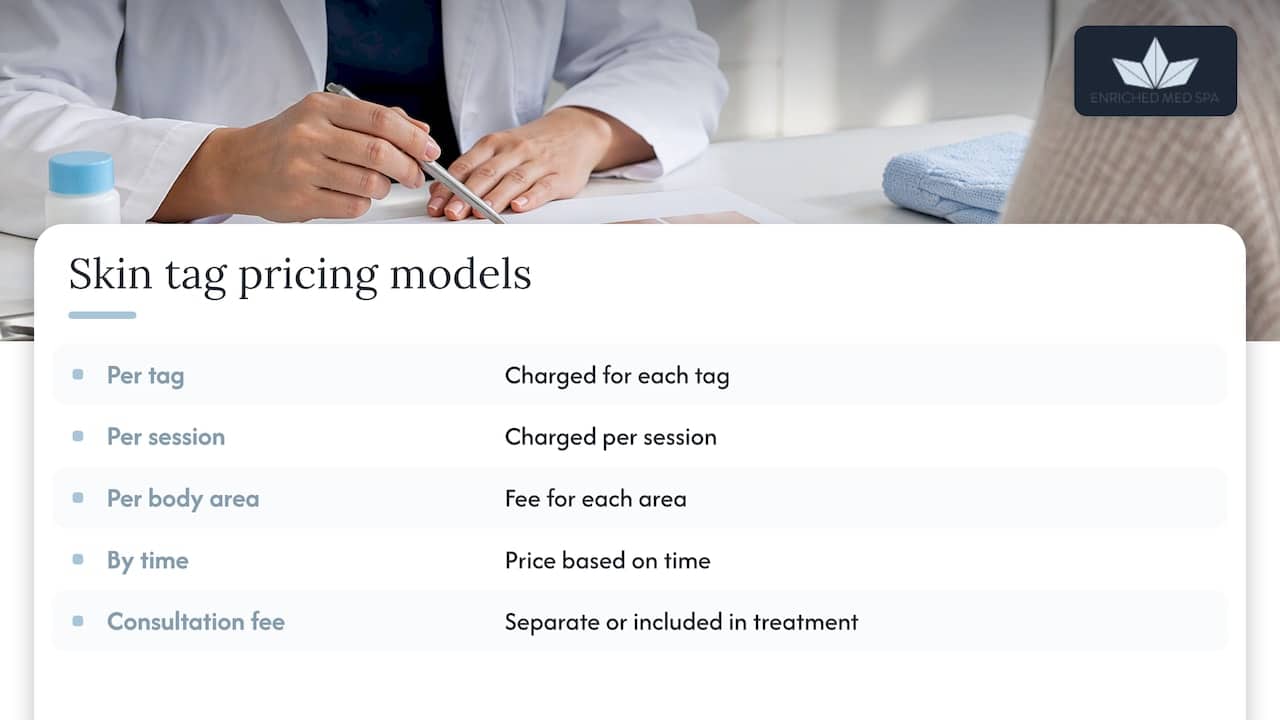
Some clinics charge per tag. Others charge per session, per body area or by time. A consultation fee may be separate, or it may be folded into the treatment. A quote that sounds low per tag can end up higher once you add a fee for each area, and a session price that sounds high can cover ten tags in one sitting.
That is why the useful question is not “what is the average cost?” but “what exactly does this price include?” We cover Canadian price ranges in more detail in our skin tag removal price guide for Canada. Below is how to read any quote you receive, ours included.
What changes the cost
The factors below are the ones that move a quote. Most clients come in with a mix of them, for example three small tags on the neck and one in the underarm that rubs against clothing.
Number of tags
This is the biggest driver. One tag is a quick visit. A cluster of ten takes longer, needs more numbing if the method calls for it and more aftercare for you. Many clinics price clusters differently from single tags, so ask whether the quote is per tag or for the whole session.
Location
Tags on the neck, underarms, groin folds and under the breasts are common because they form where skin rubs against skin or clothing. Tags on or near the eyelid need more care, because of how close they sit to the eye. The American Academy of Dermatology notes that a tag on the eyelid that affects eyesight is one of the situations where removal is warranted, and that is a case for your dermatologist or doctor rather than a quick cosmetic visit (American Academy of Dermatology).
Size and base
A small tag on a thin stalk is a very different job from a larger, thicker tag with a broad base. Larger tags may need a different technique and more time, and that is reflected in the price.
Removal method
The AAD describes three methods used in a clinical setting (AAD):
- Cryosurgery: the tag is frozen with liquid nitrogen, sometimes with snipping as well.
- Electrodesiccation: a fine needle delivers a small electric current, and the treated spot forms a scab that heals in roughly one to three weeks.
- Snip excision: the area is numbed, the tag is cut off with sterile scissors or a blade and a solution is applied to stop bleeding.
The method matters for more than price. Dr. Ben Barankin, a Toronto dermatologist, points out that liquid nitrogen is better suited to lighter skin, because it can cause scarring in people with darker complexions (Toronto Dermatology Centre). Your skin tone and the tag’s location should shape the method, not the other way around. For a walkthrough of the options, see our guide to skin tag removal methods in Canada.
Assessment and follow-up
A good quote makes clear whether the assessment is included, whether a touch-up visit is covered if a small piece remains and what aftercare you are given. These are the lines that make two similar prices very different in practice.
Does OHIP cover skin tag removal?
In most cases, no. Removal for cosmetic reasons is generally not covered by OHIP, though there can be exceptions where a tag causes pain or irritation or a health risk and is considered medically necessary (Hellosafe’s OHIP guide). The AAD makes the same point from the other side: insurance rarely pays for cosmetic removal (AAD).
If a tag is bleeding, painful or constantly irritated by a collar, bra strap or jewellery, speak to your family doctor first. They can tell you whether it falls into a medical category. If it is purely a matter of how it looks or feels, a private assessment is the practical route, and extended health benefits are worth checking, though they rarely cover this.
Before any removal: is it really a skin tag?
This is the part of the process we would not skip, whatever the price. Skin tags are small, soft, skin-coloured or slightly darker flaps of skin, usually on a thin stalk. They are harmless. But other growths can look similar at a glance.
Dr. Barankin advises getting a proper diagnosis before removal, since a tag can be mistaken for a wart or, rarely, a skin cancer. He lists a growth that looks different from your others, especially if it is darker and bleeding, as a warning sign (Toronto Dermatology Centre). HealthLink BC adds that skin tags are not moles and usually do not turn into cancer, and that moles should be checked by a doctor before anyone removes them (HealthLink BC).
In practice, that means:
- A mole, or anything dark, uneven, changing or bleeding: see your doctor or a dermatologist first.
- Many tags appearing suddenly: the AAD says this can signal an underlying problem and warrants a visit to a board-certified dermatologist (AAD).
- A rough, raised bump near a fingernail: this may be a wart rather than a tag, and the care is different. If that is your situation, this overview of periungual wart removal options explains timelines and safe care.
- A soft, painless flap on the neck, underarm or eyelid crease that has been there for a while: this is the typical skin tag, and a short assessment will usually confirm it.
Our assessment comes first for exactly this reason. We look at the growth, ask how long it has been there and whether it has changed, and tell you plainly if it should go to your doctor before anything else happens.
Why not do it at home?
It is tempting, especially when a tag is small and the quote feels like a lot for a two-minute procedure. But HealthLink BC warns that removing tags at home with clippers or lotions may cause bleeding, infection and scarring (HealthLink BC). The AAD specifically cautions that wart remover does not work on skin tags and can cause scarring or irritation (AAD).
The clinical difference is not just the tool. It is the identification beforehand, the sterile technique, the control of bleeding and the aftercare that follows. That is what your fee covers, and it is why the final mark tends to be cleaner.
What a visit looks like
We like clients to know what will happen before they arrive, because it calms most of the nerves. A typical visit follows this order:
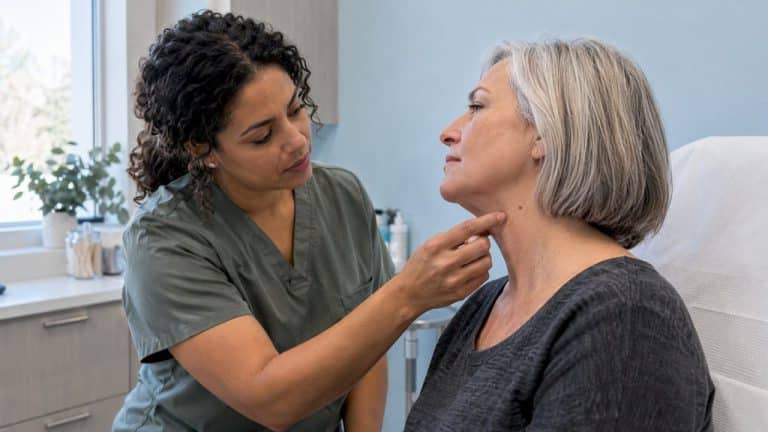
- Conversation and assessment. We ask how long the tags have been there, whether they have bled, caught on clothing or changed, and we look at each one.
- A recommendation. If the growths are suitable for removal, we explain the approach and what healing will look like. If something looks like it needs a doctor’s opinion, we tell you.
- A clear quote. You hear the price for the tags we have seen before you agree to anything.
- Removal. The procedure itself is brief for most tags.
- Aftercare. You leave knowing how to keep the area clean, what normal healing looks like and what should prompt a call.
The AAD notes that after electrodesiccation, for instance, a scab forms and heals in one to three weeks (AAD). Healing time varies with the method, the site and the person, so we set expectations for your skin specifically.
Realistic expectations: results and recurrence
Removal takes away the tags you have. It does not change the tendency to grow them. Dr. Barankin is direct about this: removal is not a cure, and you are likely to get more tags down the road (Toronto Dermatology Centre). Friction, skin folds and genetics all play a part.
That is useful to know when you compare prices. If you tend to grow tags, a clinic you can return to for a quick assessment is worth more than a one-off bargain. Many clients come back once or twice a year for a new tag or two, and an established relationship makes those visits simple.
How to compare quotes in East Gwillimbury, Newmarket and Vaughan
Bring the same questions to every clinic. The answers will tell you more than the headline number.
- Who assesses the growth, and what are their credentials? Ours is a team of experienced, nurse-level injectors and aestheticians, and we begin with a consultation.
- Is the price per tag, per area or per session?
- Is the assessment included or charged separately?
- What method will be used, and why is it right for your skin tone and the location?
- Is a follow-up included if something needs a touch-up?
- What aftercare will you receive?
- What happens if the growth is not a skin tag?
A clinic that answers these without hesitation is one you can trust with the next visit as well.
Combining visits: when other treatments make sense
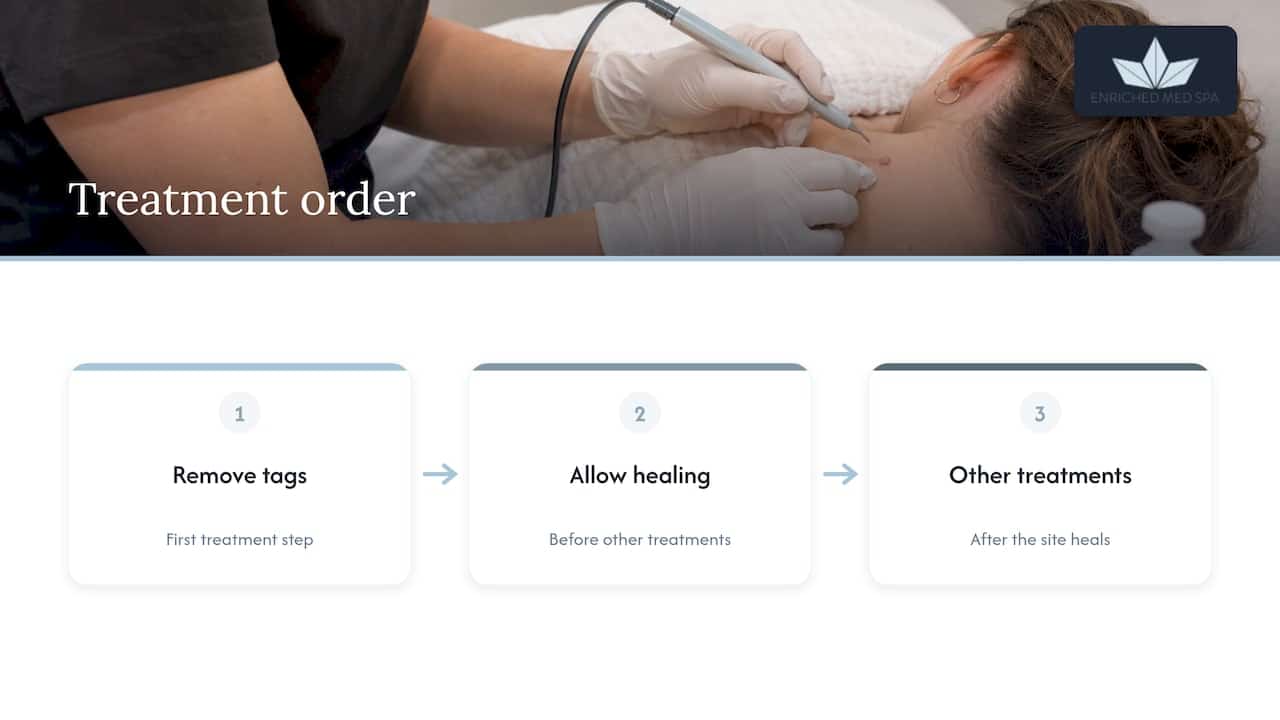
Some clients book skin tag removal alongside something else, because they are already thinking about their skin. This is usually a sensible conversation, as long as we take it in the right order. Tags are removed first and the area is allowed to heal before other treatments touch it.
If you are preparing for a wedding, a trip or a photoshoot, tell us the date at your assessment. Healing from tag removal is typically quick, but we would rather plan it with room to spare. Clients who are also thinking about texture or tone often look at microneedling, which we offer at $359 per session, or at our other skin treatments once the removal site has healed.
Our perspective
Most people who ask us about skin tag cost are really asking two things: “Is it safe?” and “Will I be surprised by the bill?” We think the answer to both starts with a proper look at the growth.
A fixed price list for skin tags can sound reassuring, but it skips the step that matters most. A tag on the underarm and a tag near the eyelid are not the same job, and a growth that is not a tag at all should never be priced as one. So we assess first, explain what we see in plain language, and quote what we have actually examined.
Our approach is built on a thorough consultation, clear aftercare guidance and treatment by experienced, nurse-level clinicians and aestheticians. That is what we mean by patient-first care. It means you leave knowing what was done, how to look after it and when to come back or see your doctor.
If you have a few tags that bother you, you do not need to wait until there are many. A short visit is easier on you and on your skin.
Felix
Book a skin tag assessment
If you are in East Gwillimbury, Newmarket, Aurora or Vaughan and want to know what your own tags would cost to remove, book through our skin tag removal page. We will look at what you have, talk through the method and give you a price before anything is done. You can also read about our East Gwillimbury and Newmarket clinic first.
FAQ
How much does it cost to have a skin tag taken off?
It depends on the number of tags, their location, their size and the method. Clinics across Ontario price per tag, per session or per area, so compare what is included rather than the headline figure. We quote after a short assessment so the price reflects the tags we have seen.
Is skin tag removal covered by OHIP?
Usually not. Cosmetic removal is generally excluded, with possible exceptions when a tag is painful, irritated or considered a health risk (Hellosafe). If a tag is bleeding or hurting, speak to your family doctor first.
Is it worth getting a skin tag removed?
Skin tags are harmless, so removal is a personal choice. The AAD says removal is medically needed if a tag becomes irritated or bleeds, sits on an eyelid and affects eyesight, or is painful (AAD). Many clients choose it simply because a tag catches on clothing or jewellery, or because they dislike how it looks.
How do you remove skin tags on the face?
Facial and eyelid tags call for extra care because of the delicate skin and the closeness to the eye. They should be assessed and removed by a trained professional rather than at home. HealthLink BC warns that home removal may cause bleeding, infection and scarring (HealthLink BC).
Can skin tags come back after removal?
The tag that was removed does not return, but new ones can form in the same or other areas. Dr. Barankin notes that removal is not a cure (Toronto Dermatology Centre). Reducing friction in skin folds can help, and a quick return visit handles any new tag.
Sources
- Skin tags: Why they develop, and how to remove them, American Academy of Dermatology
- Removing Moles and Skin Tags, HealthLink BC
- What are Skin Tags, Toronto Dermatology Centre
- All about OHIP: coverage list, how to apply, renew, Hellosafe
- Periungual wart removal: options, timelines and safe care