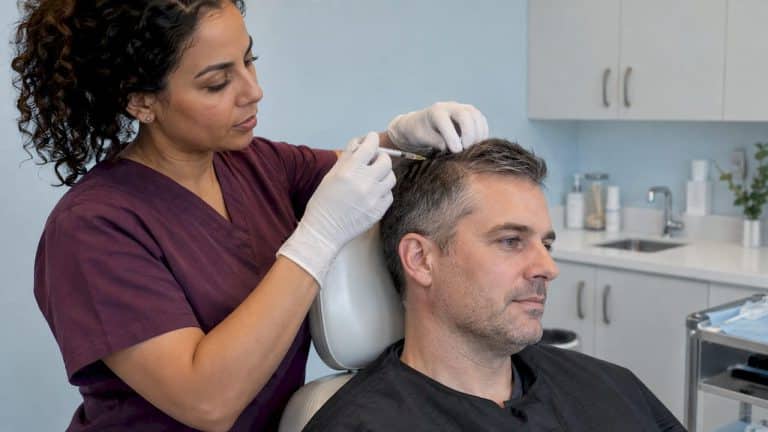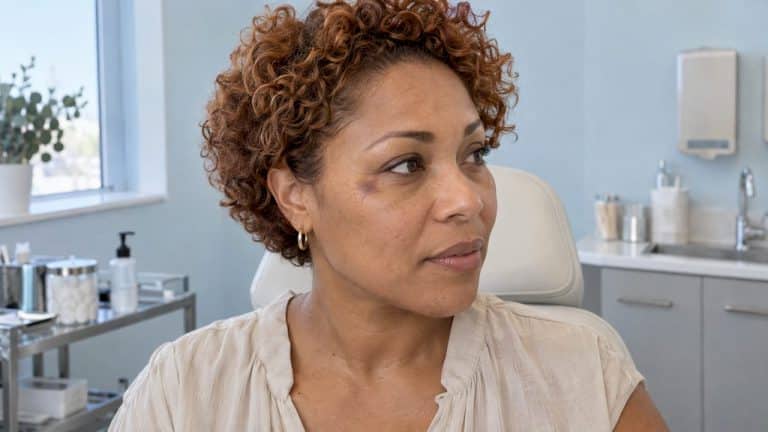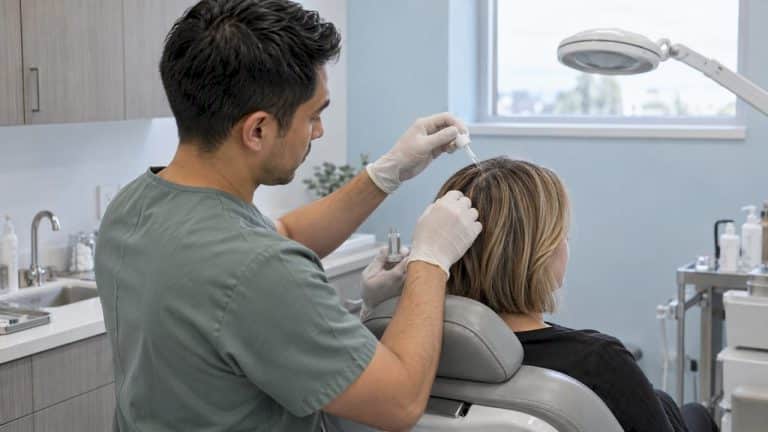
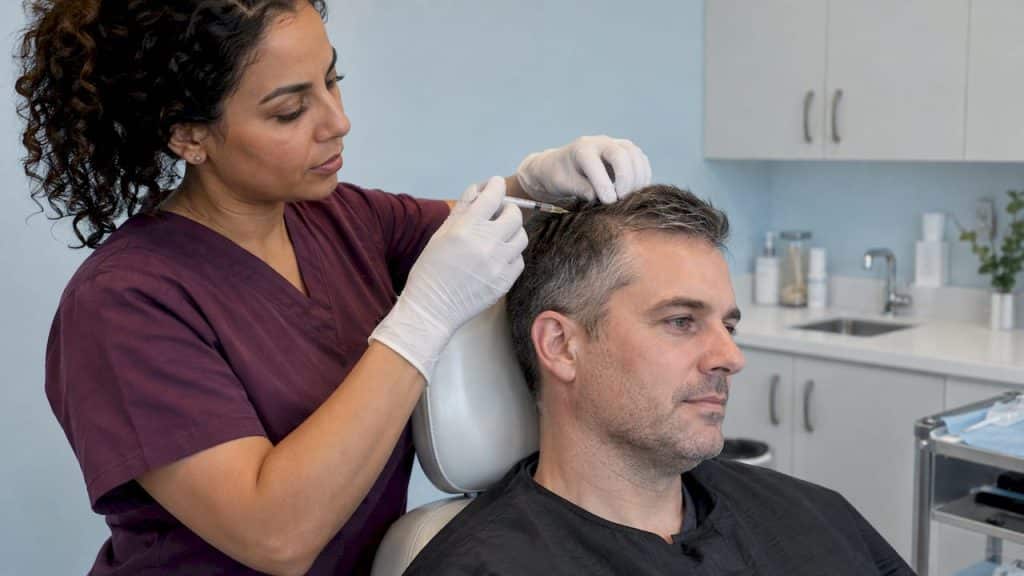
PRP hair treatment has a mild side effect profile. Across the clinical research, the usual effects are short-lived pain, redness, swelling, a little pinpoint bleeding and sometimes a headache, and most settle within a day or two. Serious complications were not reported in the major reviews. Because the treatment uses plasma from your own blood, allergic reactions are not the concern they are with many other injectables. What matters more is knowing which reactions are routine, which medications or conditions change your suitability, and which symptoms mean you should call your provider.
If you are considering PRP hair restoration in Woodbridge, Vaughan or East Gwillimbury, this guide walks through the effects in the order you would meet them: during the appointment, the first 24 hours, the first week and the first couple of months.
TL;DR
- The most commonly reported effects are mild and local: headache, scalp tightness, swelling, redness, bleeding and tingling, usually gone within 24 hours.
- Bruising can appear a little later, around 48 to 72 hours after treatment, and fades within a few days.
- A temporary increase in shedding is described in a small share of patients and has been reported to settle within weeks.
- Platelet disorders, anemia, bleeding disorders, active infection, pregnancy, cancer and recent anti-inflammatory use are the main reasons to talk to a clinician before booking.
- Fever, worsening pain or trouble breathing are not part of normal recovery and need prompt medical attention.
Table of Contents
- Why PRP is considered a low-risk treatment
- The common side effects, in plain terms
- How long do side effects last?
- Is an itchy or sore scalp normal afterwards?
- Temporary shedding: confusing, but usually short-lived
- What recovery looks like in practice
- Who should talk to a clinician first
- When to call your provider or get urgent care
- Where PRP fits among your options
- What we offer for hair restoration
- Our perspective
- FAQ
- Sources
Why PRP is considered a low-risk treatment
Platelet-rich plasma (PRP) is a concentrate of your own blood plasma, rich in platelets, the cells involved in healing. It is injected into the scalp to support thinning hair follicles. Because the plasma comes from you, a 2026 narrative review describes the treatment as free of the risk of allergic reaction, immune rejection or transmission of infectious disease that a donor product would carry. That is why most reported events are mild, brief and limited to the treated area.
The evidence behind that statement is reasonably broad. A 2024 meta-analysis of 14 randomized trials covering 431 patients with androgenetic alopecia (the common pattern of hair thinning, often called male or female pattern hair loss) found that no intolerable or high-risk adverse effects were reported, with short local pain the most common complaint. A 2022 review of 30 studies and 687 patients likewise reported no serious adverse events.
A low-risk treatment is still a medical procedure. Needles go through the skin, blood is drawn, and your own health history shapes how your body responds. If you would like a wider look at the overall risk profile, this overview of the safety of PRP for hair loss covers the topic from another angle.
The common side effects, in plain terms
Many clients ask the same question first: will this hurt, and will I look different afterwards? Here is what the studies describe.
- Pain or tenderness. The most frequent complaint. A 2026 retrospective study of 72 patients recorded a mean pain score of 3.88 out of 10 for the injections, which is moderate and brief. In a 2023 study of 30 men, pain affected 3 patients (11.1%) and was relieved with a single 500 mg dose of paracetamol.
- Redness and swelling. These come from the needle and the injected fluid. The same 72-patient study saw transient redness in 3 patients and localized swelling in 2, all resolving on their own.
- Itching. Mild itching is listed in most reviews. In the 2023 men’s study, itching affected 2 patients (7.4%) and settled spontaneously within a day.
- Headache and scalp tightness. A meta-analysis of 21 studies with 628 participants named headache, scalp tightness, swelling, redness, bleeding and tingling as the commonly reported effects, all mild and resolving within 24 hours.
- Pinpoint bleeding and bruising. Small spots of bleeding at injection sites are routine. A randomized placebo-controlled pilot study of 30 men reported swelling, redness, minor bleeding, hematoma (a small collection of blood under the skin) and pain, all fully reversible, with no serious adverse events in either group.
Two details are worth knowing. First, that same 21-study analysis found no significant difference in pain or discomfort between PRP and control groups, which suggests that part of what people feel comes from the injections themselves. Second, reviews of PRP trials found no major problems such as scarring, progressive worsening or infection in the 12 clinical trials examined.
How long do side effects last?
Timing is what most people really want to know, especially if they have a work week, a wedding or a photoshoot on the calendar.
| Effect | What the research reports | Typical window |
|---|---|---|
| Pain, redness, swelling, pinpoint bleeding, headache | Immediate effects after injection | Resolving within 24 hours |
| Injection-site tenderness, itching | Narrative review of 52 studies | 24 to 72 hours |
| Hematoma (bruise) | Arises later than the other effects | Appears at 48 to 72 hours, resolves by days 4 to 5 |
| Temporary hair shedding | Reported in a minority of patients | Seen at 2 to 4 weeks, settling by 4 to 6 weeks |
A 2022 review notes that patients can resume normal daily activities, need no antibiotics, and most can return to work the following day. Individual responses vary, so treat these as typical windows, not promises. A Canadian patient information sheet adds that pain, bruising and swelling get better over time, while visible hair improvement takes weeks to months. If you are planning around an event, book with that in mind and ask your provider how much buffer to leave. Our guide on how long PRP lasts for hair covers the longer timeline.
Is an itchy or sore scalp normal afterwards?
Yes, in the first day or two. The scalp has just had a series of small injections, and some tenderness, tightness and mild itching are part of how it responds. In the studies above, itching was brief and settled on its own, and tenderness cleared within 24 to 72 hours.
What tends to be a good sign is a pattern that improves each day. What deserves a call to your provider is the opposite: pain or itching that grows, spreads or does not ease after the first few days. Avoid scratching, since broken skin is the one way a minor reaction can turn into something that needs treatment. A 2026 study of 72 patients did record one case of scalp dermatitis, which resolved spontaneously, so a rash-like, irritated scalp is worth mentioning to your provider even when it is mild.
Temporary shedding: confusing, but usually short-lived
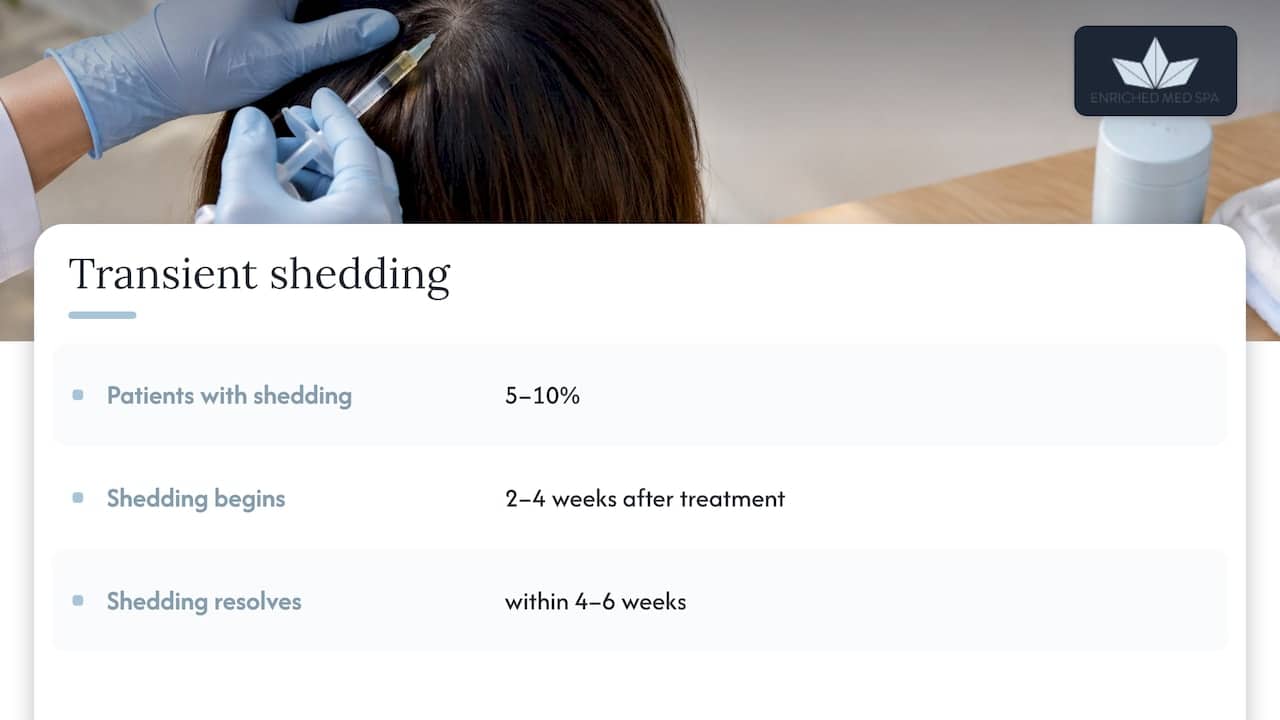
Some people notice more hairs in the brush a few weeks after a session and worry the treatment has backfired. A narrative review citing one study reported transient shedding in 5 to 10% of patients at 2 to 4 weeks, resolving within 4 to 6 weeks. Shedding of this kind is generally described as temporary. It is still worth telling your provider if it happens, so they can follow your progress and compare it with the hair growth you are aiming for.
Many clients come in expecting results to be visible within days. Hair grows slowly, and PRP is usually given as a series, so the first weeks are better judged by how your scalp feels than by how your hair looks.
What recovery looks like in practice
Recovery from PRP for hair is quiet. You can usually carry on with your day, and the main task is to avoid irritating the scalp while the small injection sites close. Specific aftercare differs between clinics and between patients, so follow the written instructions you are given for your own treatment. Questions to settle at your consultation include:
- When you can wash your hair for the first time, and what to use.
- How long to avoid hard exercise, heat and direct sun on the scalp.
- Whether you can take an over-the-counter pain reliever, and which one. The 2023 men’s study used paracetamol, and the 2022 review lists recent NSAID use as a relative contraindication, so ask before you reach for ibuprofen or similar anti-inflammatory drugs.
- When to book your next session and when to take photos for comparison.
Enriched Med Spa’s approach to care includes a full consultation and pre- and post-treatment guidance, so you leave knowing what to do and what to watch for.
Who should talk to a clinician first
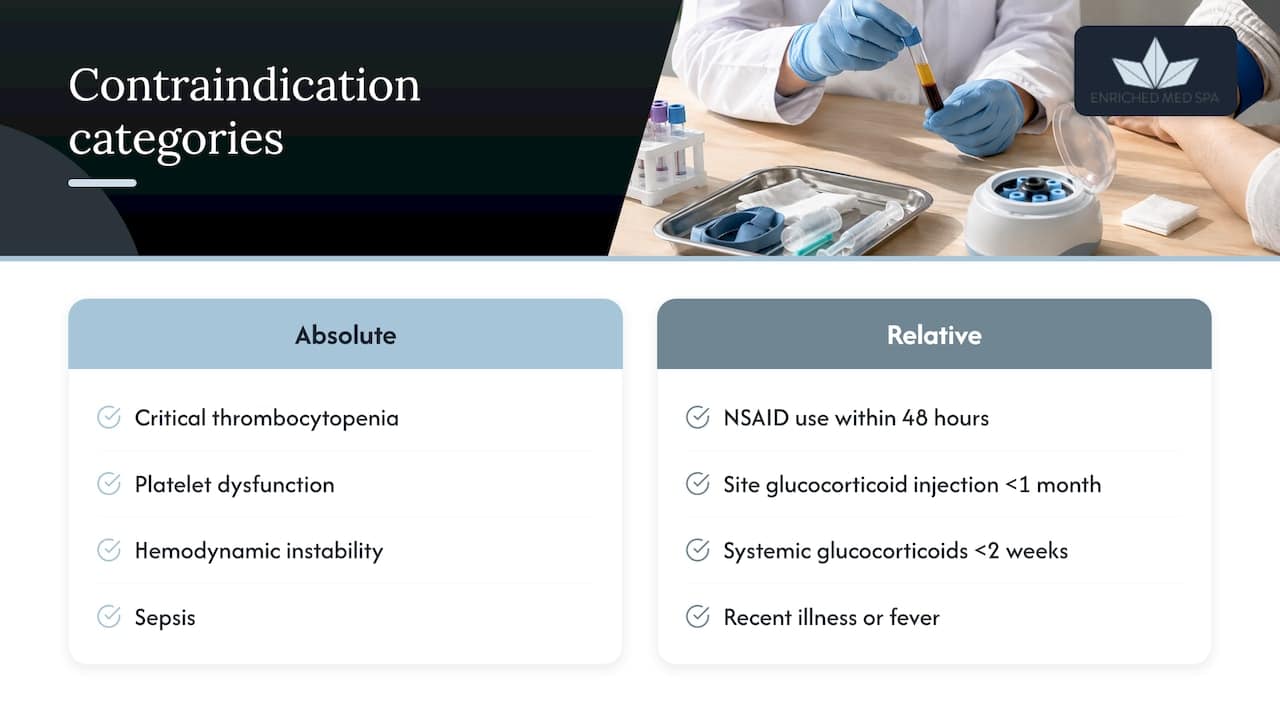
Most healthy adults tolerate PRP well, but a few situations change the picture. The 2022 review separates them into absolute and relative contraindications.
Absolute contraindications (PRP is not appropriate) include critical thrombocytopenia (very low platelet count), platelet dysfunction, hemodynamic instability, sepsis and local infection at the treatment site.
Relative contraindications (to be weighed with a clinician) include NSAID use within 48 hours, a glucocorticoid injection at the site within one month, systemic glucocorticoids within two weeks, recent illness or fever, cancer, anemia with hemoglobin below 10 g/dL, platelets below 150,000 per microlitre, and tobacco use.
A 2023 peer-reviewed review adds that PRP should be avoided in people with malignancy, platelet disorders, anemia, bleeding disorders, pregnancy or a compromised immune system. It also notes that the overall risk of adverse effects is small, with infection the main one to guard against.
If any of this describes you, speak with your family doctor or the specialist who manages your condition before booking, and bring that guidance to your consultation. If you take blood thinners, tell your provider at the first conversation. Hair thinning after pregnancy is a common reason to look into PRP, and timing matters there, so see our guide on PRP for postpartum hair loss.
When to call your provider or get urgent care
The reactions above are expected and short. These are not:
- A fever of 38°C (100.4°F) or higher, or symptoms that do not improve. A Canadian health sheet advises contacting your provider in these cases.
- Pain, heat, spreading redness or discharge at the injection sites, which can signal infection.
- Trouble breathing, trouble swallowing or loss of consciousness. The same sheet says to call 911.
When in doubt, call. A quick check costs you very little.
Where PRP fits among your options
PRP is one of several approaches to hair thinning, and a Canadian expert consensus of 11 physicians included it among seven recommended interventions for androgenetic alopecia while noting that Canada has no single set of formal guidelines for managing it. Who benefits most, and what results to expect, depends on the cause of your thinning. Our article on PRP for female hair loss goes through who qualifies, and Exosome Hair Therapy explains a related option we offer.
What we offer for hair restoration
Enriched Med Spa offers PRP Hair Restoration at $800 and DERIVE Exosomes Hair Restoration at $950, both on our hair restoration page. Treatments are performed by experienced nurse-level injectors and aestheticians, and we begin with a consultation so your history, medications and goals are reviewed before anything is booked. For cost context across Canada, see what PRP hair restoration really costs.
Our perspective
Most of the worry we hear about PRP comes from one question: will my scalp be fine afterwards? The research is reassuring. The effects are mild, local and brief, and the questions that matter most are the ones asked before the appointment: your medications, your blood work, your health history.
That is why we put the consultation first. Many clients come in noticing thinning at the part or a wider shed in the brush, and they want a straight answer about timelines and upkeep. We would rather set realistic expectations early than have you discover them halfway through a series. Hair takes months to respond, and a quiet scalp in week one tells you nothing about the result in month six.
Our goal is a treatment you feel informed about and cared for through, with clear pre- and post-care guidance and a team you can call if something feels off.
Felix
FAQ
Is PRP for hair safe?
For most healthy adults, the clinical research describes it as low-risk. Reviews of randomized trials report mild, temporary local effects and no serious adverse events. Your own health history still matters, so share your medications and conditions at your consultation.
How long does the scalp feel sore after PRP?
Tenderness, redness and swelling usually settle within 24 to 72 hours. A bruise can show up around two to three days in and typically fades by day four or five. If soreness is getting worse instead of better, contact your provider.
Can PRP make my hair fall out?
A temporary increase in shedding has been reported in a small share of patients, appearing around two to four weeks after treatment and settling within about four to six weeks. It is not a sign that treatment has failed. Tell your provider if you notice it so it can be tracked.
Can I take ibuprofen after PRP?
Ask before you do. A 2022 review lists NSAID use within 48 hours as a relative contraindication, and the 2023 men’s study used paracetamol for discomfort. Your provider can tell you which pain reliever suits you.
Who should not have PRP for hair loss?
People with platelet disorders, bleeding disorders, anemia, active infection at the treatment site, cancer, pregnancy or a weakened immune system should speak with their doctor first. Tobacco use and recent steroid or anti-inflammatory medication also matter.
Sources
- Effectiveness of platelet-rich plasma in treating female hair loss, meta-analysis (2024)
- Platelet Rich Plasma and Its Use in Hair Regrowth: A Review (2022)
- Is autologous platelet-rich plasma capable of increasing hair density? Meta-analysis (2024)
- Platelet-rich Plasma for Androgenetic Alopecia Treatment: pilot study (2020)
- Systematic Review of Platelet-Rich Plasma Use in hair loss (2020)
- Efficacy of Platelet-Rich Plasma in Males With Androgenetic Alopecia (2023)
- Efficacy of Oxygen-Enriched Platelet-Rich Plasma, Journal of Cosmetic Dermatology
- Therapeutic Efficacy and Safety of Platelet-Rich Plasma, narrative review (2026)
- Platelet-rich plasma as a therapy for androgenic alopecia: systematic review and meta-analysis (2022)
- Treatment of androgenetic alopecia: current guidance and unmet needs, CCID (2023)
- Platelet-Rich Plasma for Hair Loss, patient health sheet
- A Canadian Consensus on Androgenetic Alopecia