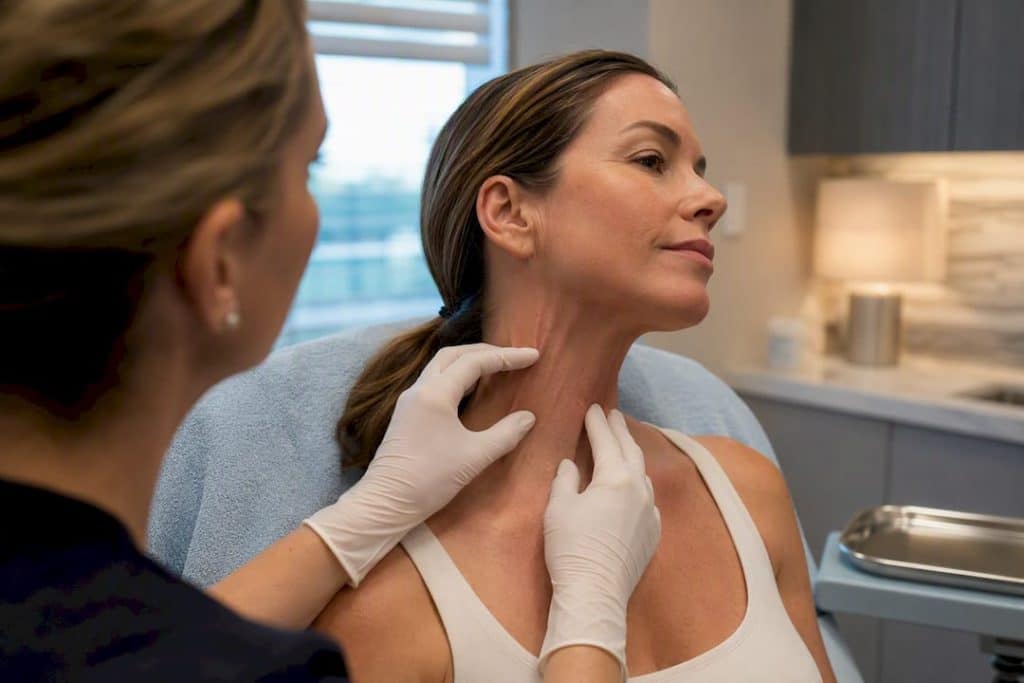
Yes, Botox works for vertical neck bands, but only the dynamic kind. When the platysma muscle contracts and pulls those cords into view, onabotulinumtoxinA relaxes that contraction and softens their appearance within days. Most people see visible change by about two weeks, with results typically lasting several months. The main caveat: this only works when an experienced injector understands neck anatomy, since the treatment area sits close to muscles involved in swallowing.
TL;DR:
- Botox effectively softens dynamic neck bands by relaxing the platysma muscle, with visible results typically appearing within two weeks and lasting several months.
- Success depends on the injector’s expertise in neck anatomy, especially to avoid affecting muscles responsible for swallowing, with doses usually ranging from 40 to 100 units.
- The treatment works best for bands that appear or worsen with neck tension and are not solely caused by skin laxity or deep wrinkles.
- Botox cannot tighten loose skin or treat static bands caused by skin aging, often requiring additional skin tightening or filler procedures.
- A conservative approach with a thorough consultation can help determine whether muscle activity or skin laxity drives your neck appearance and guide appropriate treatment options.
Table of Contents
- What are platysmal neck bands, and will Botox treat yours?
- How does neck Botox work, and what does the research actually show?
- Are you a good candidate for Botox on your neck?
- What happens during treatment, and when will you see results?
- When does Botox alone fall short for neck rejuvenation?
- What we see in the clinic with neck band treatment
- Ready to talk to someone about your neck bands?
- Sources
- FAQ
What are platysmal neck bands, and will Botox treat yours?
The platysma is a thin, sheet-like muscle running from your collarbone up to your jawline. As it ages, it can separate into distinct vertical strands, and every time you clench your jaw, grimace, or even talk, those strands tighten into visible cords. That is a dynamic band. A static band, by contrast, sits there whether your neck is relaxed or not, usually because the skin itself has lost elasticity rather than because the muscle is overactive.
We can tell you which one you have with a simple self-check: stand in front of a mirror, tense your neck as if you are bracing for a photo, and watch what happens.
- Bands appear or worsen with tension, then soften at rest: this points to dynamic bands driven by platysma activity, and it is the pattern Botox treats.
- Bands are visible even with your neck completely relaxed: this suggests skin laxity is playing a bigger role, and neuromodulators alone will not resolve it.
- You see a mix of both: common as people move into their 40s and 50s, and it usually calls for a combination approach rather than Botox on its own.
Genetics, sun exposure, and simple repetition (years of the same expressions) all factor into how early and how visibly these bands show up.
How does neck Botox work, and what does the research actually show?
Botox works on platysmal bands the same way it works on forehead lines: it blocks the nerve signal that tells the muscle to contract. With the platysma relaxed, the vertical cords it was pulling taut simply stop showing, and the jawline often looks cleaner as a side effect, an effect sometimes marketed separately as a Nefertiti lift.
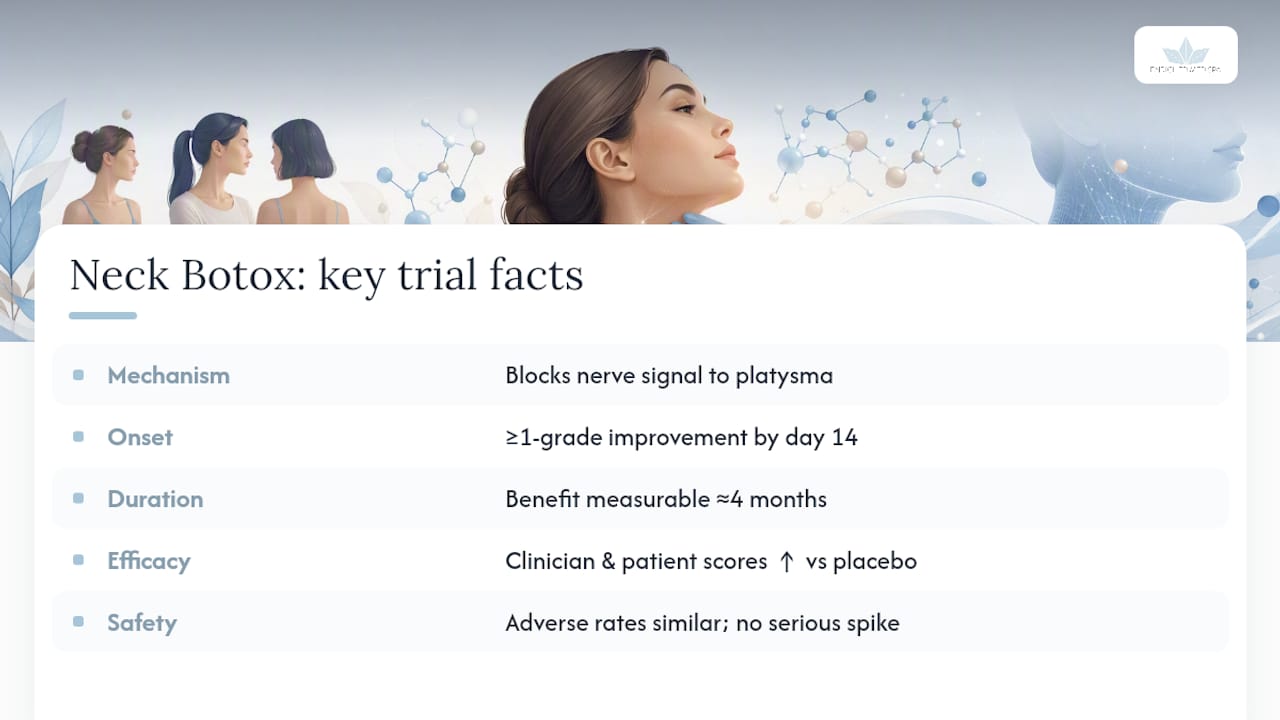
The clinical evidence behind this is stronger than most people expect for a cosmetic treatment. A phase 3 randomized study of onabotulinumtoxinA found that a large majority of treated participants showed at least a one-grade improvement in platysma prominence by day 14, a statistically significant difference from placebo. That benefit remained measurable through about four months.
Pooled trial data across multiple randomized controlled studies shows a consistent pattern: onabotulinumtoxinA significantly raises both clinician-rated and patient-rated improvement scores compared with placebo, with adverse event rates that stay similar between groups.
A systematic review and meta-analysis of pooled trials backs this up, finding significant gains in both one-grade and two-grade improvement scales, plus higher patient satisfaction scores, without a corresponding spike in serious side effects.
What the data does not claim matters just as much. These trials measured muscle-driven banding, not sagging skin or deep textural changes. If your neck concern is loose skin rather than cords that pop with movement, this evidence does not apply to your situation the same way.
Are you a good candidate for Botox on your neck?
Good candidates tend to share a specific profile: visible platysmal bands that intensify with muscle tension, reasonably elastic skin, and no significant loose or crepey skin at rest. If your neck shows heavy skin laxity as the dominant issue, Botox alone will likely disappoint you, since it cannot tighten skin that has already lost structural support.
Side effects fall into two very different categories, and it is worth understanding both before you book. Temporary bruising, tenderness, and mild swelling at injection sites are common and resolve on their own within days, according to Health Canada’s guidance on cosmetic injections. Serious events, including difficulty swallowing or changes in voice, are rare, and Health Canada links them to injection depth and technique rather than the medication itself.
Before you commit to treatment, ask your injector these questions:
- How many neck band cases have you treated, and what results do your patients typically see?
- How do you approach my specific anatomy, and where exactly will injections be placed?
- What unit range are you estimating for my bands, and why?
- What steps do you take to avoid affecting my swallowing muscles?
- What is your plan if I need a touch-up at two weeks?
Pro Tip: Bring a photo of your neck from ten years ago if you have one. Comparing it to your current profile helps your injector quickly separate genuine muscle banding from age-related skin change, and it speeds up the consultation considerably.
What happens during treatment, and when will you see results?
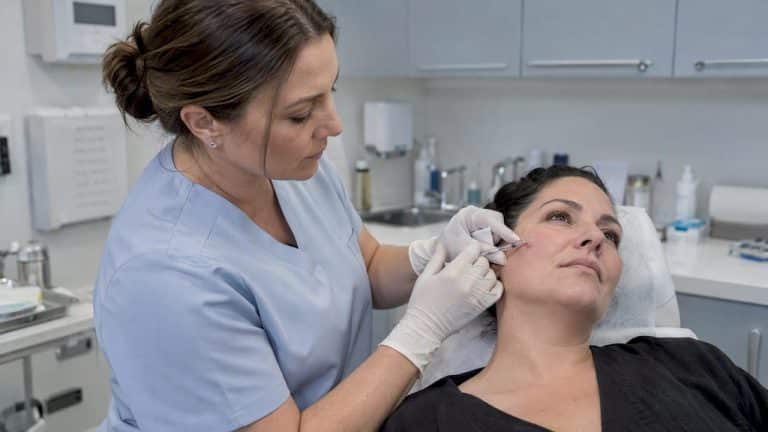
A typical appointment starts with your injector asking you to tense your neck so they can map exactly which bands are active. Injectors commonly grasp and gently pull the platysma band away from deeper neck structures before injecting, a technique described in published injection technique recommendations, and injections stay superficial and at least one finger breadth below the jawline to protect swallowing muscles.
Unit counts vary by how many bands you have and how pronounced they are. Practice-level reporting describes total doses commonly falling within a range often used in clinical practice, delivered in small increments spaced along each band. Your injector will individualize this based on what they see when you tense your neck, not a fixed formula.
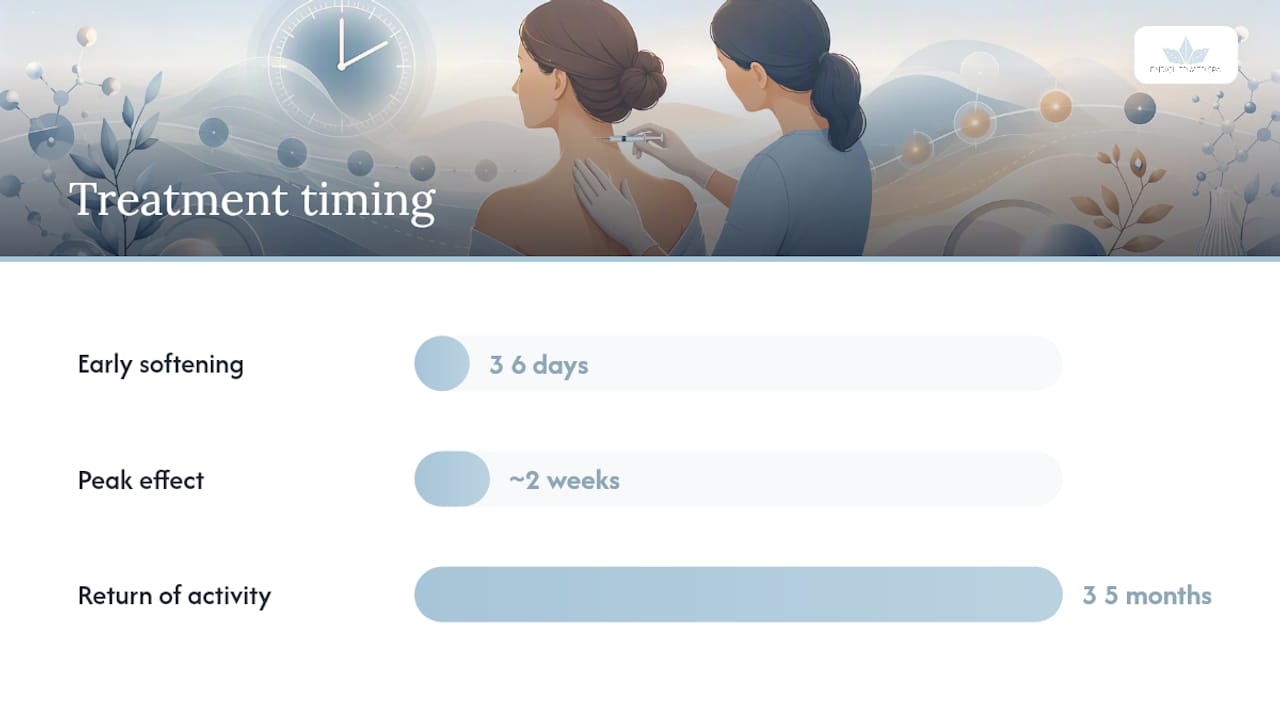
- Days 3 to 7: early softening usually starts to show.
- Around two weeks: peak effect, and the point where most people decide whether they need a touch-up.
- Three to five months: typical duration before the muscle regains full activity, based on patient-reported timelines from reviewed patient experiences and consistent with trial follow-up data.
Aftercare is simple: avoid lying flat or massaging the treated area for a few hours, skip intense exercise the day of treatment, and contact your clinic if you notice swallowing difficulty or unusual voice changes. Our Botox aftercare guide covers this in more detail, and if you want a deeper look at timing expectations, see how soon you’ll notice results after any Botox treatment.
When does Botox alone fall short for neck rejuvenation?
Botox relaxes muscle contraction. It does not tighten loose skin, and it will not resolve deep texture or crepiness that comes from years of collagen loss. If your consultation reveals static bands or significant skin laxity alongside your dynamic cords, a combined plan usually gets you a more natural-looking result than Botox on its own.
Clinical guidance generally points toward pairing neurotoxin treatment with modalities built for skin structure, and it recommends non-toxin approaches for cases where skin laxity, not muscle activity, is the primary driver. Common combinations include:
- Radiofrequency skin tightening: addresses loose skin texture that Botox cannot touch.
- Dermal fillers along the jawline: restore contour and definition, particularly useful when jawline volume loss compounds the appearance of neck bands.
- Resurfacing treatments: target surface texture and fine lines rather than muscle-driven banding.
People in their late 40s through 60s are the ones who most often benefit from this layered approach, since skin laxity and muscle banding tend to show up together at that stage. If skin tightening is part of your picture, our guide to smoother, more youthful-looking skin walks through what those options actually involve.
What we see in the clinic with neck band treatment
Many clients come to us noticing neck bands only after a photo catches them mid-conversation, cords visible in a way they never noticed in the mirror. That gap between how you look at rest and how you look while talking is exactly the dynamic pattern Botox is built for, and it is usually the first thing we check during a consultation.
Our approach leans conservative. A lower starting dose with a planned two-week follow-up almost always beats an aggressive first treatment, particularly in an area with muscles tied to swallowing and posture. If the effect needs reinforcing, we adjust at the follow-up rather than overtreating from the start. That measured approach, paired with an honest conversation about whether skin laxity is part of your picture, tends to produce results that look like your neck relaxed, not like it was treated.
— Felix
Ready to talk to someone about your neck bands?
If you have been staring at your neck in bad lighting wondering whether it is worth bringing up at your next appointment, that conversation is exactly what a consultation is for. We assess whether your bands are dynamic, static, or a mix of both, then build a plan around what your neck actually needs rather than a one-size dose. For patients whose concerns extend beyond muscle activity into skin quality, we can also walk you through options like radiofrequency tightening or fillers in the same visit, so you are not left guessing which treatment addresses which problem.
A good starting point is our guide to medical aesthetics, which outlines how we approach treatment planning before you ever sit in the chair. If neck bands are your primary concern, book a consultation with our team and we will map out your anatomy, discuss realistic timelines, and give you a straightforward unit estimate before you commit to anything. For general background on Botox timing expectations, Starboard Dental’s overview offers a useful patient-facing comparison point.
This article is general information, not a substitute for advice from a qualified doctor. Consult a qualified healthcare professional about your own circumstances before acting on anything here.
Sources
- Improving neck and jawline aesthetics with onabotulinumtoxinA: phase 3 randomized study (source provided)
- Health Canada: cosmetic injections guidance
- Meta‑analysis: efficacy and safety of onabotulinumtoxinA for platysma prominence
FAQ
Does Botox actually work for neck bands?
Yes, for dynamic platysmal bands.
What is the riskiest injection site for neck Botox?
The area closest to the jawline carries the most risk, since injecting too deep or too close to the mandible can affect muscles involved in swallowing. Experienced injectors stay superficial and keep injections at least one finger breadth below the jawbone to avoid this.
How long does Botox last in platysmal bands?
Most patients see results last several months before the muscle regains full activity, though individual duration varies based on dose and muscle strength.
How many units of Botox treat neck bands?
Total dosing commonly falls between 40 and 100 units depending on how many bands are present and how pronounced they are, delivered in small increments spaced along each band rather than as one large injection.