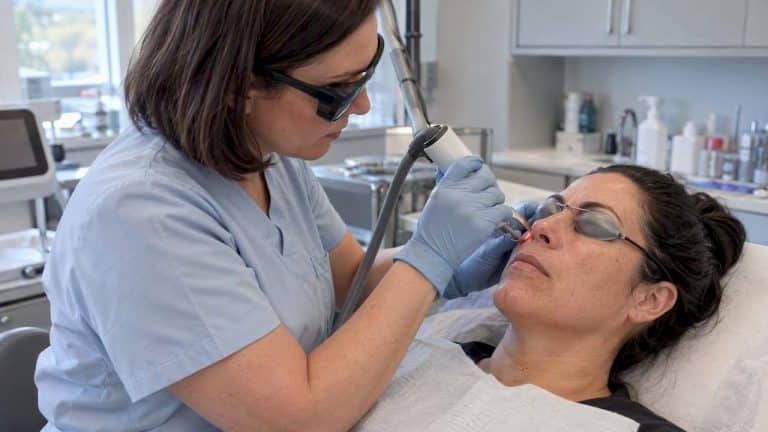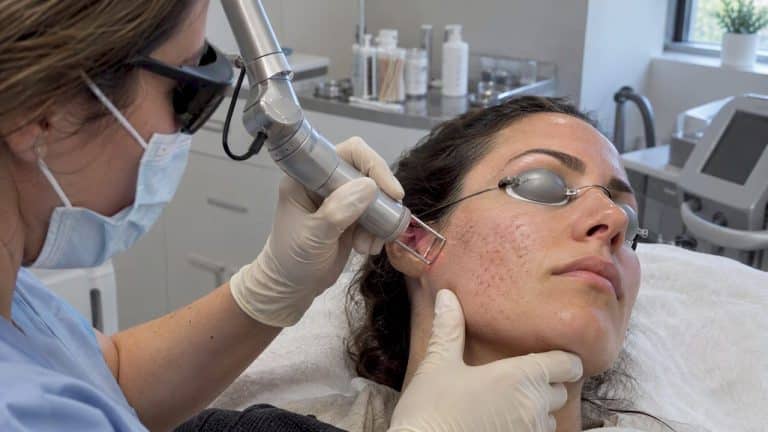
Laser and light-based treatments, such as pulsed dye laser, KTP, Nd:YAG and IPL, are the usual and effective approaches for facial spider veins. Most people need a few sessions spaced four to six weeks apart, and results depend on vessel size and cause. Choose a licensed clinician experienced with vascular devices, because cooling and device choice matter as much as the laser itself.
TL;DR:
- Small red vessels may clear in one to three sessions; larger veins or networks need more, with visits spaced four to six weeks apart.
- One trial found pulsed dye laser reduced vessels more than IPL, while KTP suits superficial red vessels and Nd:YAG reaches deeper veins.
- Choose a licensed clinician trained in vascular lasers, and ask about wavelength, cooling, device maintenance, and a patch test if you have darker skin.
- Treated vessels fade over several weeks, but rosacea and sun exposure can contribute to new ones, so protect skin from sunlight and plan for maintenance.
Table of Contents
- What are facial spider veins and why do they appear?
- Which treatments remove spider veins on the face?
- How many sessions will you need?
- How do clinics keep laser treatment safe?
- What should aftercare look like?
- What should you ask before booking?
- Why we favour gradual, conservative results
- How we approach spider vein reduction
- FAQ
- Sources
What are facial spider veins and why do they appear?
Facial spider veins, or telangiectasias, are small, dilated blood vessels near the skin surface. Health Canada notes they typically measure 0.1 to 1.0 mm in diameter. They are mainly a cosmetic concern, though they can be associated with conditions such as chronic rosacea, so knowing the cause helps predict recurrence.
Common contributors include:
- Genetics and family history
- Sun damage over the years
- Rosacea and persistent flushing
- Temperature extremes and wind exposure
- Skin trauma, including aggressive scrubbing
- Pregnancy and hormonal shifts
- Liver disease, in some cases
The pattern you see matters. A single fine line on the side of the nose is usually simple to treat. A branching network, or diffuse redness across the cheeks, tends to need more sessions and a different device setting. When clients show us a photo and say “it’s just one vein,” we often find a faint network around it once we look closely.
Which treatments remove spider veins on the face?
Nearly every modern option rests on selective photothermolysis. Clinical research describes the principle: light is absorbed by haemoglobin in the vessel, which heats and closes it without harming the surrounding skin. Your body then clears the treated vessel over the following weeks.
The main options are:
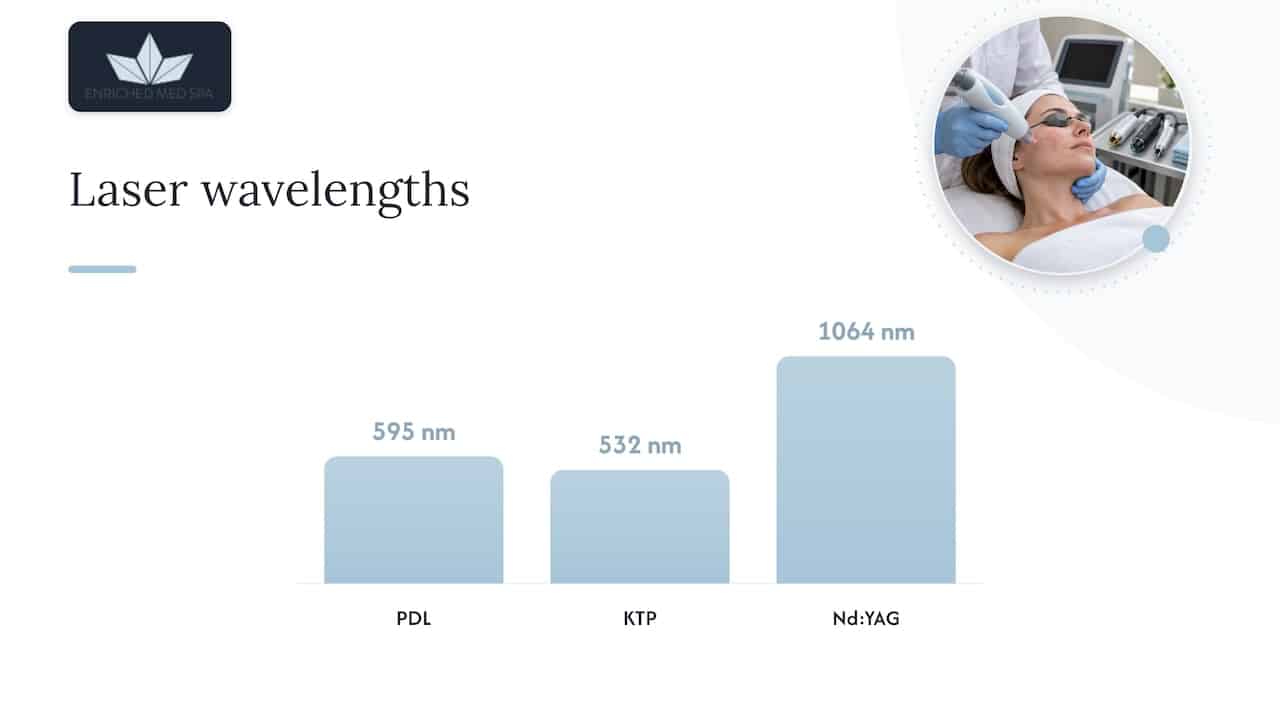
- Pulsed dye laser (PDL, about 595 nm): The longest track record for facial telangiectasia, with good clearance across many studies. A randomized split-face trial found a long-pulsed dye laser was superior to IPL in overall reduction, though both worked.
- KTP (532 nm): Suited to superficial red vessels.
- Nd:YAG (1064 nm): Penetrates deeper, so it is often chosen for larger or blue-tinged veins, as DermNet describes.
- IPL with a vascular filter: A prospective study of IPL with a KTP/PDL-like filter found significant improvement in facial telangiectasias, so some configurations perform well. We also explain how IPL works for colour concerns in our IPL photofacial guide.
- Thermolysis (electrosurgery): An older approach occasionally used for isolated tiny vessels, and less common today.
Whichever device is used, operator skill decides the outcome. Wavelength, pulse duration and energy all have to match the vessel size and your skin tone.
Pro Tip: Ask which wavelength your clinician plans to use and why it suits your vessels. A clear, specific answer is a good sign.
How many sessions will you need?
Small red vessels often respond within one to three sessions, while larger veins or extensive networks may need more, according to published studies. Sessions are usually spaced four to six weeks apart, according to published guidance, so the full course takes a couple of months.
Here is a realistic picture:
- Right after treatment, you may notice blanching of the vessel, mild redness, swelling or bruising.
- Over the next few weeks, treated vessels fade gradually as your body absorbs them.
- Each session builds on the last, so improvement is progressive rather than instant.
- New vessels can appear later, particularly with rosacea or sun exposure, so yearly touch-ups are common.
One sample, two sessions: In one retrospective study, PDL and optimized IPL achieved marked improvement or near-complete clearance in over 95% of patients after two sessions. That is one study’s sample, so treat it as encouraging, not a promise for your skin.
How do clinics keep laser treatment safe?
Health Canada advises choosing a licensed healthcare professional trained in laser procedures. This helps manage risks such as bruising, swelling and, rarely, burns. Most patients report only mild discomfort and minimal downtime.
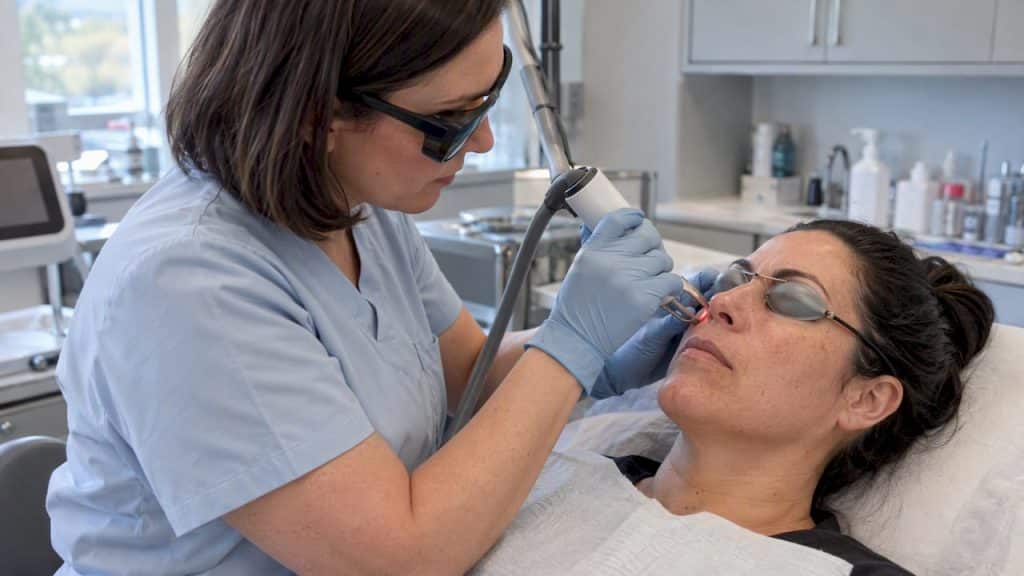
Many dermatology lasers are powerful devices, so a well-run clinic works in a controlled treatment area with protective eyewear and fire-safety measures. Cooling matters too. Cryogen spray, contact cooling or air cooling protects the skin surface, and weak cooling raises the risk of burns at higher energy settings. If your skin is darker, a patch test lowers the chance of pigment change, because settings must be matched carefully to your skin type.
A good clinic should be able to show you:
- The operator’s training in vascular lasers
- How the device is calibrated and maintained
- Which cooling method it uses
- Its protocol if something goes wrong
Pro Tip: Book a consultation before committing to treatment. A good clinician will assess your skin type and explain the device settings in plain language.
What should aftercare look like?
Aftercare is simple, and following it protects your results. For the first days:
- Apply cold compresses if the area feels warm or swollen.
- Avoid direct sun and tanning, and wear a broad-spectrum SPF daily.
- Use gentle cleansers and a plain moisturizer.
- Ask your clinician which activities to avoid after treatment and for how long.
On makeup, wait until any redness or tenderness settles, and apply it gently with clean tools. Our guide on wearing makeup after a facial covers the same principles, and our laser aftercare advice explains how to avoid burns and pigment changes.
Contact your clinic if you notice increasing pain, blistering, or pigment change that persists or spreads. Seek immediate medical care if you notice increasing pain, blistering, or pigment change that persists or spreads.
What should you ask before booking?
Bring this checklist to any consultation:
- Will you assess my skin phototype, and which device and wavelength do you recommend?
- What cooling method do you use, and who performs the treatment?
- Can I see before-and-after photos of similar veins?
- How many sessions, how much downtime and what follow-up should I expect?
- How do you manage adverse events, and what maintenance should I plan for?
Treat a promise of a single, guaranteed cure as a red flag. So is a clinic with no visible safety protocols or no real before-and-after evidence.
Why we favour gradual, conservative results
Many clients come to us wanting a natural-looking improvement around the nose and cheeks, not a dramatic change. We prioritize conservative, safety-first settings and gradual progress, and we set expectations early, including how results will be documented. Maintenance is a normal part of long-term vein management, not a sign that treatment failed.
— Felix
How we approach spider vein reduction
We offer vascular lesion, redness and spider vein reduction among our medical-grade services. A consultation covers your assessment, the device options that suit your veins, the expected number of sessions and your aftercare plan. You can see our full range on our services page, and current pricing details are on our website. At your visit, we:
- Look at your vessel pattern and skin type together
- Explain which settings we would use and why
- Map out sessions, spacing and maintenance
When you are ready, book a consultation through our services page and we will plan your next step with you.
This article is general information, not a substitute for advice from a qualified doctor. Consult a qualified healthcare professional about your own circumstances before acting on anything here.
FAQ
What causes small spider veins on the face?
They form when tiny blood vessels near the surface dilate and stay visible. Common triggers include genetics, sun damage, rosacea, temperature extremes and skin trauma. Health Canada also notes a link with chronic rosacea in some people.
What are broken capillaries on the nose and how can I treat them?
Broken capillaries are the same visible vessels, often seen around the nostrils where skin is thin and sun-exposed. Light-based treatments such as pulsed dye laser or IPL are the usual way to treat them. The number of sessions varies with the size and extent of the vessels. Published guidance suggests small red vessels may need one to three sessions.
How much does it cost to get rid of spider veins on the face?
Cost depends on how many vessels you have, the device used and how many sessions you need. We do not publish a set price for this treatment; current pricing details are on our website. A consultation lets us give you a clear plan for your skin.
Can you reverse spider veins naturally?
Once a vessel is visibly dilated, home remedies are unlikely to close it. Daily sunscreen and avoiding triggers like extreme heat may slow new veins from appearing. For visible vessels, a licensed clinician using a vascular laser or IPL is the dependable route.
Sources
- Canada
- A Retrospective Study on Efficacy of Pulsed Dye Laser and Intense Pulsed Light for the Treatment of Facial Telangiectasia – JDDonline – Journal of Drugs in Dermatology
- Long‐pulsed dye laser vs. intense pulsed light for the treatment of facial telangiectasias: a randomized controlled trial – Nymann – 2010 – Journal of the European Academy of Dermatology and Venereology – Wiley Online Library