PRP can improve hair density and thickness for many women dealing with thinning hair, and the evidence behind it has grown stronger in recent years. Systematic reviews and randomized trials report measurable gains in hair density, though protocols vary widely between clinics. We walk you through what the research actually shows, who tends to respond best, and why a proper consultation and screening process matters before you book your first session.
TL;DR:
- PRP is best studied for female pattern hair loss, not shedding after stress, alopecia areata, or scarring conditions, which require different evaluation.
- Before treatment, clinicians should review blood counts, iron stores, thyroid function, hormones, and medications; pregnancy, breastfeeding, and some blood disorders usually rule out PRP.
- Most trials used three or four sessions about four weeks apart, then maintenance every four to six months; visible improvement often takes six months.
- Clinics vary in centrifuge methods and platelet yield, so ask whether they measure concentration, use sterile handling, and document baseline photos.
- Enriched Med Spa lists PRP at $800 per session, so compare the full course and maintenance cost rather than the first appointment alone.
Table of Contents
- What the research says about PRP for hair density and thickness
- How PRP works and why preparation technique matters
- Are you a good candidate for PRP, and what screening comes first
- What a PRP session and a full treatment course look like
- How much improvement is realistic, and how long does it last
- Staying safe: common reactions and how we reduce risk
- What PRP costs and the commitment it involves
- What we see in clinic: patient patterns and personalized care
- How to choose a clinic you can trust with PRP
- A measured take on PRP for female hair loss
- PRP hair restoration at Enriched Med Spa
- FAQ
- Sources
What the research says about PRP for hair density and thickness
If you have searched around for PRP results, you have probably noticed the claims range from modest to miraculous. The real picture sits somewhere in between, and it is more encouraging than skeptics suggest.
A comprehensive systematic review and meta-analysis focused specifically on female pattern hair loss pooled data across 42 studies involving 1,569 cases and found a meaningfully positive effect on hair density compared with control groups, with a pooled odds ratio around 1.61. That is a real signal, not a rounding error, but the authors were also clear that preparation protocols varied enough across studies to limit how confidently we can generalize the size of the benefit.
A more recent 2024 systematic review and meta-analysis of randomized controlled trials reinforced this picture. It reported significant increases in both hair density and thickness with PRP treatment in women across multiple trials, while again flagging that protocol differences, injection intervals, and small sample sizes make it hard to pin down one universal effect size. A separate review covering similar ground echoed the same conclusion: PRP improves density and thickness in women with pattern hair loss, but larger standardized trials are still needed before anyone should call the numbers settled.
Among women treated with PRP for pattern hair loss, systematic reviews report meaningful improvements in hair density compared with untreated controls, though the exact magnitude differs by study design and preparation method.
Here is what tends to drive the inconsistency between studies:
- Some trials used single-spin centrifugation, others used double-spin, which changes platelet concentration substantially.
- Sample sizes in many trials are small, which widens the confidence interval around any reported benefit.
- Several studies mixed male and female participants, diluting what we know specifically about female pattern hair loss.
- Follow-up windows differ, with some trials measuring at three months and others extending to six months or longer.
What does a “statistically significant” improvement actually mean for you, practically? It means the measured change in hair density or thickness was unlikely to be due to chance within that study’s data. It does not automatically mean every woman will notice a dramatic visual transformation. Patient-reported satisfaction surveys referenced in the same body of research tell a complementary story: many participants describe marked improvement in how their hair looks and feels, even when the objective hair-count numbers are moderate rather than dramatic. Both pieces of information matter. The clinical numbers show PRP has real biological effect, and the satisfaction data suggest that effect often translates into something women notice and value in daily life.
How PRP works and why preparation technique matters
PRP stands for platelet-rich plasma, and the concept is straightforward: we draw a small sample of your own blood, spin it in a centrifuge to concentrate the platelets, and inject that concentrated plasma into areas of the scalp where hair is thinning. Platelets carry growth factors that are thought to support the hair follicle environment, including PDGF, VEGF, IGF-1, EGF, and TGF-beta.
Because the plasma comes from your own body, there is essentially no risk of an allergic reaction to a foreign substance, which is one of the more reassuring aspects of this treatment.
The preparation process, though, is where things get inconsistent across the industry. A typical session looks like this:
- A phlebotomist or clinician draws a small vial of blood, similar to a routine lab test.
- The blood goes into a centrifuge, spun once or twice to separate red blood cells from the platelet-rich layer.
- The concentrated plasma is drawn off and, depending on the clinic’s protocol, may be activated before injection.
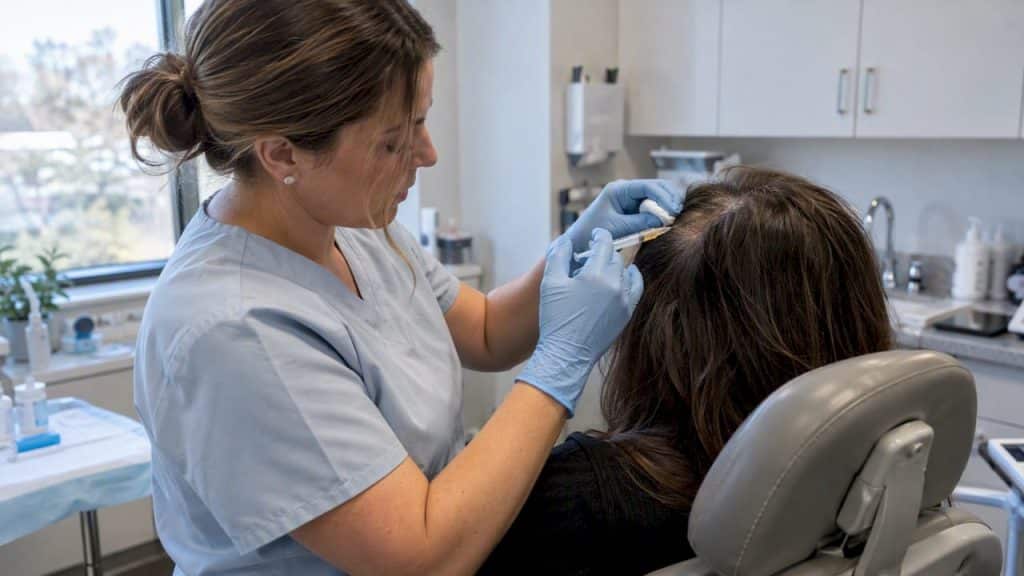
- The plasma is injected into the scalp at the depth and spacing the clinician determines based on the treatment area.
Platelet concentration achieved through this process can range from roughly 1.5 times baseline to as much as seven times baseline, and centrifugation speed, duration, and the device used all influence that yield. There is no single international standard dictating exactly how this should be done, which is part of why results differ from one provider to another, and why two women with similar hair loss patterns might report different outcomes from different clinics.
Pro Tip: Ask your clinician whether they measure and record platelet concentration for each session. Clinics that track this number can better explain your individual response and adjust future sessions accordingly.
Are you a good candidate for PRP, and what screening comes first
PRP works best for a specific kind of hair loss, so the first step is always figuring out what is actually causing your thinning.
Female pattern hair loss, known clinically as female androgenetic alopecia, tends to show up as diffuse thinning across the crown and part line, with the frontal hairline usually preserved. This is the pattern PRP research has focused on, and it is distinct from telogen effluvium, which often follows a stressful event or hormonal shift and tends to resolve on its own, and from alopecia areata or scarring alopecias, which involve immune or inflammatory processes that respond to very different treatments.
Before recommending PRP, we typically review a short list of health factors because thinning hair can be a symptom of something else entirely. Common screening steps include:
- A complete blood count and platelet count, since PRP’s effectiveness depends on your own platelet levels.
- Ferritin and iron studies, because low iron is a frequent and treatable cause of diffuse shedding in women.
- Thyroid function testing, since both an underactive and overactive thyroid can cause hair thinning.
- A review of hormone levels and current medications, including birth control, which can influence shedding patterns.
If screening reveals an underlying issue like iron deficiency or a thyroid imbalance, we address that first or alongside PRP, since treating the root cause often improves results. Women who are pregnant, breastfeeding, or managing certain blood disorders are generally not candidates, and we will say so plainly during consultation rather than proceeding regardless.
What a PRP session and a full treatment course look like
Walking into your first PRP appointment is far less intense than most women expect. Here is the general sequence:
- Check-in and consultation review, where we confirm your scalp mapping, discuss any changes since your last visit, and answer last-minute questions.
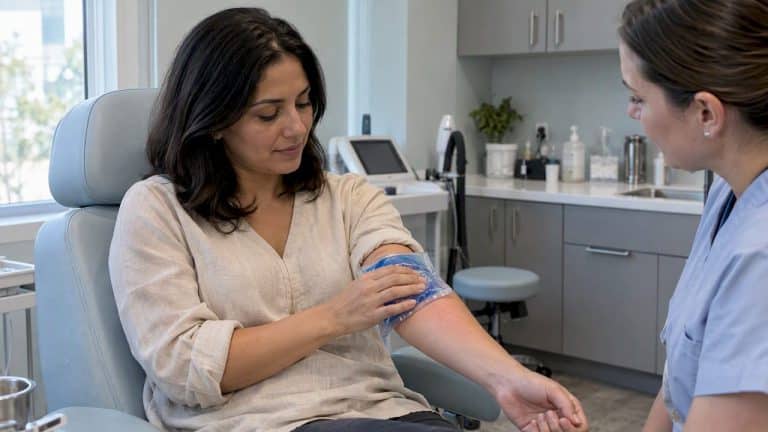
- Blood draw, typically a single vial taken from your arm, similar to standard lab work.
- Centrifugation, where the blood spins for several minutes to separate and concentrate the platelet-rich plasma.
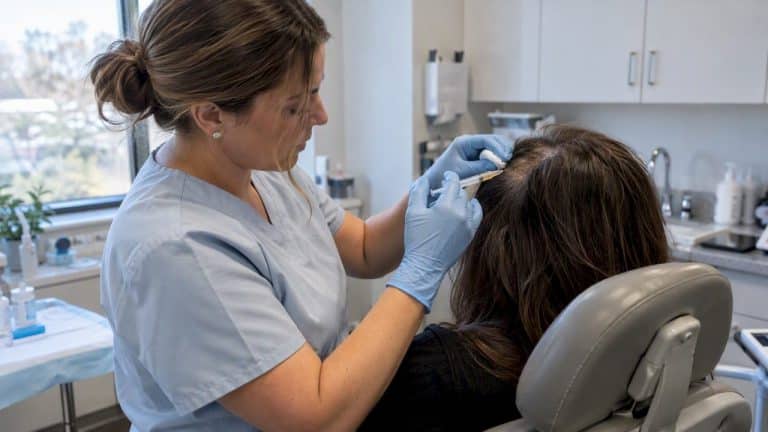
- Scalp injections, delivered in a grid pattern across the thinning areas, usually taking 20 to 30 minutes total depending on the treatment area size.
Most clinical trials used an induction series of three to four sessions spaced about four weeks apart, followed by maintenance sessions every four to six months to sustain results. That said, exact spacing varies by clinic and by how your hair responds, so treat these intervals as a general framework rather than a fixed rule.
Immediately afterward, mild redness, tenderness, and a tight or warm sensation across the scalp are common and usually settle within a day or two. Visible change is not instant. Most women who respond to PRP start noticing less shedding and some new growth between two and four months in, with clearer results typically visible by month six.
Pro Tip: Take simple before photos under consistent lighting at your first appointment. Scalp changes happen gradually, and a side-by-side comparison months later is often more convincing than memory alone.
How much improvement is realistic, and how long does it last
Trial endpoints for PRP generally measure three things: hair density per square centimetre, shaft thickness, and patient satisfaction, sometimes supported by a gentle pull test to assess shedding.
Across the reviewed trials, the most consistent timeline is this: early changes in shedding often appear within two to three months, and measurable improvements in density and thickness are more consistently reported by the six-month mark, according to pooled data from systematic reviews and randomized trials.
What PRP does not do is permanently switch off the hormonal and genetic drivers behind female pattern hair loss. The follicles that were miniaturizing before treatment can resume that process if maintenance sessions lapse, which is exactly why the four to six month booster schedule exists. Think of PRP less as a one-time fix and more as an ongoing input your follicles respond to, similar to how a skincare routine only keeps working while you keep using it.
Several clinical reviews also point to better outcomes when PRP is combined with other evidence-supported approaches rather than used in isolation:
- Pairing PRP with topical minoxidil often produces a more noticeable result than either treatment alone.
- Microneedling before PRP injection may improve how well the plasma is absorbed into the scalp tissue.
- Addressing nutritional gaps, like iron or protein intake, supports the biological environment PRP is trying to influence.
If you are weighing options and want a broader sense of why PRP is often chosen over other non-surgical routes, our earlier comparison of PRP against other hair treatments walks through that in more detail.
Staying safe: common reactions and how we reduce risk
Because PRP uses your own blood, the safety profile is genuinely reassuring compared with treatments involving foreign substances or synthetic fillers.
The most commonly reported effects are mild and short-lived: redness, tenderness, and swelling at the injection sites, occasional bruising, and sometimes a dull headache afterward. Safety summaries across clinical reviews consistently list these as the most frequent reactions, and most settle within a day or two without any specific treatment.
More serious complications like infection or excessive bleeding are rare, and they are almost always tied to technique rather than the treatment itself. That is why sterile handling of your blood sample, single-use equipment, and a clinician trained in injection protocol matter as much as the biology behind PRP.
Before your first session, we walk through a few practical points:
- Confirm there is no active scalp infection or skin condition at the injection sites.
- Review any blood-thinning medications, since these can increase bruising risk.
- Disclose pregnancy, breastfeeding, or any bleeding disorder, as these typically rule out PRP for now.
- Plan to avoid strenuous exercise and alcohol for about 24 hours after treatment to reduce swelling.
Because the plasma is autologous, meaning it comes entirely from your own body, the risk of an allergic reaction is extremely low, which is part of why PRP has become a comfortable option for women who are cautious about injectables generally.
What PRP costs and the commitment it involves
Pricing for PRP typically follows a per-session model, with the total cost shaped by how many sessions your induction series requires and whether you add complementary treatments like microneedling.
At Enriched Med Spa, PRP Hair Restoration is priced at $800 per session, and we also offer DERIVE Exosomes Hair Restoration at $950 per session for clients exploring that related option. If your plan includes a typical induction series of three to four sessions followed by periodic maintenance, it is worth budgeting across the full year rather than just the first appointment, since the maintenance boosters are what sustain the results.
A few things tend to influence the total investment:
- Add-on treatments like microneedling, which some protocols use alongside PRP to improve absorption.
- Whether you choose standard PRP or an exosome-based alternative.
- How many maintenance sessions your scalp response requires over the following year.
For a more detailed breakdown of what a full PRP plan can cost over time, our dedicated page on PRP hair restoration pricing walks through the numbers in more depth. We also document baseline photos and scalp assessments at each visit so you can see measurable progress rather than relying on impression alone.
What we see in clinic: patient patterns and personalized care
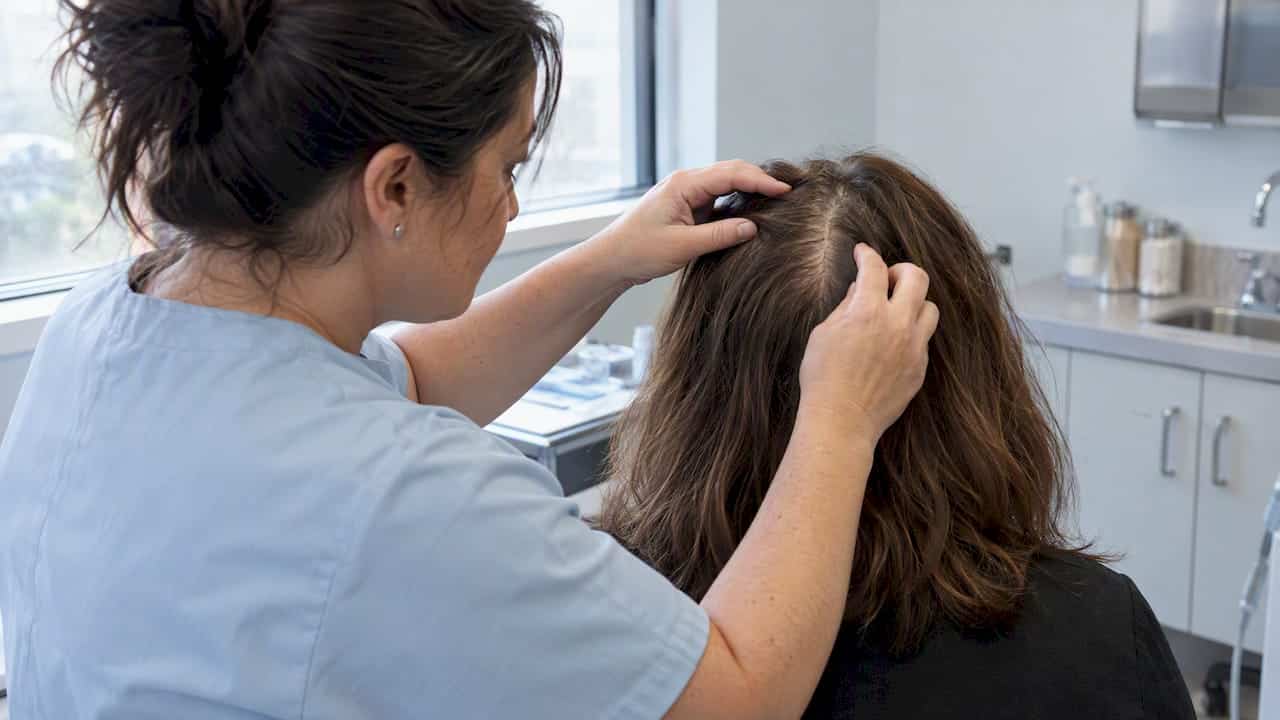
Many clients come to us noticing gradual thinning along the part line or a scalp that feels more visible under bright light, often after months of wondering whether it was just their imagination. That hesitation before booking a consultation is common, and it usually resolves once a proper scalp assessment clarifies what is actually happening.
Satisfaction tends to build gradually rather than arriving all at once. Women who stay consistent with their induction series and maintenance schedule are the ones who report the most noticeable change by the six-month mark, which lines up with what the clinical literature describes.
Our approach starts with a scalp assessment and baseline photography, followed by bloodwork screening where indicated, before we personalize session intervals to your response. Some clients also incorporate skin-supportive nutrition alongside their treatment plan, and research on collagen tripeptides suggests visible skin improvements within eight to twelve weeks, which some clients find complements their overall hair and scalp care routine.
How to choose a clinic you can trust with PRP
Not every provider offering PRP follows the same standard of care, so a short checklist at your consultation can save you time and disappointment.
Before booking, confirm the following:
- The practitioner performing injections is licensed and trained specifically in PRP technique.
- The clinic follows a documented, sterile blood-handling protocol from draw to injection.
- Pre-treatment bloodwork or screening is offered, not skipped.
- Baseline photos or trichoscopy are used to track your progress objectively over time.
At your consultation, it is reasonable to ask about expected platelet concentration, a realistic timeline for your specific hair pattern, any contraindications based on your health history, and what the follow-up and maintenance plan looks like.
Pro Tip: Be cautious of any clinic promising guaranteed regrowth or using words like “miracle” or “permanent cure.” The research supports real, measurable improvement for many women, but it does not support absolute guarantees.
A measured take on PRP for female hair loss
PRP is not a miracle cure, and it is not a scam either. It sits in a middle ground that is far more useful than either extreme: a treatment with genuine biological rationale and growing trial support, best suited to women with early-to-moderate female pattern hair loss who are prepared for an ongoing maintenance relationship rather than a single fix.
The women who tend to be happiest with PRP are the ones who went in with grounded expectations, got proper bloodwork first, and stuck with their maintenance schedule. If you are considering it, start with a consultation and baseline screening before anything else. Evidence should guide the decision, not marketing language.
— Felix
PRP hair restoration at Enriched Med Spa
If you are ready to move past research and into a real conversation about your scalp, we offer PRP Hair Restoration designed around your specific pattern of thinning rather than a one-size protocol. Every plan starts with a scalp assessment, a review of your health history, and baseline photos so you have an objective way to track change over the months that follow, not just an impression.
During your consultation, we talk through whether standard PRP or our DERIVE Exosomes Hair Restoration option fits your goals better, and we are upfront about realistic timelines based on what the research and our own clinical experience show. Our team also reviews bloodwork needs with you before your first session, so nothing about the process feels like guesswork.
- A full scalp and health history assessment before your first injection.
- Baseline photography to track measurable change over your treatment course.
- A personalized induction and maintenance schedule based on how your scalp responds.
You can review the full details and book a PRP hair restoration consultation whenever you are ready to take that next step.
This article is general information, not a substitute for advice from a qualified doctor. Consult a qualified healthcare professional about your own circumstances before acting on anything here.
FAQ
How effective is PRP for female hair loss?
PRP has shown meaningful improvements in hair density and thickness across multiple systematic reviews and randomized controlled trials involving women with pattern hair loss. Results vary by preparation protocol and individual response, and most women see clearer change by the six-month mark rather than immediately.
What did Jennifer Lopez use for hair loss?
We do not have any publicly documented, verified information about a specific hair loss treatment used by that individual. If you are researching PRP for your own hair thinning, it is more useful to focus on what the clinical research actually supports rather than unconfirmed celebrity routines.
What are the disadvantages of PRP for hair loss?
PRP requires an ongoing commitment of multiple sessions and periodic maintenance boosters rather than a single treatment, and results depend heavily on preparation technique, which varies across clinics and devices. It also does not permanently reverse the hormonal and genetic drivers of female pattern hair loss, so thinning can resume if maintenance lapses.
Does PRP regrow hair permanently?
No, PRP does not provide a permanent fix on its own, since it does not stop the underlying hormonal process behind female pattern hair loss. Most clinics use an induction series followed by maintenance sessions every four to six months to sustain results over time.