Right after your session, cool the treated area, keep it clean, avoid sun and heat, and call your clinic if you notice blistering or drainage. These few steps calm discomfort and lower your risk of burns or pigment changes while you heal. Following your aftercare plan closely, session after session, also gives you the best chance at lasting hair reduction.
TL;DR:
- Cooling with a cloth-wrapped compress and gentle cleansing are essential in the first 24 hours, with hot water and active skincare ingredients avoided to reduce irritation.
- Applying a fragrance-free moisturizer and waiting for redness to fade before makeup or exfoliation helps support skin healing from day two to seven.
- Shaving is recommended between sessions, while waxing, plucking, or tanning should be avoided to prevent undoing progress or skin damage.
- Consistent daily use of broad-spectrum SPF 30 to 50+ and strict sun avoidance for 4 to 6 weeks post-treatment is crucial to prevent pigment changes.
- Contact your clinic immediately if you notice spreading redness, drainage, blistering, worsening pain, or signs of infection to prevent complications.
Table of Contents
- What to do in the first 24 hours after treatment
- Caring for days 2 to 7: soothing, moisturizing, and reducing irritation
- Ongoing care between sessions: protecting your results
- What to avoid and why: common aftercare mistakes
- Managing common side effects at home
- When to contact your clinic or seek urgent care
- Expectations and timeline: how aftercare shapes your results
- Clinic-backed perspective and clinician tips
- A short checklist for peace of mind
- How we support safe treatment and aftercare
- FAQ
- Sources
What to do in the first 24 hours after treatment
The skin right after laser hair removal often looks and feels a bit like mild sunburn. Health Canada notes that redness and perifollicular swelling, meaning puffiness around each hair follicle, are expected immediate effects, and that cooling agents help with comfort. We see this same pattern with almost every client who comes in for a first or second session: a little warmth, a little pink, nothing alarming.
Here is what we recommend for the first day:
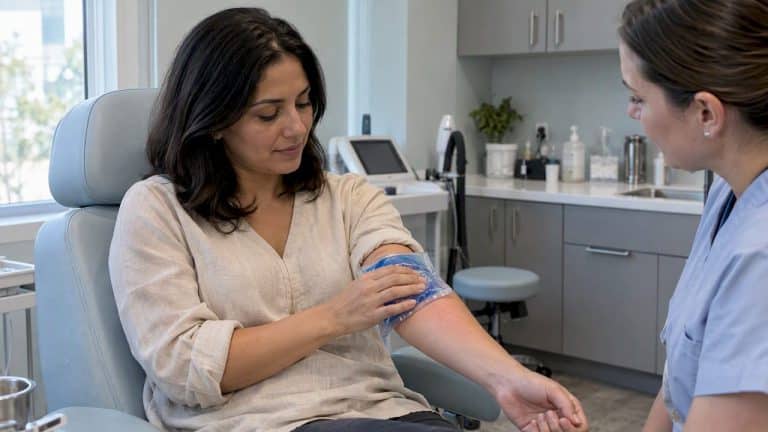
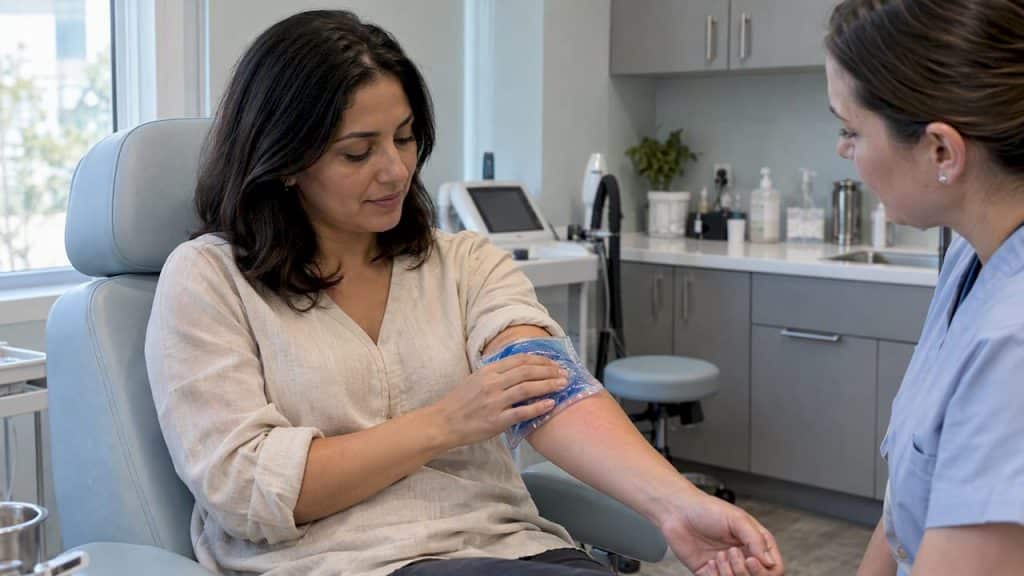
- Cool the area with a cold compress for 10 to 15 minutes at a time, repeating every hour or two as needed. Wrap ice packs in a cloth rather than placing them directly on skin, since direct ice can cause its own irritation.
- Cleanse gently with a fragrance-free, non-foaming cleanser, then pat the skin dry with a clean towel instead of rubbing it.
- Shower in lukewarm water only, and skip hot tubs, saunas, and steam rooms for at least 24 hours, since heat keeps blood flow and inflammation elevated in the treated area.
- Hold off on active skincare ingredients. Retinoids, exfoliating acids, and any perfumed lotions or sprays should wait 24 to 48 hours unless your clinician gives you a specific exception.
Pro Tip: Keep a spare cold compress in the freezer before your appointment so it’s ready the moment you get home.
Most of this is about letting the skin settle rather than treating a problem. A little redness and warmth are part of the normal healing response, not a sign that something went wrong.
Caring for days 2 to 7: soothing, moisturizing, and reducing irritation
Once the first day has passed, the focus shifts from calming the skin to supporting it as it finishes healing. This is the week where good habits make the biggest visible difference in comfort.
- Apply a fragrance-free, barrier-supporting moisturizer (look for ceramides or hyaluronic acid on the label) once or twice daily to keep skin hydrated without clogging follicles.
- Wait until any redness has faded and there is no open or broken skin before applying makeup to the treated area; most clients are comfortable doing this by day two or three on the face.
- Hold off on exfoliation until about a week after treatment, then start gently with a soft washcloth or a mild chemical exfoliant used once or twice weekly, never a harsh scrub.
- If your skin is especially reactive or prone to breakouts, a fragrance-free, non-comedogenic lotion is a safer bet than a multi-step exfoliating routine during this stage.
Ingrown hairs are a common frustration between sessions, especially around the bikini line and underarms. Gentle exfoliation starting in week one, combined with not picking at bumps or shedding hairs, keeps most cases manageable. If ingrown hairs persist or seem infected, mention it at your next visit rather than trying to extract them yourself.
Ongoing care between sessions: protecting your results
The weeks between appointments matter just as much as the day of treatment. What you do (or avoid) in between has a direct effect on both your comfort and how well each subsequent session works.
- Shave, don’t wax or pluck. Shaving keeps the hair shaft intact so the laser has a target to heat during your next visit, while waxing and plucking remove the follicle’s visible hair and work against the treatment.
- Use broad-spectrum SPF 30 to 50+ daily on treated skin, applying generously and reapplying roughly every two hours if you’re outside. Health Canada advises strict sun avoidance and consistent sunscreen use for 4 to 6 weeks after each treatment, since treated skin is more vulnerable to hyperpigmentation or hypopigmentation.
- Skip tanning beds entirely between sessions, not just immediately after.
- Avoid saunas, hot yoga, and intense workouts near the treated area for a day or two if you notice lingering sensitivity.
- Reintroduce retinoids and chemical peels gradually, usually stopping them several days before your next laser appointment and waiting until any post-treatment redness has fully resolved before restarting.
Research shows that adverse events in laser hair removal are closely linked to operator technique and patient factors, and that proper training and correct device selection meaningfully reduce complications. That is one reason we pay close attention to device settings and skin type at every visit, not just at the first consultation.
What to avoid and why: common aftercare mistakes
A few habits come up again and again, and each one carries a specific, explainable risk.
- Tanning or using self-tanner too soon. UV exposure changes melanin activity in skin that is already sensitized, raising the chance of burns and dark or light patches. Self-tanners can mask early signs of irritation and sometimes irritate healing skin further, so it’s best to wait until skin has fully settled.
- Waxing, plucking, or electrolysis between sessions. These methods remove the hair follicle laser treatment depends on, undoing progress and sometimes triggering more inflammation than shaving would.
- Hot showers, pools, and strong actives too early. Heat and chlorine both aggravate already-sensitive skin, and retinoids or acids layered on top can compound redness or peeling.
- Assuming exfoliation right away speeds healing. It’s a common myth that scrubbing away dead skin helps skin “reset” faster. In reality, early exfoliation on freshly treated skin tends to cause more irritation, not less, which is why we recommend waiting about a week.
Pro Tip: When in doubt about a product or activity, ask before your appointment rather than after a reaction starts.
Managing common side effects at home
Most reactions after laser hair removal are mild and short-lived, and respond well to simple home care.
- Redness and swelling: cold compresses, fragrance-free emollients, and gentle cleansing are usually enough, and these typically fade within a day or two.
- Mild crusting: keep the area clean and moisturized, and resist the urge to pick, since picking can lead to scarring or infection.
- Blisters: do not pop, drain, or pick at them. Keep the area clean and covered if needed, and contact your clinic for guidance rather than treating it yourself.
- Prescription topical steroids or antibiotic ointment are sometimes used for more pronounced swelling or any break in the skin, but only when a clinician has recommended them for your specific reaction.
According to a clinical review on NCBI’s StatPearls, common adverse effects include post-treatment redness, pain, and mild burning, while blistering, crusting, pigment changes, and scarring are less common but recognized possibilities. Watch for spreading redness well beyond the treated area, pus or unusual drainage, worsening pain instead of gradual improvement, or fever. Any of these warrants a call to your provider rather than waiting it out.
When to contact your clinic or seek urgent care
Call your clinic promptly if you notice spreading redness, drainage or pus, pain that is getting worse rather than better, fever, or any vision changes following treatment near the eyes. These signs can indicate infection or a reaction that needs professional assessment rather than home care alone.
When you call, have ready your treatment date, a clear description of your symptoms, and, if possible, a photo of the area. This helps your clinic’s team triage quickly and decide whether you need to come in or simply adjust your home care. While you wait to hear back, keep the area clean, cool, and uncovered unless you’ve been told otherwise, and avoid applying anything new to it.
Expectations and timeline: how aftercare shapes your results
Most people need multiple sessions to see meaningful, lasting reduction. The Canadian Dermatology Association notes that multiple sessions spaced roughly eight to 12 weeks apart are typically required, since laser treatment targets hair in its active growth phase and not every follicle is in that phase at once.
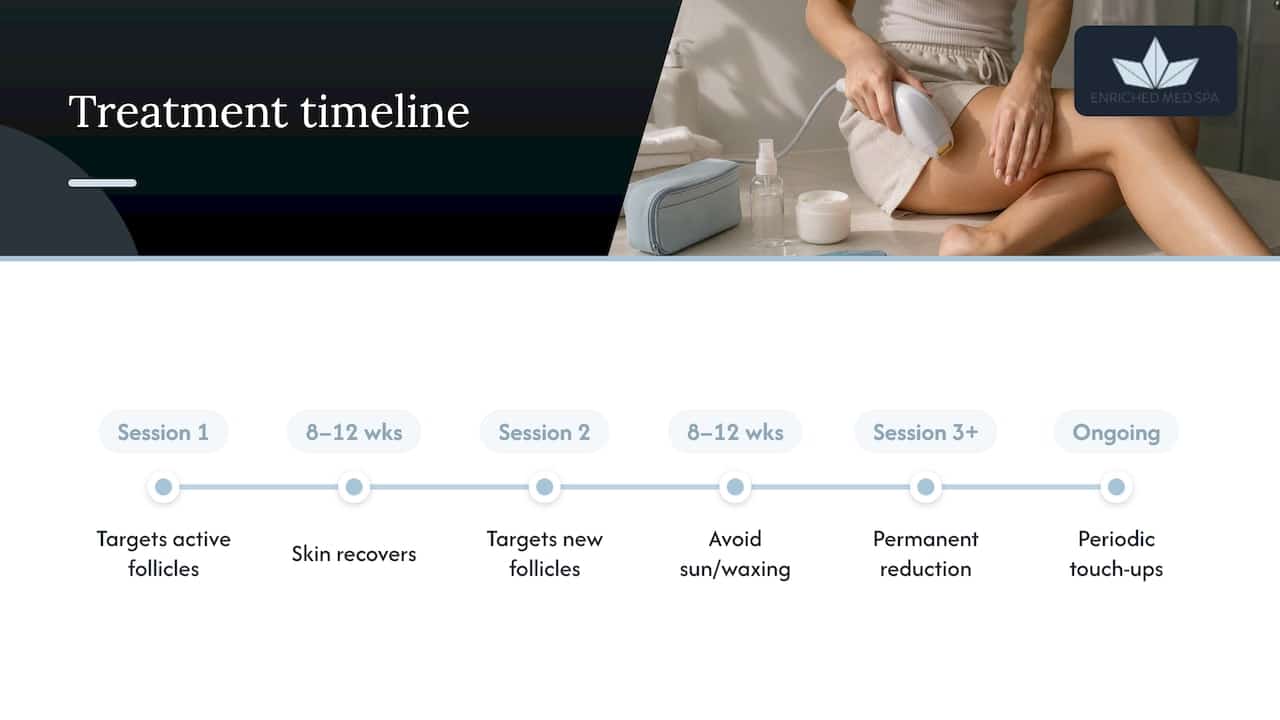
It’s worth being clear about terminology here too: dermatologists describe laser hair removal as providing permanent reduction, not guaranteed total removal. Most people see a lasting decrease in hair density and thickness, with occasional fine hairs returning that may need periodic touch-ups. You can read more about how session counts vary by area and skin type and what permanent reduction really means in practice.
Skipping sun protection, waxing between sessions, or rushing back into harsh skincare doesn’t just risk a bad reaction. It can also set back your results, since irritated or pigment-affected skin sometimes needs a treatment delay to recover before the next session can proceed safely.
Clinic-backed perspective and clinician tips
Many clients come to us partway through a laser hair removal course started elsewhere, often because their aftercare questions went unanswered. We build aftercare into every consultation rather than treating it as an afterthought: device settings, cooling methods, and sun protection guidance are all adjusted to the person’s skin tone and hair colour, not applied as one generic script.
For darker skin tones specifically, device choice matters more than most people realize. The right laser type and conservative settings reduce the chance of pigment changes, and strict sun protection matters even more in the weeks following treatment, a point echoed in clinical guidance on laser hair removal. We also check in after each session rather than assuming everything is fine, since a quick follow-up catches small concerns before they become bigger ones.
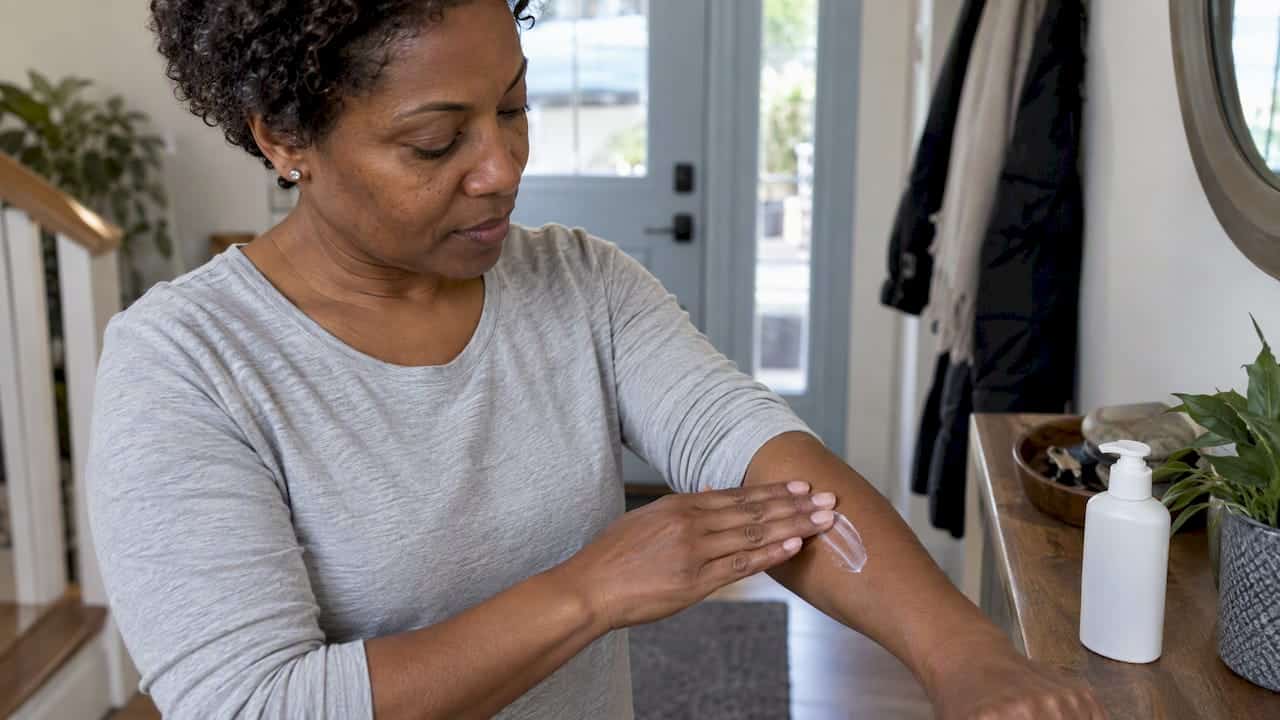
Makeup over treated facial skin is generally fine once any visible irritation has settled, usually within a day or so for most clients. If you’re unsure whether your skin has calmed enough, that’s exactly the kind of question worth asking at your follow-up rather than guessing.
A short checklist for peace of mind
Laser hair removal aftercare isn’t complicated once you know the pattern: cool it, clean it, protect it from the sun, and leave it alone otherwise. Most reactions are mild, predictable, and short-lived when you follow a clear plan from a qualified provider, and most concerns that do come up resolve quickly with a quick call to your clinic.
- Cool the area with a cloth-wrapped compress, not direct ice.
- Cleanse gently and pat dry, skipping hot water for the first day.
- Apply broad-spectrum sunscreen daily for at least 4 to 6 weeks.
- Shave between sessions, and skip waxing, plucking, and tanning beds.
- Contact your clinic for blistering, spreading redness, or drainage.
— Felix
How we support safe treatment and aftercare
Choosing a clinic that treats aftercare as part of the appointment, not an afterthought, makes the whole process easier to manage. At Enriched Med Spa, every laser hair removal plan is paired with clear, written aftercare guidance tailored to your skin type and the area treated, along with a follow-up check so small questions get answered before they become concerns.
| What you get | Details |
|---|---|
| Treatment pricing | $25 to $579 per session, depending on area (pricing) |
| Shaving fee (if needed before your visit) | Please refer to the clinic’s website for current details |
| Aftercare support | Written guidance plus clinic follow-up after each session |
- Personalized device settings based on your skin tone and hair colour.
- A follow-up touchpoint after your session to check healing and answer questions.
If you’d like clinician-led guidance through every stage of your laser hair removal course, you can book a consultation to get started.
This article is general information, not a substitute for advice from a qualified doctor. Consult a qualified healthcare professional about your own circumstances before acting on anything here.
FAQ
Is laser hair removal 100% permanent?
No. Dermatologists describe the outcome as permanent reduction rather than complete, guaranteed removal, since some fine hairs can regrow over time. Most people maintain results with occasional touch-up sessions.
Is 6 sessions of laser enough?
Six sessions is within the typical range, since the Canadian Dermatology Association notes that most people need six to eight sessions spaced eight to 12 weeks apart. Some areas or hair types may need a few more sessions to reach the same level of reduction.
What should I do after my laser hair removal?
Cool the area with a cloth-wrapped compress, cleanse gently with a fragrance-free product, and avoid sun exposure, hot showers, and strong actives for the first day or two. Health Canada recommends strict sun protection and sunscreen use for 4 to 6 weeks after treatment.
Can I shave 1 day after laser?
Shaving the day after treatment is generally fine once any redness or sensitivity has settled, and shaving is the preferred hair removal method between sessions anyway. Waxing or plucking should be avoided throughout your treatment course since they remove the follicle the laser needs to target.
Sources
- Canada
- Laser Hair Removal – StatPearls – NCBI Bookshelf
- Hair removal & reduction – Canadian Dermatology Association
- Adverse events of light-assisted hair removal: An updated review (2023)