Yes, migrated hyaluronic acid filler is usually treatable. The fastest safe corrective option is hyaluronidase given by a trained clinician, often guided with ultrasound, and many people notice a real difference within hours. Full correction can take more than one session. Skip the DIY kits and unauthorized devices and see an experienced medical injector instead.
TL;DR:
- Proper correction of migrated filler typically involves hyaluronidase administered by a trained clinician, often with ultrasound guidance, and may require multiple sessions for full resolution.
- Filler migration follows predictable anatomical patterns, influenced by facial fascial planes, injection pressure, volume, muscle movement, and gravity, rather than random displacement.
- Symptoms like persistent lumps, bluish skin discoloration, or asymmetry should prompt prompt assessment, especially if they last beyond two weeks or worsen over time.
- Avoiding large bolus injections, choosing experienced injectors, and using appropriate techniques significantly reduce the risk of filler migration in future treatments.
- Residual filler can remain visible on imaging even after effective hyaluronidase treatment, and targeted injections are preferred over complete dissolution when correcting migration.
Table of Contents
- What causes filler to move under the skin
- Recognizing migration and knowing when to see a clinician
- How clinicians correct migrated filler
- Preventing migration in future filler treatments
- What recovery looks like after treatment
- How we assess and manage migration cases
- What most advice on this topic gets wrong
- Ready to have it looked at properly
- Where these guidelines come from
- Sources
- FAQ
What causes filler to move under the skin
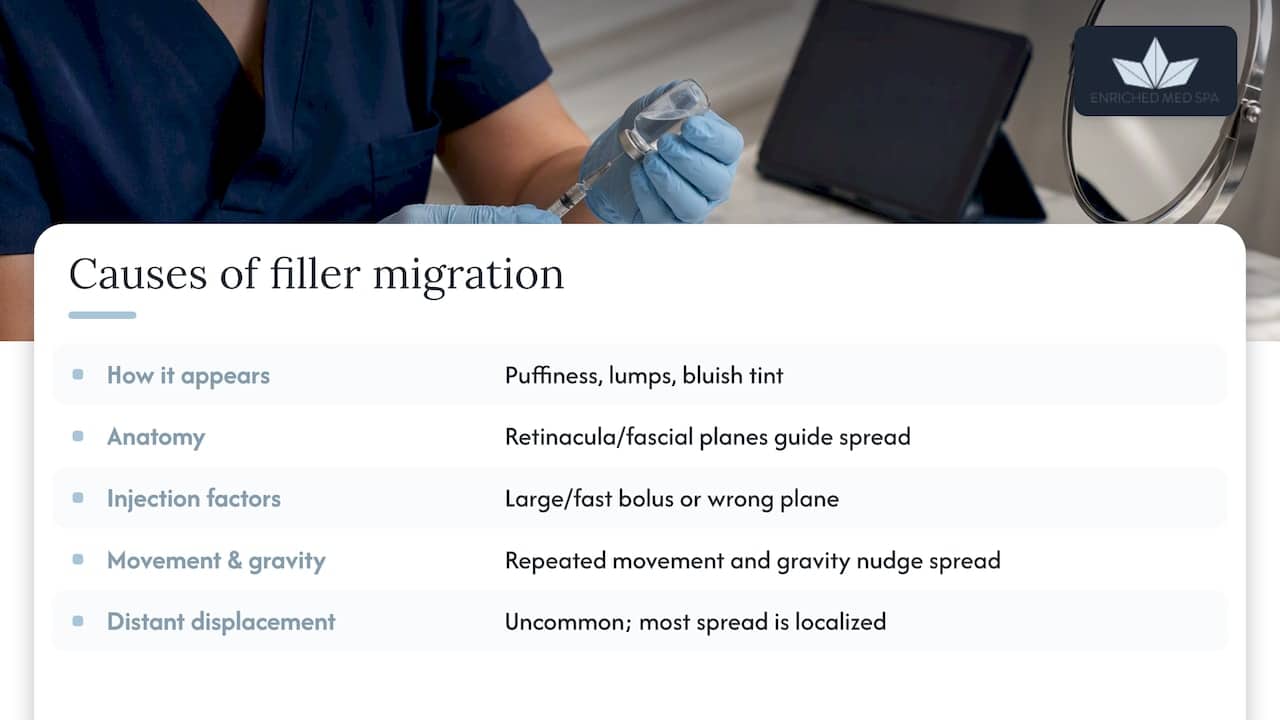
When we talk about filler migration, we mean hyaluronic acid gel that has spread beyond where it was originally placed, sometimes showing up as puffiness, small lumps, or a bluish tint under thin skin. Most cases we see follow a predictable pattern rather than a random one.
Anatomy plays a bigger role than people expect. Facial retinacula, those fibrous bands that anchor skin to deeper structures, tend to guide where filler travels, and anatomical studies show filler spread follows consistent directional patterns tied to these fascial planes rather than simply drifting at random. Injection pressure and volume matter too. A larger bolus pushed in too quickly or placed in the wrong tissue plane is more likely to spread along these pathways. Repeated muscle movement (think constant smiling or pursing of the lips) and gravity can nudge product further over time, especially in areas like the tear troughs or lips.
True distant displacement, where filler ends up somewhere unrelated to the injection site, is uncommon. Most of what people call migration is localized spread that a skilled injector can trace and treat.
Recognizing migration and knowing when to see a clinician
Migrated filler often shows up as firmness or puffiness in an area you didn’t expect, sometimes with a faint blue-grey cast under the skin known as the Tyndall effect. Early changes can appear within hours to days of treatment, especially if the initial swelling hasn’t settled yet. Delayed migration, on the other hand, tends to show up weeks or months later, often after repeated facial movement or a new filler session added on top of older product.
Signs worth booking an assessment for include:
- Lumps or firmness that persist beyond the usual two-week swelling window.
- Visible bluish discolouration under thin skin, particularly around the lips or tear troughs.
- Asymmetry that seems to be getting more noticeable rather than settling.
- Puffiness that returns in the same spot every time you smile or purse your lips.
Some symptoms need urgent, same-day care rather than a routine follow-up. Severe or worsening pain, sudden vision changes, or skin that turns pale or dusky (a sign of compromised blood flow) are emergencies. Head to urgent care or an emergency department immediately if any of these occur.
How clinicians correct migrated filler
Hyaluronidase is the main tool for correcting hyaluronic acid filler migration. It’s an enzyme that breaks down hyaluronic acid, and clinical literature describes it as modifying the filler-tissue complex rather than simply erasing it. Many people notice a significant reduction within the first hour, with more improvement over the following 24 hours, though the exact pace depends on the filler brand and how heavily cross-linked it is. More resistant products may need a larger dose or a second session.
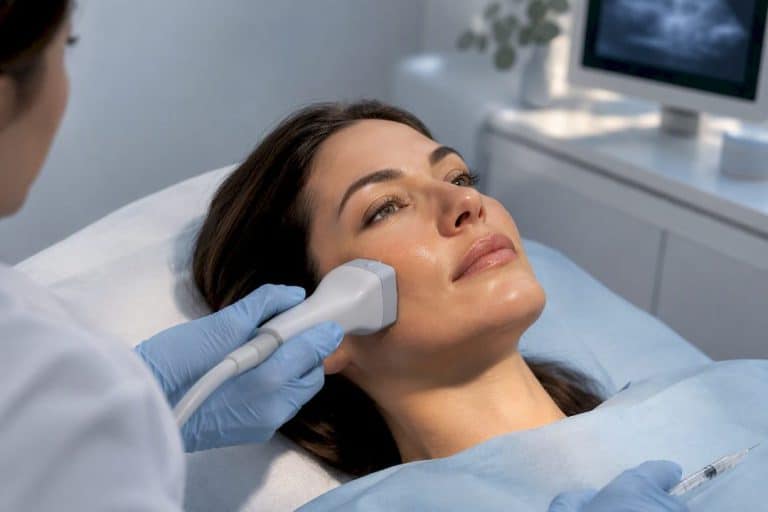
Before injecting, many clinicians now use ultrasound to confirm exactly where the gel sits and whether it’s still discrete or has already integrated into surrounding tissue. High-resolution ultrasound with Doppler helps distinguish residual filler from swelling or scar tissue, which means treatment can target the right spot instead of guessing.
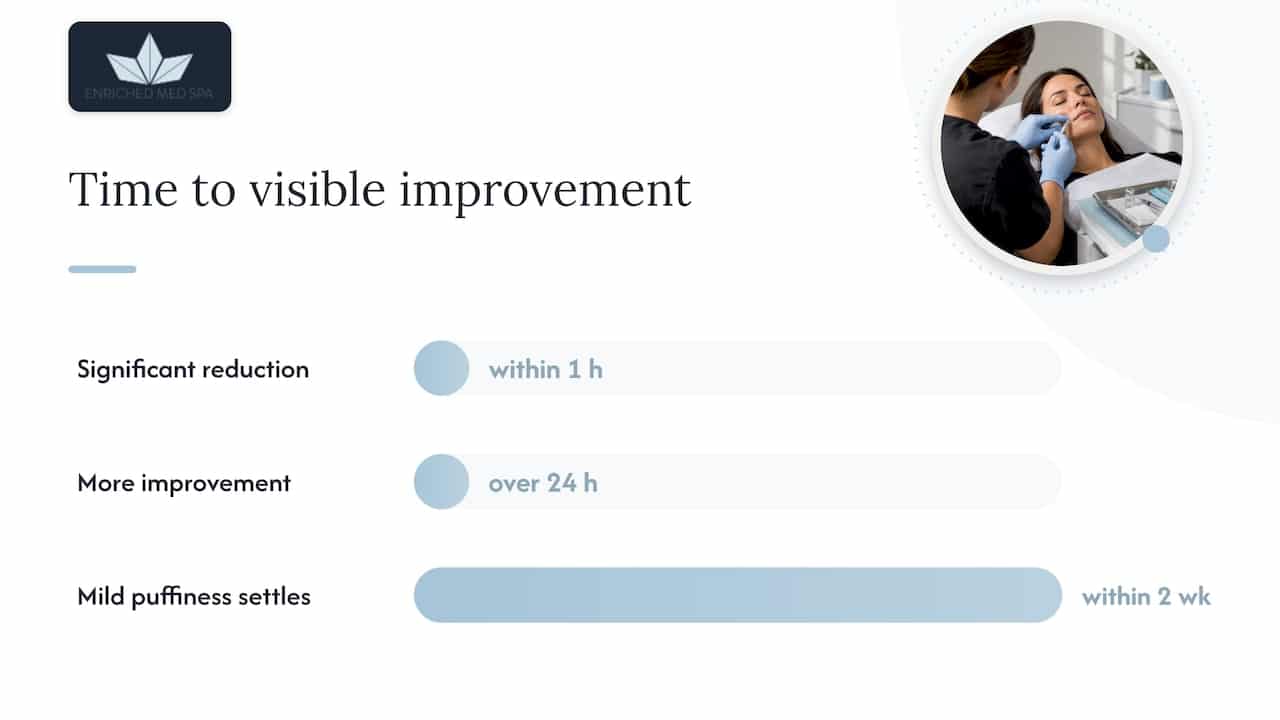
Not every case needs immediate intervention. Mild puffiness in the first two weeks often settles with gentle massage and a bit of patience, since some of what looks like migration is really just normal post-injection swelling. Once it’s been longer than that and the firmness hasn’t shifted, waiting rarely helps.
Beyond hyaluronidase, options include ultrasound-guided aspiration for pooled gel and staged hyaluronidase treatments for larger or more established migration. Surgical removal exists but is rarely necessary and is reserved for cases that don’t respond to enzyme therapy.
- Hyaluronidase remains the first-line option for correcting HA filler migration.
- Ultrasound guidance improves both diagnosis and injection accuracy.
- Complete dissolution isn’t always the outcome. Residual material can still appear on imaging even after visible improvement.
- People with a known bee sting or hyaluronidase allergy need a different plan. Your injector will discuss this during consultation.
Pro Tip: Bring photos of how the area looked in the first few days after your original filler appointment. They help your injector tell the difference between normal early swelling and true migration.
Preventing migration in future filler treatments
The single biggest factor in avoiding migration is who injects you. An experienced medical injector chooses the right tissue plane, uses appropriate product for the area, and knows when less filler is the safer choice. Ask about their technique and how many years they’ve been doing injectables specifically, not just aesthetics in general.
A few technical choices lower risk meaningfully:
- Smaller aliquots placed slowly can reduce pressure-driven spread compared to one large bolus.
- Injecting into the correct tissue plane, confirmed by anatomical landmarks, keeps product where it belongs.
- A cannula rather than a needle is often preferred in sensitive areas like the tear troughs or lips, since it reduces trauma to surrounding tissue.
Steer clear of needle-free filler pens entirely — choosing professional-grade tools like a derma stamp is safer and more effective under expert guidance. Health Canada has confirmed these devices are not authorized for use in Canada and has linked them to infection and vascular injury.
Afterward, avoid vigorous massage unless your injector specifically instructs it, since pressing on fresh filler can encourage spread rather than prevent it. If you have an upcoming vaccination, the Canadian Dermatology Association suggests spacing it roughly two weeks from filler treatment as a precaution, noting that reactions in people with prior filler are rare and usually mild.
What recovery looks like after treatment
Most people notice visible softening within the first hour after hyaluronidase, with continued improvement over the next day as the enzyme keeps working. If migration was more established or involved a larger area, your clinician may recommend a staged plan with a follow-up session two to four weeks later to assess what’s left before deciding on further correction.
Photos taken at each visit make it much easier to track real change instead of relying on memory, and an ultrasound recheck can confirm whether any gel remains if the first round didn’t fully resolve things. Plan on a follow-up appointment even if things look good, since firmness sometimes reappears as swelling settles.
At home, keep things simple: avoid touching or massaging the area unless told to, and skip strenuous exercise for the first day or so. Contact your clinic promptly if you notice increasing pain, spreading redness, or any skin colour change, since these can signal a problem that needs same-day attention rather than a scheduled check-in.
How we assess and manage migration cases
We see filler migration cases regularly enough to know that a careful look before treatment matters as much as the correction itself. Our approach starts with a consultation to understand your history: what was injected, where, and when. From there, we assess the area clinically and, where needed, plan targeted hyaluronidase treatment rather than a blanket dissolve. Follow-up is built into the plan, not an afterthought, because staged correction often gives a better result than trying to fix everything in one visit. Our team’s focus stays on judgement over speed.
What most advice on this topic gets wrong
Most articles on filler migration treat it as either a disaster or a non-issue, and neither framing helps you make a decision. The truth sits in between: migration is usually correctable, but “usually” isn’t “always instantly,” and anyone promising complete dissolution in one visit is oversimplifying what the research actually shows. Residual material can still show up on imaging even when you can’t see or feel it anymore, and that’s a normal outcome, not a failure.
What gets underestimated is how much the choice of injector at the original appointment matters compared to how the correction goes later. Prevention through technique and product choice does more heavy lifting than any correction can. If you’re weighing where to get filler done in the first place, spend more time vetting the injector’s experience than comparing product brands.
If you’re dealing with migration now, prioritize getting an accurate assessment before agreeing to a treatment plan. Ultrasound isn’t necessary in every case, but when the diagnosis is unclear, it changes the conversation from guessing to targeting.
— Felix
Ready to have it looked at properly
If you’re noticing puffiness, firmness, or discolouration that doesn’t match how your filler looked in the first couple of weeks, an in-person assessment is the clearest way to know what’s actually going on. At your visit, we’ll look at the area, talk through your filler history, and outline whether hyaluronidase, a staged plan, or simply more time is the right call for your case. If you’re also considering fresh filler once things settle, our dermal filler page outlines how we approach placement and product choice to keep results looking natural. Book a consultation when you’re ready, and we’ll take it from there.
Where these guidelines come from
Claims here draw on Health Canada’s cosmetic injection safety guidance, peer-reviewed hyaluronidase and ultrasound research, and the Canadian Dermatology Association’s position statements.
This article is general information, not a substitute for advice from a qualified doctor. Consult a qualified healthcare professional about your own circumstances before acting on anything here.
Sources
- Health Canada — Cosmetic injections: safety information
- Ultrasonographic features of nonvascular complications of hyaluronic acid fillers (Aesthetic Dermatology)
- Canadian Dermatology Association — COVID-19 vaccine and hyaluronic acid dermal filler use
FAQ
Can migrated fillers be fixed?
Yes, in most cases. Hyaluronidase, given by a trained injector and sometimes guided with ultrasound, is the standard corrective option, though more established migration may need more than one session.
How do you stop fillers from migrating in the first place?
Choosing an experienced medical injector who uses smaller aliquots, correct tissue planes, and appropriate product for the area is the biggest factor. Avoiding vigorous massage after treatment and steering clear of unauthorized needle-free filler devices also lowers risk.
How fast can lip fillers migrate?
Migration can appear within hours to days if it’s linked to early swelling settling unevenly, or weeks to months later with delayed spread, often influenced by repeated lip movement. The timeline varies enough that any unexpected firmness or asymmetry beyond two weeks is worth having assessed.
Can I dissolve just the migrated portion of filler?
Targeted hyaluronidase injections, especially when guided by ultrasound, are designed to treat the specific area of concern rather than the whole treated zone. Complete elimination isn’t guaranteed, since some residual material can remain detectable even after visible improvement.