Radiofrequency can meaningfully firm mild to moderate jowl laxity, but it works gradually and it is not a replacement for a surgical facelift when skin descent is advanced. Professional, medical-grade RF delivered over multiple sessions produces modest, measurable tightening that builds over months and needs practical aftercare and skincare routines to protect new collagen and prolong RF results. Because Health Canada has flagged thermal-harm risks with these devices, the provider and equipment you choose matter as much as the treatment itself.
TL;DR:
- RF is most effective for mild to moderate jowl laxity, with results gradually improving over three to six months after a series of sessions.
- Devices with temperature control and real-time skin monitoring are safest and most likely to produce predictable, lasting tightening results.
- Surgery achieves significantly greater lifting, especially in cases of heavy, hanging jowls with excess skin, where RF alone is unlikely to meet expectations.
- Proper device licensing and provider training are critical to avoid risks such as burns, scarring, fat loss, or nerve damage during RF treatments.
- Home RF devices may offer some improvement but lack the safety standards of professional systems and should not replace in-clinic procedures for significant laxity.
Table of Contents
- How radiofrequency tightens jowl tissue
- Types of RF used on the lower face and jowls
- What the research says about RF for facial laxity
- Who benefits most, and when surgery makes more sense
- Safety risks and what Health Canada says about them
- At-home devices versus in-clinic systems
- What to expect: sessions, timeline, and cost
- Choosing a provider: your consultation checklist
- What we see in clients considering RF for jowls
- RF skin tightening at Enriched Med Spa
- Sources
- FAQ
How radiofrequency tightens jowl tissue
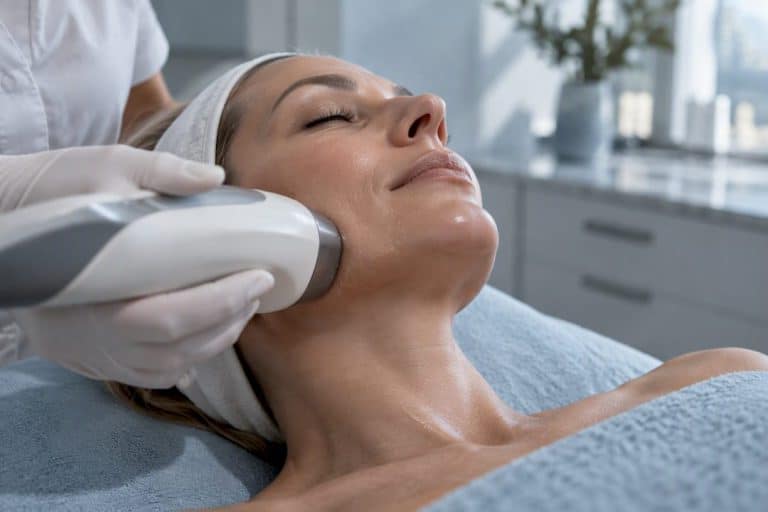
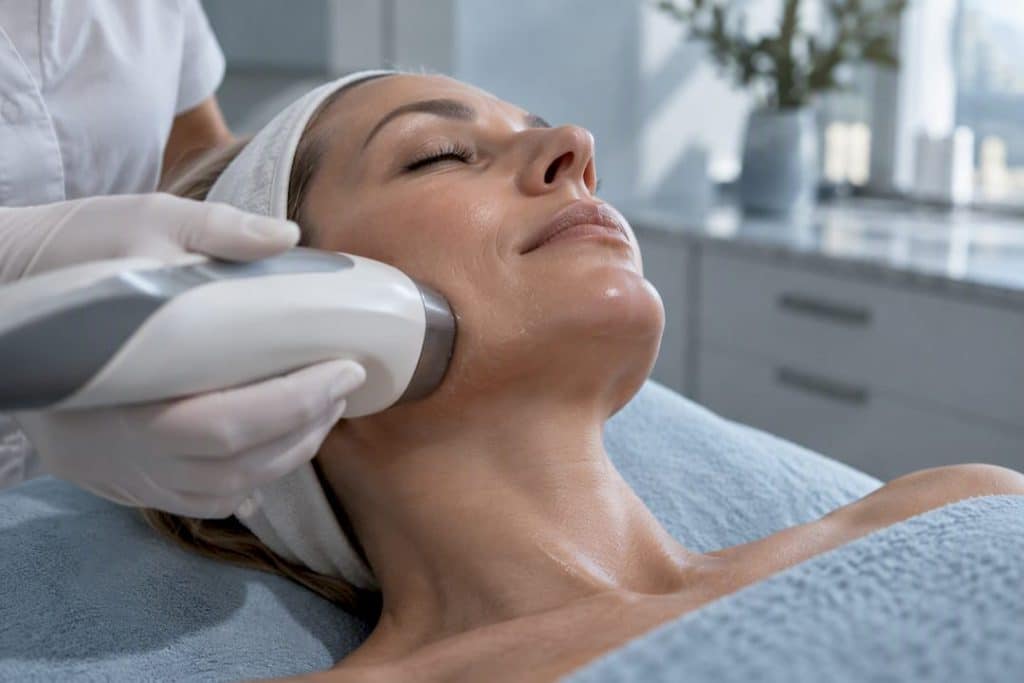
RF devices deliver controlled heat into the dermis and, depending on the device, the tissue just beneath it. That heat does two things: it causes existing collagen fibres to contract slightly, and it triggers a wound-healing style response that produces new collagen and elastin over the following weeks, a process often called neocollagenesis. You will not see this happen instantly, and that is normal. The skin needs time to rebuild, much like a garden needs a season to show new growth after you have prepared the soil.
Some RF systems also affect the fat layer beneath the skin, softening its volume slightly, though this effect is limited and should never be confused with surgical fat removal. Most of the visible change at the jawline comes from tightening the skin itself rather than reducing what sits underneath it.
Expect a gradual build. Collagen remodelling continues for weeks after each session, which is why clinics space treatments out and why results are usually judged three to six months after a full series rather than immediately after one visit.
Types of RF used on the lower face and jowls
Not all radiofrequency devices work the same way, and the differences matter for both safety and outcome.
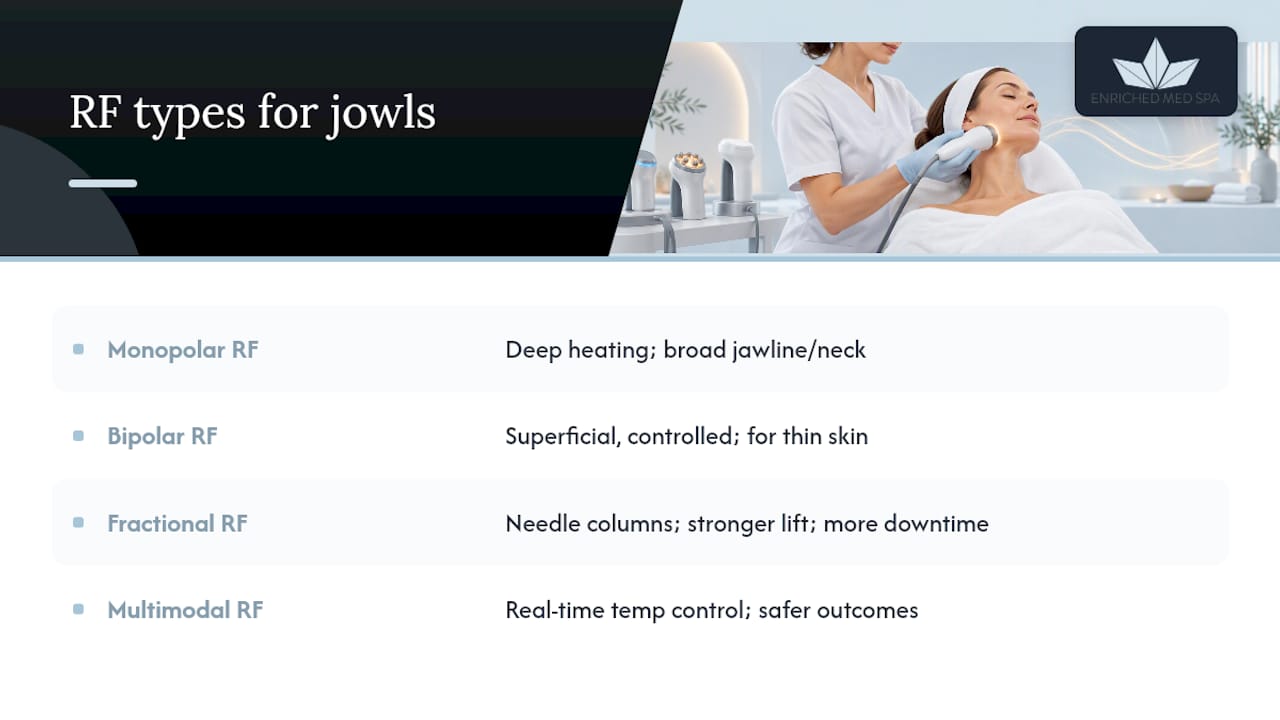
Monopolar RF sends energy from a single electrode deep into the tissue, reaching the subdermal layer and sometimes the muscle fascia. It is generally used for broader, deeper heating across the jawline and neck.
Bipolar RF passes energy between two closely spaced electrodes, so the heating stays more superficial and controlled, often favoured for the thinner skin around the jaw and lower cheek.
Fractional and microneedle RF deliver energy through fine needles or a fractionated pattern that creates small columns of heat deeper in the dermis. These tend to produce stronger lifting effects than surface-only bipolar treatments, but they also involve more discomfort and downtime because they briefly disrupt the skin’s surface.
Multimodal, temperature-controlled systems combine RF with real-time skin temperature feedback, which lets the practitioner keep tissue within a safe therapeutic range instead of guessing at settings. This kind of monitoring, along with well-designed applicators, is one of the clearest predictors of both safety and a good outcome, since Health Canada’s guidance on thermal harm specifically calls out inadequate temperature testing as a risk factor.
What the research says about RF for facial laxity
A systematic review evaluating radiofrequency for face and neck rejuvenation found measurable improvements in skin laxity and patient satisfaction for people with mild to moderate facial laxity, describing RF as a way to fill the gap between topical skincare and surgery for patients who are not ready for, or not suited to, a facelift. The improvements were consistent across studies but modest in size compared with surgical results, and researchers noted wide variation in device settings and protocols between studies.
A more specific look at lower-face and neck treatment, a multicentre retrospective study of multimodal RF, reported objective improvements on the Baker jowl-severity scale along with high patient satisfaction, and most complications were transient, such as prolonged swelling.
A randomized, blinded comparison of fractional RF against surgical facelift put a number on that gap: RF achieved roughly one-third of the improvement seen with surgery on validated laxity scoring, with fewer complications and far less downtime. That single figure captures the honest trade-off: RF works, but it works within limits that surgery does not share.
Who benefits most, and when surgery makes more sense
RF tends to work best on people with reasonably good skin quality and mild to moderate laxity, the early jowl softening that shows up before there is true excess skin. If your skin still has some elasticity and the change is more about firmness than volume of loose tissue, RF has a realistic chance of making a visible difference.
Signs that point toward a surgical consultation instead include heavy, hanging jowls, significant excess skin at the jawline, or noticeable descent that has changed the shape of your lower face rather than just its firmness. In these cases, RF alone is unlikely to meet expectations, and a qualified surgeon should be part of the conversation.
Many clients land somewhere in between, and that is where combination planning helps. Dermal filler can restore lost volume along the jawline, while neuromodulators like Botox can soften pulling from muscles that worsen jowl appearance. RF, filler, and neuromodulators are often used together rather than as competing options, each addressing a different part of the aging pattern.
Safety risks and what Health Canada says about them
Health Canada classifies many RF microneedling and similar energy-based systems as Class III medical devices, a category reserved for devices carrying a moderate to high risk if something goes wrong. The regulator has specifically warned about burns, scarring, fat loss, disfigurement, and nerve damage from these devices, and has urged both patients and providers to confirm that a device is properly licensed before use.
Separately, Health Canada’s notice on thermal harm from energy-based devices makes clear that labelling alone does not protect patients: manufacturers are now expected to provide detailed skin-temperature testing data across different skin types. The same notice flags a rise in counterfeit or unlicensed devices entering the market, which makes verification your responsibility as much as the clinic’s.
A practical safety checklist before booking:
- Ask the provider to confirm the device’s Health Canada licence and model name.
- Ask whether the system uses real-time temperature monitoring rather than fixed settings alone.
- Ask what happens if you experience unusual pain, blistering, or numbness after treatment.
More energy is not automatically a better result. Skilled dosing and monitoring protect you from thermal injury while still giving the tissue enough stimulus to remodel.
At-home devices versus in-clinic systems
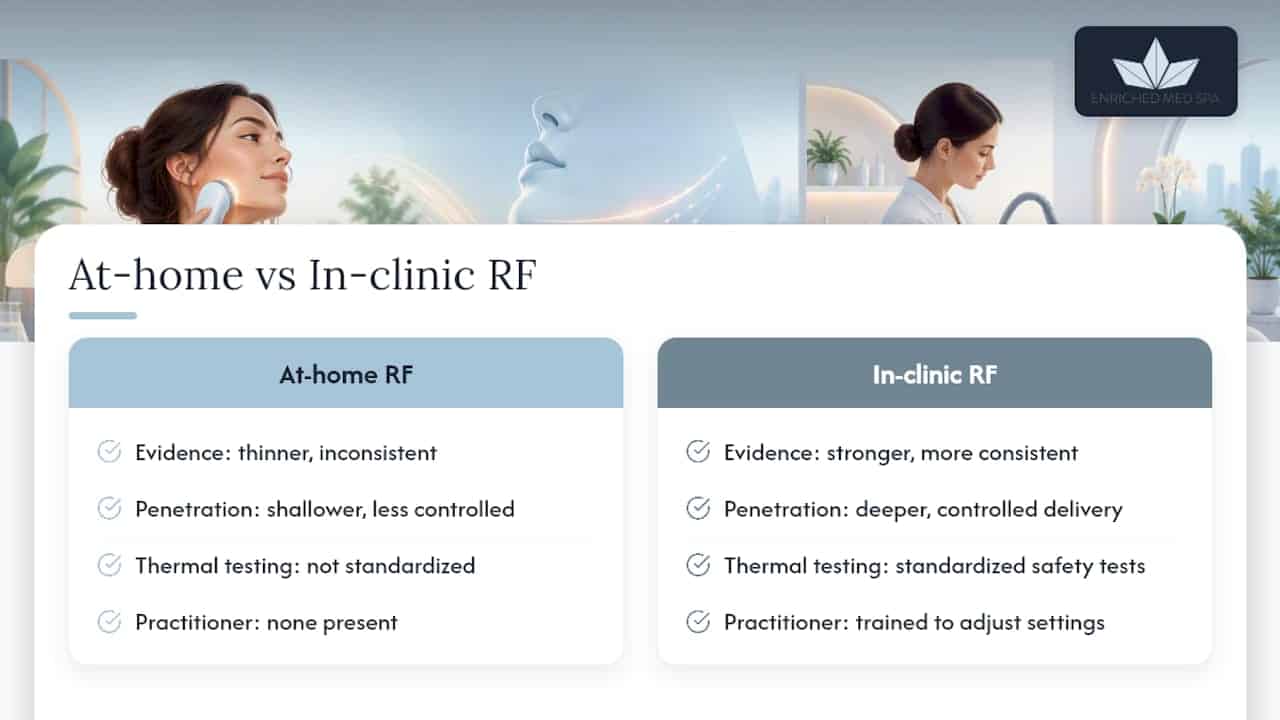
Consumer RF devices exist and some have supporting evidence, but that evidence is thinner and less consistent than what backs professional systems. A randomized controlled trial comparing a home-based RF device with a topical anti-aging cosmetic found the device produced better results for wrinkle depth and skin thickness. That is a genuine finding, but it compares a home device against a cream, not against a clinic-grade RF system, and home devices are not held to the same standardized thermal-safety testing as the equipment used in a clinic.
Professional systems generally offer deeper, more controlled penetration, calibrated energy delivery, and a practitioner who is trained to adjust settings to your skin type and read early signs of a problem. A home device that overheats or is used incorrectly on sensitive areas like the jawline carries real risk, and there is no one present to catch an adverse reaction early.
If your goal is a visible, lasting change to jowl firmness, a supervised clinic protocol has more evidence behind it. A home device may suit someone looking for subtle, low-commitment maintenance between clinic visits, not as the primary treatment for established jowl laxity.
What to expect: sessions, timeline, and cost
Most clinic protocols involve a series, typically three to six sessions spaced four to eight weeks apart, rather than a single visit. Peak results usually appear three to six months after finishing the series, once collagen remodelling has had time to mature.
Immediate effects are generally mild: redness and warmth in the treated area that settle within hours for most bipolar or monopolar treatments. Fractional and microneedle RF carry a longer recovery, sometimes a few days of pinpoint redness or mild swelling, because the skin’s surface is briefly disrupted.
Cost varies with the device class used, the practitioner’s experience, and how many sessions your plan calls for. Broadly, expect a full series to represent a bigger investment than a single facial or peel, reflecting both the equipment and the time needed for a proper course of treatment. Ask any clinic for a written estimate covering the full series, not just the first session, so you know the real cost of the plan before committing.
Choosing a provider: your consultation checklist
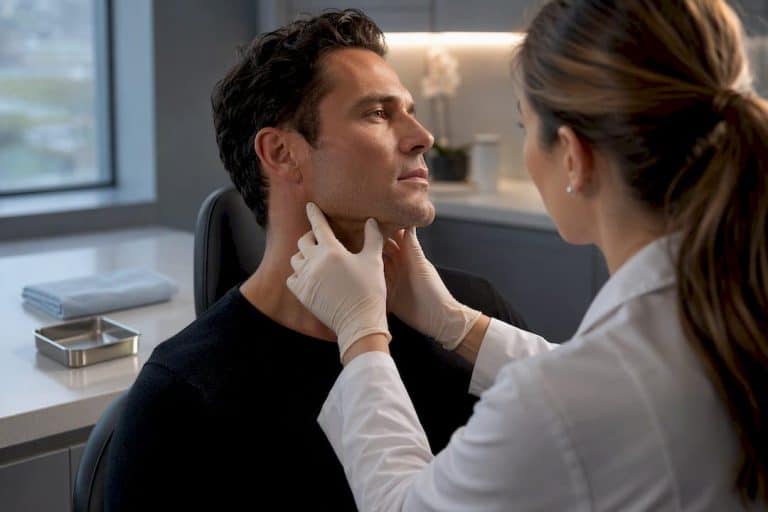
A good consultation should feel like a conversation, not a sales pitch. Before booking a course of RF treatments, it helps to ask direct questions and watch how openly they are answered.
- Confirm the device model and its Health Canada licence status.
- Ask how much training and hands-on experience the provider has with lower-face RF specifically.
- Request before-and-after photos from similar jowl cases, not just general skin-tightening examples.
- Ask what their protocol is for complications, including who you contact after hours.
- Ask whether they perform a test patch before full treatment, particularly if you have a history of sensitive skin.
Pro Tip: If a provider cannot tell you the exact device model and licence number without hesitation, treat that as a reason to keep looking.
Red flags worth taking seriously include a reluctance to name the device, promises of dramatic change from a single session, or pricing well below what similar clinics in your area charge for a comparable series. Our guide to microneedling safety covers similar licence-verification steps that apply just as well to RF.
What we see in clients considering RF for jowls
Many clients come in noticing early softening along the jawline well before they are ready to consider surgery, often in their late thirties to fifties. We build the plan around their skin quality and how much laxity is truly present, sometimes pairing RF with filler for volume or Botox to ease muscle pull that worsens jowl appearance. Realistic timelines matter more than dramatic promises.
— Felix
RF skin tightening at Enriched Med Spa
Radiofrequency skin tightening using the TriPollar system is one available non-surgical option for early jowl laxity and overall facial firmness. Because RF suits some skin types and laxity patterns better than others, plans typically start with a consultation to assess skin quality, the degree of jowl softening, and whether combining RF with filler or a neuromodulator would be more beneficial than RF alone.
If you are curious whether RF fits your situation, you can read more about our approach on our skin tightening page or book a consultation directly through our services page to get a personalized assessment rather than a generic recommendation.
This article is general information, not a substitute for advice from a qualified doctor. Consult a qualified healthcare professional about your own circumstances before acting on anything here.
Sources
- Notice: Risk of thermal harm from therapeutic and cosmetic energy-based medical devices (Health Canada)
- Evaluating the effectiveness and safety of radiofrequency for face and neck rejuvenation: A systematic review (PubMed)
- Multimodal radiofrequency application for lower face and neck laxity (PubMed)
- Randomised controlled trial of a home-based RF device vs anti-ageing cosmetic (PubMed)
FAQ
What is the best device for sagging jowls?
There is no single best device: the right choice depends on your skin quality and how much laxity is present. Multimodal, temperature-controlled RF systems used in a clinic setting tend to have the strongest supporting evidence for jowl firming, with Health Canada requiring licensed devices to meet thermal safety testing standards.
What is the most effective treatment for sagging jowls?
For significant jowl descent, a surgical facelift produces substantially greater improvement than any non-surgical option, based on a randomized comparison against fractional RF that found RF achieved about 37% of the surgical result. For mild to moderate laxity, professional RF delivered as a series remains one of the more evidence-supported non-surgical routes.
How much does a single session of radiofrequency skin tightening cost?
Pricing varies by clinic, device type, and geographic market, so there is no fixed figure that applies everywhere. Ask your provider for a written quote covering the full recommended series, since most protocols call for multiple sessions rather than one visit.
Can RF skin tightening go wrong?
Yes, and Health Canada has warned specifically about burns, scarring, fat loss, disfigurement, and nerve damage linked to certain energy-based devices. These risks are lower when the device is properly licensed, the provider is trained, and settings are individualized rather than pushed to maximum energy for a faster result.