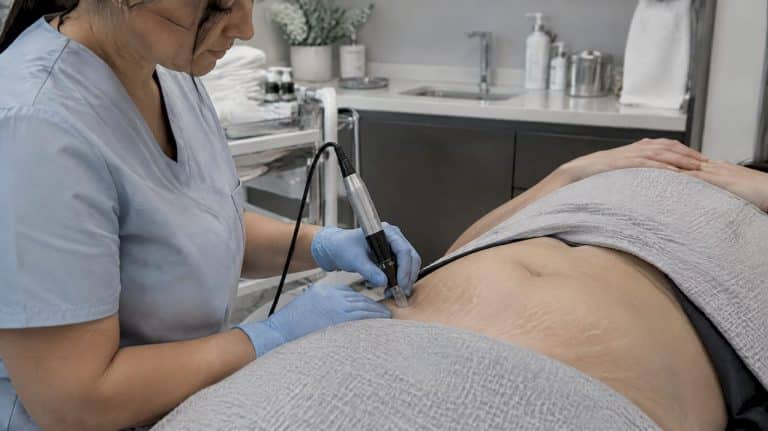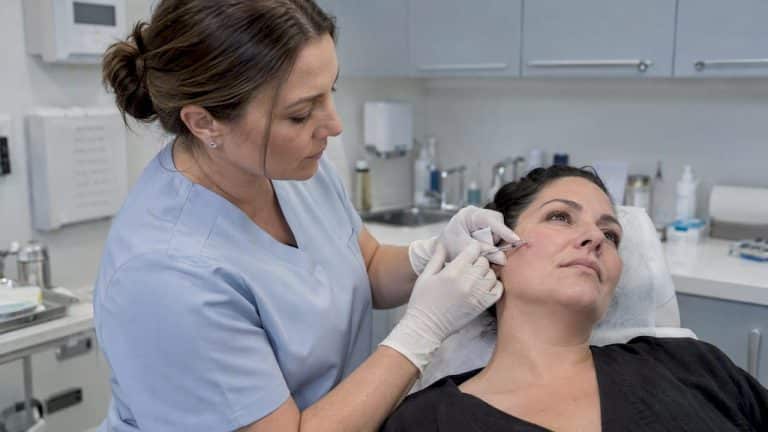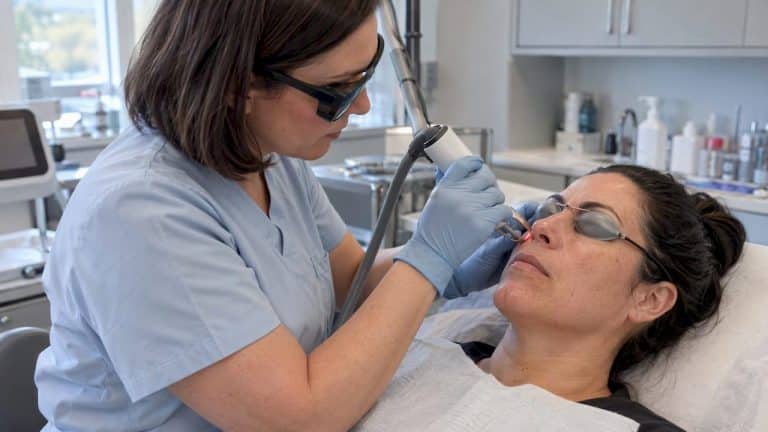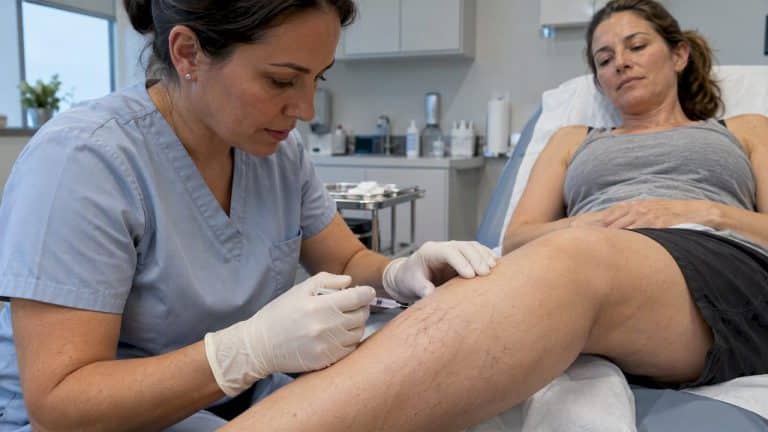
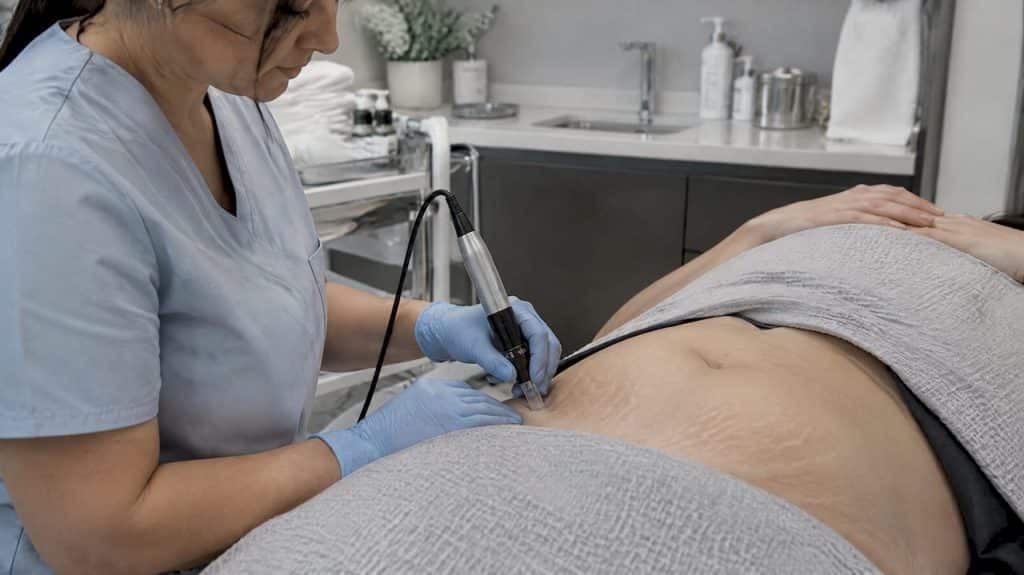
Microneedling can make stretch marks look smoother, less depressed and more blended with the surrounding skin. It cannot erase them. Results build over several sessions and keep improving for months afterwards, and newer red or purple marks tend to respond better than older white ones. Below, we walk through what the research shows, what a realistic plan looks like, who is not a good candidate, and how to check that a clinic in Ontario is doing it safely.
TL;DR
- Microneedling improves the appearance of stretch marks by stimulating collagen. It does not remove them, and no single treatment does.
- In a 2026 study, early-stage (red) marks improved more than mature (white) marks, and improvement continued up to 6 months after the last session.
- Expect a series of treatments spaced weeks apart, not a one-visit fix. Needle depth should be set by a trained professional, never pushed deep to speed things up.
- In Ontario, ask who performs the treatment, what their training is and how needles and equipment are handled before you book.
- Our microneedling service is listed at $359, and a consultation is where we decide whether your marks are a good fit.
Table of Contents
- What stretch marks are, and why they are hard to treat
- How microneedling works on stretch marks
- What the evidence says
- Before and after: reading photos honestly
- Red marks versus white marks: what to expect
- How many sessions and how long it takes
- Needle depth: why deeper is not better
- Who may not be a good candidate
- What the visit and recovery feel like
- Safety: how to check a clinic in Ontario
- Our perspective
- Booking microneedling with us
- FAQ
- Sources
What stretch marks are, and why they are hard to treat
Stretch marks (striae) are a form of scarring in the dermis, the middle layer of skin. When skin stretches quickly, the collagen and elastin fibres in that layer tear. This is why they commonly appear during puberty, pregnancy, rapid weight change or muscle gain, as the Canadian-relevant overview from the American Academy of Dermatology explains.
They change over time, and that change matters for treatment:
- Striae rubrae are the early stage. They look red, pink or purple, and the area can feel slightly raised or itchy. Blood vessels are still active in the tissue.
- Striae albae are the mature stage. They fade to white or skin-toned, and often sit slightly below the surface of surrounding skin. Collagen has been replaced by thinner, scar-like tissue.
Many clients tell us they have lived with their marks for years and only now want to do something about them, often ahead of a wedding, a vacation or simply because they are tired of covering up. That is a perfectly good reason to ask, as long as the goal is realistic. The marks are a permanent change to the skin’s structure. Treatment aims to improve how they look and feel, not to return the skin to how it was before.
How microneedling works on stretch marks
Microneedling uses fine, sterile needles to create controlled micro-channels in the skin. Public Health Ontario describes it as a motorized pen-style device or a manual roller with many needles that make tiny punctures. Your body treats those channels as minor injuries and responds by laying down new collagen and elastic fibres.
For a stretch mark, that means the thinned, scarred dermis gets a chance to rebuild. Over weeks and months, the mark often becomes less indented, with a smoother texture and a tone closer to the skin around it. Your skin needs time to do this work, which is why the best changes tend to show up well after the final session rather than the week after.
What the evidence says
The research is encouraging but honest about limits. A 2026 comparative study of microneedling as a stand-alone treatment looked at both stages of stretch marks. Participants received four monthly treatments and were assessed up to six months later. The authors reported that microneedling was safe and effective for both types, with early-stage marks improving by up to 48.89% on the Manchester Scar Scale, compared with 41.61% for mature marks. Improvement kept going between 3 and 6 months after treatment, which fits what we know about collagen remodelling.
Three takeaways:
- Earlier is generally better. Red marks respond a little more than white ones, though white marks still improved.
- Improvement is partial. A figure near 49% on a scar scale is a meaningful change, not a disappearance.
- Timing matters. Judging results at two weeks undersells what the skin is doing.
Dermatology reviews also point out that there is no single cure. Experts generally favour a personalized strategy, often combining microneedling with other modalities such as radiofrequency or targeted growth factors. For active red marks the priority is calming inflammation and pigment, while for mature white marks the focus shifts to stimulating collagen and elastic fibres. The NCBI clinical overview of stretch marks describes the same split in treatment goals.
Before and after: reading photos honestly
Many people search for before and after images, and they are useful if you read them carefully. Look for:
- The same lighting, angle and distance in both photos.
- The interval. A photo at six months tells you more than one at two weeks.
- Skin tone similar to yours, since pigment response varies.
- The number of sessions and whether other treatments were combined.
Be cautious of any image that shows a mark vanishing. What you can realistically hope for is an area that looks more blended and less depressed, especially with older white marks. At our consultations we are happy to talk through what that could look like on your own skin, and we would rather under-promise than send you home with a picture in your head that skin biology cannot deliver.
Red marks versus white marks: what to expect
| Early red or purple marks | Mature white marks | |
|---|---|---|
| What is happening | Active inflammation, visible blood vessels | Thinned, scar-like tissue with less collagen |
| Response in the 2026 study | Up to 48.89% improvement | Up to 41.61% improvement |
| Treatment focus | Calm redness and pigment while rebuilding collagen | Stimulate collagen and elastic fibre production |
| Common approach | Microneedling, sometimes with other modalities | Microneedling, often combined with other treatments |
| Realistic outcome | Less colour, smoother texture | Less depressed, more blended, rarely invisible |
The study figures come from the same 2026 trial and describe averages under study conditions. Your result may be higher or lower.
How many sessions and how long it takes
The trial above used four treatments, one month apart. In practice, the number depends on how deep and how old the marks are, your skin type, and how your skin recovers between visits. Deeper, longer-standing marks generally need more sessions and more patience than shallow, newer ones.
Here is a sensible way to think about the timeline:
- Consultation. We look at the marks, your skin tone and history, and talk about goals.
- A series of sessions, spaced weeks apart. The gap lets the skin repair before it is treated again.
- A waiting period. Collagen remodelling continues after your last visit, and the most visible change often shows months later.
- Review and maintenance. Some clients add a top-up session, or a complementary treatment, once they see how the skin has responded.
If you are planning around an event, start early. A wedding in three months is workable for a first series. A wedding in three weeks is not the time to begin, and we will tell you so.
Needle depth: why deeper is not better
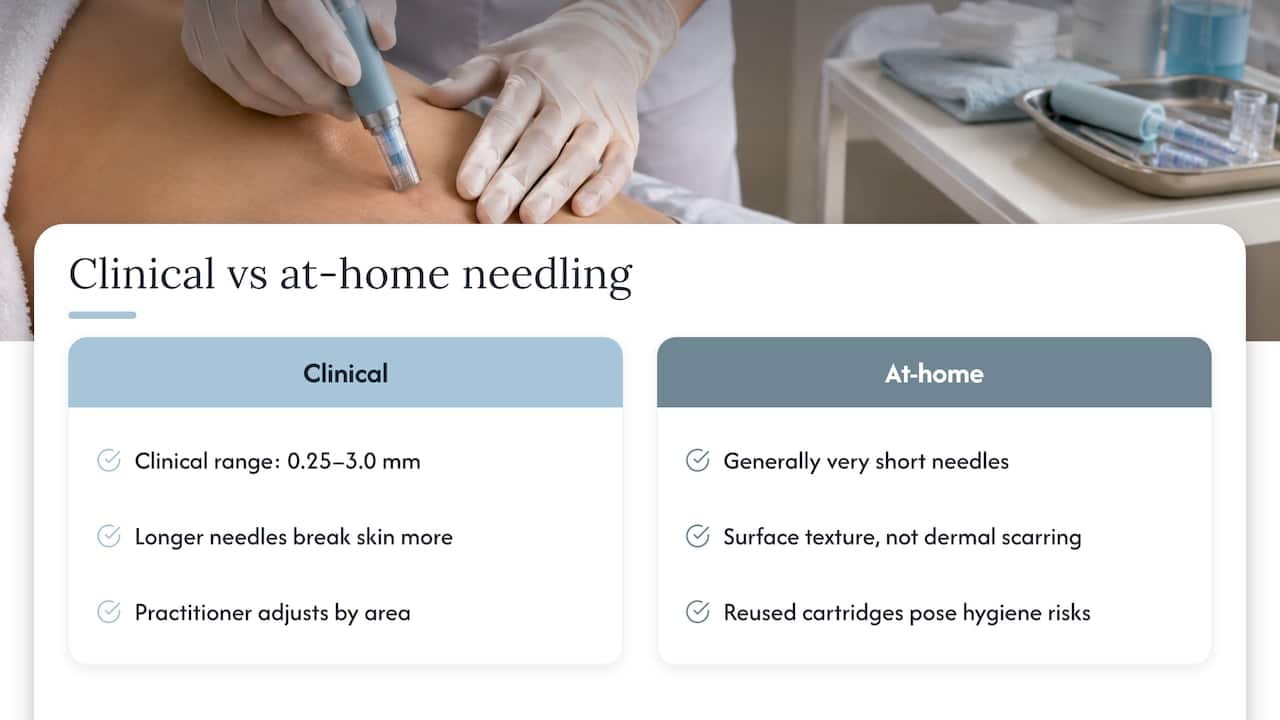
You may read online that stretch marks need needles of 2.5 to 3.0 mm. Needle lengths used in clinical practice do range from 0.25 mm up to 3.0 mm, according to Public Health Ontario’s guidance, but longer needles break the skin more significantly. That raises the risk of infection, scarring and pigment changes, particularly in deeper skin tones.
A careful practitioner will usually start conservatively, adjust by area and thickness of skin, and build up over several visits. The stomach, hips, thighs and breasts all behave differently. Skin over bone or thin skin needs a different approach from thicker skin on the thighs.
At-home rollers and pens are a different matter. They are generally limited to very short needles, which can help with surface texture but are not designed to reach the dermal scarring behind a stretch mark. They also carry their own hygiene risks if cartridges are reused or not stored properly.
Who may not be a good candidate
Microneedling is not suitable for everyone, and a good provider will say no when it is the wrong choice. Skin that is inflamed, infected or has a rash should not be treated. The Durham Region microneedling guidance for personal service settings lists this as a check before service. Other situations to raise with us at consultation include:
- Active acne, cold sores or eczema in the treatment area.
- A tendency to keloid or raised scarring.
- Pregnancy or breastfeeding. Stretch marks often appear at this stage, but we generally suggest waiting.
- Recent sun exposure or a tan.
- Blood thinners, isotretinoin or other medications that affect healing.
- Very fresh marks that are still changing rapidly. Sometimes the right call is to wait or begin with a gentler approach.
It also helps to know when something else might serve you better. Topical creams and lotions have a patchy track record for existing marks, and the AAD notes that many products do not seem to work at all. For some people, combining microneedling with radiofrequency or a laser-based treatment is a better route, and we would talk through that during your assessment.
What the visit and recovery feel like
A numbing cream is usually applied first, then the device passes over the area. Most people describe a scratching or vibrating sensation, stronger over bony areas. Afterwards, expect redness similar to a mild sunburn, some tightness and sometimes light swelling. This usually settles over a few days. Our guide on microneedling downtime in Canada walks through the timeline so you can plan around work and events.
For the days after:
- Keep the skin clean and gently moisturized.
- Avoid direct sun and use broad-spectrum SPF on any exposed area.
- Skip exfoliants, retinoids, saunas and strenuous workouts until we say your skin is ready.
- Do not pick at flaking skin. Let it shed.
Our post-microneedling care guide covers the common mistakes, and the preparation guide shows how to get your skin ready. Mild redness and stinging are expected. Burning, ongoing discharge, spreading redness or fever in the first 24 to 48 hours is not normal, and you should contact your provider or see a doctor promptly.
Safety: how to check a clinic in Ontario
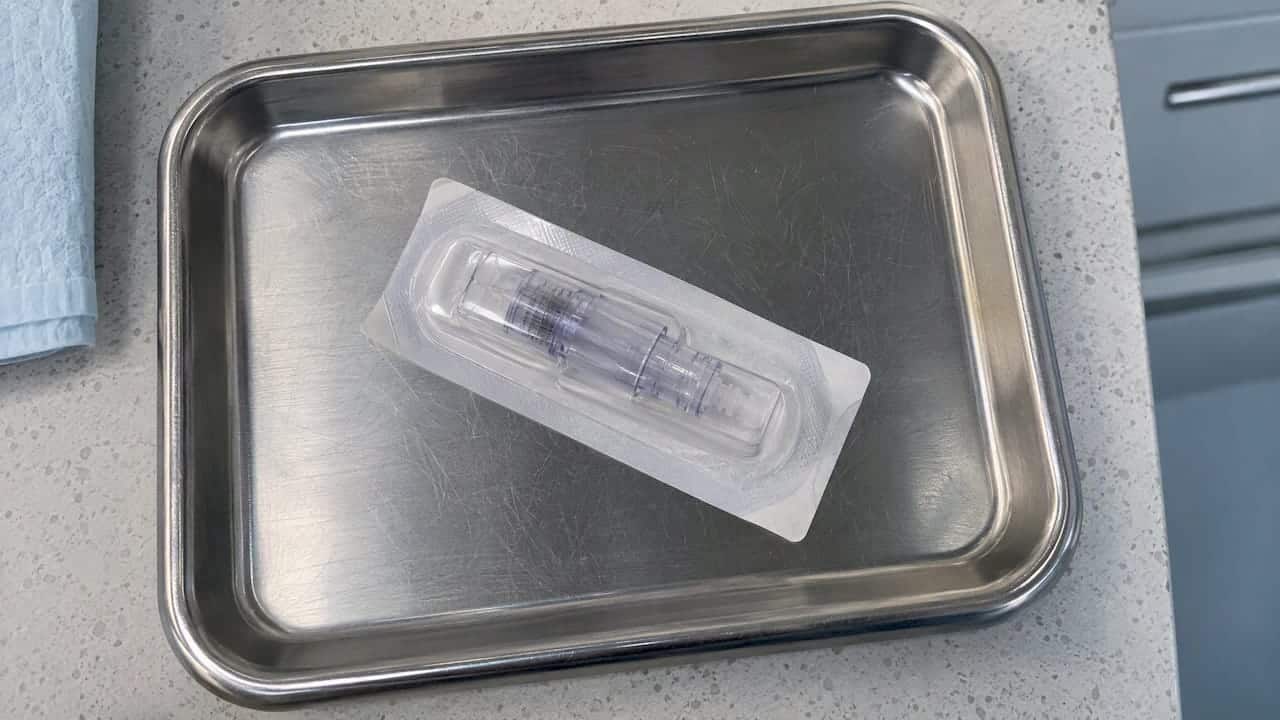
Stretch mark treatment involves breaking the skin over a large area, so the standards of the clinic matter as much as the technique. Public Health Ontario stresses that infection risk depends on needle length and the environment, and that providers must follow infection prevention and control (IPAC) practices, including single-use sterile needle cartridges that are discarded right after each session. Durham Region’s guidance adds that needles and cartridges stay sealed in sterile packaging until use.
Radiofrequency microneedling is treated differently again. Health Canada has flagged risks such as burns, scarring and infection with devices that combine needles and RF energy, since these are regulated as medical devices.
Oversight in Ontario’s med spa sector has also drawn scrutiny. A Toronto Star investigation reported that a clinic’s medical director was not involved in a procedure involving a prescription anesthetic cream. Medical delegation means a physician is not always on site, so ask these questions before you book:
- Who will perform my treatment, and are they a regulated health professional such as a nurse?
- What specific training do they have in microneedling?
- Has the supervising medical director assessed skin like mine, or will I only meet the provider?
- Are needles single-use and opened in front of me?
- How are non-disposable items cleaned and sterilized?
A clinic that answers these plainly is one you can trust. One that dodges them is not. We go into more depth in our articles on whether microneedling is safe and a microneedling checklist for safe results.
Our perspective
When clients first come to us about stretch marks, they are usually hoping for one of two things: that the marks will disappear, or that nothing can be done. Neither is quite true, and we start by saying so.
Our approach is to look at the mark itself before choosing a tool. Is it still red? Is it white and sunken? Is the skin around it thin, or tanned, or sensitive? Those answers shape whether we begin with microneedling alone and how gently we start. We would rather build up across visits than push depth early and risk pigment changes or irritation, and we are comfortable telling a client that their expectations need adjusting.
Treatments here are performed by experienced, nurse-level injectors and aestheticians, and we put weight on consultation, pre-care and post-care instructions. We also tell clients when a different option, such as radiofrequency skin tightening, is worth considering alongside microneedling. Stretch marks are common, and nothing about them needs to be hidden or feared. If you want to improve how they look, we will walk you through it one step at a time.
— Felix
Booking microneedling with us
If you are in Woodbridge, Vaughan or East Gwillimbury, our microneedling service is listed at $359. Because stretch marks vary so much, we start with an assessment so we can recommend a plan, including how many visits make sense for your skin. If you want to read more first, our article on how microneedling revives skin safely is a good next step. When you are ready, you can reach us through Enriched Med Spa.
FAQ
Does microneedling help with stretch marks?
Yes, it can improve their appearance. In a 2026 study, both red and white stretch marks improved, with early marks improving more. It does not make them disappear, and results vary from person to person.
How long until I see results?
Some clients notice smoother texture within weeks, but collagen remodelling is slow. In the study above, improvement continued between 3 and 6 months after treatment. Judge your results at several months, not several days.
Is microneedling for stretch marks painful?
Most people find it tolerable with numbing cream. Bony areas such as the hips feel sharper than fleshy areas. Afterwards the skin feels like a mild sunburn for a few days.
Can I do microneedling for stretch marks at home?
Home devices use short needles and are meant for surface texture, not dermal scarring. Reusing or poorly cleaning them also raises infection risk. For stretch marks, a regulated professional working in a clinic that follows Ontario infection control practices is the safer route.
Is it safe for darker skin tones?
It can be, but deeper needle settings raise the risk of pigment changes, so a conservative start matters. Tell your provider about your skin history at the consultation, and ask how they adjust depth and spacing for your skin.
Sources
- A Comparative Study of Microneedling as a Stand-Alone Treatment for Striae Rubrae and Albae (PubMed)
- Stretch marks: why they appear and how to get rid of them (American Academy of Dermatology)
- Stretch marks systematic review (Actas Dermo-Sifiliográficas)
- Stretch Marks (NCBI Bookshelf)
- At a glance: Personal Services and Infection Risks (Public Health Ontario)
- Microneedling guidance (Durham Region Health Department)
- Potential risks of radiofrequency microneedling (Health Canada)
- Ontario’s weak oversight of med spas puts patients at risk (Toronto Star)