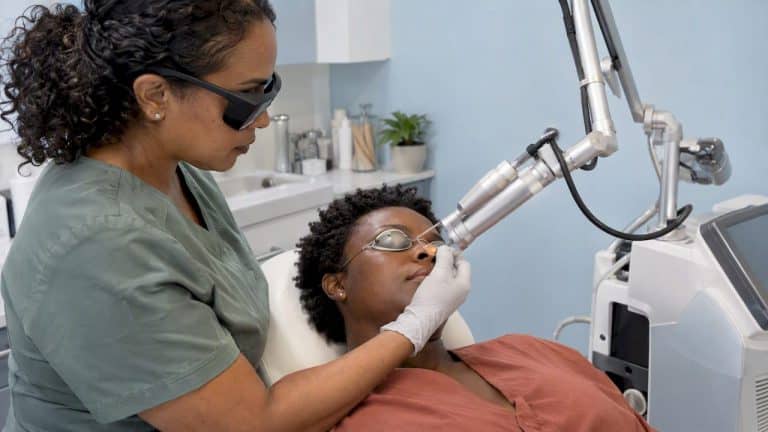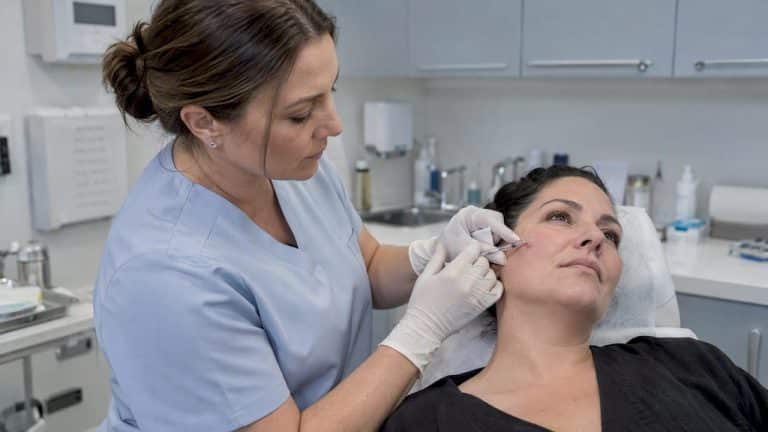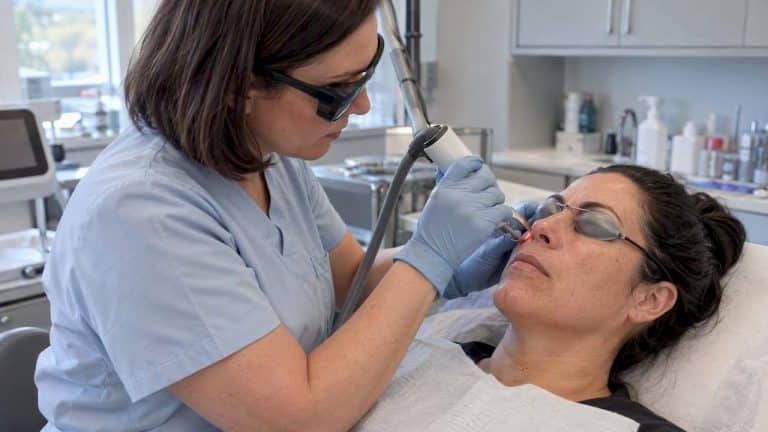
Skin tag removal in Canada typically costs between $50 and $350 or more per visit, depending on the method, the number of tags, and who performs the procedure. Provincial health plans generally treat removal as cosmetic and won’t cover it unless a physician documents medical necessity, such as bleeding, pain, or repeated irritation. Some clinics offer professional removal for tags that are simply unwanted, with pricing confirmed after a quick assessment.
TL;DR:
- Skin tag removal in Canada costs between $50 and $350 or more, depending on the number, size, and method used.
- Insurance typically covers removal only if medical necessity is documented, such as pain, bleeding, or interference with function.
- Common methods include cryotherapy for small tags, electrocautery for larger or vascular tags, and surgical excision for complex cases, with healing typically completing in two weeks.
- Pricing varies with location on the body, provider credentials, and additional fees like biopsies or local anesthesia, so itemized quotes are essential.
- Patients should verify clinic oversight and avoid at-home removal to prevent risks like infection, scarring, and uncontrolled bleeding.
Table of Contents
- How much does skin tag removal cost in Canada?
- Which removal method fits your skin tag?
- Does provincial insurance cover skin tag removal?
- What changes your skin tag removal quote?
- How do you choose a safe clinic for skin tag removal?
- What happens during a skin tag removal appointment?
- Why clinical oversight matters for skin tag removal
- Ready to book your skin tag removal consultation?
- Sources
How much does skin tag removal cost in Canada?
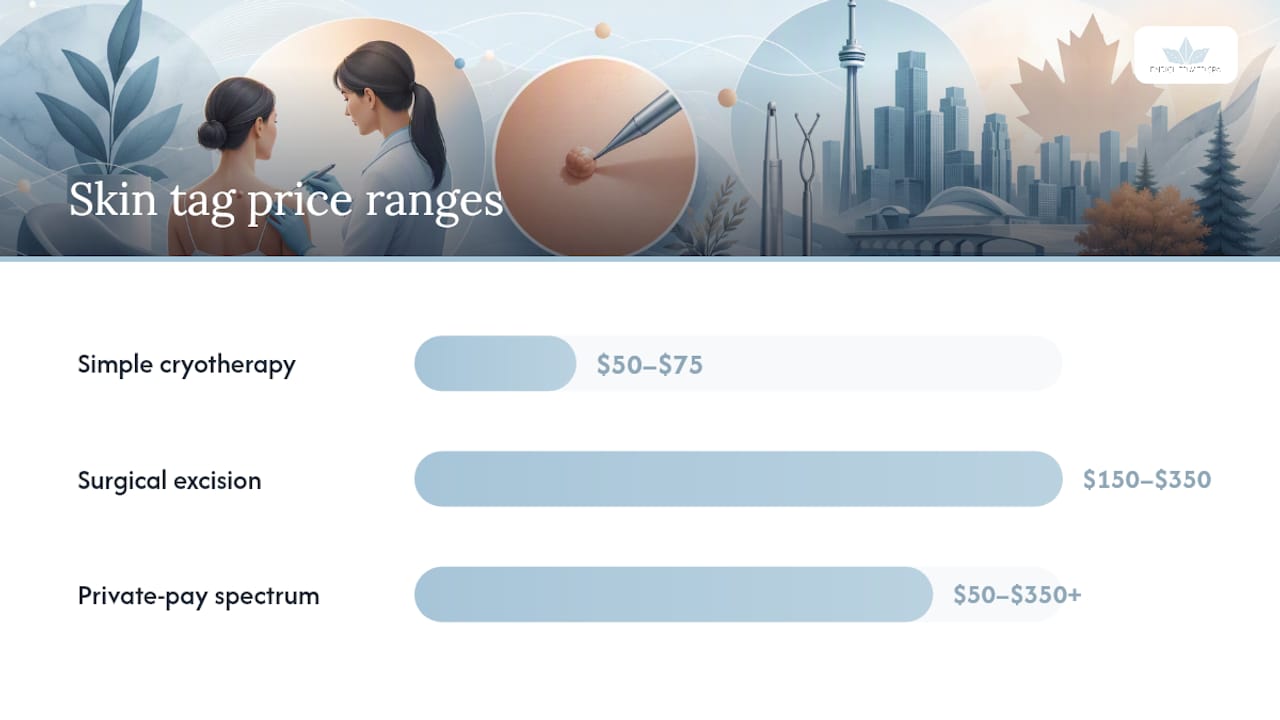
Most Canadian clinics price skin tag removal one of three ways: per tag, in count tiers, or by time booked. A single small tag removed by cryotherapy or electrocautery often starts around $50 to $75. Surgical excision, which is usually reserved for larger or more complex tags, can run $150 to $350 or higher once you factor in local anaesthetic and any biopsy work.
Clinics dealing with multiple tags rarely charge a flat per-tag rate all the way up. Pricing tends to fall into bands:
- 1 to 5 tags: often a flat consultation-plus-procedure fee
- 6 to 15 tags: a discounted per-tag rate or a fixed session price
- 16 or more tags: usually billed by time (10, 15, or 30-minute sessions) rather than by count
Pro Tip: Ask for a written quote that separates the consultation fee from the procedure fee. Some clinics waive the consultation cost if you go ahead with treatment the same day.
Consultation fees, when charged separately, typically add some additional cost, and add-ons like local anaesthetic, biopsy for unusual lesions, or follow-up wound checks may increase the total price. Private-pay cosmetic removal commonly starts around $50 to $75 for simple cryotherapy and can reach $350 or more for excision on complex or numerous tags, so getting a firm number before you book saves you from surprises at checkout.
Which removal method fits your skin tag?
The method a clinician chooses depends on the tag’s size, location, and how your skin tends to heal, not a fixed rulebook. Method choice should prioritize cosmetic outcome and low pigmentation risk over speed.
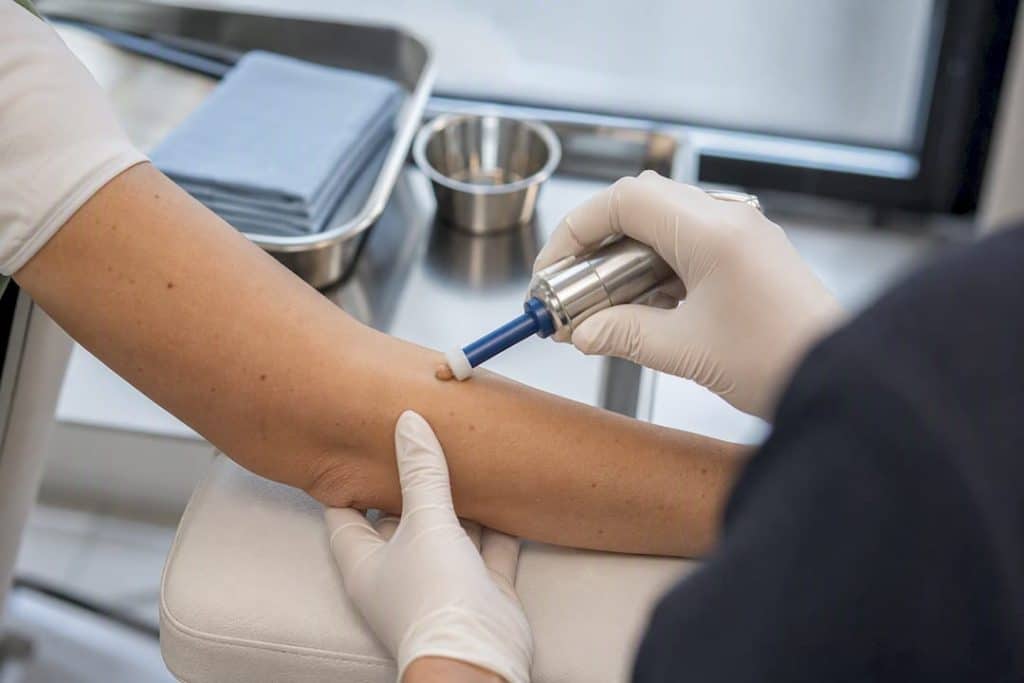
- Cryotherapy (freezing): Best for small, straightforward tags. It’s the lowest-cost option, and healing usually takes about one to two weeks.
- Electrocautery (heat treatment): Offers more precision and controls bleeding as it removes the tag, which suits slightly larger or vascular tags. Cost sits in the moderate range.
- Surgical excision: Used for larger tags, clusters, or delicate areas like the eyelid, where a scalpel or sterile scissors give more control. This method carries higher cost because it often needs local anaesthetic and, occasionally, a biopsy if the tag looks atypical.
Healing across these methods generally takes 5 to 14 days, with minimal scarring when the procedure is done by a trained provider.
Does provincial insurance cover skin tag removal?
Generally, no. Provincial health plans treat skin tag removal as a cosmetic procedure, and coverage only applies when a physician documents medical necessity, such as persistent pain, bleeding, infection, or interference with function. If a tag is simply unwanted but causing no symptoms, expect to pay privately regardless of province.
- Ontario (OHIP): Cosmetic removals are private-pay; medically necessary cases require physician documentation.
- Manitoba: Lesion and wart removal can be insured when medically required, with tariffs that vary by technique, lesion count, and site.
- Nova Scotia: Cosmetic procedures are typically not insured, and medically necessary services may need pre-approval before coverage applies.
If you believe your case qualifies as medically necessary, book a physician assessment first, document your symptoms clearly, and ask whether pre-approval is required before scheduling the removal. Skipping that step is the most common reason patients end up paying out of pocket for something that might have been covered.
What changes your skin tag removal quote?
A handful of practical factors explain why two people can pay very different amounts for what looks like the same procedure.
- Location on the body. Eyelid or facial tags cost more because they demand precision work and carry a higher risk of pigmentation change or scarring if handled carelessly.
- Number of tags. Clinics often bundle multiple tags into a discounted rate or switch to time-based billing once you pass a handful, rather than charging per tag indefinitely.
- Provider credentials. A medical aesthetician typically charges less than a physician or dermatologist for the same cosmetic removal, though physician oversight matters more for larger or atypical lesions.
- Add-ons. Biopsy fees, local anaesthetic, and follow-up wound checks are common extras that aren’t always included in the headline price.
Ask any clinic to itemize these before you commit, so you’re comparing like for like.
How do you choose a safe clinic for skin tag removal?
Not every provider offering skin tag removal has the same level of oversight, and that’s worth checking before you book.
- Ask who performs the procedure and whether a physician supervises the care.
- Confirm the clinic follows provincial licensing rules and sterile technique protocols.
- Request a written estimate listing method, tag count, and any possible add-on fees.
- Watch for red flags: no proper assessment, pressure to treat immediately, or vague answers about aftercare.
Pro Tip: If a provider can’t clearly explain what happens if a tag turns out to be something other than a skin tag, that’s a sign to look elsewhere.
Attempting removal at home carries real risk of infection, scarring, and uncontrolled bleeding, and that risk climbs in sensitive spots like the eyelid where sterile technique matters most.
What happens during a skin tag removal appointment?
Most appointments run 15 to 30 minutes in total, including assessment, numbing if needed, and the treatment itself, since the actual removal often takes just seconds per tag.
- Assessment first: your provider examines each tag and confirms the best method.
- Treatment: cryotherapy, electrocautery, or excision, depending on the tag.
- Aftercare: keep the site clean and dry, and watch for unusual changes.
Healing generally falls within the 5 to 14 day range noted earlier, varying by method. Contact your clinic if you notice persistent bleeding, spreading redness, or fever after the procedure.
Why clinical oversight matters for skin tag removal
At Enrichedmedspa, we see many clients come in simply wanting a tag gone, but a proper assessment still matters. A lesion that looks routine can occasionally need a closer look, and having physician-supervised care means that possibility gets caught early rather than assumed away. We prioritize a good cosmetic outcome alongside safety, particularly on visible areas like the neck and eyelids.
— Felix
Ready to book your skin tag removal consultation?
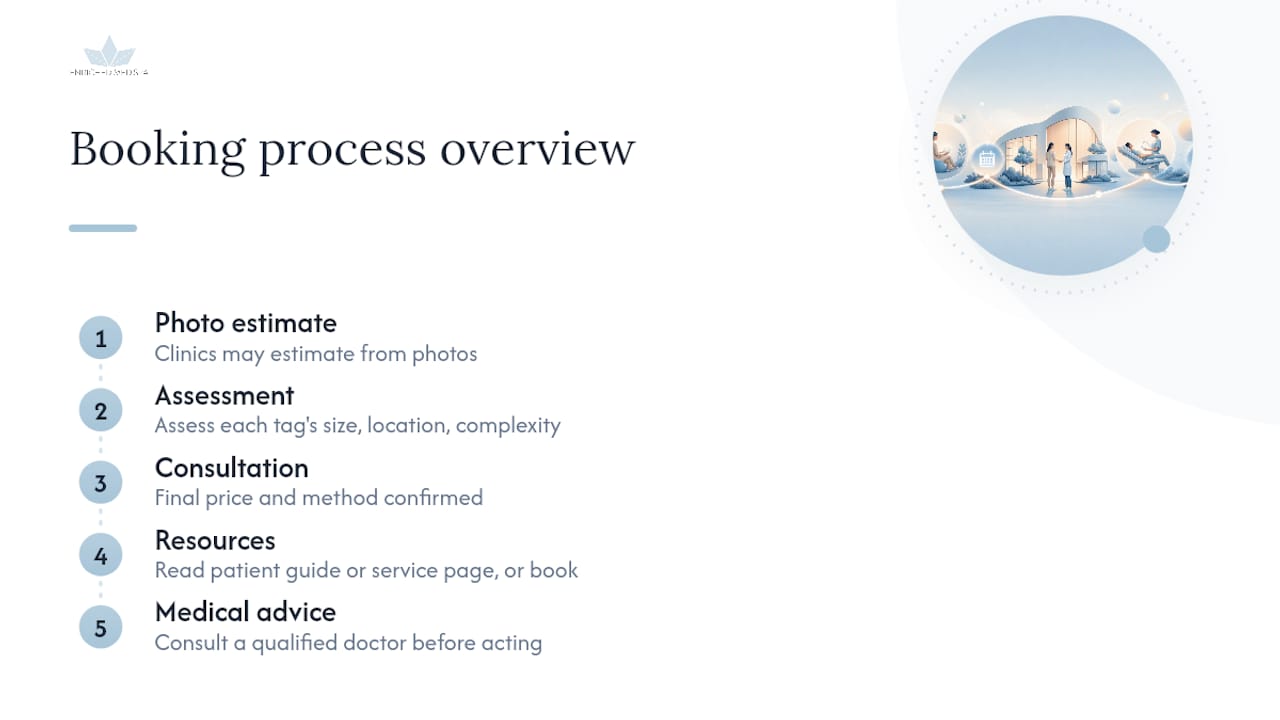
Some clinics can provide an estimate based on photos before your appointment. They assess each tag for size, location, and complexity, then confirm the final price and method at your consultation. If you’re weighing removal against other skin concerns, our patient guide to medical aesthetics walks through what to expect from a first visit. You can also review our skin tag removal service page for details, or book a consultation directly to get your personalized quote.
This article is general information, not a substitute for advice from a qualified doctor. Consult a qualified healthcare professional about your own circumstances before acting on anything here.
Sources
- Ontario government — health care options
- Doctors Manitoba — Lesion and wart removal (billing & tariffs)
- Nova Scotia — healthcare services covered by your health card