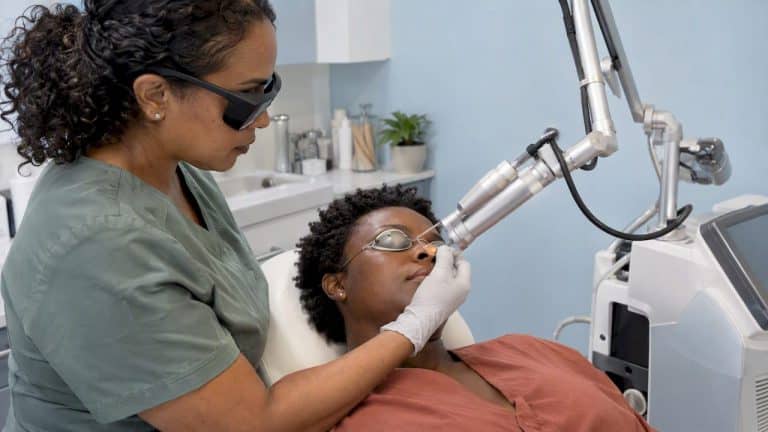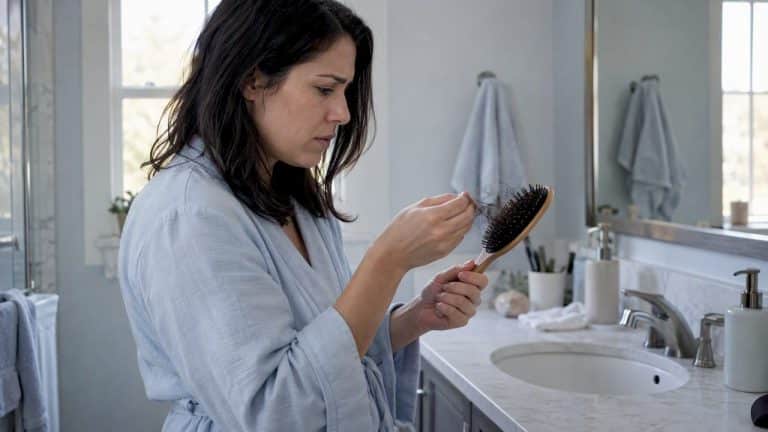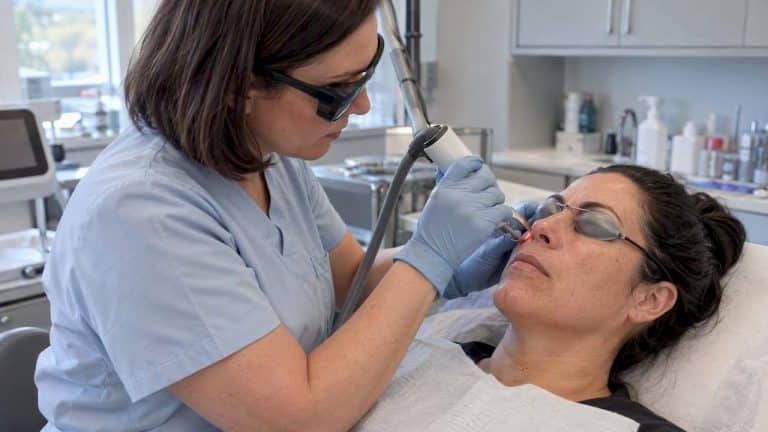
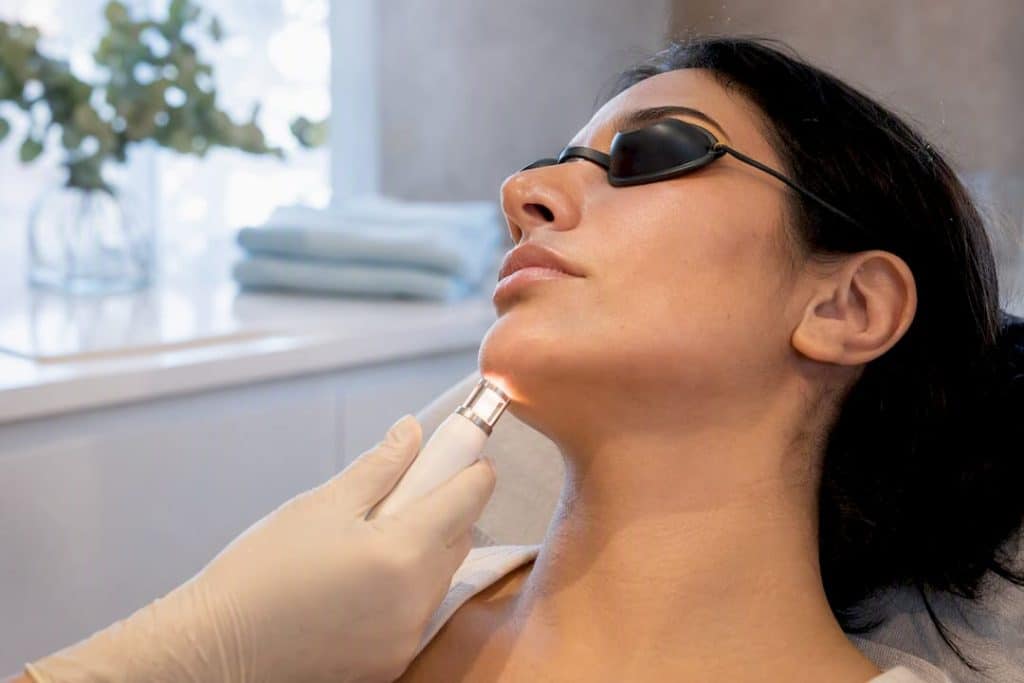
Laser hair removal works for PCOS, but not the way most marketing suggests. The hair follicles driving unwanted growth respond to androgen signals your body keeps producing, so lasting results usually depend on pairing laser sessions with maintenance visits and, often, hormonal management alongside them.
TL;DR:
- Laser hair removal reduces hair count and makes remaining hairs finer and lighter, but complete, permanent removal is rare in PCOS patients.
- Multiple sessions spaced 4 to 6 weeks apart are necessary, with some clients requiring ongoing maintenance every 6 to 12 months due to hormonal influences.
- Alexandrite devices show the strongest evidence for effectiveness in PCOS-related hirsutism, especially on light to medium skin tones; Nd:YAG is safer for darker skin.
- Side effects are typically mild and temporary, but paradoxical hair growth can occur, especially on the face and in darker-skinned individuals.
- Combining laser treatments with hormonal management, such as contraceptives or anti-androgens, improves long-term outcomes by reducing androgen signals.
Table of Contents
- Does laser hair removal work for PCOS? Setting realistic expectations
- How laser hair removal works and which devices suit your skin
- What a typical treatment course looks like, and how maintenance works
- Side effects and safety, especially for darker skin and lighter hair
- Combining laser with medical management for better, longer-lasting results
- How to choose a clinic for PCOS-related hair removal
- What we see in practice at Enriched Med Spa
- A note from our team on managing expectations
- Ready to talk laser hair removal for your PCOS pattern?
- Sources
Does laser hair removal work for PCOS? Setting realistic expectations
Yes, laser hair removal for PCOS reduces hair growth in most patients who complete a full treatment course. The honest answer requires two parts: how much reduction to expect, and how long it tends to hold.
A 2024 systematic review looking at six studies covering 423 women with PCOS found that laser and light-based therapies significantly improved hirsutism severity, with alexandrite devices producing stronger hair-reduction signals than intense pulsed light (IPL) across the pooled data. That is a solid signal, but the review’s authors were careful to note the certainty of evidence remains limited by small sample sizes and inconsistent methods between trials.
Here is where PCOS complicates the picture. Hair follicles in androgen-sensitive areas, the chin, jawline, upper lip, and midline of the abdomen, keep receiving hormonal signals to grow, even after the follicle itself has been damaged by laser energy. That is different from someone without PCOS getting laser hair removal on their legs, where the follicle has no ongoing hormonal push once it’s treated.
An observational study of 172 women found short-term quality-of-life improvements after laser therapy, measured through reduced DLQI scores at 12 to 24 weeks. But most participants saw hair regrowth within one to six months. That does not mean the treatment failed. It means the benefit window was real but time-limited, which is exactly why we talk about laser as a management tool for PCOS rather than a one-time fix.
What actually changes with treatment:
- Hair count in the treated area typically drops, sometimes substantially, though rarely to zero
- Remaining hairs are often finer and lighter (vellus-like) rather than the thick, dark terminal hairs PCOS tends to produce
- Time spent shaving, plucking, or waxing usually shrinks even when some regrowth occurs
- Facial areas often respond less predictably than body areas, partly because facial follicles sit closer to active androgen receptors
Pro Tip: Ask your provider to photograph and count hairs in a small marked area before you start. It gives you an honest, personal benchmark instead of relying on memory or general study percentages that may not reflect your specific hair pattern.
A 2005 randomized controlled trial comparing high fluence alexandrite treatment against a low fluence control arm found clinically meaningful declines in self-reported hirsutism severity and less time spent on hair removal in the high-fluence group. That trial, and others like it, is part of why alexandrite shows up repeatedly as a preferred device for PCOS-related hirsutism, a point worth understanding before you book anywhere.
How laser hair removal works and which devices suit your skin
Laser hair removal relies on a principle called selective photothermolysis. The laser targets melanin, the pigment in your hair follicle, heating it enough to damage the follicle’s ability to produce new hair, while (ideally) sparing the surrounding skin. That is the theory. In practice, device choice matters enormously, especially for PCOS patients who often have thicker, darker terminal hairs mixed with finer regrowth.
The main device categories:
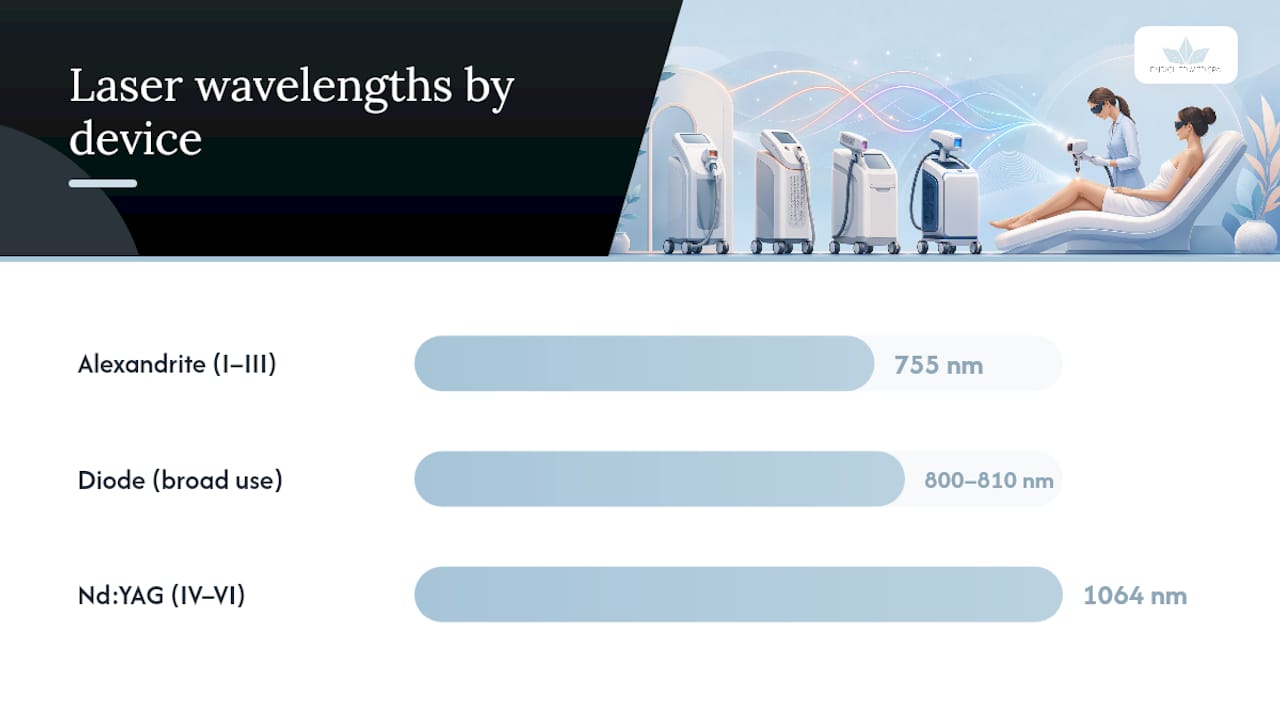
- Alexandrite (755nm): Works well on lighter to medium skin tones (Fitzpatrick I to III) with dark hair. This is the device with the strongest evidence base in PCOS-specific studies, showing up repeatedly in the trials behind current recommendations.
- Diode (800 to 810nm): A versatile middle ground, often used across a broader range of skin tones with reasonable safety margins.
- Nd:YAG (1064nm): The safer choice for darker skin (Fitzpatrick IV to VI) because its longer wavelength bypasses surface melanin more effectively, lowering burn and pigment-change risk.
- IPL (intense pulsed light): Not a true laser, and the evidence for IPL in PCOS-related hirsutism is weaker than for alexandrite. Home IPL devices in particular have no convincing evidence for efficacy in this population and shouldn’t replace in-clinic care.
One detail that surprises a lot of clients: laser hair removal is largely ineffective on white, grey, or very light blond hair, because there’s not enough pigment for the laser to target. If that describes some of your hair, electrolysis remains the only method suited to permanently treating those individual follicles.
Pro Tip: If you have naturally dark, coarse hair on light to medium skin, ask specifically whether the clinic uses alexandrite, since PCOS-specific trial data leans in its favour over IPL.
Understanding the hair growth cycle also helps explain why one session never does the job. Laser only damages follicles in the active growth (anagen) phase, and at any given time, a portion of your hair is resting or shedding. That’s the real reason behind multiple sessions, not a sales tactic.
What a typical treatment course looks like, and how maintenance works
Most PCOS patients need more sessions, spaced more thoughtfully, than the general laser hair removal population. Here’s how that usually plays out in practice.
- Patch test first. A small test area, treated and observed over several days to weeks, tells your provider how your skin and hair respond before committing to a full course.
- Initial series: typically 6 to 10 sessions. Clinical trials in PCOS populations commonly used 5 to 8 sessions, though real-world practice often runs slightly longer to account for the mixed terminal and vellus hair pattern PCOS produces.
- Spacing: generally every 4 to 6 weeks. This interval is timed to catch follicles as they cycle into the active growth phase, since treating too soon misses hairs that were resting during the last visit.
- Reassessment around session 4 to 5. This is usually when visible change becomes clear enough to judge whether the current settings and device are working for you, and to adjust fluence or pulse duration if needed.
- Maintenance: often every 6 to 12 months after the initial series. Because PCOS keeps signalling androgen-sensitive follicles to regrow hair, most clients return periodically rather than finishing treatment entirely, a pattern our permanent versus temporary breakdown covers in more detail.
The honest caveat here is that hormonal fluctuation, not treatment failure, drives most of the variability in how often someone needs maintenance. A client whose PCOS is well managed medically may stretch maintenance visits further apart than someone whose androgen levels are still elevated. That’s not a reflection of how well the laser “worked”. It’s biology doing what PCOS biology does. For a sense of how session frequency is usually planned out, our guide on how often you need laser hair removal walks through the practical side of this.
Side effects and safety, especially for darker skin and lighter hair
Most side effects from laser hair removal for PCOS are mild and temporary. Redness, mild swelling, and a sensation like a light sunburn are common in the first day or two after treatment. These usually resolve without intervention.
Common, expected reactions:
- Temporary redness and follicular swelling (often mistaken for irritation, but it’s normal)
- Mild sensitivity or tightness in the treated area for a day or two
- Occasional temporary darkening or lightening of skin, especially with inconsistent sun protection
The side effect that deserves more attention than it usually gets is paradoxical hypertrichosis, where laser treatment triggers increased hair growth in the treated area instead of reducing it. This happens more often in PCOS patients than the general population, likely because of the hormonal environment that already predisposes certain follicles to respond unpredictably to heat stimulation. Patients with Mediterranean or Middle Eastern heritage and darker skin tones appear to carry a higher risk for this reaction, and it tends to show up on the face and jawline rather than the body.
If paradoxical hypertrichosis occurs, most providers recommend switching to electrolysis for the affected area rather than continuing laser at a different setting, since electrolysis treats each follicle individually and doesn’t rely on the same thermal trigger.
Pro Tip: If you’ve noticed patchy or unusually located hair growth after any past hair removal method, mention it during your consultation before your first session, not after. It changes which device and fluence your provider will choose.
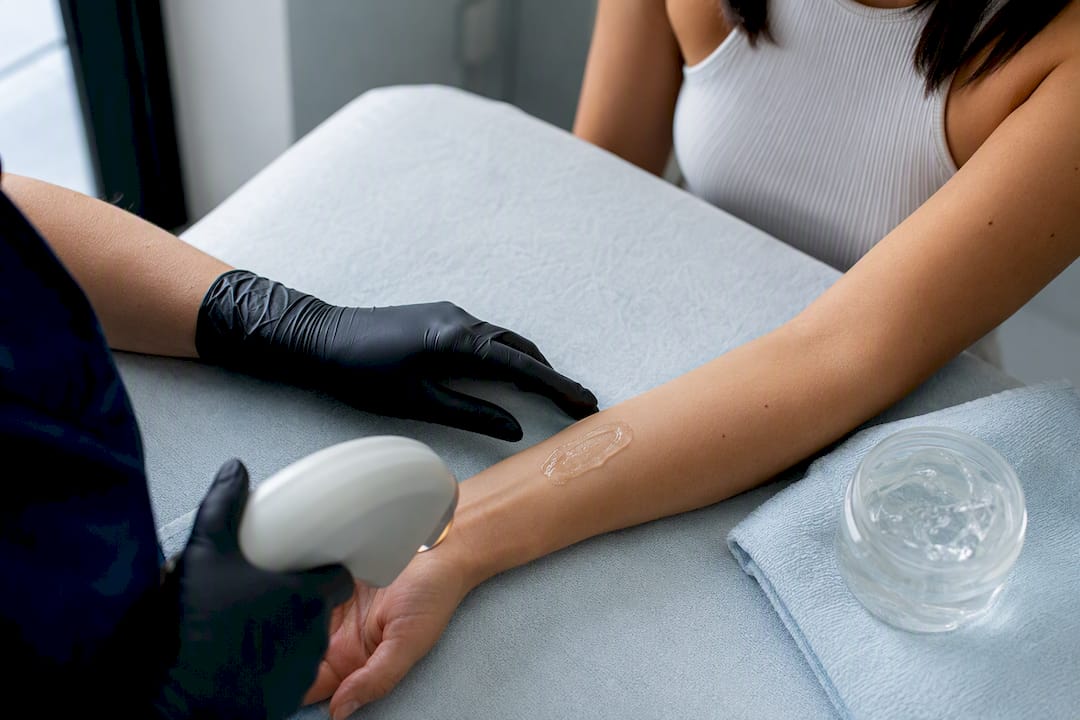
Risk mitigation in practice comes down to a few consistent habits: test patching before a full session, matching wavelength to skin tone (Nd:YAG for darker skin), using conservative fluence settings on the first few visits, and proper cooling during treatment. None of these guarantee zero side effects, but they meaningfully lower the odds of a bad outcome.
Combining laser with medical management for better, longer-lasting results
The international evidence-based PCOS guideline recommends considering mechanical laser and light therapies for facial hirsutism, but it pairs that recommendation with something equally important: discussing combined oral contraceptives (COCP) as first-line pharmacological treatment to work alongside cosmetic hair removal, not instead of it.
This isn’t guideline bureaucracy. The 2024 systematic review found that combining laser with systemic agents like metformin or COCP produced better outcomes than laser alone across the studies reviewed. That makes physiological sense: laser addresses the follicle that’s already there, while hormonal treatment reduces the androgen signal telling new follicles to activate.
What this looks like in practice:
- COCP can lower circulating androgens, which may slow the rate at which new terminal hairs appear over time
- Metformin, often prescribed for insulin resistance in PCOS, may indirectly support hormonal balance that affects hair growth patterns
- Anti-androgen medications are sometimes added when COCP alone isn’t managing hirsutism adequately
A safety note worth stating plainly: some anti-androgen medications carry teratogenic risk and require reliable contraception while in use. Any decision to start or combine these medications belongs with your prescribing physician, not your aesthetics provider. The two should be coordinating, not operating in isolation. If you’re managing PCOS with a doctor or endocrinologist, it’s worth telling them you’re pursuing laser hair removal so the plans align.
How to choose a clinic for PCOS-related hair removal
Not every laser clinic is set up to manage the specific challenges PCOS presents, so a slightly more thorough consultation is worth your time upfront.
- Ask what device they use and why. A provider who can explain why they’d choose alexandrite versus Nd:YAG for your skin and hair combination is showing real clinical reasoning, not a script.
- Confirm they test patch before a full session. This should be standard, not an upsell.
- Ask to see real before-and-after results from PCOS clients specifically, not generic hair removal marketing photos.
- Get a clear, honest framing of expected outcomes. A provider who talks in ranges and maintenance rather than guarantees of permanence is giving you the truthful version.
- Ask about maintenance pricing upfront, not just the initial package cost, since PCOS-related hair removal is rarely a one-time expense.
Red flags to walk away from: promises of permanent, guaranteed results; no test patch offered; high-pressure package sales before you’ve had a proper consultation.
On cost: pricing depends heavily on treated area, device type, and clinician expertise. Health-technology assessments modelling 4 to 8 sessions over 6 to 12 months found only modest quality-of-life gains within short time horizons, which is a useful reminder to budget for maintenance rather than treating the initial series as the finish line.
Pro Tip: Ask your clinic whether their laser hair removal pricing includes any maintenance sessions in the first year. Some do, some don’t, and it changes the real cost significantly.
What we see in practice at Enriched Med Spa
Many clients come after trying shaving, waxing, or at-home devices for years, often frustrated that nothing seems to keep pace with how quickly hair returns. What we typically see with PCOS clients mirrors the research: a strong initial response through the treatment series, followed by a maintenance phase that varies quite a bit from person to person.
Clients whose PCOS is being actively managed medically tend to need less frequent maintenance than those who aren’t. That pattern lines up with what the guideline evidence would predict, and it’s part of why we ask about hormonal management history during consultations rather than treating every hirsutism case identically.
Treatment parameters such as fluence, pulse duration, and session spacing are personalized based on how each individual’s skin and hair respond across the series, with tracking over time so adjustments are made based on observed results rather than a fixed protocol.
A note from our team on managing expectations
We’d rather tell you the honest version upfront than have you feel disappointed six months in. Test patches aren’t a formality for us. They’re how we build a plan around your actual skin and hair, not an average from a study.
What we tell PCOS clients consistently: expect real reduction, expect some maintenance, and expect better results if hormonal management is part of the picture. If you’re not sure where to start, book a consultation or a patch test. We’ll walk through it honestly.
Ready to talk laser hair removal for your PCOS pattern?
Enriched Med Spa treats laser hair removal as a personalized, maintenance-aware process rather than a one-time promise, which matters more for PCOS clients than almost anyone else walking through our doors. We take the time to review your hair and skin pattern, discuss whether you’re managing PCOS medically, and set a realistic plan around test-patch results rather than a generic package. If ongoing hair concerns are just one piece of what you’re navigating with PCOS, from skin changes to overall confidence, our team can also walk you through complementary options like cosmetic injectables or explore our full laser hair removal service details. For hair thinning that sometimes accompanies PCOS, a topical option like Splendora’s hair loss prevention serum may be worth discussing alongside your treatment plan. The next step is simple: book a consultation with us, and we’ll start with a patch test before recommending anything further.
This article is general information, not a substitute for advice from a qualified doctor. Consult a qualified healthcare professional about your own circumstances before acting on anything here.
Sources
- Laser and light-based therapies for hirsutism management in women with PCOS (JAMA Dermatology, 2024)
- Laser and light-based therapies for hirsutism management in women with PCOS (systematic review, 2024)
- Impact of laser therapy on quality of life in women living with PCOS-associated hirsutism (Cureus, 2024)