

Skin health is defined as the condition of your skin maintaining its barrier function, moisture balance, and protection against environmental stressors, all of which are essential for overall well-being. Your skin is the body’s largest organ, covering roughly 2 square metres and making up approximately 15% of total body weight. It shields you from infection, regulates temperature, and processes sensory information every second of the day. Understanding skin health means recognising that what happens on the surface reflects what is happening throughout the body. Daily habits, from sun protection to gentle cleansing, are the foundation of keeping that system working well.
What is skin health, and how does your skin actually work?
Your skin is built in layers, each with a specific job. The outermost layer, the epidermis, acts as the primary barrier against bacteria, allergens, and UV radiation. Beneath it, the dermis contains collagen, elastin, and blood vessels that give skin its structure and resilience. Below both sits the hypodermis, a layer of fat and connective tissue that insulates and cushions.
These layers work together to perform functions that go well beyond appearance:
- Barrier protection: The epidermis prevents pathogens and irritants from entering the body.
- Temperature regulation: Blood vessels in the dermis dilate or constrict to manage heat loss.
- Sensory perception: Nerve endings throughout the skin detect pressure, pain, and temperature.
- Immune signalling: Skin cells communicate with the immune system to trigger responses to injury or infection.
- Vitamin D synthesis: UV exposure activates vitamin D production in the epidermis.
When the skin barrier is compromised, the consequences extend beyond dryness or irritation. A weakened barrier allows inflammatory triggers to enter the bloodstream, which links skin dysfunction to systemic inflammation. Skin aging is now understood as part of a broader biological process. Intrinsic aging, driven by genetics and cellular decline, combines with extrinsic exposome factors such as pollution, tobacco, and nutritional stress to accelerate barrier dysfunction. Healthy skin, in this context, is not a cosmetic goal. It is a functional health outcome.
What are the biggest threats to your skin health?
UV radiation is the most well-documented threat to skin health. UVA rays penetrate deep into the dermis, breaking down collagen and elastin, which causes structural aging and loss of firmness. UVB rays act on the epidermis, causing sunburn and direct DNA damage that raises the risk of skin cancer. Globally, melanoma caused nearly 60,000 deaths in 2022. That figure reflects cumulative, largely preventable UV exposure over a lifetime.

Pollution, tobacco smoke, and chronic stress compound the damage. These extrinsic factors generate free radicals that degrade the skin barrier and accelerate the aging process. Poor nutrition, particularly diets low in antioxidants and essential fatty acids, reduces the skin’s ability to repair itself.
Gender also shapes skin vulnerability in ways that are often overlooked:
- Men’s skin is biologically thicker and produces more sebum than women’s skin.
- Despite this, men over 50 have more than twice the melanoma rate compared to women of the same age.
- Men are significantly less likely to use daily sunscreen or schedule dermatologist visits.
- Post-shave skin is particularly susceptible to barrier disruption from aggressive products.
Stat callout: Men over 50 face more than double the melanoma risk of women, yet remain the demographic least likely to seek professional skin checks.
This gap between biological risk and protective behaviour is one of the most clinically significant patterns in skin health. Addressing it starts with understanding that skin care is not a gendered luxury. It is preventive healthcare.
How to maintain skin health with daily habits
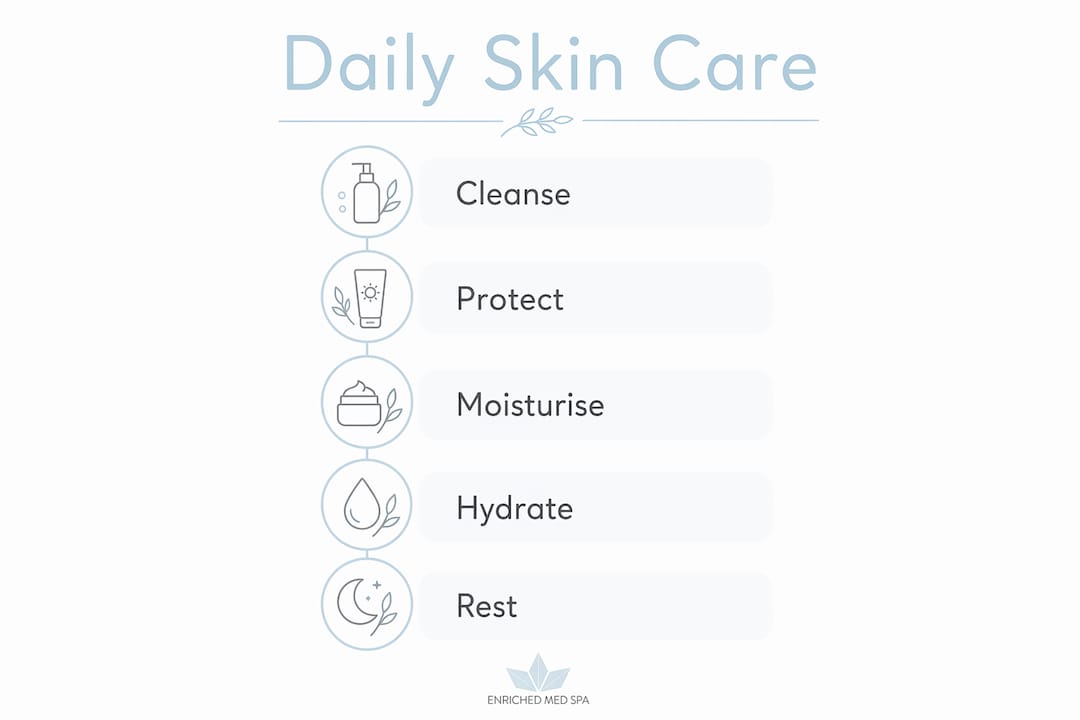
Consistency matters far more than complexity. A simple, repeatable routine protects the skin barrier and reduces cumulative damage over time. The following habits are backed by dermatological evidence.
Cleanse gently, every day
Gentle cleansing supports the skin barrier without stripping its natural oils. Use a mild, non-comedogenic cleanser suited to your skin type. Avoid hot water, which disrupts the lipid barrier, and skip abrasive scrubs that cause micro-tears. Once in the morning and once at night is sufficient for most people.
Apply broad-spectrum sunscreen daily
Daily broad-spectrum sunscreen is the single most effective step you can take to prevent premature aging and reduce skin cancer risk. Apply SPF 30 or higher every morning, including on overcast days. UV radiation penetrates cloud cover and glass. Sunscreen is critical daily protection regardless of season or weather.
Pro Tip: Apply sunscreen as the last step in your morning routine, after moisturiser and before makeup. Reapply every two hours if you are spending time outdoors.
Moisturise to maintain barrier function
A good moisturiser seals in hydration and reinforces the skin barrier. Look for ingredients like ceramides, hyaluronic acid, or glycerin. Apply while skin is still slightly damp after cleansing to lock in moisture more effectively.
Support your skin from the inside
- Hydration: Drink adequate water throughout the day. Dehydrated skin loses elasticity and becomes more prone to irritation.
- Nutrition: A diet rich in antioxidants, omega-3 fatty acids, and vitamins C and E supports collagen production and reduces oxidative stress.
- Sleep: Skin repairs itself during sleep. Chronic sleep deprivation impairs barrier recovery and accelerates visible aging.
- Stress management: Elevated cortisol disrupts the skin barrier and worsens conditions like acne, eczema, and psoriasis.
- No smoking: Tobacco smoke constricts blood vessels in the dermis, reducing oxygen delivery and accelerating collagen breakdown.
Pro Tip: Skin aging involves what researchers describe as an ecosystemic collapse driven by both genetics and environment. Lifestyle choices are the part of that equation you can actually control.
When should you see a dermatologist?
Knowing when to seek professional care is part of maintaining skin health. Many skin changes develop slowly and appear in areas that are difficult to see on your own. Professional skin checks are essential for catching issues early, particularly for moles, cysts, or patches that change in size, colour, or texture.
Common signs that warrant a professional assessment include:
- A mole or spot that changes shape, colour, or begins to bleed
- Persistent dryness, redness, or irritation that does not respond to basic care
- Acne that is moderate to severe, or leaves scarring
- Skin that feels consistently tight, itchy, or inflamed without a clear cause
For everyday concerns like mild acne or dryness, a consistent gentle routine often resolves the issue over several weeks. For anything that persists or worsens, a dermatologist can identify the underlying cause and recommend targeted treatment.
Medical-grade treatments complement daily care in meaningful ways. Procedures like chemical peels and microneedling address concerns that topical products cannot fully resolve, including textural irregularities, post-acne marks, and early signs of collagen loss. These are not replacements for a daily routine. They work best when layered on top of consistent foundational habits.
Pro Tip: Men, in particular, benefit from scheduling a baseline skin check before age 40. Given the elevated melanoma risk after 50, early professional assessment creates a reference point for monitoring changes over time.
Key takeaways
Skin health is a functional health outcome, not a cosmetic concern. Protecting it requires consistent daily habits, awareness of biological risk factors, and professional care when needed.
| Point | Details |
|---|---|
| Skin is a systemic organ | Barrier dysfunction links to systemic inflammation and accelerated aging beyond the skin itself. |
| UV radiation is the top threat | UVA and UVB damage collagen, cause DNA mutations, and contributed to nearly 60,000 melanoma deaths globally in 2022. |
| Men face elevated risk | Men over 50 have more than twice the melanoma rate of women but are least likely to use sunscreen or see a dermatologist. |
| Consistency beats complexity | A gentle cleanser, daily broad-spectrum SPF, and a moisturiser form the evidence-based core of any effective routine. |
| Professional care fills the gaps | Dermatologist checks and medical-grade treatments address what daily habits alone cannot resolve. |
Why I think we’ve been overcomplicating skin health
After years of working alongside clients who come in with 10-step routines they found on social media, I keep arriving at the same conclusion: the fundamentals are doing most of the heavy lifting, and the extras are often doing very little.
The science is clear. Dermatology-validated skin care relies on simple, consistent habits, not trending ingredients or elaborate protocols. A gentle cleanser, a reliable moisturiser, and daily broad-spectrum SPF will outperform any elaborate routine that skips those three steps.
What I find genuinely underappreciated is the systemic dimension. Skin is not just a surface. Researchers now describe skin aging as part of a broader biological decline, where maintaining skin barrier function may actually help slow age-related changes elsewhere in the body. That reframes the entire conversation. Caring for your skin is not vanity. It is maintenance.
The gender gap troubles me most. Men arrive at clinics later, with more advanced concerns, and often after years of dismissing skin care as unnecessary. The data on melanoma risk after 50 is not subtle. It is a clear, preventable gap in health behaviour. If you are a man in your 30s or 40s reading this, the best time to build a routine and schedule a skin check is now, not after something changes.
Social media has made skin care more visible, which is genuinely good. But it has also created a culture of product accumulation that can actually harm the barrier. Over-cleansing and aggressive scrubbing damage the very thing you are trying to protect. Less, done consistently, is almost always more.
— Felix
Skin health support at Enrichedmedspa
Many clients come to Enrichedmedspa noticing early signs of aging, persistent dullness, or skin that no longer responds to their at-home routine. That is a normal progression, and it is exactly where professional care adds real value. Enrichedmedspa offers medical-grade treatments including microneedling, chemical peels, laser resurfacing, and radiofrequency skin tightening, all designed to reinforce barrier function and address structural changes that topical products cannot reach. For clients considering injectables, a clear understanding of Botox versus fillers helps set realistic expectations before any appointment. You can also review the full range of skin treatment options available at Enrichedmedspa to find what fits your skin’s current needs.
FAQ
What is skin health in simple terms?
Skin health is the state of your skin functioning effectively as a barrier, regulating moisture, and protecting the body from environmental damage. It reflects both your biology and your daily habits.
Why does skin health matter for men specifically?
Men over 50 have more than twice the melanoma rate of women and are less likely to use sunscreen or see a dermatologist. Skin health matters for men because the biological risks are real and the protective behaviours are often absent.
What are the most important skin health tips to follow daily?
Apply a broad-spectrum SPF 30 or higher every morning, cleanse gently twice a day, and moisturise with a ceramide or hyaluronic acid formula. These three steps form the evidence-based core of any effective routine.
What factors affect skin health the most?
UV radiation, pollution, tobacco, poor nutrition, chronic stress, and inadequate sleep are the leading extrinsic factors. Genetics and natural aging processes also play a significant role in how skin functions over time.
When should you see a professional about your skin?
See a dermatologist or medical aesthetics provider if a mole changes in size, colour, or texture, if acne is causing scarring, or if persistent dryness or irritation does not resolve with basic care within a few weeks.