
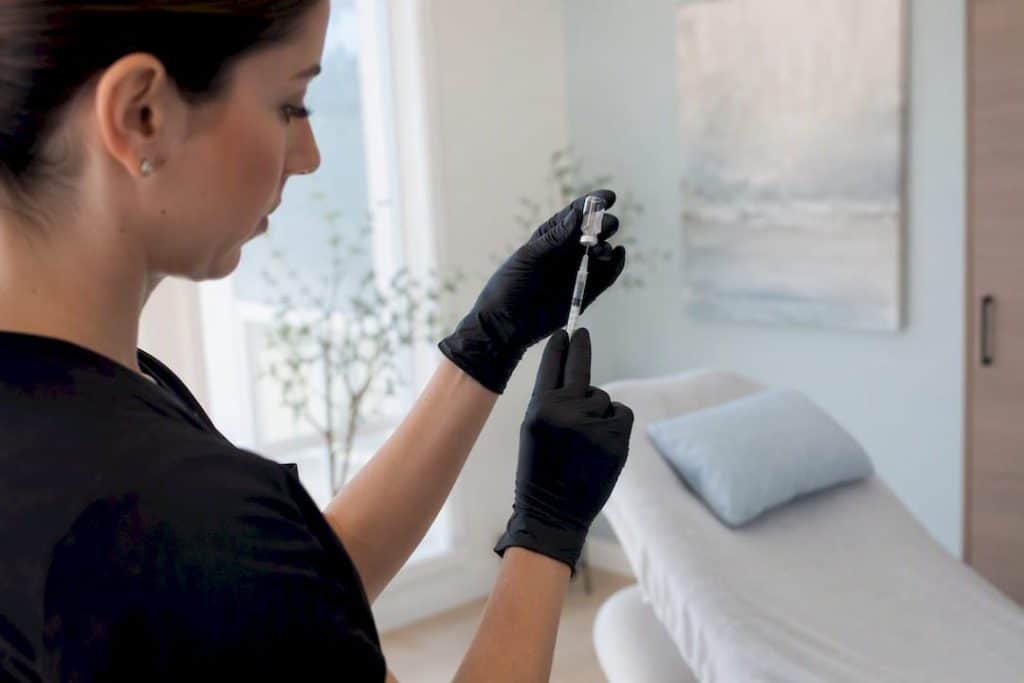
Masseter Botox reduces activity in the jaw muscle you use to chew and clench, and for the right candidate, it does two things well: it can ease jaw pain from bruxism or temporomandibular disorder (TMD), and it can slim a square lower face by shrinking an overworked masseter. Effects typically begin within two to four weeks and last around 12 weeks before the muscle returns toward its baseline strength. Results are temporary by design, and that’s actually the safety feature, not a drawback. If you clench at night, notice jaw fatigue, or want a softer jawline, this is worth exploring with a qualified injector.
- Reduces masseter muscle activity, which can ease clenching pain and slim jaw contour
- Onset in 2 to 4 weeks, effects generally lasting about 12 weeks
- Repeated injections need careful spacing to avoid long-term muscle thinning
- Best assessed through a proper consultation, not guesswork
Key takeaways
Masseter Botox works by reducing muscle contraction, easing clenching pain for many TMD and bruxism patients while slimming the jawline through gradual muscle thinning, though effects fade by around six months.
| Point | Details |
|---|---|
| Mechanism is reversible | Effects fade over months, which is why conservative dosing matters more than aggressive single sessions. |
| Evidence favours TMD pain relief | Meta-analyses show measurable pain reduction at one and six months, especially at higher bilateral doses. |
| Side effects are mostly mild | Bruising affects about 2.5% of cases; rarer complications like paradoxical bulging remain uncommon. |
| Repeated dosing carries functional risk | Multiple sessions can cause longer-lasting muscle thinning and reduced chewing performance. |
| Enrichedmedspa emphasizes conservative, reassessed dosing | Enrichedmedspa builds treatment plans around anatomy and clench assessment rather than a fixed repeat schedule. |
Table of Contents
- What is masseter Botox and how does it work?
- Who actually benefits from masseter Botox treatment?
- What happens during a masseter Botox appointment?
- What benefits and results does the evidence support?
- What are the risks and side effects of masseter Botox?
- How long do results last and what dose is typical?
- Are you a good candidate for masseter Botox?
- Why does injection technique and precision matter?
- What should you expect during recovery?
- What we’ve learned from treating jaw concerns
- Ready to explore masseter Botox with a conservative, anatomy-first approach?
- Sources
What is masseter Botox and how does it work?
Botulinum toxin type A works by blocking the release of a neurotransmitter at the junction between nerve and muscle, so the masseter simply can’t contract as forcefully. Less contraction means less clenching force, and over weeks, the muscle itself can shrink slightly from reduced use, which is what creates the slimming effect people notice around the jawline.
We think of it as two separate goals wearing the same needle. One is therapeutic: calming an overactive muscle that’s causing pain or wearing down teeth. The other is aesthetic: softening a wide, square jaw. Both use the same mechanism, but the dose and injection pattern often differ.
- Effect is reversible; nothing is permanently altered in a single session
- Different formulations (onabotulinumtoxinA, abobotulinumtoxinA, incobotulinumtoxinA) have different unit potencies, so “units” aren’t directly comparable across brands
- Cosmetic slimming tends to need higher or repeated dosing than pain relief alone
Who actually benefits from masseter Botox treatment?
Not everyone with a clenched jaw needs an injection, and we’d rather tell you that upfront than sell you one. The strongest evidence sits with muscular TMD pain: meta-analyses of randomized trials show measurable pain reduction at both one and six months, with higher bilateral doses in the 60 to 100 unit range producing larger effects in several trials. Bruxism and masseter muscle hypertrophy (that visibly enlarged jaw muscle) also respond well in many cases.

Cosmetic slimming has a real evidence base too, but the outcome is more individual. Muscle thickness reduction is well documented, though how visible the change looks depends on your starting anatomy.
Most clinicians recommend conservative approaches such as a night guard or physiotherapy first for TMD, reserving injections for cases that don’t resolve.
Pain relief in trials is measurable, not universal. Studies consistently report meaningful drops in reported pain scores by six months, but “meaningful” still means some patients respond better than others.
- Muscular TMD and jaw pain: strong RCT and meta-analysis support
- Bruxism-related clenching: good evidence, often paired with a night guard
- Masseter hypertrophy (jaw slimming): well-documented muscle thinning, variable visible outcomes
- Long-term cosmetic maintenance: evidence is thinner past the first year of repeated dosing
What happens during a masseter Botox appointment?
A proper visit starts before the needle ever comes out. We walk through your medical history, take a look at your bite and jaw joint, and often ask you to clench so we can feel exactly where the masseter bulges. That clench test maps the injection points more accurately than guessing from the outside.
- Consultation: history review, dental and TMJ exam, clench palpation to identify muscle borders
- Marking and antisepsis: injection sites are marked on the skin and cleaned
- Injection: several small injections spread across the muscle, using a fine needle, with minimal discomfort for most people
- Immediate aftercare: you’re given a short list of what to avoid for the next day or two
Discomfort is usually brief, more of a pinch than a pain, and most people are back to normal activities the same day.
Pro Tip: Bring a note of your typical clenching pattern, morning jaw soreness, or any teeth grinding your dentist has flagged. That detail helps your injector plan dose and placement more precisely than a general complaint of “jaw tension.”

What benefits and results does the evidence support?
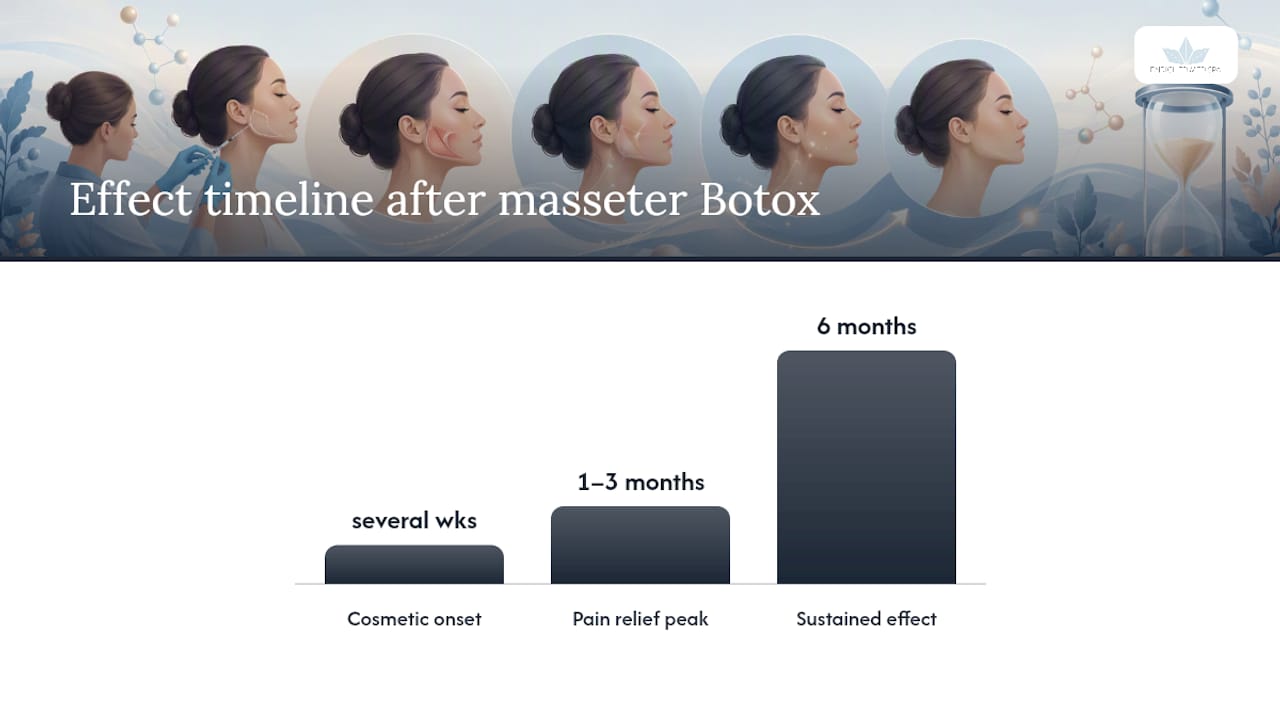
The clearest benefit is pain reduction for people with genuine muscular TMD, and it’s backed by real numbers, not just testimonials. Trials show significant drops in pain intensity at both the one month and six month marks, with the effect size tending to grow at higher bilateral doses.
On the cosmetic side, botulinum toxin reduces masseter muscle thickness in a way that produces visible facial slimming for many patients, particularly those with hypertrophy from years of clenching. The trade-off is real: pushing for a more dramatic contour through repeated high dosing carries a greater risk of affecting how well you chew, not just how you look.
- Pain relief: peaks around one to three months, evidence strongest for muscular TMD
- Cosmetic slimming: visible over several weeks as muscle bulk decreases
- Dose and injection-site selection meaningfully change the outcome
- More conservative dosing tends to preserve normal chewing function better than aggressive dosing
If you’re weighing this against other approaches to a slimmer jawline, our page on how Botox reduces jaw size for a slimmer face walks through what a realistic contour change looks like over time.
What are the risks and side effects of masseter Botox?
Most side effects are mild and pass quickly. Bruising shows up in roughly 2.5% of cases in reviewed literature, and some patients notice temporary soreness or a feeling of jaw fatigue during the first week.
The functional risks matter more with repeated treatment than with a single session. Reduced bite force is expected and temporary after one injection, but studies following patients for a year show that repeated sessions can cause more persistent muscle thinning and a measurable drop in chewing performance in some cases. This is why we don’t treat masseter Botox as something to top up reflexively every three months without reassessment.
- Bruising: common, transient, usually resolves within days
- Skin laxity or paradoxical bulging: uncommon, linked to uneven dosing
- Reduced bite force: expected temporarily, usually returns by six months after a single session
- Repeated injections: greater risk of longer-lasting thinning and chewing fatigue
Mitigation comes down to fundamentals: conservative dosing, adequate spacing between sessions, an experienced injector who understands facial anatomy, and ultrasound guidance for higher-risk or larger-dose cases.
How long do results last and what dose is typical?
Bite force reduction generally becomes noticeable within one to four weeks and holds for at least 12 weeks, with most patients returning to baseline muscle force by around 24 weeks after a single injection. Some people report visible slimming lasting closer to six months, since the cosmetic change from reduced muscle bulk can outlast the functional bite-force change.
Dosing in studies varies by goal. Aesthetic slimming protocols often use lower total dosing than therapeutic TMD protocols, which in trials have used bilateral dosing in the higher dose range to achieve stronger pain outcomes. Neither figure is a prescription. Your injector should calculate dose based on your muscle size, goals, and prior response.
- Onset: 2 to 4 weeks
- Typical duration: about 12 weeks, with some visible cosmetic effects lasting longer
- Safety principle: lowest effective dose, documented intervals between sessions
For a broader sense of timing across Botox treatments generally, see how long Botox results last and when to consider a touch-up.
Are you a good candidate for masseter Botox?
Good candidates typically have documented clenching, TMD pain that hasn’t resolved with conservative care, or visible masseter hypertrophy they’d like softened. Pregnancy, active infection at the injection site, known neuromuscular disease, and allergy to the toxin are standard contraindications.
We also flag less obvious red flags during consultation: rapid unexplained bone loss, dental instability, or any unexplained facial weakness need investigation before treatment, not after. A responsible clinician weighs your aesthetic goals against the functional cost of a stronger dose.
- Good fit: documented clenching, TMD pain, visible masseter hypertrophy
- Avoid or delay: pregnancy, local infection, neuromuscular disorders, toxin allergy
- Always flag: dental instability or unexplained facial weakness before booking
Why does injection technique and precision matter?
The masseter has three distinct heads, and even a well-intentioned injector can create an uneven, lopsided result by concentrating toxin in one area. Spreading the dose across multiple points, guided by a clench-and-palpate assessment, helps distribute the effect evenly and avoid that paradoxical bulging risk mentioned earlier.
Safe injecting also means respecting anatomical boundaries, generally staying a safe margin from the mandible’s edge and away from the parotid gland and facial nerve branches that run nearby. Ultrasound guidance improves precision by letting the injector see all three muscle heads and surrounding structures in real time, which reduces the chance of the toxin spreading somewhere it shouldn’t.
- Multi-point injection reduces uneven muscle weakening
- Safe zones protect the parotid gland and facial nerve
- Ultrasound guidance is increasingly recommended for higher-dose or complex cases
Pro Tip: If you have a naturally asymmetric jaw or a history of facial nerve issues, ask specifically whether ultrasound guidance is available. It’s a reasonable question, not an unusual one.
Our overview of facial anatomy for injectables goes deeper into why these landmarks matter for any injection, not just masseter treatment.
What should you expect during recovery?
Recovery is minimal for most people. Avoid massaging the treated area and go easy on tough, chewy foods for the first day or two while the toxin settles into place.
- First 24 to 48 hours: skip vigorous chewing, avoid massaging the jaw, watch for unusual swelling
- First week: mild soreness or bruising may appear and typically resolves on its own
- Weeks 2 to 4: this is when you’ll start noticing reduced clenching or early contour change
- Follow-up: most clinics schedule a check-in around 8 to 12 weeks to assess results and plan next steps
Contact your clinic sooner if you notice sudden facial weakness, difficulty swallowing, or asymmetry that seems to be worsening rather than settling.
What we’ve learned from treating jaw concerns
In our experience, clients booking masseter Botox usually fall into one of two camps: people whose dentist has flagged grinding-related wear, and people who simply want a softer jawline without surgery. Both groups do better with a conservative first dose.
We favour reassessing before repeating treatment, rather than defaulting to a fixed schedule, because the muscle’s response varies enough from person to person that a rigid three-month rebooking doesn’t always serve the client. Anatomy-focused planning, checking muscle bulk and bite pattern before ever picking up a needle, tends to produce steadier, more predictable outcomes than dosing by habit.
— Felix
Ready to explore masseter Botox with a conservative, anatomy-first approach?
Enrichedmedspa treats masseter concerns the way this article recommends: starting with a proper assessment of your bite, muscle bulk, and clenching pattern before any dose is chosen, rather than defaulting to a one-size-fits-all injection plan. That matters if you’ve read about the risks of repeated high-dose treatment and want a clinic that reassesses before rebooking you automatically.
If you’re weighing masseter Botox against dermal fillers or want to understand where it fits among other facial treatments, our guide on Botox in Ontario, Canada across treatment areas is a good starting point. For readers considering non-injectable alternatives first, HIFU treatment for jawline tightening is worth understanding too. When you’re ready to talk specifics, book a consultation with Enrichedmedspa to get a dosing plan built around your own jaw anatomy, not a generic protocol.
This article is general information, not a substitute for advice from a qualified doctor. Consult a qualified healthcare professional about your own circumstances before acting on anything here.
Sources
- Adverse effects of treating bruxism and masseter muscle hypertrophy with botulinum toxin injection – a literature review
- Exploring botulinum toxin’s impact on masseter hypertrophy: a randomized, triple-blinded clinical trial
- Systematic reviews and RCT meta-analyses on BTX-A for muscular TMD