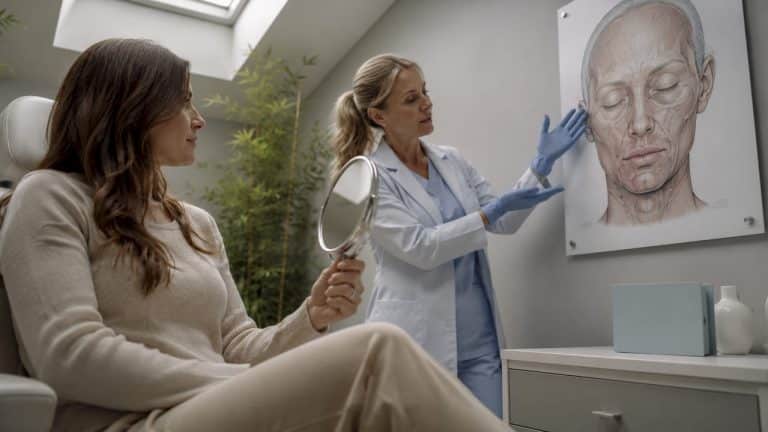

Proper preparation for skin treatments is defined as the process of conditioning your skin barrier through gentle cleansing, consistent hydration, and daily sun protection before any clinical procedure. Whether you are planning a facial, a chemical peel, laser resurfacing, or cosmetic injectables, what you do in the weeks before your appointment shapes how well your skin responds and heals. The Canadian Dermatology Association sets a clear benchmark: products used before procedures should be fragrance-free, low-irritation, and allergen-free. Skipping these steps does not just affect comfort. It can directly increase your risk of post-treatment pigmentation, prolonged redness, and slower recovery.
How to prepare for skin treatments: building your pre-treatment routine
A pre-treatment skincare routine works best when it starts at least four weeks before your appointment. That window gives your skin barrier time to strengthen, your hydration levels time to stabilise, and your clinician time to assess your baseline skin condition.
Cleansing: the foundation of every prep routine
Gentle cleansing is the first and most consistent step. A syndet-based cleanser used twice daily supports skin barrier repair and reduces inflammation risk before procedures. Syndet cleansers are synthetic detergent bars or liquids formulated to match the skin’s natural pH, which means they clean without stripping. Avoid foaming cleansers with sulphates, fragranced washes, or anything that leaves your skin feeling tight after rinsing.
Moisturising: ingredients that actually work
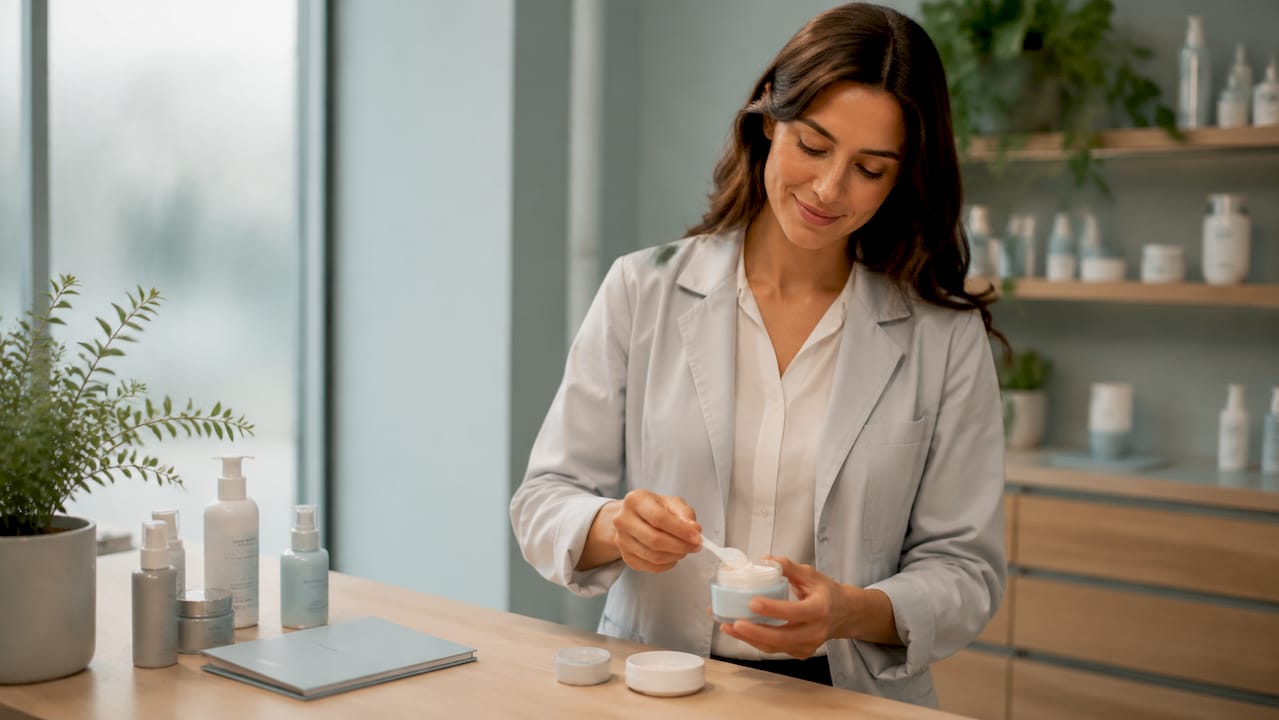
Daily moisturising is non-negotiable in any pre-treatment skin routine. The ingredients that matter most are ceramides, hyaluronic acid, niacinamide, and peptides. Expert consensus rates these as top-ranked for pre-, peri-, and post-procedure use because they support the skin barrier without causing irritation. Apply your moisturiser morning and night, and do not skip it on days when your skin feels oily. Hydrated skin heals faster and responds more evenly to treatment.
Sun protection: your most important pre-treatment step
SPF 50+ daily is the single most impactful thing you can do before a skin procedure. Clinical consensus recommends broad-spectrum SPF 50 mineral sunscreen for a minimum of four weeks before ablative treatments. Mineral formulas containing zinc oxide or titanium dioxide are preferred because they sit on top of the skin rather than absorbing into it, which reduces irritation risk. Sun exposure before treatment raises your risk of post-procedural hyperpigmentation significantly, particularly for laser and chemical peel procedures.
What to stop using before your appointment
Retinoids, glycolic acid, lactic acid, and salicylic acid all increase skin sensitivity. Experts recommend stopping these active ingredients at least a few days before any procedure, and longer for more aggressive treatments. This is especially relevant for clients with medium to deep skin tones, where the risk of post-inflammatory hyperpigmentation is higher.
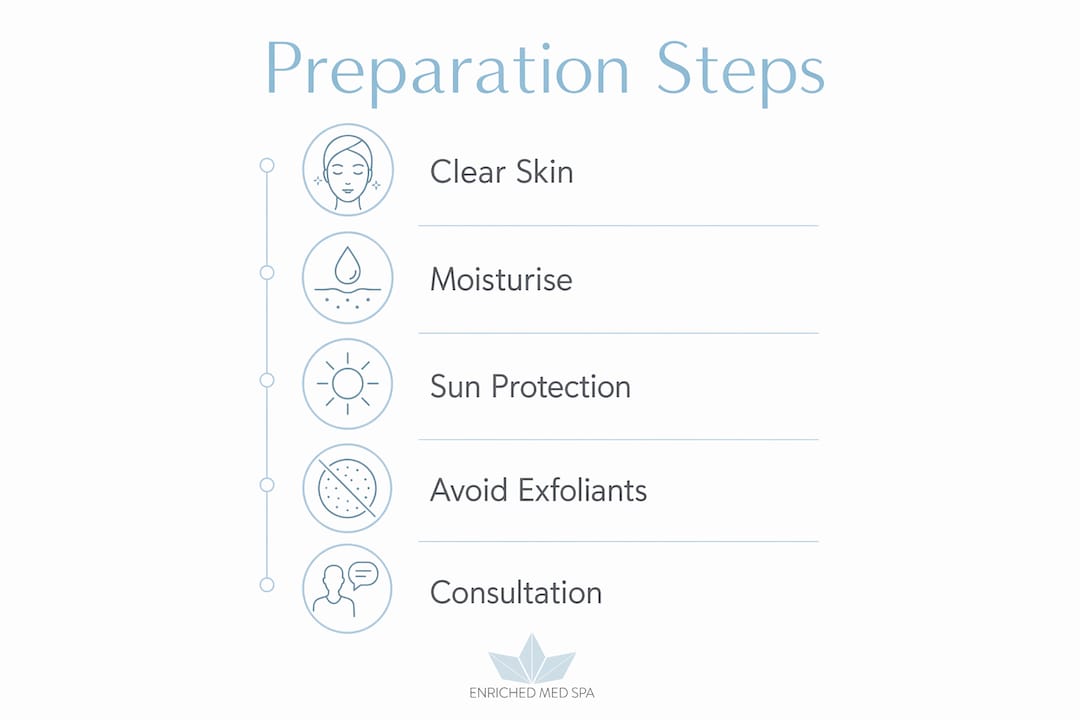
Pro Tip: Set a calendar reminder four weeks before your appointment to begin your SPF routine and switch to a gentle, fragrance-free cleanser. Small, consistent changes in this window make a measurable difference to your results.
What does preparation look like for different treatments?
Preparation is not one-size-fits-all. The level of skin barrier disruption varies significantly between a hydrating facial and a CO2 laser resurfacing session. The table below outlines the key differences in prep approach by treatment category.
| Treatment type | Barrier disruption | Key prep steps | What to avoid |
|---|---|---|---|
| Facial treatments | Mild | Hydrate, remove makeup, gentle cleanse | Shaving or waxing 48 hours before |
| Chemical peels | Moderate | Stop acids and retinoids, gentle cleanse, hydrate | Exfoliants, fragranced products |
| Injectables (Botox, fillers) | Minimal | Skin hygiene, gentle moisturiser | Blood-thinning supplements close to appointment |
| Laser resurfacing | High | 4+ weeks SPF 50, minimal irritants, deep hydration | Sun exposure, active ingredients |
| Radiofrequency tightening | Moderate | Hydration focus, gentle products | Harsh exfoliants, new products |
For facial treatments, the prep is straightforward. Avoid shaving or waxing for at least 48 hours before your appointment to prevent sensitivity and micro-irritation. Remove all makeup on the day of treatment so active ingredients can penetrate fully and the risk of particulate irritation is eliminated. Many clients arrive thinking a clean face means a quick rinse. A thorough, gentle cleanse with a non-irritating product is what your clinician actually needs.
For laser resurfacing and ablative procedures, the prep window is longer and the stakes are higher. Consistent sun protection before these treatments correlates directly with faster healing and better aesthetic results. Your skin needs to arrive at the appointment as calm and well-hydrated as possible.
For injectables like Botox, Nucieva, Xeomin, or dermal fillers such as Juvederm and Teosyal, the prep is less intensive but still matters. Clean, well-moisturised skin and good hydration on the day of treatment support comfort and reduce the risk of bruising. Your clinician at Enrichedmedspa will give you specific guidance based on which product you are receiving.
Pro Tip: For chemical peels, stop all exfoliating acids and retinoids at least five to seven days before your appointment. If you are unsure whether a product counts as an exfoliant, bring it to your consultation and ask.
What are the most common mistakes when preparing for skin procedures?
Most preparation errors come down to doing too much, not too little. Clients often over-treat their skin in the weeks before an appointment, hoping to arrive with their best complexion. The result is frequently the opposite.
The most common mistakes include:
- Over-exfoliating. Using scrubs, acids, or retinoids too close to your appointment compromises the skin barrier. A disrupted barrier heals more slowly and reacts more intensely to treatment.
- Skipping sun protection. Unprotected sun exposure in the weeks before treatment raises your risk of post-procedural pigmentation. This applies even on cloudy days and even if you are mostly indoors.
- Introducing new products. Starting a new serum or cream in the two weeks before your appointment is a risk. If your skin reacts, your clinician may need to postpone the procedure.
- Using fragranced or irritating products. Fragrances are among the most common causes of contact dermatitis. The CDA’s Skin Health Programme validates products that meet fragrance-free and low-allergen standards. Stick to those benchmarks.
- Skipping moisturisation. Dehydrated skin does not respond as well to treatment and takes longer to heal. Apply your moisturiser twice daily without exception.
- Not following your clinician’s specific instructions. General guidance is a starting point. Your clinician’s pre-treatment protocol is the final word. If you receive written instructions, follow them exactly.
When in doubt, less is more. A simple routine of gentle cleanser, moisturiser, and SPF is almost always the right approach in the final week before any procedure.
How do you maintain skin readiness leading up to your appointment?
Once your pre-treatment routine is in place, the goal is consistency. Skin readiness is not built in a single week. It accumulates through daily habits maintained over the full preparation window.
- Continue SPF every morning without exception. Apply your mineral SPF 50+ as the last step in your morning routine, even if you plan to stay indoors. UV exposure through windows counts.
- Moisturise morning and night. Use your ceramide or hyaluronic acid moisturiser consistently. Do not swap products or skip applications in the final two weeks.
- Avoid introducing anything new. New serums, masks, or treatments in the two weeks before your appointment carry unnecessary risk. Stay with what your skin already knows.
- Schedule your appointment with timing in mind. Book treatments 3–4 weeks before any major event to allow full healing and optimal results. Rushing a procedure close to a wedding, reunion, or important occasion is the most common scheduling mistake we see.
- Prepare emotionally and physically. Get adequate sleep in the days before your appointment. Avoid alcohol for at least 24 hours prior, as it dehydrates the skin and can increase bruising with injectables. Arrive well-hydrated and with a light meal if your procedure is longer.
Personalised, staged skincare regimens aligned to the level of skin barrier disruption your treatment involves improve outcomes and reduce adverse effects. Your clinician can help you build a regimen that fits your specific skin type, treatment plan, and timeline.
Key takeaways
Proper skin treatment preparation requires consistent SPF 50+ use, gentle cleansing, and barrier-supporting hydration for at least four weeks before any procedure.
| Point | Details |
|---|---|
| Start SPF four weeks early | Use broad-spectrum mineral SPF 50+ daily to reduce post-procedural pigmentation risk. |
| Choose barrier-supporting ingredients | Ceramides, hyaluronic acid, niacinamide, and peptides are the most effective pre-treatment moisturising ingredients. |
| Stop active ingredients before procedures | Discontinue retinoids and exfoliating acids at least five to seven days before your appointment. |
| Avoid shaving and waxing before facials | Wait at least 48 hours after hair removal before any facial treatment to prevent irritation. |
| Schedule treatments 3–4 weeks before events | This window allows full healing and the best possible visible results before important occasions. |
What I have learned from watching clients prepare well and poorly
Over the years, the pattern I have seen most consistently is this: clients who arrive with well-prepared skin get better results, full stop. Not marginally better. Noticeably better, with faster healing and fewer complications.
The clients who struggle are rarely the ones who did nothing. They are often the ones who did too much. They exfoliated aggressively the week before, tried a new brightening serum, and skipped their SPF because it was overcast. Their skin arrives at the appointment reactive and compromised, and even a skilled clinician is working against that.
What I tell every client is this: preparation is not about perfection. It is about giving your skin a stable, calm foundation. A gentle cleanser, a good moisturiser, and daily sun protection are genuinely enough for most people. The dramatic results come from the treatment itself, not from stacking actives in the weeks before.
I also want to be honest about timelines. Skin does not transform overnight. If you are preparing for a series of treatments, expect gradual, cumulative improvement rather than a single dramatic change. That is not a limitation. That is how healthy skin actually works. Patience and consistency will always outperform urgency.
— Felix
Skin treatments at Enrichedmedspa: where preparation meets expertise
At Enrichedmedspa, serving clients in Woodbridge and East Gwillimbury, Ontario, preparation is built into every consultation. Before any procedure, whether it is microneedling, a chemical peel, laser resurfacing, or cosmetic injectables, the team walks you through a personalised pre-treatment plan tailored to your skin type and goals. You will receive clear guidance on product selection, timing, and what to expect at every stage. If you are weighing your skin treatment options and want to understand which procedures suit your skin and how to prepare for them, a consultation with Enrichedmedspa is the right starting point.
FAQ
How far in advance should I start preparing for a skin treatment?
Start your pre-treatment routine at least four weeks before your appointment. This window is especially important for sun protection and barrier-building hydration before laser or ablative procedures.
What products should I use when preparing for skin therapy?
Use a fragrance-free, gentle cleanser twice daily and a moisturiser containing ceramides, hyaluronic acid, or niacinamide. Apply a broad-spectrum mineral SPF 50+ every morning without exception.
What should I stop using before a skin procedure?
Stop retinoids, glycolic acid, lactic acid, and salicylic acid at least five to seven days before your appointment. These active ingredients increase skin sensitivity and raise the risk of post-procedural irritation.
How do I get ready for a facial treatment specifically?
Avoid shaving or waxing for at least 48 hours before your facial, and arrive with a thoroughly cleansed face free of all makeup. Focus on hydration in the days leading up to your appointment.
When should I schedule a skin treatment before an important event?
Book your treatment 3–4 weeks before any major event. This allows enough time for healing and for the full results to become visible.