In Canada, spider vein treatment is generally quoted per session rather than as one flat fee. One published Canadian guide puts the range at $275 to $550 per treatment, and most people need more than one visit. So the number to budget around is the price per session multiplied by the sessions your veins need, not the first quote you see. At Enriched Med Spa, we offer vascular lesion, redness and spider vein reduction using MotusAZ+ laser technology, and this guide explains how to work out your own total before you book.
TL;DR
- Expect roughly $275 to $550 per session in Canada, with the final total depending on how many veins you are treating, where they are and which method suits them.
- A course of treatment is the norm, so plan for several visits spaced weeks apart rather than a single appointment.
- Spider vein removal done for appearance is a cosmetic service, so plan to pay out of pocket and ask your doctor or insurer about coverage if symptoms are involved.
- Spider veins on the face and on the legs are treated differently, which changes both session count and cost.
- A consultation before treatment is where you get a real quote for your veins, not an average.
Table of Contents
- What spider veins are, and why the price is not one number
- The typical cost range in Canada
- What drives the cost of spider vein treatment
- Sclerotherapy or laser: how the cost compares
- Will OHIP or your provincial plan cover it?
- Spider veins or varicose veins: when to see a doctor first
- What to expect from treatment and aftercare
- How to budget before you book
- Our perspective on spider vein treatment
- Treatment at Enriched Med Spa
- FAQ
- Sources
What spider veins are, and why the price is not one number
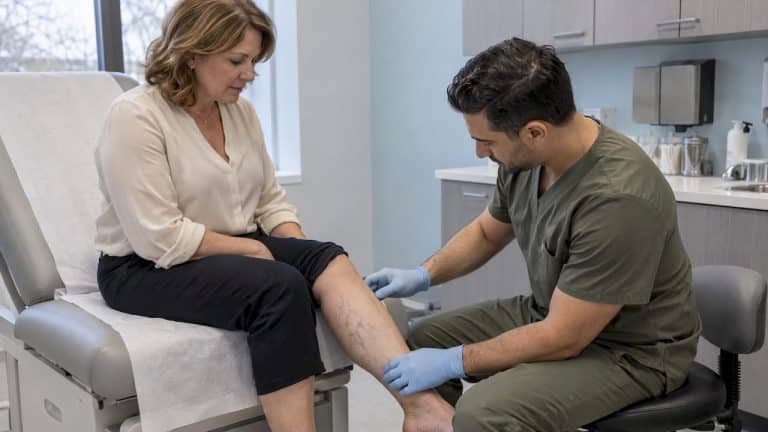
Spider veins are tiny, thread-like vessels close to the skin’s surface. They appear red, purple or blue, often in a web or branching pattern, and are most common on the legs and the face (around the nose, cheeks and chin). Most people notice them gradually. Many of the clients who ask us about them are in their thirties to fifties and have simply had enough of seeing them in photos, in summer clothing or in the mirror.
They are different from varicose veins, which are larger, raised, rope-like veins that can ache, swell or feel heavy. We come back to that difference below, because it affects whether treatment is cosmetic or medical.
The reason you will see such a wide range of prices is that “spider vein removal” covers several things: different treatment methods, very different areas of the body, and very different numbers of vessels. Ten fine red lines beside the nose and a patch of blue-purple veins behind both knees are not the same job.
The typical cost range in Canada
The most useful figure in circulation is a per-session one. A Canadian procedure guide lists $275 to $550 per treatment and notes that the final cost depends on your individual needs, your condition, the number of treatments and the method used. Clinics in different provinces and cities price differently, and prices are set by each clinic, so treat any range as a planning estimate rather than a quote.
Here is how that range turns into a budget in practice. These are worked illustrations using the guide’s range, not our prices:
| Scenario | Sessions | Per-session cost | Approximate total |
|---|---|---|---|
| A small cluster of facial veins | 1 to 2 | $275 | $275 to $550 |
| A moderate area on one leg | 3 | $275 to $550 | $825 to $1,650 |
| Several areas, both legs | 4 or more | $275 to $550 | $1,100 or more |
The session counts are illustrative. Your own number depends on how many vessels are present and how deep they sit, and a course of treatment is usual rather than a single visit.
We do not publish a price for our MotusAZ+ vascular treatment on our services page, so we will not quote you a figure here. What we can do is help you see what drives the cost so that when you do receive a quote, you can read it properly.
What drives the cost of spider vein treatment
Five things move the total more than anything else.
The number and size of the veins
More vessels means more treatment time and usually more sessions. Very fine red veins and larger blue ones also respond differently, and the larger or deeper ones tend to need more visits.
The area being treated
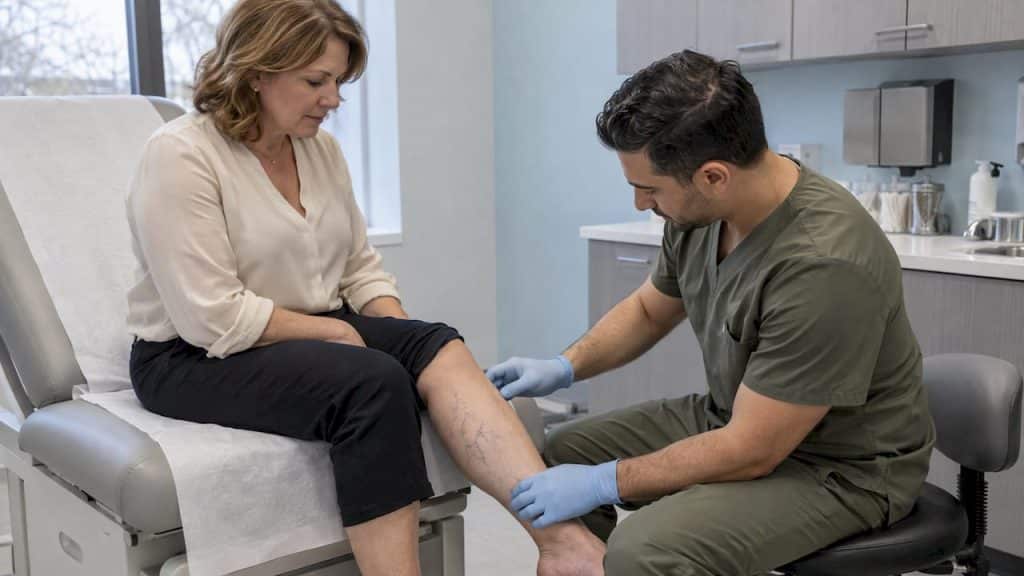
Facial veins are small and the skin is delicate, so sessions tend to be short and the course is often brief. Leg veins cover more surface, sit under thicker skin and are under more pressure from standing and walking, so they typically take longer to clear. We cover each in detail on our pages for facial spider veins and leg spider veins.
The treatment method
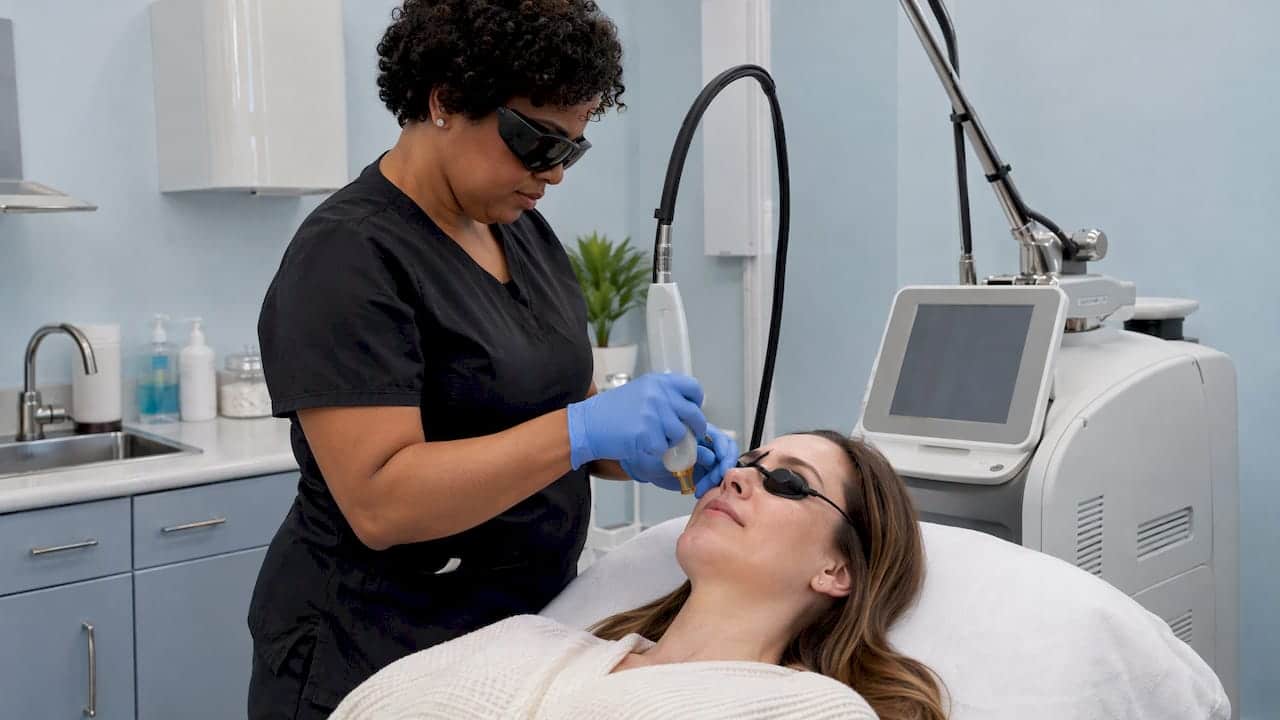
Two approaches are most common. Sclerotherapy uses a small injection to close a vein, and laser or light-based treatment uses targeted energy to do the same through the skin. Which is better depends on the vein’s size, depth and location. Fine facial vessels are often a good fit for laser, while leg veins are frequently treated with injections first. Because the method changes the price per session, the cheaper-looking quote is not always the cheaper course. Our guide to spider vein treatment options compares them side by side.
How many sessions you need
Sessions are normally spaced weeks apart so that the skin can settle and the treated veins can fade. That spacing is why one visit rarely finishes the job, and why the real cost is a course, not a single appointment.
Who is treating you and what the visit includes
A quote that looks low may leave out the consultation, aftercare guidance or follow-up. Ask what is included before you compare two numbers. At Enriched Med Spa, treatments are performed by experienced nurse-level injectors and aestheticians, and we put a comprehensive consultation and pre and post-care guidance at the centre of every plan.
Sclerotherapy or laser: how the cost compares
There is no single answer on which is cheaper, because they are priced and scheduled differently. In general terms:
- Sclerotherapy is usually priced per session and is common for leg veins. Larger areas can take several sessions.
- Laser or light-based treatment is often chosen for fine, superficial or facial vessels, and for redness. Sessions can be brief for small areas.
- Combination plans are sometimes the most sensible for legs, with different methods used on different vessels.
What matters for your wallet is cost per cleared area, not cost per session. A method that needs two visits at a higher price can cost less overall than one that needs five at a lower price. This is why a personal assessment is worth more than any online average.
Will OHIP or your provincial plan cover it?
In Canada, provincial health plans such as OHIP are built around medically necessary care. Treating spider veins for appearance is a cosmetic service, so most people should plan to pay for it themselves. Quebec’s public plan, for instance, is stated by one Quebec clinic to not cover surface vein treatment. Rules can differ by province and change over time, so if you have symptoms, speak with your family doctor, who can tell you whether your situation counts as medical and what your plan covers. Some private insurance plans reimburse parts of vein care, so it is also worth checking your own policy.
Spider veins or varicose veins: when to see a doctor first
Spider veins are usually a cosmetic concern. Varicose veins can be a medical one. See your family doctor first if you have any of the following in the legs:
- aching, heaviness or throbbing
- swelling in the ankles or lower legs
- skin changes, such as darkening, dryness or itching near the vein
- bleeding from a vein, sores that heal slowly, or a painful, hard, red area
A sudden painful swelling in one leg needs urgent medical attention. Once a doctor confirms that what you have is cosmetic, treatment for appearance is something we can plan with you.
What to expect from treatment and aftercare
Most people describe the sessions as quick, with mild stinging or a snapping sensation, and with redness or small bumps afterwards that settle. Results are gradual. Treated veins often look worse for a short time before they fade, and the full result can take weeks, which is why sessions are spaced apart. We do not promise a particular outcome, because skin tone, vein depth and your own healing all play a part.
Some practical points for the weeks after treatment:
- Keep the area out of direct sun and use a broad-spectrum SPF, because sun exposure on freshly treated skin can lead to dark marks.
- Follow the aftercare instructions you are given, including any advice on exercise, hot baths and saunas.
- For leg treatment, ask about compression. Compression therapy for varicose veins explains what compression can and cannot do for leg veins, which helps you set realistic expectations about the weeks after a session.
- Book your follow-up sessions at the spacing your practitioner recommends, rather than trying to compress the schedule for an event.
New veins can appear over time, because the tendency to develop them is often hereditary and tied to age, hormones and long periods standing. Treatment clears the vessels that are treated, not the tendency itself, so some people return for occasional touch-ups. It is worth budgeting for that possibility.
How to budget before you book
A few steps help you land on a figure you can trust.
- Count your areas. Face, thighs, calves and ankles are each assessed separately.
- Ask for a per-session price and an expected session range. Multiply the two for a realistic total.
- Ask what is included. Consultation, numbing, aftercare and follow-up should be clear.
- Leave time before any event. If you are working toward a wedding or a holiday, start well ahead. The spacing between sessions cannot be shortened safely, and the full fade takes weeks.
- Plan for the sun. Treat in a season when you can protect your skin, and avoid tanning beforehand.
If you are comparing several skin goals at once, our other cost guides can help you build one plan, for example microneedling cost in Canada for texture and chemical peel costs for tone. Redness and visible vessels are a different concern from texture or pigment, so it helps to keep them separate in your plan.
Our perspective on spider vein treatment
Many clients arrive telling us the same thing: they are not unhappy with their skin overall, but one small area keeps catching their eye. Visible veins on the cheeks or the legs are a good example. The concern is real, and it deserves a calm, specific plan rather than a rushed one.
What we believe in is starting with a thorough consultation. Treating vessels well means understanding how many there are, where they sit and what your skin can comfortably tolerate. That is also what makes the cost predictable, because a plan built around your veins gives you a number you can actually use.
We would rather set honest expectations about timelines than promise a quick fix. Results build over several weeks, and the best outcomes come from patient spacing between sessions and good sun protection. Our approach is patient-first and aimed at natural-looking results, and our nurse-level injectors and aestheticians guide you through preparation and aftercare so you know what to expect at each stage.
Lighter treatments such as facials and peels can improve tone and glow, while concerns like visible vessels and redness call for a more targeted approach. We are glad to explain the difference in person.
Felix
Treatment at Enriched Med Spa
We treat vascular lesions, redness and spider veins with MotusAZ+ at our clinic serving Woodbridge, Vaughan and East Gwillimbury. You can see the full list of what we offer on our services page. If you would like to talk through your veins, your timeline and a realistic total, begin with a consultation and bring photos or a note of the areas that bother you most.
FAQ
How much does spider vein removal cost in Canada?
A Canadian guide lists $275 to $550 per treatment, with the total depending on the method, the area and how many sessions you need. Most people need a course, so the total is usually several times the per-session price. A consultation gives you a figure based on your own veins.
How many sessions will I need?
That depends on how many vessels are present and how deep they sit. Fine facial veins often need fewer visits than leg veins. Sessions are spaced weeks apart, so plan for results to build over time.
Is spider vein removal covered by OHIP?
Treatment for appearance is generally treated as cosmetic and paid for by the patient. If you have symptoms such as aching, swelling or skin changes, see your family doctor, who can assess whether your veins need medical care and what your plan covers.
Are spider veins the same as varicose veins?
No. Spider veins are small, flat, thread-like vessels near the surface, while varicose veins are larger, raised and can cause discomfort. If you have pain, swelling or skin changes in the legs, see your doctor before booking any cosmetic treatment.
Can spider veins come back?
Treated vessels fade, but new ones can form over time because genetics, hormones and age all play a part. Some people return for touch-up sessions, so it is sensible to include that in your long-term budget.
Sources
- Spider Vein Treatment Cost, Benefits & Financing, Beautifi
- Treatment of varicose veins: How much does it cost?