A CO2 laser can soften fine lines and moderate to deeper wrinkles by creating tiny, controlled areas of injury that trigger your skin to rebuild collagen. Results build over months and can last for several years. Recovery is real, though: expect roughly one to three weeks for a full resurfacing, with a lighter schedule for gentler settings. Skin type, medical history and how much downtime you can accommodate decide whether it is the right tool for you.
Many clients come to us after noticing that skin looks tired, creased or textured, even though they use good skincare and have tried injectables. This guide explains how the treatment works, what the evidence says about results, who is and is not a good candidate, and how to prepare, so you can walk into a consultation informed.
TL;DR
- CO2 laser resurfacing works by stimulating new collagen. Improvement continues for months, and results can last for several years.
- Recovery for full resurfacing is typically one to three weeks. Fractional settings treat only part of the skin at a time, which helps healing.
- The best-studied candidates are fair-skinned adults with moderate to advanced wrinkles. Darker skin tones carry a higher risk of pigment changes and need a tailored plan.
- Isotretinoin use, keloid scarring, cold sores, pregnancy and recent sun exposure all affect whether and when you can be treated.
- A consultation is where settings, number of sessions and cost are set, because they depend on your skin and goals.
Table of Contents
- How a CO2 laser improves wrinkles
- What results to expect, and for how long
- Who is a good candidate
- What happens during and after treatment
- Risks and side effects
- Lighter treatments versus laser: choosing your level
- How cost is set
- Our perspective
- Exploring CO2 laser at Enriched in Vaughan and Woodbridge
- Preparing for your consultation
- FAQ
- Sources
How a CO2 laser improves wrinkles
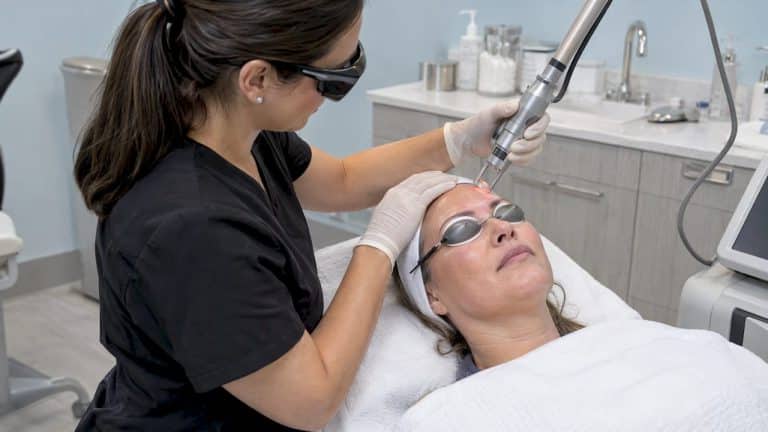
A carbon dioxide laser emits an infrared beam that is absorbed by water in the skin. Used for resurfacing, it vaporizes very thin columns or layers of tissue. Your body responds the way it does to any controlled injury: it heals, and in the process it produces new collagen. The University of Florida’s dermatology department describes CO2 resurfacing as using focused beams of light to penetrate the skin’s surface and promote collagen production, which allows healthier-looking skin to form.
In practical terms, you are not just smoothing the surface. You are asking the deeper layers to rebuild, which is why CO2 is chosen for wrinkles that products, peels and facials cannot reach.
Fractional versus fully ablative
Older, fully ablative resurfacing removes the entire top layer across the whole treated area. Fractional delivery changed that. As Canadian Dermatology Today explains, fractional lasers treat only a fraction of the area with microscopic beams, so the untreated skin between them speeds up healing. Patients typically see significant improvement after one or a few treatments, and the improvement keeps developing for a few months afterwards.
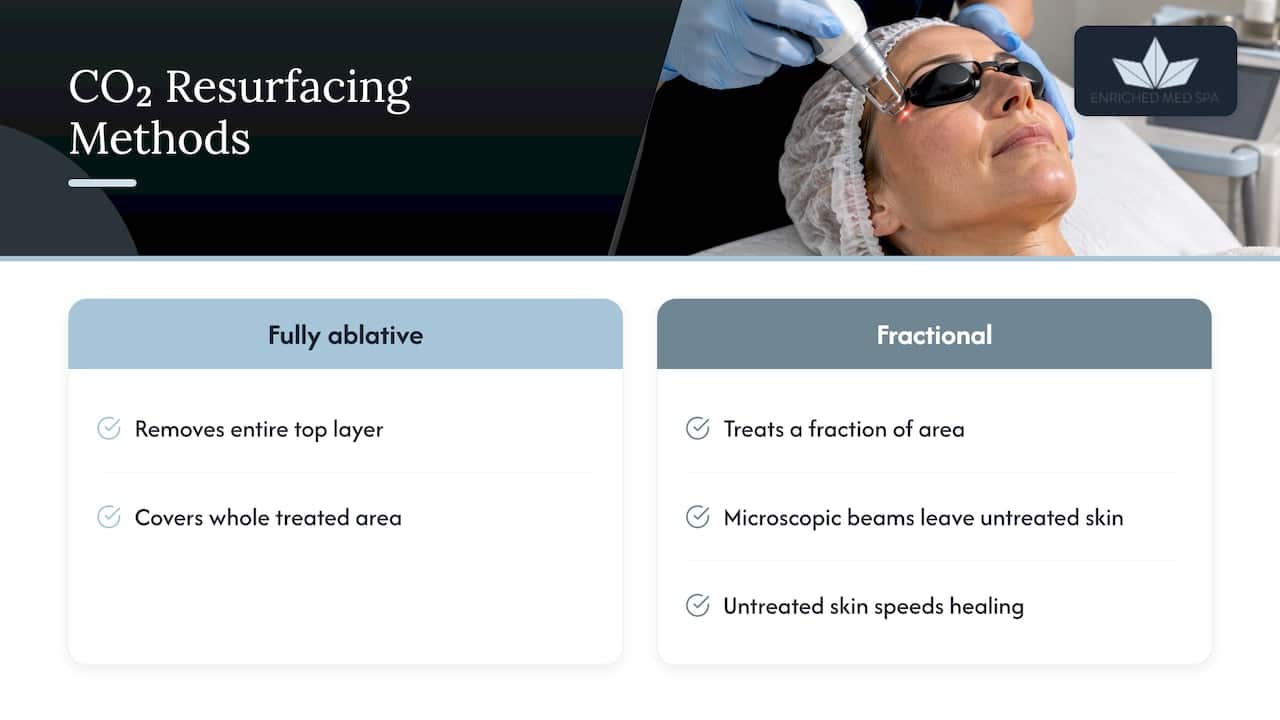
Think of it as a trade: deeper settings do more per session and ask more of your recovery, while lighter settings are gentler and are often repeated. Your clinician adjusts this balance to your skin.
Which lines respond best
CO2 laser is best suited to etched-in lines that remain when your face is at rest: around the mouth, the cheeks, the lower eyelids and the forehead. Lines caused mainly by repeated muscle movement, such as frown lines between the brows, often respond better to a neuromodulator like Botox, Nuceiva or Xeomin, sometimes combined with resurfacing. Volume loss, such as hollowing in the cheeks or deep folds, is usually a filler conversation. A good plan frequently uses more than one tool.
What results to expect, and for how long
Honest expectations matter more than any promise. Here is what the published evidence supports:
- Timeline: According to the University of Florida Department of Dermatology, results take between one and six months to show, and improvement continues for months to years as collagen keeps forming.
- Size of improvement: In a 2012 study by Clementoni, a multi-modal fractional ablative CO2 laser produced an average 42% improvement in wrinkles after six months, as reported on the same University of Florida page. That is a meaningful change, not a transformation into a different face.
- Clinician expectations: In a 2024 expert consensus published in Lasers in Surgery and Medicine, 94% of panelists said they expect and promise a moderate improvement after fractional ablative CO2 treatment.
- Longevity: Cleveland Clinic states that skin may keep improving for up to a year and that the improvement can last for several years.
Results do not stop the clock. You will continue to age, and sun exposure will continue to affect your skin, so daily broad-spectrum SPF is part of keeping the result. Many clients pair resurfacing with maintenance injectables or lighter skin treatments between laser sessions.
Who is a good candidate
The 2024 expert consensus describes the ideal patient for fractional ablative CO2 resurfacing as middle-aged (40 to 60), with fair skin (Fitzpatrick type I or II), thin to moderate skin thickness and moderate to advanced wrinkles. That is the group the evidence is strongest for, and it does not mean everyone else is excluded. It means treatment planning matters more as you move away from that profile.
Skin tone and pigment risk
Skin type is the factor we look at first. StatPearls notes that CO2 lasers carry a higher rate of dyspigmentation than Er:YAG lasers, and that non-fractional CO2 use is not recommended for Fitzpatrick types IV and above. The same consensus suggests most panelists use a single treatment at high settings for types 1 to 2, while types 3 to 4 are treated with several sessions at milder settings.
If you have olive, tan, brown or deeper skin, read our guide on CO2 laser on dark skin. It explains the limits and the safer options, and your consultation will cover which approach, if any, suits your skin.
Health history that changes the plan
Several situations call for caution or delay. Mayo Clinic advises care for people who have taken oral isotretinoin in the past year, have a history of keloid scars, are prone to cold sores or had a recent outbreak, or are pregnant or breastfeeding. StatPearls adds a longer list of contraindications, including active herpes outbreaks, ongoing ultraviolet exposure, a recent chemical peel and certain skin conditions such as vitiligo, lichen planus and psoriasis.
Tell us about all of this at your consultation, including any recent peel, tanning or sun exposure. If you have a history of cold sores, a prescription-strength antiviral is often part of preparation, and that is a decision for your prescriber or the treating clinician, never something to start on your own.
What happens during and after treatment
The appointment
Settings are not one-size-fits-all. The expert panel named wrinkle depth, your tendency toward hyper- or hypopigmentation, phototype and the facial area as the main factors when choosing settings, with density the main parameter adjusted. In plain language: thinner skin around the eyes is treated differently from the cheeks, and a person who tends to scar or darken is treated more conservatively.
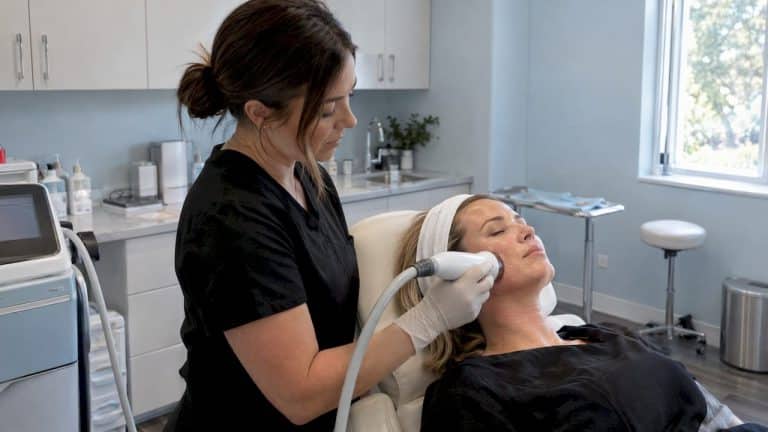
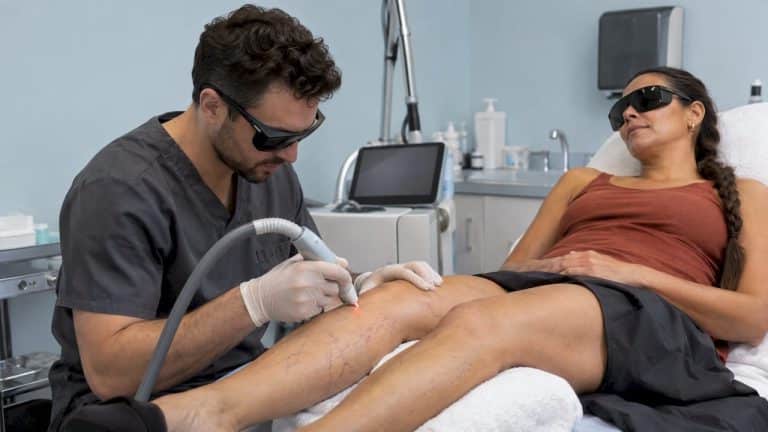
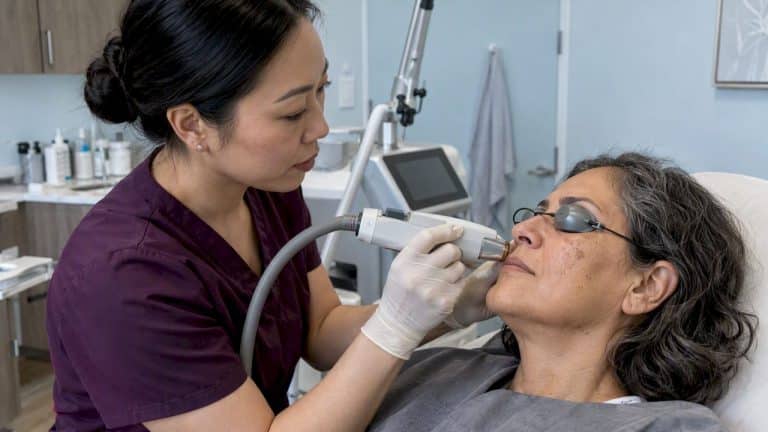
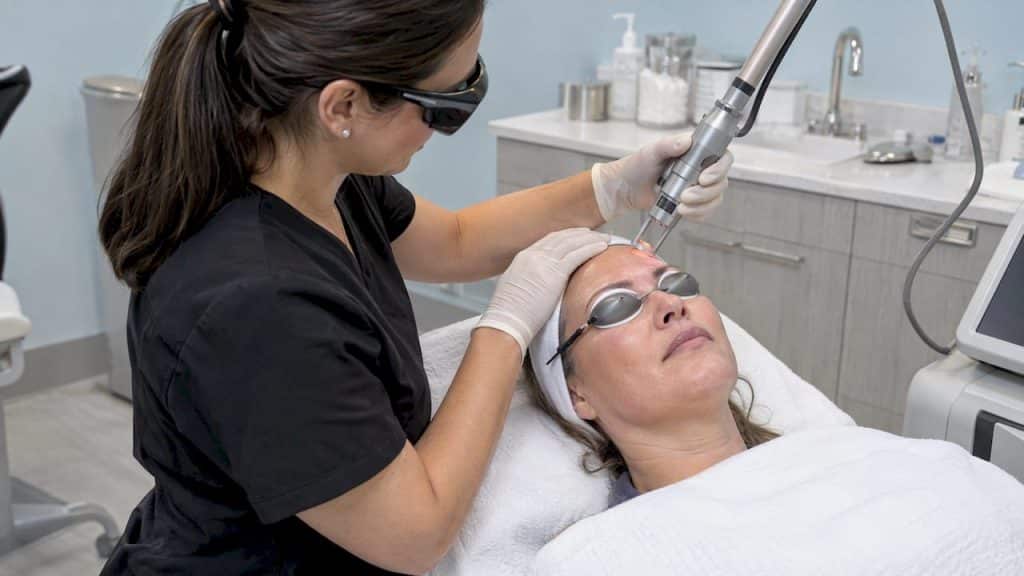
A typical visit includes a skin assessment, cleansing, numbing and then the laser pass itself. Numbing keeps the treatment tolerable, though you will feel warmth and a sensation of heat.
Recovery
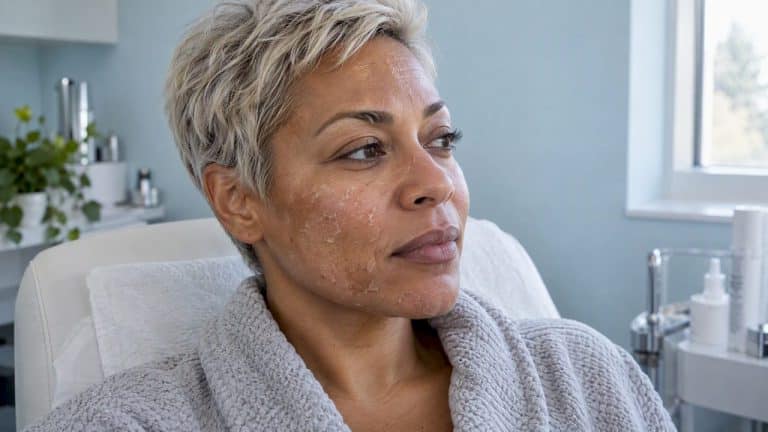
Your skin will look pink or red, feel tight and warm, and may swell, and the surface can ooze, crust or peel as it heals. The University of Florida gives an expected recovery of one to three weeks for CO2 resurfacing. Redness can linger longer than the visible peeling.
Canadian Dermatology Today frames it well: resurfacing is a “no pain, no gain” phenomenon, so the condition, desired improvement, timeline and your capacity for recovery have to be matched with the right treatment. If you cannot take prolonged recovery or heavy aftercare, a non-ablative approach may be a better fit for you right now. That is not a lesser choice, only a different one.
Good aftercare generally includes:
- Gentle cleansing and the barrier-supporting moisturizer or ointment your clinician recommends.
- No picking or peeling of crusts. Your skin needs time to breathe and heal on its own schedule.
- Strict sun avoidance, then broad-spectrum SPF daily once the skin has closed.
- Pausing exfoliants, retinoids and active ingredients until you are cleared to restart.
- Calling your clinic promptly for increasing pain, spreading redness, fever, pus or blistering, which can signal infection.
Risks and side effects
Mayo Clinic lists the common effects as inflamed, swollen, itchy and painful skin, acne or milia (tiny white bumps), and infection, most commonly herpes virus reactivation. It also notes skin colour changes, with a higher risk in brown or Black skin, and a slightly higher risk of scarring with ablative methods.
Most of these are managed or avoided through careful screening, the right settings for your skin tone, preparation and disciplined aftercare. Knowing the list is not a reason to be afraid. It is the reason a thorough consultation, honest medical history and sun protection before and after treatment are not optional.
Lighter treatments versus laser: choosing your level
Not every wrinkle needs the deepest tool. Here is how we think about the options in a consultation:
| Concern | Often considered | Typical downtime |
|---|---|---|
| Early fine lines, dullness | Facials, peels, microneedling | Little to a few days of redness or flaking |
| Movement lines (forehead, frown, crow’s feet) | Botox, Nuceiva or Xeomin | Minimal |
| Lost volume, folds | Dermal fillers | Minimal |
| Texture, pigment, mild to moderate lines | Lighter laser or radiofrequency treatments | Varies by treatment |
| Moderate to advanced etched lines | Fractional CO2 resurfacing | Roughly one to three weeks for full resurfacing |
If you are earlier in your skin journey, our guide to how laser resurfacing works and its benefits shows where it sits among other options. If you want collagen stimulation with less downtime, microneedling is an option we offer at $359. For peel options and their recovery by depth, see our overview of chemical peel downtime. Note that a recent chemical peel can delay laser resurfacing, so tell us what you have had done lately.
CO2 laser can also address acne scarring, which responds differently from wrinkles. Our article on CO2 laser for acne scars covers scar types and skin tone considerations.
How cost is set
CO2 laser pricing across Canada varies widely, because it depends on several things:
- The area treated: full face, eyes only, or neck and chest.
- The depth and density of treatment, which follow your wrinkle depth and skin type.
- Whether you need one stronger session or several milder ones, as the consensus above describes for darker phototypes.
- Aftercare supplies and follow-up visits.
We do not publish a fixed price for CO2 treatments online, since the right plan can only be set after we see your skin. We give you a clear quote at your consultation, before anything is booked.
Our perspective
We see the same pattern often: someone in their late thirties to fifties tells us their skin looks tired, that lines around the mouth or cheeks are set in even when their face is relaxed, and that Botox alone is no longer enough. That is usually the moment to talk about collagen rather than just muscle movement.
We believe the best CO2 outcomes come from matching the treatment to the person, not the other way around. Skin tone, history of cold sores, medications, your calendar and your tolerance for recovery all shape the plan. Our injectors and aestheticians are experienced, nurse-level professionals, and we would rather take time over your consultation and pre-care guidance than rush you onto a table.
At Enriched we offer CO2-based treatment through our CoolPeel service, and we also offer MotusAZ+ laser treatments, radiofrequency skin tightening, microneedling and peels. That range lets us build a layered plan: perhaps a laser series for texture and lines, injectables for movement and volume, and good home care to protect the result. We keep expectations realistic, because gradual, natural-looking improvement is what we aim for.
Felix
Exploring CO2 laser at Enriched in Vaughan and Woodbridge
If you are weighing laser for lines and texture, start with a consultation. We will review your skin, health history and timeline, explain what is realistic, and tell you honestly if a different treatment would suit you better. You can read about our Tetra CO2 CoolPeel, browse the full list of services, or learn more in our complete guide to laser skin resurfacing. If lines are mainly from movement, our Botox, Nuceiva and Xeomin service may be the first step.
Preparing for your consultation
A few steps make the visit more useful:
- Bring a list of medications and skincare actives, especially any isotretinoin use in the past year.
- Note any history of cold sores, keloid or raised scars, and pigment problems after past injuries or treatments.
- Tell us about recent peels, waxing, tanning or significant sun exposure.
- Think about your calendar. Resurfacing is best planned well ahead of weddings, vacations or photoshoots, since healing and redness take time.
- Share your goals in your own words. “Look rested” and “soften the lines around my mouth” lead to different plans.
FAQ
Is CO2 laser good for wrinkles?
Yes, it is one of the most studied options for moderate to advanced wrinkles. A 2024 expert panel found most clinicians expect a moderate improvement from fractional ablative CO2 treatment. It suits some skin types better than others, so assessment comes first.
How long do CO2 laser results last?
The University of Florida notes that results can last for several years, with collagen continuing to build for months after treatment. Ongoing aging and sun exposure still affect your skin, so sunscreen and maintenance matter.
What is a fractional CO2 laser?
It is a CO2 laser that treats only a fraction of the skin with microscopic beams, leaving untreated skin in between. This lets the skin heal faster than with fully ablative treatment, and improvement usually continues for a few months afterwards.
What are the risks of CO2 laser resurfacing?
Mayo Clinic lists swelling, itching, acne or milia, infection (most often herpes reactivation), skin colour changes and a slightly higher scarring risk with ablative methods. The risk of colour change is higher in brown or Black skin, which is why we assess skin type and history before any plan.
How much does CO2 laser for wrinkles cost?
The price depends on the area, the depth of treatment and the number of sessions your skin needs. We give a personalized quote at your consultation rather than a one-size figure.
Sources
- Rhytides (“Wrinkles”), University of Florida Department of Dermatology
- Expert Consensus on Clinical Recommendations for Fractional Ablative CO2 Laser, Lasers in Surgery and Medicine (PMC)
- Expert Consensus on Clinical Recommendations for Fractional Ablative CO2 Laser (Ovid full text)
- Ablative Laser Resurfacing, StatPearls (NCBI Bookshelf)
- Laser resurfacing, Mayo Clinic
- Answering 10 Burning Questions on Fractional Resurfacing, Canadian Dermatology Today