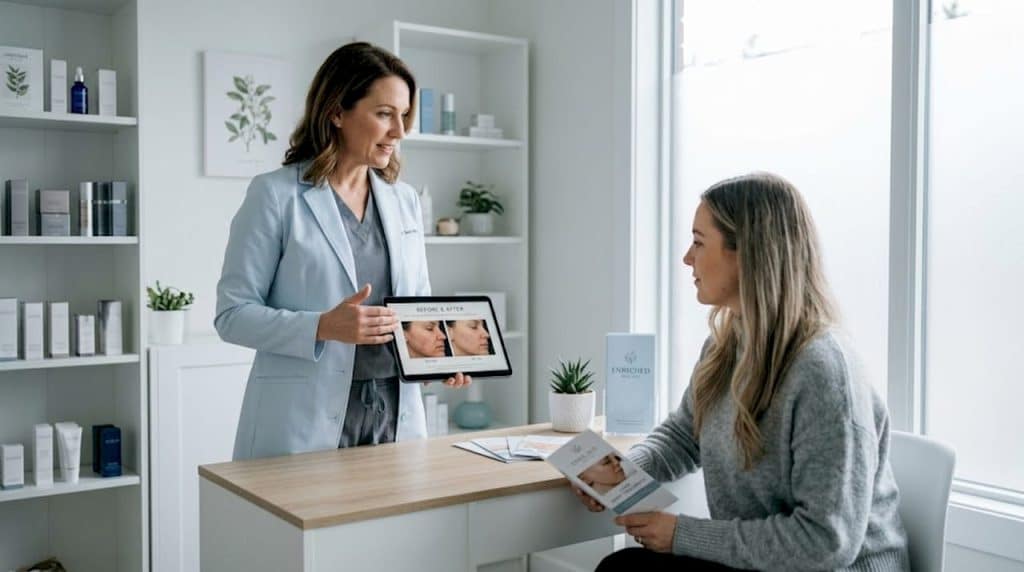
Most people assume laser resurfacing works like an eraser, sweeping away wrinkles and sun damage in a single pass. The truth is far more interesting. The visible improvements you see after treatment are largely the result of your own skin’s healing response, triggered by precisely controlled laser energy. Understanding this process helps you set realistic expectations, make informed choices, and get the most out of your investment in non-surgical skin renewal.
Table of Contents
- What is laser resurfacing and why do people choose it?
- The science behind how laser resurfacing works
- Comparing types of laser resurfacing: Ablative, non-ablative, and fractional
- What results can you expect? Visible changes, benchmarks, and what impacts outcomes
- What most people miss about laser resurfacing results
- Take the next step with expert-guided anti-aging treatments
- Frequently asked questions
Key Takeaways
| Point | Details |
|---|---|
| Natural healing drives results | Laser resurfacing works by stimulating your body’s own repair and collagen remodelling for smoother, firmer skin. |
| Ablative vs. fractional lasers | Ablative lasers remove surface skin for dramatic results, while fractional lasers offer faster healing with less downtime. |
| Visible age reduction | Clinical studies show laser resurfacing can visibly reduce the signs of ageing by one to two years on average. |
| Safety depends on expertise | Provider experience and matching the right treatment to your skin type are key to safe, effective results. |
What is laser resurfacing and why do people choose it?
Laser resurfacing is a medical-grade skin treatment that uses focused light energy to address a wide range of concerns, from fine lines and deep wrinkles to sun damage, uneven skin tone, and mild laxity. For adults aged 25 to 55 in Woodbridge and East Gwillimbury, it represents one of the most effective non-surgical options available for meaningful anti-aging results.
The appeal is straightforward. You do not need general anaesthesia, there are no surgical incisions, and you can return to daily life relatively quickly compared to surgical procedures. Many people explore laser resurfacing after learning about anti-aging facial benefits and wanting a more intensive step forward. Others come in after trying surface-level treatments like a microdermabrasion facial process and seeking deeper renewal.
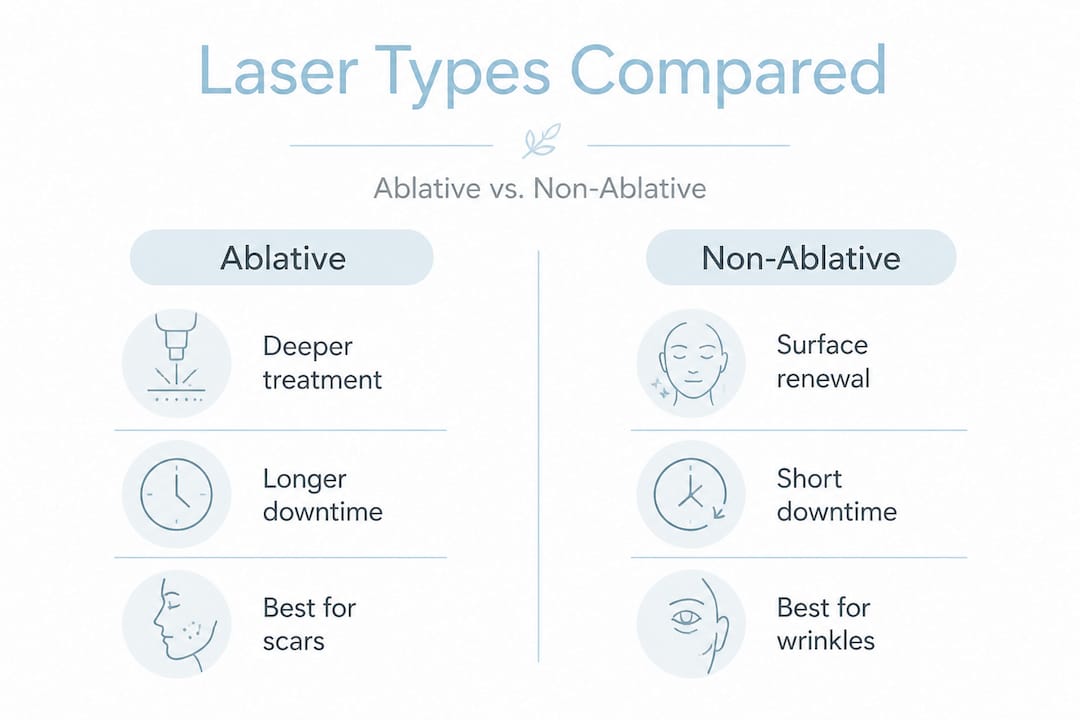
There are two main categories to understand: ablative and non-ablative. Ablative lasers physically remove the outermost layers of skin. As the research confirms, ablative laser resurfacing improves visible photodamage by ablating the epidermis and portions of the superficial dermis while inducing collagen remodelling in the deeper dermis. Non-ablative lasers, by contrast, heat the tissue beneath the surface without removing the top layer, making them gentler with less downtime.
Here is a quick summary of what laser resurfacing commonly treats:
- Fine lines and deeper wrinkles, particularly around the eyes and mouth
- Sun damage, including age spots and uneven pigmentation
- Acne scars and textural irregularities
- Mild to moderate skin laxity
- Dull, rough, or uneven skin tone
“The goal of laser resurfacing is not simply to remove damaged skin. It is to create a controlled healing environment where your body rebuilds healthier, more youthful-looking tissue from the inside out.” — Enriched Med Spa clinical team
With an understanding of why it is sought after, we can explore the science driving the visible improvements seen after laser resurfacing.
The science behind how laser resurfacing works
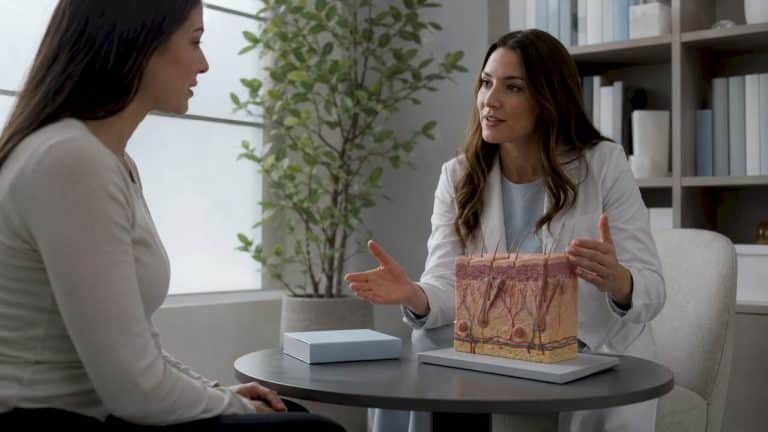
When laser energy contacts your skin, something remarkable happens beneath the surface. The treatment creates thousands of microscopic zones of controlled thermal injury, and your body immediately mobilises to repair them. This is not damage in the harmful sense. It is a deliberate, precisely calibrated signal that tells your skin to rebuild.
Here is how the process unfolds, step by step:
- Laser energy is applied to the targeted area, either removing surface cells (ablative) or heating the dermis without surface removal (non-ablative).
- Epidermal cells are affected, removing the outer layer where photodamage, pigmentation, and texture irregularities live.
- Thermal energy penetrates into the dermis, the deeper structural layer where collagen and elastin fibres reside.
- The wound-healing cascade begins, triggering the release of growth factors and cytokines that stimulate new cell production.
- Collagen remodelling takes place over weeks and months, gradually firming and smoothing the skin from within.
- New epidermal cells migrate inward from untreated areas, covering the treated zones with fresher, healthier skin.
This is what the evidence describes as a wound-healing and collagen remodelling cascade, the foundational mechanism behind virtually all laser-based anti-aging results. It is your skin doing the heavy lifting, not just the laser itself.
Fractional laser technology refined this process significantly. Rather than treating the entire surface, fractional lasers deliver energy in tiny columns called microscopic treatment zones, leaving bridges of untreated skin in between. These intact bridges act as reservoirs of healthy cells that speed up the healing process. Fractional laser resurfacing treats only a defined fraction of skin while leaving intervening bridges intact, which allows faster re-epithelialization than full-field ablation.
The firmer, more even skin you see post-treatment is the result of this multi-layered renewal. New collagen fibres are more organised and abundant. Fresh epidermal cells are free of accumulated photodamage. The net effect is skin that looks and feels meaningfully younger.
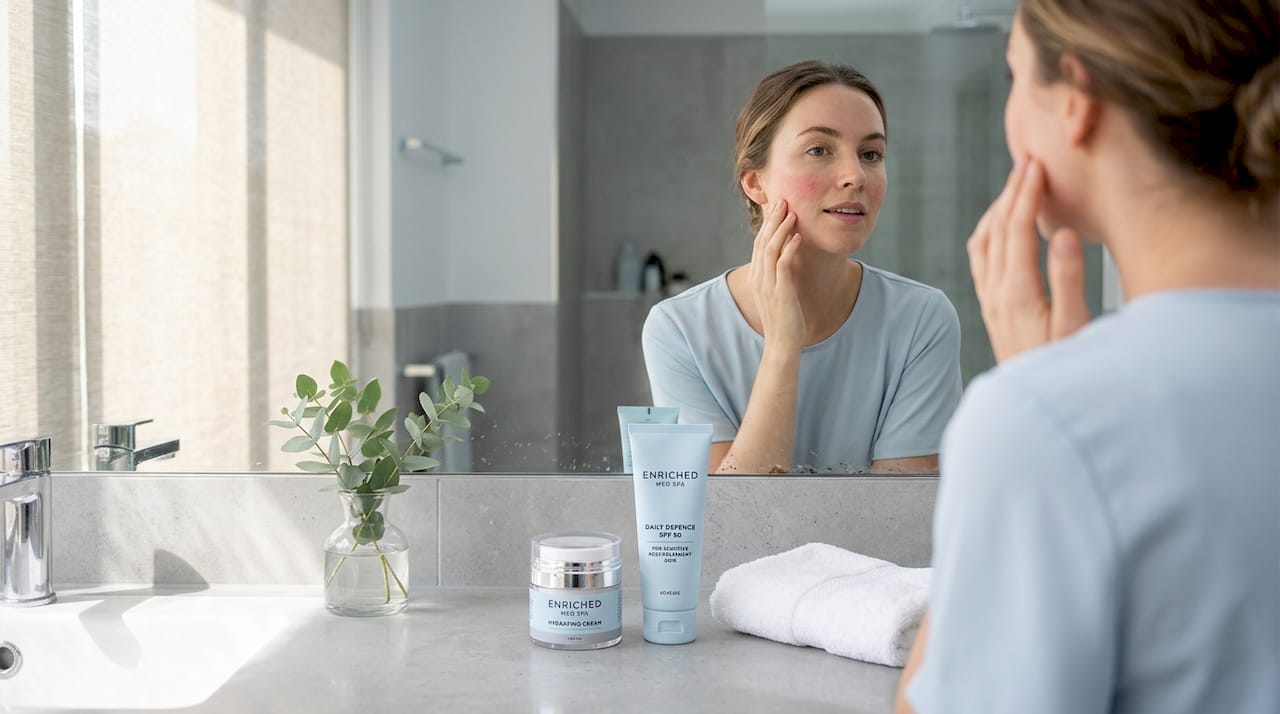
Pro Tip: Supporting your skin’s collagen production after treatment with broad-spectrum SPF, gentle hydration, and a provider-recommended post-care routine helps you maintain and extend your results. This is why maintaining skin results is as important as the treatment itself.
| Phase | Timing | What happens |
|---|---|---|
| Immediate response | 0 to 48 hours | Redness, swelling, skin sensitivity |
| Re-epithelialization | Days 3 to 7 | New skin cells resurface the treated area |
| Early remodelling | Weeks 1 to 4 | Collagen fibres begin to reorganise |
| Maturation phase | Months 1 to 6 | Full collagen remodelling and visible firming |
You can also complement this process with treatments like LED facial therapy, which supports cellular recovery through specific wavelengths of light after resurfacing.
Now that we know the foundations, let us look closer at the methods and what sets different approaches apart.
Comparing types of laser resurfacing: Ablative, non-ablative, and fractional
Not all lasers behave the same way, and choosing the right approach depends on your skin concerns, skin type, tolerance for downtime, and the results you want to achieve. Understanding the differences helps you have a more informed conversation with your provider.
Here is a side-by-side comparison:
| Laser type | Mechanism | Downtime | Best for | Sessions typically needed |
|---|---|---|---|---|
| Ablative (CO2 or Er:YAG) | Removes surface skin layers | 7 to 14 days | Deep wrinkles, significant photodamage | Often 1 to 2 |
| Non-ablative | Heats dermis, no surface removal | Minimal to none | Early lines, tone, mild laxity | 3 to 6 or more |
| Fractional ablative | Micro-columns of ablation, bridges intact | 4 to 7 days | Moderate wrinkles, scars, texture | 1 to 3 |
| Fractional non-ablative | Micro-columns of heat, no surface removal | 1 to 3 days | Pigmentation, mild lines, maintenance | 3 to 5 |
The research behind CO2 lasers, one of the most studied ablative options, shows that re-epithelialization occurred in all quadrants by day 7 across four different CO2 resurfacing lasers in a prospective study, with comparable clinical improvement across devices. This means that even within the ablative category, results and healing timelines are fairly consistent when performed by a skilled provider.
Fractional delivery was a significant advancement in making laser resurfacing accessible to a wider range of patients. Fractional delivery mainly aims to reduce recovery burden by keeping untreated skin between micro-injured columns, meaning you benefit from the stimulation of healing without the longer recovery of full-field ablation.
Key factors that influence which laser type is right for you include:
- The depth and severity of your skin concerns
- Your Fitzpatrick skin type (which indicates pigmentation risk)
- Your personal tolerance for downtime and social recovery
- Your overall health and any contraindicated medications
- The expertise and equipment available at your chosen clinic
One area that deserves particular attention is minimising hyperpigmentation risk, especially for those with medium to deeper skin tones. Darker skin types can experience post-inflammatory hyperpigmentation after ablative procedures, which is why laser selection and provider expertise are not optional extras. They are central to your safety and outcome.
Pro Tip: Diligent post-laser aftercare is non-negotiable. Skipping sunscreen or returning to active exfoliants too soon after treatment can undo weeks of healing and increase your risk of pigmentation changes.
How do these technical aspects translate into real-life results?
What results can you expect? Visible changes, benchmarks, and what impacts outcomes
One of the most common questions we hear from clients considering laser resurfacing is this: “How much of a difference will I actually see?” The honest answer depends on a number of variables, but the clinical evidence gives us meaningful benchmarks.
Studies measuring visible aging outcomes after laser resurfacing show that the treatment correlates with real, measurable improvements across different skin types. Research confirms that laser resurfacing can correlate with visible improvement and reductions on composite aging measures across Fitzpatrick categories, with estimated age change averaging approximately 1.7 years of apparent age reduction. That is a meaningful shift in how others perceive your skin’s age, and it is validated using established dermatologist rating scales like the Glogau scale.
Here is a realistic picture of what most people notice after a complete treatment course:
| Concern | Typical improvement | Timeframe |
|---|---|---|
| Fine lines | Noticeable softening | 4 to 8 weeks |
| Deeper wrinkles | Reduced depth, smoother appearance | 3 to 6 months |
| Skin tone and texture | More even, refined surface | 4 to 6 weeks |
| Skin firmness | Gradual tightening from collagen renewal | 3 to 6 months |
| Acne scars | Flattening and softening of edges | Several months |
What shapes your individual outcome? Here are the most significant factors:
- Skin type and baseline damage. Skin with more accumulated sun damage often shows more dramatic improvement, simply because there is more to correct.
- Laser selection. Matching the right technology to your concern and skin type is the single biggest driver of both results and safety.
- Provider skill and protocol. Settings, passes, and patient assessment all vary significantly between practitioners.
- Aftercare compliance. Your skin’s healing response is influenced directly by how well you support it post-treatment.
- Realistic expectations. Laser resurfacing produces gradual, progressive improvement. The best results typically appear at three to six months.
Safety is also a genuine consideration. As the evidence highlights, patient safety edge cases often revolve around pigment risk and how laser settings and choice affect thermal injury. If you have a history of keloid scarring, active acne, or are taking certain medications, your provider needs to know this before any treatment begins.
For those dealing with acne-related scarring specifically, exploring treating acne scars with laser resurfacing can offer meaningful textural improvement over time, particularly with fractional approaches.
Having set realistic expectations, let us draw some lessons from experience and share a perspective that goes beyond the basics.
What most people miss about laser resurfacing results
Here is something we find ourselves explaining regularly: most people come in expecting the laser to do everything. They focus on the machine, the technology, the brand name of the device. What they underestimate almost every time is the role their own biology plays in the outcome.
The visible changes from laser resurfacing are not immediate. They build over months as collagen remodels and new tissue matures. This means a patient who sees modest results at four weeks may see dramatically better results at four months. Patience is not just encouraged here. It is scientifically necessary.
We also see patients who expect one session to address everything. For most people, especially those with deeper concerns or skin that needs careful, staged treatment, a single session is a starting point, not a finish line. A thoughtful, multi-session plan tailored to your skin type often outperforms a single aggressive treatment from a results and safety standpoint.
There is also the issue of aftercare being treated as optional. It is not. Your skin is actively rebuilding after laser treatment, and everything you put on it or expose it to during that window either supports or undermines the process. Broad-spectrum SPF every morning, gentle non-comedogenic moisturisers, and avoiding active ingredients like retinoids and exfoliants until your provider clears them are essential, not suggestions.
Finally, we would encourage anyone researching laser resurfacing to think about their overall skin health, not just the treatment itself. Exploring holistic facial benefits helps frame laser resurfacing as part of a broader, long-term commitment to skin wellness rather than a one-off fix. The best outcomes we see are in clients who combine evidence-based treatments with consistent, expert-guided home care. That combination is what delivers lasting results.
Take the next step with expert-guided anti-aging treatments
If you are ready to explore laser resurfacing or want to understand how it fits into a broader anti-aging plan, the team at Enriched Med Spa is here to help. We serve clients in Woodbridge and East Gwillimbury with personalised skin consultations that consider your unique skin type, concerns, and goals before recommending any treatment. Whether you are curious about how laser resurfacing compares to other options or want to explore the full range of possibilities, you can compare dermal fillers and Botox as complementary approaches, or browse our skin care essentials to support your results at home. We believe informed clients get the best outcomes, and we are committed to being your trusted partner every step of the way.
Frequently asked questions
How long does it take to recover from laser resurfacing?
Most people experience re-epithelialization within 5 to 7 days, but redness can last up to three months depending on the laser type and depth of treatment.
Will laser resurfacing make me look younger?
Yes, clinical studies show that estimated age change averaged approximately 1.7 years of visible age reduction after laser resurfacing, alongside measurable improvements in skin quality and texture.
Is laser resurfacing safe for all skin tones?
Laser resurfacing can be adapted for most skin tones, but pigment risk edge cases are more common with deeper Fitzpatrick types, making provider expertise and careful laser selection essential for safety.
What is the difference between ablative and non-ablative lasers?
Ablative lasers improve visible photodamage by ablating the epidermis and superficial dermis for stronger results, while non-ablative lasers heat deeper tissue without surface removal, offering a gentler treatment with less recovery time.
Recommended
- What Is a Microdermabrasion Facial? Revealing Fresher, Younger Skin – Botox Laser Hair Removal OxyGeneo Medi Facial Microneedling – Enriched Med Spa – Vaughan Woodbridge Maple Vellore Village
- What Are Anti-Aging Facials? Fighting Wrinkles and Fine Lines Effectively – Botox Laser Hair Removal OxyGeneo Medi Facial Microneedling – Enriched Med Spa – Vaughan Woodbridge Maple Vellore Village
- How can combining BOTOX and Juvéderm achieve a non-surgical facelift? – Botox Laser Hair Removal OxyGeneo Medi Facial Microneedling – Enriched Med Spa – Vaughan Woodbridge Maple Vellore Village
- How Juvederm Can Give You A More Youthful Appearance | Vaughan