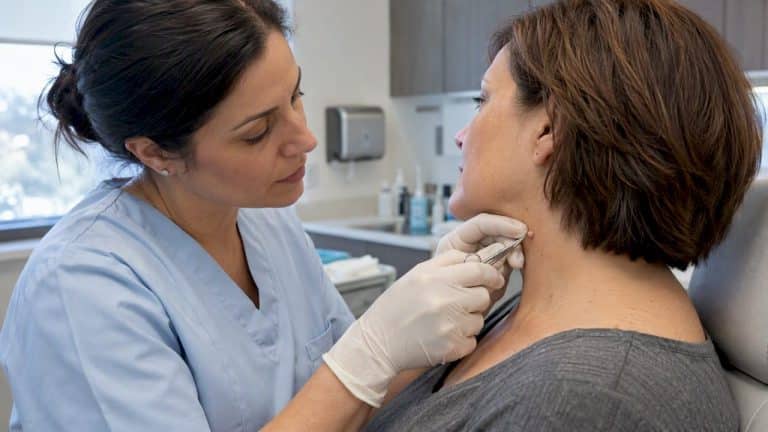

For most new mothers, postpartum shedding is temporary and resolves without treatment, so PRP (platelet-rich plasma) is usually not the first step. It becomes worth discussing when hair has not returned to its usual fullness after the normal recovery window, or when the thinning looks like something other than simple shedding. This guide explains how to tell the difference, what to check first, and what PRP can and cannot realistically do.
TL;DR
- Postpartum shedding typically starts around three months after birth and usually resolves within 6 to 12 months. In that window, patience is the main treatment.
- Before PRP, ask your doctor about blood tests for iron and thyroid problems, which can mimic or prolong postpartum shedding.
- PRP has randomized-trial evidence for improving hair density in women, but it is not a universal fix and works best where follicles are still active.
- At our Woodbridge clinic, PRP hair restoration is $800 and a consultation comes first, so you can decide with a clear picture of your scalp.
Table of Contents
- What is actually happening to your hair
- Is this still normal shedding?
- Rule out the common causes first
- What PRP is and how it is used for hair
- What the evidence says
- When we would suggest waiting
- When PRP is worth discussing
- Can PRP be combined with other treatments?
- What a PRP hair visit looks like
- Our perspective
- Looking after your hair while it recovers
- Booking a consultation in Woodbridge
- FAQ
- Sources
What is actually happening to your hair
During pregnancy, high estrogen keeps more hairs in the growing phase, so many women notice thicker hair. After delivery, estrogen drops quickly and those hairs move into the resting phase together, then shed together. The medical name is telogen effluvium. Johns Hopkins Medicine describes it as a normal process that begins about three months after birth, and notes that up to 30 to 50 percent of scalp hair may be affected during the heavier shedding phase.
That figure sounds alarming, and it is one reason many clients come to us frightened. Handfuls of hair in the shower or on the pillow are common, and in most cases they are not a sign of disease. Hairs are being replaced, not permanently lost. The follicles are intact; they are on a delayed schedule.
Two details help set expectations:
- Shedding stops before hair looks full again. DermNet notes that telogen effluvium usually stops within a few months, but regaining your previous hair bulk can take much longer, in some people up to a couple of years.
- New growth looks like short baby hairs. Around the temples and hairline, you may see short, fine regrowth. That is usually a good sign, not breakage.
Is this still normal shedding?
A useful rule of thumb is to look at timing and pattern.
| What you notice | More consistent with | Next step |
|---|---|---|
| Even shedding all over, starting about 3 months after birth | Normal postpartum shedding | Wait, support recovery, recheck at 6 to 12 months |
| Shedding still heavy well beyond a year | Something else may be contributing | See your doctor for blood work |
| Patchy bald spots, itching, redness or scalp pain | A scalp or autoimmune condition | Medical or dermatology assessment before any cosmetic treatment |
| Widening part or thinning crown that persists after shedding settles | Possible pattern hair loss, sometimes unmasked by pregnancy | Consultation to assess whether PRP suits you |
If shedding continues past the 6 to 12 month range or comes with patchy loss, itching or redness, Johns Hopkins advises having it evaluated by a healthcare provider, since thyroid disorders or iron deficiency may be involved.
Many readers also ask whether hair loss 17 months after birth is still normal. It is less typical at that point. It does not automatically mean something serious, because recovery can lag, but it is a good moment for blood work and a proper scalp assessment rather than more waiting.
Rule out the common causes first
PRP cannot correct a nutritional or hormonal cause. If iron is low or the thyroid is underactive, injections into the scalp will not fix the reason your hair is shedding.
DermNet’s overview of diffuse hair loss lists childbirth, iron deficiency and thyroid disease among the recognized triggers. The Government of Canada’s postpartum health guide is a good starting point for what to discuss at your postpartum follow-ups. Ask your family doctor or midwife about:
- Ferritin and a complete blood count to check iron stores
- Thyroid function (TSH), since postpartum thyroid changes can occur
- Your diet and protein intake, especially if you are breastfeeding
- Recent big stressors, illness or sudden weight loss, all of which can cause shedding on their own
Health Canada also notes that female adults have increased needs for nutrients such as iron and folate during pregnancy and breastfeeding. Do not start high-dose iron or other supplements on your own. Your doctor can tell you whether you need them and how much.
What PRP is and how it is used for hair
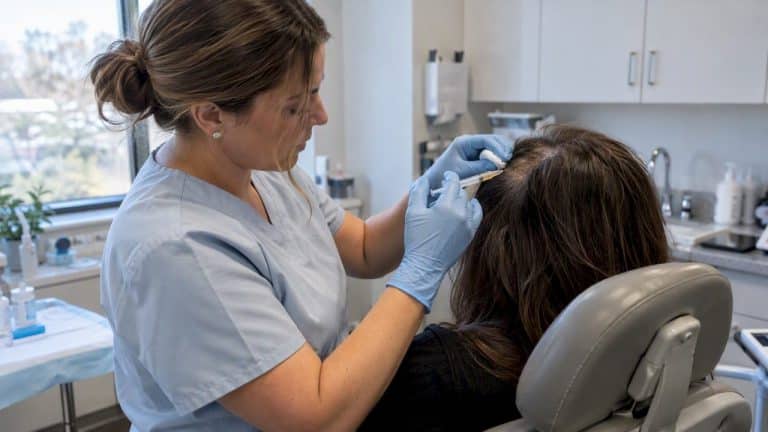
PRP is made from a small sample of your own blood. It is spun in a centrifuge to concentrate platelets, which carry growth factors, and the plasma is then injected into the scalp where hair is thinning. The idea is to support follicles that are weakened but still alive and encourage them to stay in the growth phase longer.
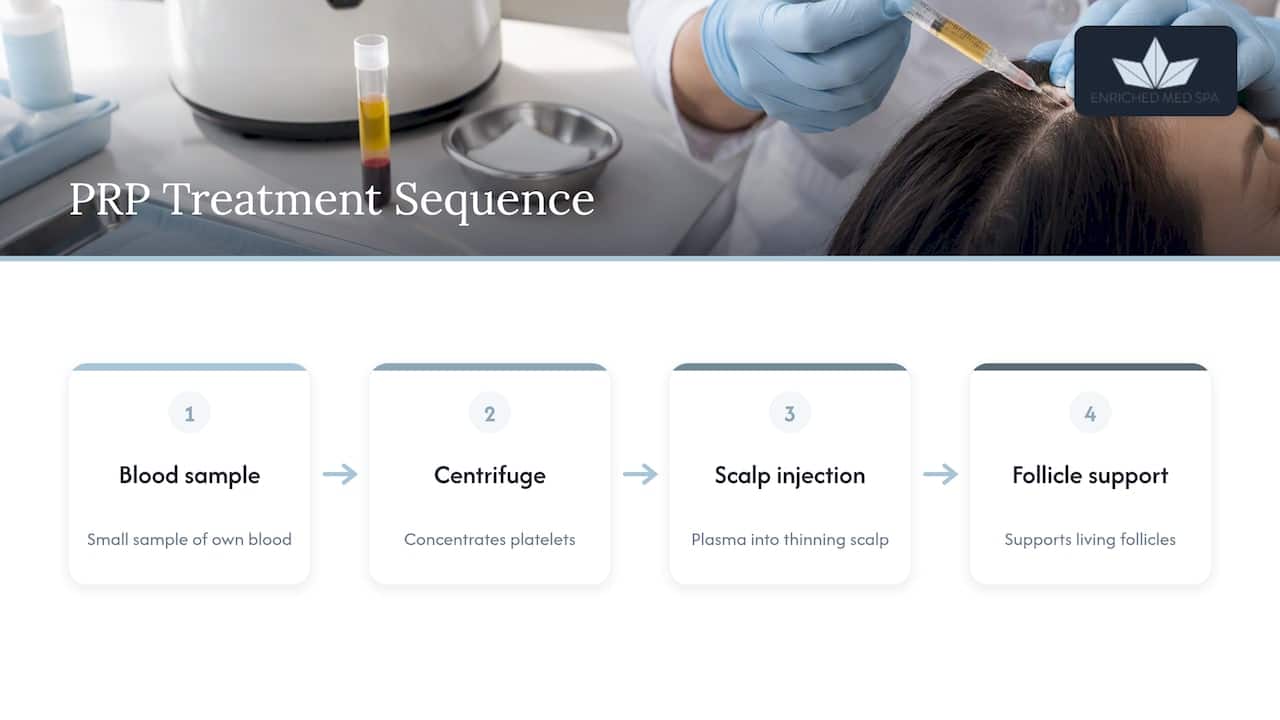
At Enriched Med Spa, this is offered as PRP Hair Restoration at $800. We also offer DERIVE Exosomes Hair Restoration at $950, listed on the same page. Both begin with a consultation, and we will tell you honestly if we think another path is better for you.
What the evidence says
A 2024 systematic review and meta-analysis of randomized controlled trials looked at PRP for female hair loss specifically and concluded it can improve hair density and thickness with a favourable safety profile. It also highlighted limits in the underlying studies, so the picture is encouraging rather than conclusive.
Three honest caveats matter for postpartum readers:
- Most research is on pattern hair loss, not postpartum shedding. Studies tend to include women with androgenetic (pattern) hair loss. Postpartum telogen effluvium is a different process that usually recovers by itself, so it is hard to prove that PRP speeds it up.
- Protocols vary. Studies use different preparation methods, numbers of sessions and spacing, which makes it hard to promise a specific result.
- Results are not guaranteed. Response differs from person to person.
So why consider PRP at all? Because pregnancy can sometimes unmask hair thinning that was already beginning. If your hair has not recovered after the normal window, or your part keeps widening after shedding has settled, PRP may help support the follicles that remain.
When we would suggest waiting
Many clients come in a few months after delivery, hoping to stop the shedding. In that early stage, we are usually cautious about recommending injections. Here is how we think about it:
- Within the first 6 to 12 months, shedding is expected. Most hair returns without treatment as hormone levels settle, so there is often no need to intervene.
- If you are exhausted, sleeping little and healing, your body has other priorities. Gentle care and a medical check-up come first.
- If blood work has not been done, we ask you to do that before booking.
None of that means your concern is unimportant. It means the best plan is the one that matches the cause.
When PRP is worth discussing
PRP tends to make sense when:
- Hair density has not rebounded a year or more after delivery
- Thinning is concentrated at the part, crown or temples rather than evenly spread
- Blood work is normal, or any deficiency is already being treated
- You are not currently pregnant, and you have talked to your doctor about breastfeeding and any medical conditions or medications, such as blood thinners
- You understand it takes several months to judge results
PRP is less suitable when the scalp is inflamed or infected, when there are patches of smooth hair loss that suggest an autoimmune cause, or when loss is advanced and follicles are no longer active. Those situations call for medical diagnosis first, and in some cases for a dermatologist.
Can PRP be combined with other treatments?
Often, yes. A network meta-analysis comparing minoxidil, PRP and microneedling in pattern hair loss found that combination treatments may improve the usefulness of approved agents, while noting that head-to-head comparisons are lacking. In practice, that supports the idea that PRP works best as one part of a plan rather than a stand-alone answer.
A plan might include:
- Treating any iron or thyroid issue your doctor identifies
- A gentle scalp routine and reduced heat and tension on the hair
- Medical options your doctor or dermatologist may suggest
- PRP sessions, spaced according to your assessment
We also offer microneedling at $359, which is a skin treatment, and microneedling with PRP for the face. For the scalp, we will recommend the right approach at your consultation rather than adding services for the sake of it.
What a PRP hair visit looks like
Every clinic has its own process. Here is what you can expect at ours, in general terms:
- Consultation. We ask about your birth date, breastfeeding, health history, medications, diet and when the shedding started. We examine your scalp and hair density.
- Blood draw. A small sample is taken, as for a routine blood test.
- Preparation. The sample is processed to concentrate platelets.
- Injections. The PRP is placed in the areas of thinning. Mild discomfort is common, and we talk you through it.
- Aftercare. You will receive clear written guidance on washing, sun and activity.
You may see some tenderness, redness or small bumps for a short time. Tell us promptly about anything that worries you, and see a doctor urgently for signs of infection such as spreading redness, heat, swelling or fever.
For timing, treatments are usually repeated rather than done once, and results are judged over months, because hair grows slowly. Our guide on how long PRP lasts for hair explains maintenance in more detail.
Our perspective
We see many new mothers who arrive worried that something is wrong. Often what they need first is reassurance and a clear timeline. We would rather tell you that your hair is likely to recover than sell you a treatment you do not need.
When PRP is appropriate, we want it to be part of a thoughtful plan. That means a full consultation, a conversation about blood work, realistic expectations about months rather than weeks, and no promises about outcomes. Our treatments are performed by experienced nurse-level injectors and aestheticians, and we believe you deserve to understand every step before you agree to it.
If you are early in your postpartum journey, come for information. There is no pressure to treat anything.
— Felix
Looking after your hair while it recovers
While you wait for regrowth, small habits protect the hair you have:
- Be gentle when detangling, and avoid tight ponytails and braids that pull on the hairline
- Limit high heat styling and harsh chemical processing for now
- Eat enough protein and iron-containing foods, in line with your doctor’s advice
- Do not panic-wash less often; regular cleansing does not cause shedding, it only shows hairs that were already coming out
Style can also help you feel like yourself again. If you have textured or Black hair and want to plan protective styles during regrowth, a virtual hairstyle preview tool and guide to postpartum hairstyles can help you try looks without committing to them on fragile edges.
Booking a consultation in Woodbridge
If your hair has not recovered after a year, or you are unsure whether what you are seeing is normal, we can assess your scalp and talk through your options. We serve Woodbridge, Vaughan and East Gwillimbury. You can read about PRP hair restoration, including the PRP and DERIVE Exosomes options, or visit our main site to get in touch. For a broader look at who qualifies, see our guide to PRP for female hair loss.
FAQ
Does PRP work for postpartum hair loss?
It may help in some women, particularly if thinning persists after the normal recovery period or reflects underlying pattern hair loss. Trials in women show improved density on average, but most were not done on postpartum shedding alone, and individual results vary. It is not a guaranteed fix.
How soon after giving birth can you have PRP?
There is no single rule, and it depends on your health and whether you are breastfeeding. We generally suggest waiting through the normal 6 to 12 month shedding period unless there is a reason to assess earlier. Talk to your doctor first, then book a consultation so we can review your situation.
Can pregnancy trigger other kinds of hair loss?
Yes. Pregnancy and delivery can sometimes bring out pattern hair loss, and iron deficiency or thyroid disease can also cause diffuse shedding. If you have patches, itching, redness or shedding that will not settle, see your doctor or a dermatologist.
How much does PRP for hair cost at Enriched Med Spa?
Our published price for PRP Hair Restoration is $800, and DERIVE Exosomes Hair Restoration is $950. We confirm what is right for you at your consultation.
Sources
- Postpartum Hair Loss, Johns Hopkins Medicine
- Follicular disorders: disorders of the hair and scalp, DermNet
- Diffuse alopecia, DermNet
- Your Guide to Postpartum Health and Caring for Your Baby, Canada.ca
- Nutrition considerations during pregnancy and to support breastfeeding, Canada.ca
- Effectiveness of platelet-rich plasma in treating female hair loss, systematic review and meta-analysis, PMC
- Relative effects of minoxidil 5%, PRP and microneedling in pattern hair loss, PMC