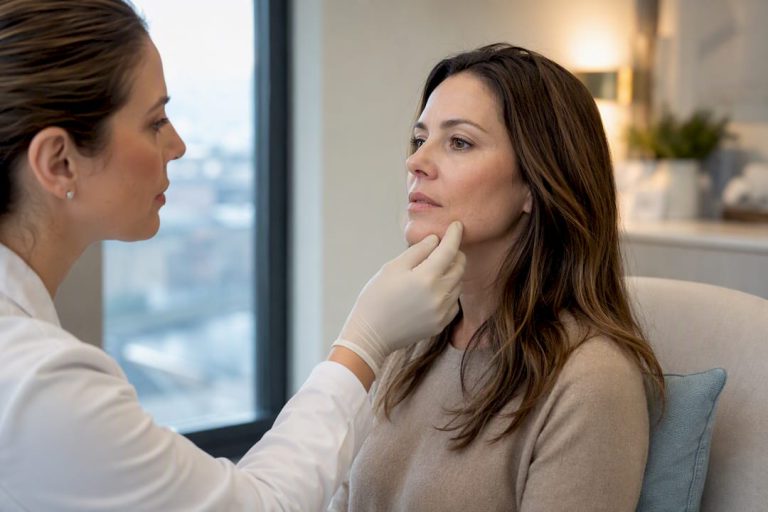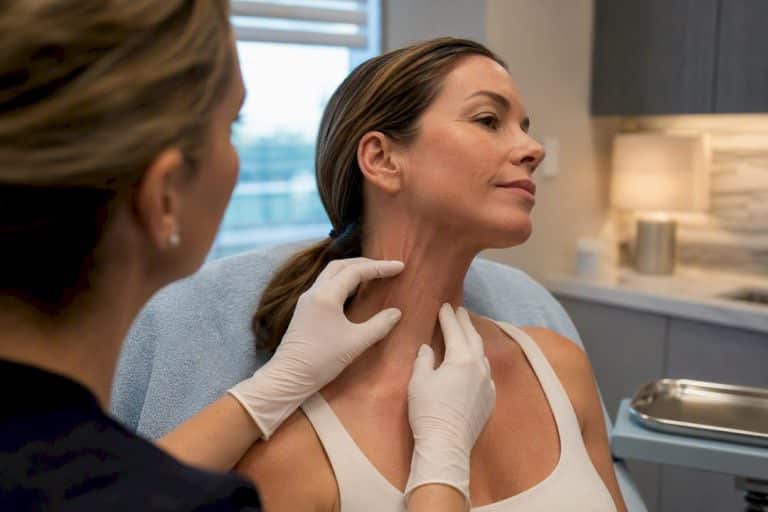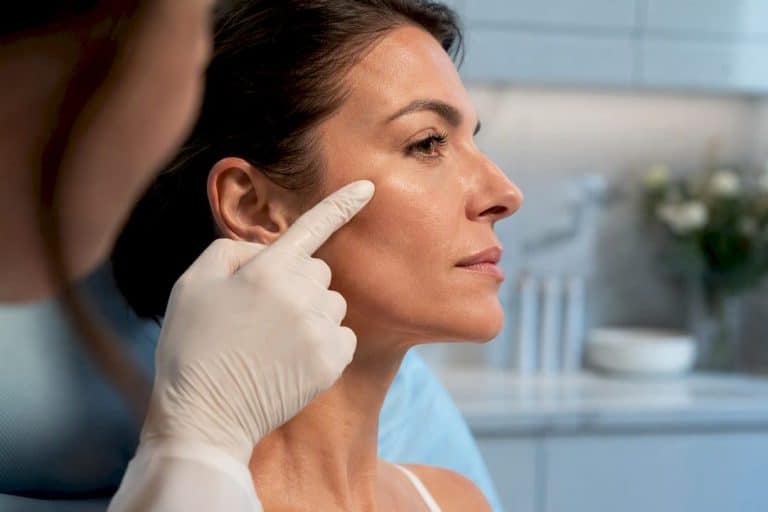

Non-surgical anti-aging treatments work by targeting the underlying causes of visible skin ageing, not just masking the surface. They stimulate collagen and elastin production, relax the muscles that create dynamic lines, resurface damaged skin cells, and restore lost volume. The result is skin that looks and functions more like it did years earlier.
The primary benefits you can expect, depending on the treatment:
- Reduced dynamic lines and wrinkles (forehead, crow’s feet, frown lines)
- Restored facial volume in cheeks, lips, and under-eye hollows
- Improved skin texture and tone through resurfacing and cell renewal
- Reduced pigmentation and sun damage
- Firmer, tighter skin through collagen remodelling
- Boosted hydration and a more even, luminous complexion
Fastest results: Neuromodulators like Botox typically show visible softening within about two weeks. Chemical peels can give a radiance boost after a single session.
Longer timeline: Structural improvements from radiofrequency (RF) microneedling, laser resurfacing, and biostimulatory fillers build progressively over 3–6 months as new collagen matures.
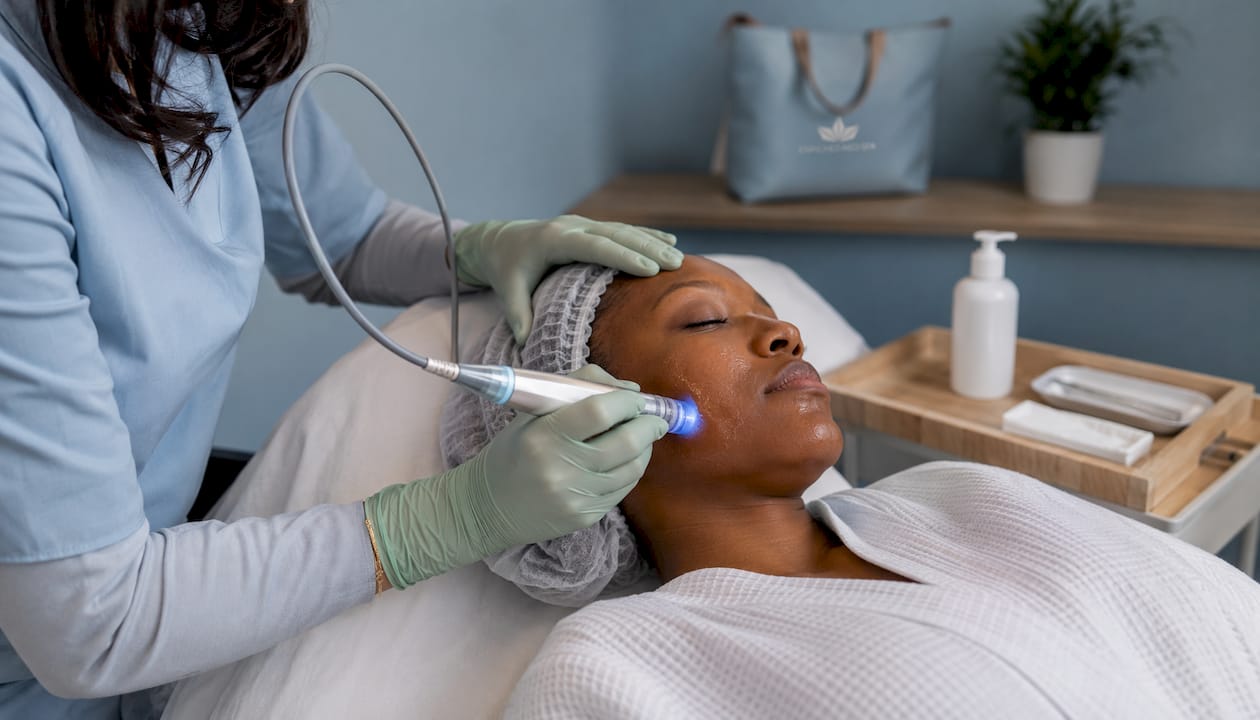
If your concerns are primarily surface-level (dullness, mild texture, early fine lines), a well-chosen topical regimen or a light chemical peel may be a reasonable starting point. If you’re noticing volume loss, significant laxity, or deeper lines, a consultation with a qualified medical aesthetics provider will help you map the right in-clinic options.

Table of Contents
- How your skin actually ages
- What visible signs can non-surgical treatments address?
- Non-surgical treatment categories and what each one does for you
- Topicals and prevention: the foundation of lasting results
- Injectables: what neuromodulators and fillers actually do
- Chemical peels and microneedling: texture, pigment, and collagen
- Lasers and radiofrequency: tightening and deeper structural improvement
- How treatments are combined and what timelines to realistically expect
- Risks, side effects, and when to pause treatment
- How to choose a clinic and what to ask at your consultation
- How we assess benefits and build treatment plans at Enrichedmedspa
- Key takeaways
- A note on realistic outcomes
- Ready to talk through your options with Enrichedmedspa?
- Useful sources for further reading
How your skin actually ages
Visible ageing is driven by two overlapping processes: intrinsic ageing (the biological clock) and photoaging (cumulative UV damage). Both reduce the skin’s structural integrity, but they do so through slightly different mechanisms.
Intrinsically, collagen production declines steadily after your mid-twenties, and elastin fibres become less resilient over time. The dermis thins, the epidermis renews more slowly, and subcutaneous fat compartments shrink and shift. The result is skin that looks less plump, less firm, and less even. Skin anti-aging strategies published in PMC confirm that collagen and elastin degradation are central to both intrinsic and extrinsic ageing pathways.
Photoaging compounds these changes significantly. UV radiation generates free radicals that break down collagen fibres, impair new collagen synthesis, and cause irregular melanin distribution. This is why two people of the same age can look quite different depending on their lifetime sun exposure. The Canadian Dermatology Association positions prevention as the most effective strategy against photoaging, noting that treatments including retinoids, lasers, and injectables can address existing damage, but cannot fully reverse years of unprotected exposure.
The subcutaneous layer matters too. As facial fat pads thin and shift with age, the face loses the three-dimensional support that keeps skin looking lifted. Bone resorption in the jaw and orbital rim adds to this structural change. Understanding these layers helps explain why a single treatment rarely addresses everything, and why personalised, layered plans tend to give the most satisfying outcomes.
What visible signs can non-surgical treatments address?
Most people who come in for a consultation are noticing one or more of these changes: fine lines that appear even at rest, a loss of fullness in the cheeks or lips, skin that feels less firm, uneven pigmentation, or a general dullness that wasn’t there before. These are the signs that non-surgical treatments are specifically designed to address.
Common visible signs and their primary causes:
- Dynamic lines (forehead, crow’s feet, frown lines): repeated muscle contractions over years
- Static lines at rest: collagen and elastin loss in the dermis
- Volume loss in cheeks, temples, and lips: fat pad atrophy and bone resorption
- Skin laxity along the jawline and neck: reduced dermal support and elastin decline
- Pigmentation and sunspots: UV-induced melanin irregularity (photoaging)
- Rough texture and enlarged pores: slowed cell turnover and surface damage
- Dullness and uneven tone: accumulated dead skin cells and reduced circulation
Pro Tip: Surface concerns like dullness, mild texture, and early pigmentation often respond well to consistent topical care and periodic chemical peels. Deeper concerns, including volume loss, laxity, and established static lines, typically need in-clinic procedures to see meaningful change.
Non-surgical treatment categories and what each one does for you
“Prevention is best, but when signs of photoaging are already present, a range of treatments, including botulinum toxin, dermal fillers, lasers, chemical peels, and retinoids, can meaningfully improve appearance when selected and applied appropriately.” — Canadian Dermatology Association
Non-surgical anti-aging treatments fall into several categories, each targeting a different layer of the skin or a different mechanism of ageing. Here is a clear map of what each category does and who tends to benefit most.
Topicals and prevention form the foundation. Retinoids accelerate cell turnover and stimulate collagen. Antioxidants like vitamin C neutralise free radicals. Broad-spectrum SPF 30+ sunscreen prevents further UV damage. These work gradually but are the most evidence-backed tools for long-term skin health.
Neuromodulators (onabotulinumtoxinA, such as Botox, Nucieva, and Xeomin) temporarily relax the muscles responsible for dynamic lines. They do not fill or plump; they prevent the repeated muscle contractions that deepen lines over time.
Dermal fillers (hyaluronic acid fillers such as Juvederm and Teosyal) restore lost volume, smooth static lines, and refine facial contours. Biostimulatory fillers like poly-L-lactic acid (PLLA) go a step further by triggering the body’s own collagen production.
Chemical peels remove the outermost layers of damaged skin, accelerating cell renewal and improving pigmentation, texture, and radiance. Superficial peels require little downtime; medium-depth peels address more significant sun damage and fine lines.
Microneedling creates controlled micro-injuries in the dermis, stimulating collagen and elastin production. It improves texture, fine lines, and mild laxity with minimal downtime and a favourable safety profile across skin tones.
Laser resurfacing (fractional lasers) uses targeted light energy to remove or remodel damaged skin, improving pigmentation, texture, and deeper lines. Ablative lasers offer more dramatic results with longer recovery; non-ablative options are gentler with less downtime.
Radiofrequency (RF) and RF microneedling deliver controlled heat to the deeper dermis and subcutaneous tissue, triggering collagen remodelling and skin tightening. Results build over several months and are particularly useful for laxity.
Topicals and prevention: the foundation of lasting results
Topical treatments and daily sun protection are the base on which every other anti-aging benefit is built, and at-home devices can also complement your routine as described in this guide to better skin at home. Without them, in-clinic results fade faster and new damage accumulates.
Retinoids are the most studied topical anti-aging ingredient. Prescription retinoids (tretinoin) produce faster, more pronounced structural changes; over-the-counter retinol works more slowly but is better tolerated by sensitive skin. Expect 8–12 weeks before visible texture improvement, and 6 months or more for meaningful collagen remodelling. Consistency matters far more than concentration.
Vitamin C serums (L-ascorbic acid, 10–20%) neutralise UV-generated free radicals and support collagen synthesis. They also help fade existing pigmentation. Apply in the morning before sunscreen for best effect.
AHAs (glycolic acid, lactic acid) accelerate surface cell turnover, improving texture, tone, and the absorption of other actives. They are particularly useful for dull, sun-damaged skin.
Broad-spectrum SPF 30+ sunscreen is non-negotiable. The Canadian Dermatology Association’s position on sun protection highlights that visible light also contributes to pigmentation, particularly in darker skin tones, making tinted sunscreens containing iron oxide a smart choice for those with Fitzpatrick IV–VI skin.
When selecting products, the Canadian Dermatology Association’s skincare guidance recommends fragrance-free, non-comedogenic formulations with evidence-backed ingredients. Medical-grade products available through clinics typically contain higher active concentrations and undergo more rigorous testing than cosmetic-counter equivalents.
- Start with a gentle cleanser, SPF, and a vitamin C serum.
- Introduce retinol two to three nights per week, increasing frequency as tolerated.
- Add an AHA exfoliant once or twice weekly once your skin has adjusted.
- Reassess with your provider at 3–6 months to determine whether prescription retinoids or in-clinic treatments are warranted.
Pro Tip: If you are already using a consistent topical regimen and still not seeing the texture or tone improvement you want after 3–4 months, that is usually the right time to discuss a chemical peel or microneedling series with your provider. Topicals and procedures work better together than either does alone.
Injectables: what neuromodulators and fillers actually do
Injectables deliver some of the most targeted and predictable anti-aging treatment results available. Neuromodulators reduce dynamic lines; dermal fillers restore volume and smooth static lines. Used together, they address complementary concerns.
| Treatment | Primary benefit | Typical onset | Typical duration |
|---|---|---|---|
| Neuromodulator (e.g., Botox) | Softens dynamic lines | typically within about two weeks | 3–4 months |
| Hyaluronic acid filler | Restores volume, smooths lines | Immediate | 6–18 months (product-dependent) |
| PLLA biostimulatory filler | Stimulates collagen, restores volume gradually | several weeks | up to two years or longer |
Health Canada’s regulatory review of Botox Cosmetic (onabotulinumtoxinA) confirms that the primary efficacy timepoint in pivotal Phase 3 trials was Day 14, with open-label extensions evaluating safety across up to three retreatments. This is why most providers schedule a follow-up assessment at two weeks after your first treatment.
Who suits neuromodulators? Anyone with dynamic lines, meaning lines that appear or deepen with facial expression, is a good candidate. Forehead lines, crow’s feet, and frown lines (the “11s”) are the most commonly treated areas. Neuromodulators are also used preventively to slow the deepening of lines before they become static. For a detailed look at how they work, this explainer on Botox for natural results covers the mechanism and realistic expectations clearly.
Who suits fillers? Hyaluronic acid fillers are well-suited to volume loss in the cheeks, lips, and under-eye area, as well as nasolabial folds and marionette lines. Poly-L-lactic acid (PLLA) is a biostimulatory option that works by stimulating the body’s own collagen production, making it particularly useful for diffuse volume loss and skin quality improvement rather than targeted spot correction. For a side-by-side comparison of these two injectable categories, Botox vs. fillers is a helpful starting point.
Key safety considerations for injectables:
- Common side effects include temporary bruising, swelling, and mild tenderness at the injection site.
- Neuromodulators are typically retreated every few months; spacing treatments too closely can reduce efficacy over time.
- Fillers should be placed by a qualified injector with a thorough understanding of facial anatomy.
- Avoid injectables during pregnancy or breastfeeding.
- Disclose all medications, including blood thinners and supplements, before treatment.
Chemical peels and microneedling: texture, pigment, and collagen
Chemical peels and microneedling both improve skin at the surface and in the dermis, but they do so through different mechanisms and suit different concerns.
Chemical peels apply an acid solution (glycolic, lactic, salicylic, or trichloroacetic acid) to remove damaged outer layers and accelerate cell renewal. Superficial peels target the epidermis, improving dullness, mild pigmentation, and texture with minimal downtime. Medium-depth peels reach into the upper dermis, addressing more significant sun damage, fine lines, and uneven tone.
Microneedling uses fine needles to create controlled micro-channels in the dermis, triggering a wound-healing response that produces new collagen and elastin. It is particularly effective for texture, fine lines, mild laxity, and acne scarring. A meta-analysis of microneedling, chemical peels, and laser therapy found that microneedling demonstrated strong efficacy for improving atrophic scars with minimal downtime and a lower risk of post-inflammatory hyperpigmentation, making it a versatile option across skin tones. For a deeper look at how the treatment works, the benefits of microneedling are covered in detail on the Enrichedmedspa site.
| Treatment | Sessions typically needed | Improvement timeline | Typical downtime |
|---|---|---|---|
| Superficial chemical peel | 3–6 (series) | Radiance after 1st; texture at 4–6 weeks | 1–3 days (mild flaking) |
| Medium-depth peel | 1–2 | 2–4 weeks for full effect | 5–7 days |
| Microneedling | 3–6 (series) | Progressive over 3–6 months | 24–48 hours (redness) |
Collagen remodelling from microneedling is cumulative. You will likely notice improved texture and tone after the first two sessions, but the deeper structural benefit builds over 3–6 months as new collagen matures.
Recovery points to keep in mind:
- Redness and mild swelling are normal for 24–48 hours after microneedling.
- Peeling and flaking after a chemical peel are part of the renewal process; do not pick or force the skin.
- Avoid direct sun exposure and use SPF diligently during recovery.
- Return to normal activities within 1–3 days for superficial treatments; plan for up to a week of social downtime after a medium-depth peel.
Pro Tip: Superficial peels can give a quick radiance boost before an event, but if your primary concern is laxity or deeper texture issues, a series of microneedling sessions will deliver more meaningful structural change over time.
Lasers and radiofrequency: tightening and deeper structural improvement
Energy-based devices address laxity and deeper structural decline by heating and remodelling the dermis and subcutaneous tissue, stimulating collagen production at a level that topicals and surface treatments cannot reach.
Fractional laser resurfacing delivers columns of laser energy into the skin, creating controlled zones of thermal injury surrounded by untreated tissue. This triggers collagen remodelling and resurfaces the outer layers simultaneously, improving pigmentation, texture, fine lines, and mild laxity. Non-ablative fractional lasers (such as Fraxel non-ablative) have less downtime; ablative fractional lasers produce more significant results but require a longer recovery. Laser resurfacing for smoother skin is a useful resource if you want to understand the mechanism in more detail before a consultation.
Radiofrequency (RF) skin tightening delivers controlled heat to the dermis and subcutaneous tissue without damaging the surface. This triggers immediate collagen contraction and longer-term collagen remodelling. Results build gradually over 3–6 months and are best for mild to moderate laxity. RF skin tightening works well as a standalone treatment or as part of a combination plan.
RF microneedling combines the collagen-stimulating effect of microneedling with the deeper heating of radiofrequency, delivering energy precisely into the dermis through insulated needles. It is one of the most effective non-surgical options for skin tightening and is considered a safer choice for clients with darker skin tones.
“For individuals with Fitzpatrick IV–VI skin tones, ‘colour-blind’ technologies like RF microneedling are preferred because they deliver energy through heat rather than light, significantly reducing the risk of post-inflammatory hyperpigmentation compared with many ablative laser options.” — Practitioner guidance, Richmond Anti-Aging
The general principle with energy-based treatments: higher impact tends to mean more downtime. A single ablative laser session may require 7–10 days of recovery but deliver results that a series of non-ablative treatments would take 6–12 months to approach. Neither is universally better; the right choice depends on your skin concerns, skin tone, lifestyle, and how much downtime you can accommodate.
Pro Tip: If you have a Fitzpatrick IV–VI skin tone, always ask your provider specifically about their experience with your skin type and which energy settings or device types they use. The wrong laser protocol on darker skin can cause hyperpigmentation that takes months to resolve.
How treatments are combined and what timelines to realistically expect
Combination (multimodal) approaches consistently deliver broader and more satisfying results than any single treatment alone. The Canada HARMONY study reported significant improvements in patient satisfaction and psychological function when HA fillers, onabotulinumtoxinA, and medical-grade skincare were combined in a panfacial protocol, with most participants rating their appearance as “much improved” or “improved” on validated FACE-Q and PAAQ scales.
A practical sequencing approach:
- Start with topicals: Establish a consistent retinoid, antioxidant, and SPF regimen before adding in-clinic treatments. This primes the skin and extends procedural results.
- Layer neuromodulators: Once your skincare is stable, address dynamic lines with a neuromodulator. This is often the first in-clinic step for clients in their late twenties to forties.
- Add fillers when volume loss is present: Hyaluronic acid fillers or PLLA can be introduced at the same appointment or a subsequent one, depending on the treatment plan.
- Introduce resurfacing or energy devices: Chemical peels, microneedling, or RF treatments are typically added after skincare and injectables are optimised, targeting texture, pigmentation, and laxity.
- Maintain consistently: Neuromodulators generally need retreatment every 3–4 months. HA fillers vary by product and placement, typically lasting 6–18 months. Energy-based treatments often require a maintenance session every 6–12 months after the initial series.
Tracking progress with photographs taken in consistent lighting at regular intervals is one of the most useful tools for seeing cumulative improvement. The FACE-Q patient-reported outcome measure, used in the Canada HARMONY study, is a validated tool that captures both aesthetic and psychological benefit, a reminder that the effects of these treatments extend beyond what a mirror shows.
Risks, side effects, and when to pause treatment
Most non-surgical anti-aging treatments are low-risk when performed by a qualified provider in an appropriate clinical setting. That said, no procedure is entirely without risk, and understanding the common side effects and contraindications helps you make an informed decision.
Common side effects by category:
- Neuromodulators: temporary bruising, mild headache, asymmetry (rare), eyelid ptosis (rare with improper placement)
- Dermal fillers: bruising, swelling, tenderness; rare but serious risks include vascular occlusion (requires immediate treatment)
- Chemical peels: redness, peeling, temporary sensitivity; risk of hyperpigmentation with inappropriate peel depth or skin type
- Microneedling: redness, mild swelling, pinpoint bleeding; low risk of infection if aftercare is followed
- Laser resurfacing: redness, swelling, crusting, risk of hyperpigmentation (higher with ablative lasers on darker skin)
- RF treatments: temporary redness and swelling; rare risk of burns with improper settings
Contraindications to discuss with your provider:
- Active skin infection, cold sore, or open wound in the treatment area
- Uncontrolled autoimmune or inflammatory skin conditions (e.g., active rosacea flare, lupus)
- Pregnancy or breastfeeding (most injectables and resurfacing treatments are deferred)
- Recent isotretinoin (Accutane) use: most resurfacing treatments require a 6–12 month waiting period after stopping
- Blood-thinning medications or supplements (increases bruising risk with injectables)
- Unrealistic expectations or a history of body dysmorphic disorder
If you experience significant swelling, pain, skin colour changes, or vision changes after an injectable treatment, contact your provider immediately. These can be signs of a vascular complication requiring urgent care.
This article provides general information, not medical advice. Confirm your suitability for any treatment with a qualified healthcare provider before proceeding.
How to choose a clinic and what to ask at your consultation
Choose a clinic based on credentials, clinical setting, and the quality of their aftercare protocols, not on price or proximity alone. In Canada, cosmetic injectables and energy-based treatments should be performed by or under the supervision of a regulated healthcare professional.
Clinic evaluation checklist:
| Criterion | What to look for |
|---|---|
| Provider credentials | Registered nurse, nurse practitioner, physician, or supervised allied health professional |
| Clinical setting | Medical clinic or medical spa with physician oversight, not a non-medical spa |
| Before/after documentation | Real patient photos with consistent lighting; not stock images |
| Safety protocols | Allergy screening, medical history intake, emergency protocols for complications |
| Follow-up policy | Scheduled follow-up at 2 weeks (injectables) or post-treatment check-in |
| Product transparency | Named brands and Health Canada-approved products |
Questions to ask at your consultation:
- What is your experience treating my skin type and Fitzpatrick tone?
- What results are realistic for my specific concerns, and over what timeline?
- What is your protocol if I experience a complication?
- What maintenance plan do you recommend, and at what intervals?
- Which products should I use at home to extend my results?
Red flags to watch for:
- High-pressure sales tactics or package deals pushed before a thorough assessment
- No medical oversight or physician on record
- Vague answers about product brands or injection technique
- No before/after photos from real patients
- Providers who promise dramatic results without discussing risks or realistic timelines
How we assess benefits and build treatment plans at Enrichedmedspa
At Enrichedmedspa, serving Woodbridge and East Gwillimbury, Ontario, the most common pattern we see is clients who come in noticing early signs of ageing, often a combination of tired-looking skin, some loss of definition along the jawline, and fine lines that weren’t there a few years ago. Rarely is it one isolated concern.
Our approach starts with a thorough skin assessment and a conversation about what you are actually noticing and what matters most to you. From there, we build a plan that is layered and realistic, not a list of every treatment we offer.
A typical starting plan for a client in their mid-thirties to mid-forties might look like this:
- Establish or refine a medical-grade topical regimen (retinoid, antioxidant, SPF)
- Address dynamic lines with a neuromodulator (Botox, Nucieva, or Xeomin)
- Assess volume and consider a conservative HA filler (Juvederm or Teosyal) if needed
- Plan a microneedling series for texture and early laxity, spaced 4–6 weeks apart
For clients with more advanced photoaging or significant laxity, we may recommend laser resurfacing or RF skin tightening as part of a longer-term plan. We always discuss realistic timelines upfront: some improvements are visible within days; others take months of collagen remodelling to fully appear.
Aftercare is part of the plan, not an afterthought. We recommend:
- Broad-spectrum SPF 30+ every morning, year-round
- Fragrance-free, non-comedogenic products during recovery periods
- Avoiding active exfoliants for 5–7 days after resurfacing treatments
- Staying well-hydrated and avoiding excessive heat (saunas, hot yoga) for 48 hours post-injectable
The psychosocial benefits of facial treatments are something we take seriously too. Clients often report feeling more confident and less self-conscious after treatment, outcomes that matter as much as what shows up in a photograph.
Pro Tip: Bring photos of your skin from 5–10 years ago to your consultation if you have them. They give your provider a clearer picture of your natural anatomy and help set a realistic, personalised goal rather than a generic one.
Key takeaways
Non-surgical anti-aging treatments deliver the most lasting results when prevention, in-clinic procedures, and consistent maintenance are combined rather than treated as separate choices.
| Point | Details |
|---|---|
| Prevention is foundational | Broad-spectrum SPF 30+ and a retinoid regimen slow new damage and extend every in-clinic result. |
| Injectables give targeted, fast results | Neuromodulators show visible softening within about two weeks; HA fillers restore volume immediately. |
| Resurfacing and energy devices remodel over months | Microneedling and RF treatments build collagen progressively over 3–6 months after a series. |
| Maintenance is ongoing, not optional | Neuromodulators need retreatment every few months; energy devices typically require maintenance treatments approximately twice per year. |
| Enrichedmedspa builds personalised plans | Woodbridge and East Gwillimbury clients receive layered, medically supervised treatment plans matched to their skin type and goals. |
A note on realistic outcomes
What I find most important to communicate, both in consultations and in writing like this, is that the gap between what people expect from anti-aging treatments and what they actually experience is almost always a communication problem, not a treatment problem. When someone understands that collagen remodelling takes months, that maintenance is part of the plan, and that the goal is to look like a well-rested version of themselves rather than a different person, they tend to be genuinely satisfied with their results.
The psychological dimension of this work is real. Feeling more confident in your skin has a measurable effect on how you carry yourself and how you engage with the world. That is not a marketing claim; the Canada HARMONY study captured it with validated outcome tools. But it only happens when expectations are grounded in what the treatments can actually do.
The clients who get the most from these treatments are the ones who come in curious rather than desperate, who are willing to start with a foundation (good skincare, sun protection, a conservative first treatment) and build from there. That patience is not a limitation. It is what makes the results last.
Ready to talk through your options with Enrichedmedspa?
Enrichedmedspa offers personalised, medically supervised consultations at its clinics in Woodbridge and East Gwillimbury, Ontario. Rather than a one-size approach, every treatment plan is built around your specific skin concerns, Fitzpatrick skin type, and realistic goals.
Services available include cosmetic injectables (Botox, Nucieva, Xeomin, Juvederm, Teosyal), microneedling, laser resurfacing, and RF skin tightening, along with medical-grade skincare guidance to support and extend your results. If you are weighing injectables specifically, the anti-aging injectables guide for Canadians is a helpful next read before booking.
To take the first step, book a consultation directly through enrichedmedspa.com. A provider will walk you through your options, set realistic timelines, and build a plan that fits your life, not just your skin.
Useful sources for further reading
The following authoritative sources were referenced in this article and are worth bookmarking if you want to go deeper on any of the topics covered.
- Skin anti-aging strategies, PMC/NIH — peer-reviewed overview of intrinsic and extrinsic ageing mechanisms and evidence-based interventions
- Canada HARMONY Study (FACE-Q outcomes) — Canadian multimodal treatment study measuring patient satisfaction and psychological outcomes
- Health Canada regulatory decision for Botox Cosmetic — official efficacy and safety summary for onabotulinumtoxinA in Canada
- Photoaging, Canadian Dermatology Association — patient-facing overview of photoaging causes and treatment options
- Sun protection and sunscreen use, Canadian Dermatology Association — position statement on broad-spectrum SPF and tinted sunscreens for all skin tones
- Poly-L-lactic acid for facial volumisation, Canadian Dermatology Today — clinical review of PLLA biostimulatory fillers and collagen stimulation
- Recognised skincare products guidance, Canadian Dermatology Association — guidance on evidence-backed, dermatologist-recommended skincare product standards
- Comparative effectiveness of microneedling, chemical peels, and laser therapy — meta-analysis of clinical outcomes across resurfacing modalities
Recommended
- What Are Anti-Aging Facials? Fighting Wrinkles and Fine Lines Effectively – Botox Laser Hair Removal OxyGeneo Medi Facial Microneedling – Enriched Med Spa – Vaughan Woodbridge Maple Vellore Village
- Benefits of advanced aesthetic treatments: what to know
- How Facial Treatments Benefit More Than Just Your Skin | Toronto
- The Truth About BOTOX: Can It Really Stop Aging in Its Tracks? – Botox Laser Hair Removal OxyGeneo Medi Facial Microneedling – Enriched Med Spa – Vaughan Woodbridge Maple Vellore Village