

Preventative Botox is defined as the low-dose application of botulinum toxin to reduce repetitive facial muscle contractions before dynamic wrinkles become permanently etched into the skin. Known clinically as prophylactic neuromodulator treatment, it uses brands such as Botox, Dysport, Nucieva, and Xeomin to soften muscle movement rather than eliminate it entirely. The goal is not to freeze your face. It is to slow the mechanical process by which expression lines deepen into static wrinkles over years of repeated movement. Many clients in their late 20s and early 30s come to us noticing faint lines at rest, particularly across the forehead, between the brows, and around the eyes, and they want to understand whether acting early actually makes a difference.
Why consider preventative Botox before wrinkles set in
The core reason to consider early neuromodulator treatment comes down to how wrinkles form in the first place. Every time you squint, frown, or raise your brows, the underlying facial muscles contract and fold the overlying skin. When you are young, collagen and elastin snap that skin back into place. Over time, those proteins degrade, and the skin holds the crease even after the muscle relaxes. That crease is now a static wrinkle, and it is far harder to address than the dynamic line that preceded it.
Microdosing botulinum toxin reduces muscle contraction slightly rather than causing full paralysis, which preserves your expressive ability while softening the mechanical pressure that causes permanent lines. This is the key distinction between preventative and corrective use. Corrective Botox treats a wrinkle that already exists. Preventative treatment interrupts the cycle before the wrinkle becomes fixed.
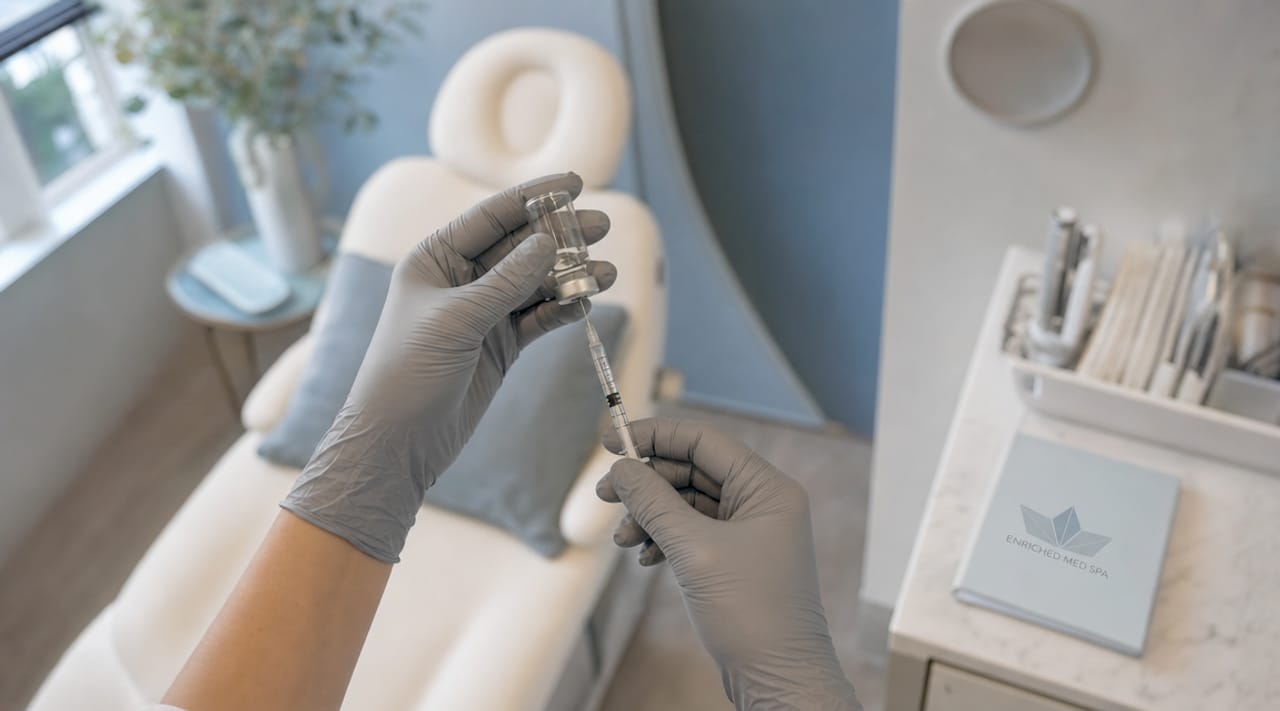
A 2006 twin study provided some of the clearest clinical evidence for this approach, showing that the twin who received consistent early Botox treatments had fewer permanent wrinkles and improved skin quality compared to the untreated twin. This is not anecdotal. It demonstrates that sustained, low-level muscle relaxation over years produces a measurable difference in how the skin ages.
Pro Tip: If you are unsure whether your lines are dynamic or static, press gently on the area and hold it flat. If the line disappears, it is dynamic and an ideal candidate for preventative treatment. If it remains, it has already become static.
Who is a good candidate, and when should you start?
The most common question we hear is about age, but timing treatment based on muscle activity rather than chronological age leads to better outcomes. A 26-year-old with highly expressive facial habits and visible forehead creasing at rest may benefit more from early treatment than a 34-year-old with naturally minimal muscle movement.
Preventative Botox is most effective for people in their late 20s to early 30s who have dynamic lines that are beginning to linger after expressions fade. The window of opportunity is the period between “lines that appear when I move” and “lines that are visible all the time.”
Signs that suggest you may be a good candidate include:
- Visible creasing in the forehead, glabella (between the brows), or crow’s feet that linger briefly after the expression relaxes
- A family history of deep expression lines appearing relatively early
- High-expression habits such as frequent squinting in bright light, or pronounced frowning during concentration
- Skin that feels less resilient than it did a few years ago, even without significant sun damage
Signs that suggest you are not yet ready, or that another treatment is more appropriate, include skin concerns rooted in dehydration, texture irregularity, or volume loss. Misdiagnoses of wrinkle causes such as confusing dehydration lines with dynamic lines can lead to ineffective treatment. This is precisely why a thorough assessment by a qualified injector matters before any decision is made. You can read more about optimal treatment start times to help frame your own readiness.
Preventative Botox vs. other anti-aging approaches
Understanding where preventative Botox fits within a broader skin health strategy helps set realistic expectations. It is a targeted tool for one specific mechanism of ageing: repetitive muscle movement. It does not address everything.
Botox only addresses muscle-related wrinkle formation and does not impact skin laxity or volume loss caused by UV exposure, collagen decline, or fat redistribution. This means that even with consistent preventative treatment, you will still benefit from a solid skincare routine that includes broad-spectrum SPF, a retinoid such as tretinoin or adapalene, and antioxidant serums containing vitamin C or niacinamide. Complementary anti-aging skincare products can meaningfully extend the results of any injectable treatment.
The table below compares preventative Botox with other common approaches across key considerations:
| Treatment | Primary target | Typical age range | Maintenance | Addresses muscle lines? |
|---|---|---|---|---|
| Preventative Botox | Dynamic wrinkles | Late 20s to early 40s | 3 to 4 times per year | Yes |
| Corrective Botox | Established static wrinkles | 35 and older | 3 to 4 times per year | Partially |
| Dermal fillers (Juvederm, Teosyal) | Volume loss, deep folds | 30s and older | Every 9 to 18 months | No |
| Laser resurfacing | Skin texture, pigmentation | 35 and older | Annually or as needed | No |
| Medical-grade skincare | Overall skin health | All ages | Daily | No |
The advantages of starting early with low-dose treatment are worth naming clearly:
- Lower doses are required when muscles have not yet developed strong contraction habits
- Natural expression is easier to preserve with microdosing than with corrective-level doses
- Repeated Botox use can reduce muscle aggressiveness over time, meaning some clients need less product and less frequent sessions as years pass
- The cost per session is often lower because fewer units are needed in a preventative context
The limitations are equally worth naming. Preventative Botox is not a substitute for sun protection, which remains the single most evidence-backed anti-ageing intervention available. It will not tighten loose skin, restore lost facial volume, or improve skin tone. Treatments like radiofrequency skin tightening, microneedling, or dermal fillers address those concerns separately.
What to expect during treatment and over time
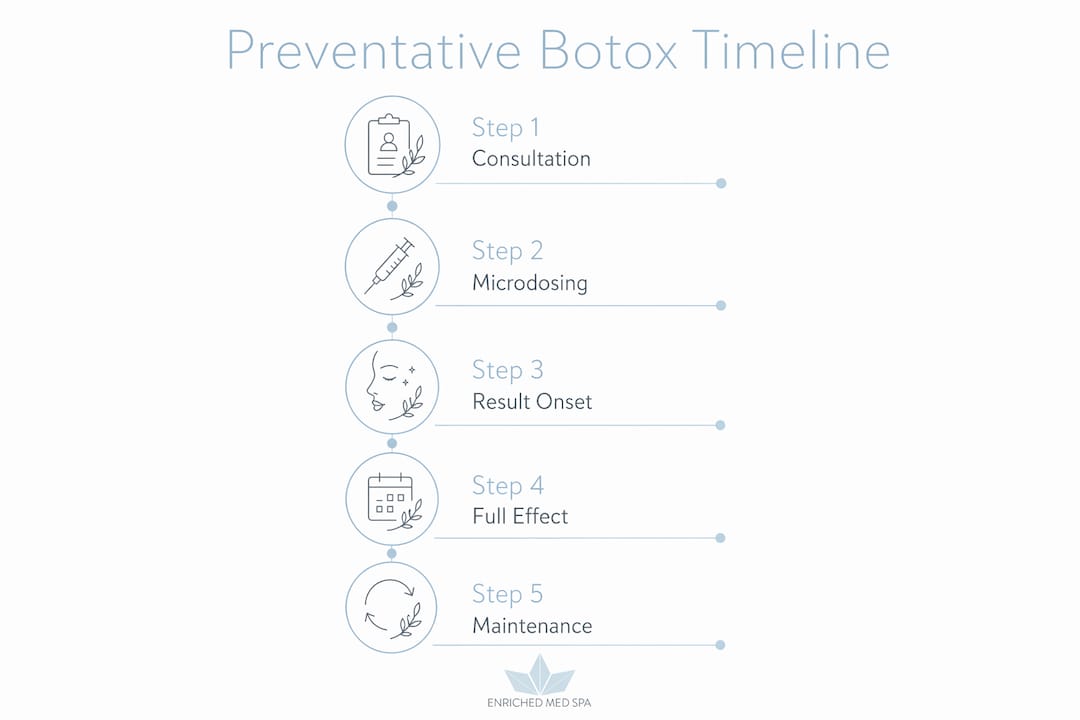
A typical preventative Botox session at Enrichedmedspa lasts between 15 and 45 minutes with no downtime required. Most clients return to their regular activities the same day. The injector will assess your facial movement patterns, mark the target areas, and administer small, precise doses using a fine needle. Commonly treated areas in a preventative context include the forehead, glabella, and lateral eye area (crow’s feet).
Results typically appear within three to seven days and reach their full effect around two weeks post-treatment. Effects last three to four months, occasionally up to six months, which means most clients schedule three to four sessions per year to maintain consistent muscle relaxation.
| Factor | Typical range |
|---|---|
| Session duration | 15 to 45 minutes |
| Onset of results | 3 to 7 days |
| Full effect | Around 2 weeks |
| Duration of results | 3 to 4 months (up to 6) |
| Sessions per year | 3 to 4 |
| Average cost per session | $400 to $800 |
The average cost per session ranges from $400 to $800 depending on the number of units used, the areas treated, and the clinic’s pricing structure. Preventative doses tend to sit at the lower end of this range because fewer units are required. For a detailed breakdown of what influences pricing, the guide on Botox cost and value is a helpful reference.
Possible side effects include mild bruising, temporary redness at injection sites, and in rare cases a slight brow heaviness if the dose or placement is imprecise. These risks are significantly reduced when treatment is performed by an experienced injector. Choosing a qualified expert injector is particularly important in younger patients, where the microdosing margins are narrow and any over-treatment is more visible against otherwise smooth skin.
Pro Tip: Ask your injector to show you before-and-after photos of clients with a similar facial structure and expression habits to yours. This gives you a realistic preview of what natural-looking results look like at your age and muscle activity level.
Over the long term, sustained lower contraction strength can persist even between treatment sessions as the muscle adapts to reduced activity. Some clients find that after several years of consistent treatment, they can extend the interval between sessions without losing the preventative benefit.
Key takeaways
Preventative Botox works best as part of a personalised skin health plan that combines low-dose neuromodulator treatment with daily sun protection, medical-grade skincare, and expert-guided dosing based on your individual muscle activity.
| Point | Details |
|---|---|
| Mechanism matters | Botox interrupts the dynamic-to-static wrinkle cycle by softening, not eliminating, muscle movement. |
| Timing is individual | Candidacy depends on muscle activity and early line visibility, not age alone. |
| Limitations are real | Botox does not address skin laxity, volume loss, or texture. Complementary treatments fill those gaps. |
| Long-term adaptation | Consistent use may reduce the dose and frequency needed over time as muscles adapt. |
| Injector expertise is non-negotiable | Precise dosing in younger patients requires a highly skilled and experienced injector. |
My honest perspective on preventative treatment
I have seen a meaningful shift in how clients approach Botox over the past several years. Many people now arrive in their late 20s asking thoughtful, well-researched questions rather than reacting to a specific wrinkle that has already bothered them for years. That shift reflects a healthier relationship with aesthetic medicine, and it is one I genuinely welcome.
That said, I want to be direct about something: preventative Botox is a tool, not a requirement. Social media has created a pressure to start early that is not always clinically justified. Some people in their late 20s have minimal muscle activity and would see little benefit from treatment at this stage. Others have highly expressive faces and would genuinely benefit from early intervention. The difference matters, and it can only be assessed in person.
What I consistently recommend is this: combine any injectable treatment with a committed skincare routine, consistent SPF use, adequate sleep, and realistic expectations about what ageing looks like. Botox can delay certain lines. It cannot stop time, and it should never be positioned as something that will. The clients who feel most satisfied with their results over the long term are those who approached treatment as one informed choice among many, not as a solution to a fear.
If you are genuinely curious about whether early treatment is right for you, a consultation is the right first step. Not a social media post. Not a friend’s recommendation. A conversation with a qualified injector who can assess your face, your habits, and your goals.
— Felix
Explore preventative Botox at Enrichedmedspa
Enrichedmedspa serves clients across Woodbridge and East Gwillimbury, Ontario, with a patient-first approach to cosmetic injectables. Our team offers personalised consultations to assess your facial muscle activity, skin condition, and aesthetic goals before recommending any treatment plan. Whether you are exploring early intervention or weighing your options, we take the time to give you an honest, clinically grounded perspective. Visit our Botox treatments page to learn about the neuromodulators we offer, including Botox, Nucieva, and Xeomin, along with membership plans designed to make consistent maintenance more accessible. You can also explore our Botox vs. fillers comparison if you are weighing injectable options side by side.
FAQ
What is preventative Botox and how does it differ from regular Botox?
Preventative Botox uses low doses of botulinum toxin to soften facial muscle contractions before dynamic wrinkles become permanent static lines. Regular or corrective Botox targets wrinkles that have already formed, typically requiring higher doses to achieve a visible result.
At what age should you consider starting preventative Botox?
Most candidates are in their late 20s to early 30s, but the right time depends on your individual muscle movement patterns and whether dynamic lines are beginning to linger after expressions fade. A qualified injector can assess this in a consultation.
Is preventative Botox worth it financially?
Sessions typically cost between $400 and $800, with preventative doses often falling at the lower end because fewer units are needed. Over time, consistent use may reduce muscle aggressiveness, potentially lowering the dose and frequency required and making the long-term cost more manageable.
What are the risks of starting Botox too early?
Starting before there is a clinical need can lead to unnecessary treatment and, if performed by an inexperienced injector, visible side effects such as brow heaviness or an unnatural expression. Expert assessment is the most reliable way to determine whether early treatment is genuinely indicated for your face.
Does preventative Botox stop all signs of ageing?
No. Botox addresses only muscle-related wrinkle formation and has no effect on skin laxity, volume loss, or pigmentation changes. A complete anti-ageing approach also includes broad-spectrum SPF, retinoids, and treatments such as microneedling or dermal fillers where appropriate.
Recommended
- How Botox works for natural anti-aging results
- The role of Botox in aesthetics: a 2026 guide
- Is Botox Permanent? Understanding the Lifespan of Results – Botox Laser Hair Removal OxyGeneo Medi Facial Microneedling – Enriched Med Spa – Vaughan Woodbridge Maple Vellore Village
- Is Botox Safe for Long-Term Use and What Are the Side Effects? – Botox Laser Hair Removal OxyGeneo Medi Facial Microneedling – Enriched Med Spa – Vaughan Woodbridge Maple Vellore Village