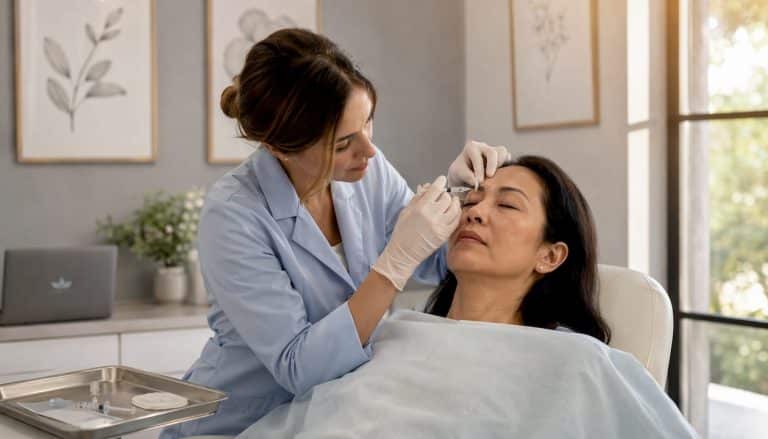

The cosmetic treatment consultation process is a structured evaluation designed to assess your goals, medical history, skin type, and available treatment options to develop a personalised plan. Clinically, this appointment is called an aesthetic assessment or pre-treatment consultation. It is the foundational step before any procedure, whether you are considering Botox, dermal fillers like Juvederm or Teosyal, microneedling, or laser resurfacing. A thorough consultation covers medical history, goal discussion, risk disclosure, and a clear aftercare plan. Skipping or rushing this step is where most cosmetic regrets begin.
What are the key stages of a cosmetic treatment consultation?
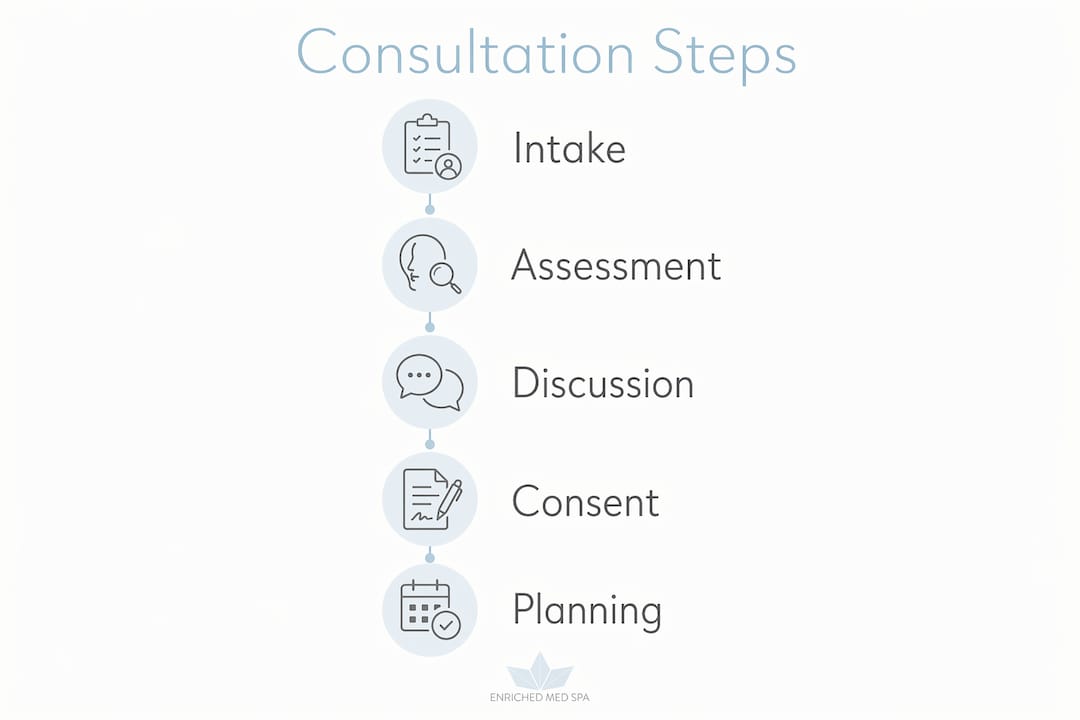
A well-structured consultation follows a clear sequence. Each stage builds on the last, and understanding the flow helps you engage more confidently with your provider.
-
Medical and cosmetic history intake. Your provider collects a full picture of your health, including current medications, supplements, allergies, and any previous cosmetic treatments. This step identifies contraindications early. For example, certain blood pressure medications or autoimmune conditions affect which treatments are safe for you.
-
Skin or anatomical assessment. The practitioner examines your skin texture, tone, volume loss, and muscle movement. Many clinics take standardised photographs at this stage to document your baseline and track results over time. This is not vanity. It is clinical record-keeping.
-
Goal discussion and expectation setting. You describe what you want to change or improve. A skilled provider listens carefully, then reflects back what is realistically achievable. Many clients come in noticing early signs of volume loss or skin laxity and are surprised to learn that a lighter treatment like a chemical peel or radiofrequency tightening may address their concern before injectables are needed.
-
Explanation of options, risks, and alternatives. Your provider outlines the procedures that suit your goals, explains the benefits and risks of each, and presents alternatives. This is where you learn the difference between, say, neuromodulators like Botox or Nucieva for dynamic lines versus dermal fillers for volume restoration.
-
Informed consent dialogue. Informed consent is an ongoing communication process, not a form you sign and forget. It requires full disclosure of benefits, risks, and alternatives, and it gives you the right to take time before deciding. A reputable provider welcomes your questions at every stage.
-
Financial disclosure and next steps. Costs, payment options, and what follow-up or maintenance is included are discussed openly. You leave with a clear plan, not a vague promise.
Consultations for non-surgical treatments typically last 15–30 minutes, while comprehensive appointments including full medical reviews can run 60–90 minutes. Longer does not always mean more complex. It often means your provider is being thorough.
Pro Tip: Write down your top three concerns before your appointment. Providers cover a lot of ground quickly, and having your priorities on paper keeps the conversation focused on what matters most to you.

How to prepare effectively for your cosmetic treatment consultation
Preparation directly affects the quality of advice you receive. Arriving organised gives your provider the full picture they need to recommend safely and accurately.
- Compile your medication and supplement list. Include prescription drugs, over-the-counter medications, vitamins, and herbal supplements. Fish oil, vitamin E, and aspirin all affect bleeding and bruising risk. Your provider needs this information before recommending any needle-based treatment.
- Gather your medical history. Previous surgeries, skin conditions, autoimmune diagnoses, and a history of cold sores are all clinically relevant. Bring records if you have them, or be ready to describe your history in detail.
- Bring reference photos. Photos showing changes you want to address, or images of results you find appealing, give your provider a concrete reference point. This reduces miscommunication about goals.
- Prepare your questions in advance. Write them down. Consultations move quickly, and it is easy to forget what you wanted to ask once you are in the room.
- Arrange a support person. Bringing a trusted person to your consultation improves information retention and provides emotional and practical support. They can take notes while you focus on the conversation.
- Follow pre-appointment restrictions. Avoid blood thinners like ibuprofen and aspirin for 48 hours before needle-based treatments to reduce bruising. Arrive with a clean face if your skin will be assessed.
A good skin treatment preparation guide will also outline which skincare products to pause before your appointment. Retinoids and active exfoliants can sensitise the skin and affect how certain treatments perform.
Pro Tip: Photograph your skin in natural light the morning of your consultation. This gives your provider an unfiltered baseline and helps you both track progress after treatment.
What safety and regulatory standards protect you during the consultation?
Regulatory frameworks exist specifically to protect you during the cosmetic assessment process. Knowing them helps you identify clinics that meet the standard and avoid those that do not.
- Provincial regulatory bodies set the rules. In Ontario, the College of Physicians and Surgeons of Ontario (CPSO) governs physician conduct and oversight. In Alberta, the College of Physicians and Surgeons of Alberta (CPSA) holds the same authority. Both bodies publish standards that apply directly to cosmetic medicine.
- Physician oversight is non-negotiable for controlled acts. Physicians maintain responsibility for care when delegating controlled acts to non-physicians. If a nurse or aesthetician performs your injectable treatment, a supervising physician must be identifiable and accessible. Ask who that physician is before you proceed.
- Verify practitioner credentials. Medical boards provide online verification tools. You can confirm that a physician or registered nurse holds a valid, active licence in your province. Verifying your clinic’s credentials is a straightforward step that many clients skip.
- Informed consent is a process, not a signature. The CPSA describes informed consent as a dynamic conversation throughout the treatment relationship. Signing a form at the start of a consultation does not satisfy this standard. Your provider should revisit consent as your plan evolves.
- Complication management must be in place. A legitimate clinic has a clear protocol for managing adverse events. Ask directly: “What happens if I have a reaction or complication?” The answer should be specific, not vague.
“Informed consent should be understood as a dynamic conversation throughout the treatment journey, empowering patient autonomy. It is not a one-time event but an ongoing dialogue that respects the patient’s right to make informed decisions at every stage.”
— College of Physicians and Surgeons of Alberta (CPSA)
Delegation policies provide flexibility in how clinics staff their teams, but they require clear physician oversight to protect patient safety. A clinic that cannot name its supervising physician is a clinic worth reconsidering.
What questions should you ask and what red flags should you watch for?
Active participation in your consultation is the single most effective way to protect yourself. These questions and warning signs give you a practical framework.
Questions to ask your provider:
- What are your credentials, and are you licensed in this province?
- How many times have you performed this specific procedure?
- Can I see before-and-after photos of your own clients?
- What are the realistic risks and how common are they?
- What alternatives exist if this treatment is not right for me?
- What does recovery look like, and how long does it take?
- What is included in the cost, and are follow-up appointments extra?
- What is your protocol if I experience a complication?
Red flags to take seriously:
- Pressure to decide quickly or limited time given for risk discussion are clear warning signs. A trustworthy provider never rushes your decision.
- Vague or dismissive answers about risks and alternatives suggest the provider is not operating transparently.
- No mention of a supervising physician in a clinic where non-physicians perform treatments.
- Unusually low pricing with no clear explanation of what is included.
- Reluctance to show a portfolio of their own work or to provide references.
- No written aftercare plan or follow-up protocol offered at the end of the consultation.
A good consultation for beauty procedures feels like a conversation between equals. You bring your goals and concerns. Your provider brings clinical knowledge and honest guidance. If that balance is missing, trust your instincts.
Key takeaways
A thorough cosmetic treatment consultation process is the single most important step between wanting a treatment and safely receiving one.
| Point | Details |
|---|---|
| Consultation stages matter | The process moves from intake and assessment through goal discussion, consent, and financial disclosure in a defined sequence. |
| Preparation improves outcomes | Bring your medication list, medical history, reference photos, and written questions to get the most from your appointment. |
| Regulatory oversight protects you | In Ontario and Alberta, provincial colleges set binding standards for physician oversight, delegation, and informed consent. |
| Informed consent is ongoing | Consent is a continuing dialogue, not a form signed once. You have the right to ask questions and take time at every stage. |
| Red flags are real | Pressure tactics, vague risk discussions, and no named supervising physician are reasons to pause before committing. |
What I have learned from watching clients walk into consultations unprepared
Felix here. After years of observing how clients experience the consultation process, the pattern I see most often is this: people arrive with a treatment in mind and a hope that the provider will simply confirm it. That is understandable. But it is also the setup for disappointment.
The clients who leave consultations feeling genuinely confident are the ones who came in with questions, not just wishes. They wanted to understand why a particular treatment suited their skin, not just that it did. They asked about alternatives. They brought a friend who took notes. They did not feel embarrassed to say, “I need a few days to think about this.”
The uncomfortable truth about cosmetic medicine is that no treatment is universally right for every client. A skin rejuvenation plan that works beautifully for one person may be entirely wrong for another with a different skin type, health history, or lifestyle. The consultation exists precisely to make that determination. Skipping it, or rushing through it, removes the only safeguard between you and a result you did not want.
One more thing worth saying plainly: if a provider makes you feel that asking questions is an inconvenience, that is not a provider you want treating your face. The best practitioners in this field welcome scrutiny. They know that an informed client is a satisfied client.
— Felix
Enrichedmedspa’s approach to your first consultation
At Enrichedmedspa, serving Woodbridge and East Gwillimbury, Ontario, every consultation begins with a thorough review of your medical history, skin assessment, and an open conversation about your goals and concerns. The team includes certified practitioners working under physician oversight, and they take the time to explain your options clearly, including what they would not recommend and why. Pricing and aftercare are discussed before any commitment is made. Whether you are exploring cosmetic injectables like Botox and dermal fillers or considering skin treatments such as microneedling or laser resurfacing, the consultation at Enrichedmedspa is designed to give you clarity, not pressure. You can also review your skin treatment options before your appointment to arrive with a clearer sense of what interests you.
FAQ
How long does a cosmetic treatment consultation take?
Non-surgical cosmetic consultations typically last 15–30 minutes. Comprehensive appointments that include a full medical review can run 60–90 minutes, depending on the complexity of your goals.
What should I bring to my first cosmetic consultation?
Bring a full list of your medications and supplements, your relevant medical history, reference photos of your goals, and a written list of questions. A trusted support person is also worth bringing for note-taking.
Is informed consent just a form I sign?
No. Informed consent is an ongoing dialogue throughout your treatment relationship. It requires full disclosure of risks, benefits, and alternatives, and you have the right to take time before making any decision.
How do I know if a cosmetic clinic is legitimate?
Verify that practitioners hold active provincial licences through your province’s medical regulatory body. In Ontario, the CPSO provides an online verification tool. Ask the clinic to identify the supervising physician responsible for your care.
What are the biggest red flags in a cosmetic consultation?
Pressure to decide immediately, vague answers about risks, no named supervising physician, and the absence of a written aftercare plan are all signs to pause and reconsider the provider.
Recommended
- How to prepare for skin treatments: a practical guide
- Customized Dermal Filler Plans: What to Consider Before Committing – Botox Laser Hair Removal OxyGeneo Medi Facial Microneedling – Enriched Med Spa – Vaughan Woodbridge Maple Vellore Village
- Why seek aesthetic treatments for events: a practical guide
- The role of aesthetics clinics in skin health and beauty