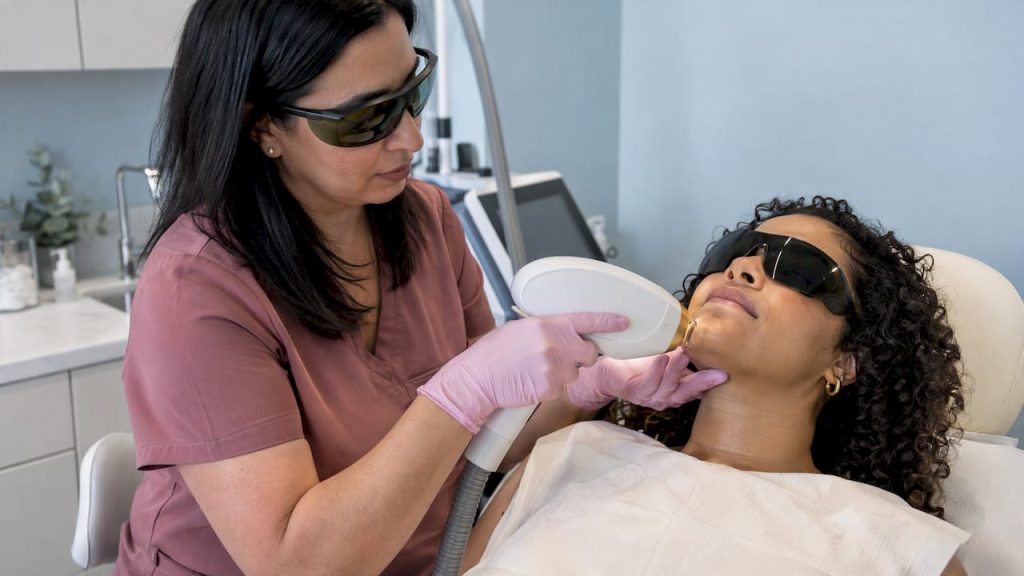
Laser can noticeably reduce dark, coarse chin hair, but it works as a series of treatments rather than a single visit, and the results depend on your hair colour, skin tone and hormones. A proper consultation sorts out which of those apply to you before you spend anything. At Enriched Med Spa in Woodbridge, laser hair removal is priced from $25 to $579 depending on the area treated, and a consultation is where we match the device and plan to your skin.
Below is the full picture: how the laser works, how many sessions to plan for, what is different when the hair is hormonal, how to prepare and heal, and what the realistic outcome looks like.
TL;DR
- Laser targets pigment (melanin) in the hair and heats the follicle, so it works best on dark, coarse hair.
- Plan on a series: the Canadian Dermatology Association says six to eight treatments, eight to 12 weeks apart are usually needed.
- “Permanent” means permanent reduction, not 100% removal. Hormonal chin hair often needs more sessions and occasional maintenance.
- Avoid sun and tanning before and after, and treat only with a properly trained operator on a licensed device.
- Sudden or increasing chin hair is worth raising with your doctor.
Table of Contents
- How laser works on chin hair
- How many sessions, and how far apart
- When chin hair is hormonal
- Skin tone, light hair and device choice
- Preparing and healing safely
- Is it permanent?
- What it costs
- Where we come in
- Our perspective
- FAQ
- Sources
How laser works on chin hair
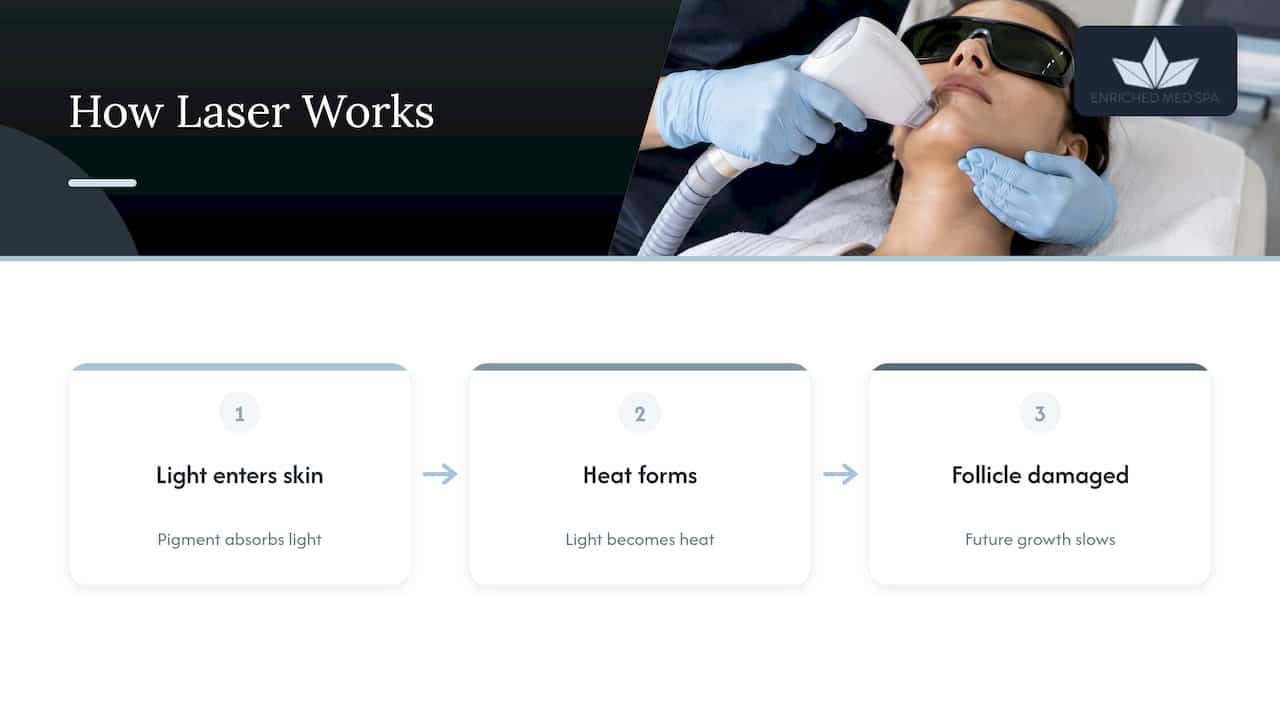
The laser sends light into the skin, where the pigment in the hair absorbs it and turns it to heat. That heat damages the follicle and slows future growth. Mayo Clinic lists the chin as a common treatment area, and notes that treated hair sheds over several days to weeks and regrowth is often finer and lighter.
Because the laser needs pigment to find, hair type matters. Health Canada’s cosmetic laser guidance says laser hair reduction works best on light skin with dark hair, and is less effective on blond, red, grey or white hair or on dark skin. That is the general rule. Different devices and settings change it, which is why the device matters as much as the area.
Many clients come in frustrated by a handful of stubborn, dark hairs on the chin that tweezing and shaving never settle. That pattern, a small area with coarse hair, is often a good fit for laser.
Why one session is never enough
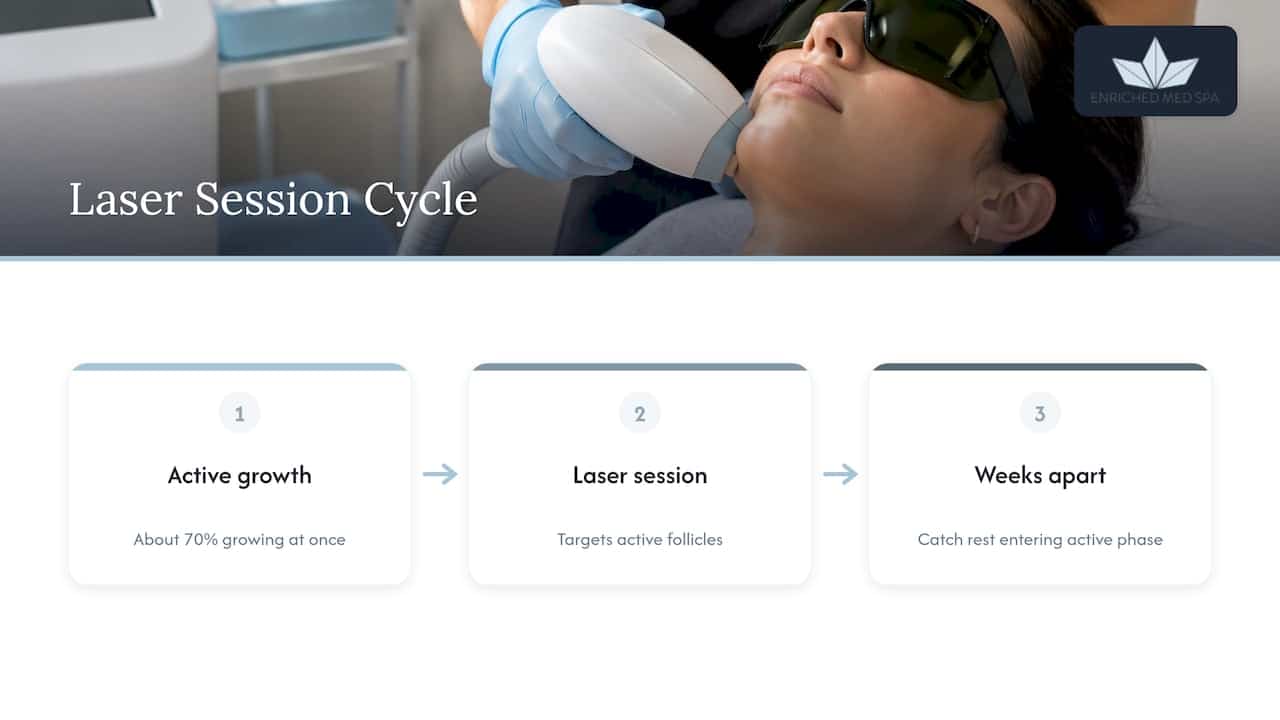
Hair grows in cycles, and the laser only affects follicles in the active growth phase. The Cut quotes a dermatologist noting that only about 70 percent of hairs are growing at any one time, so sessions are spaced weeks apart to catch the rest as they enter that phase.
How many sessions, and how far apart
Expect a series. The sources give slightly different ranges, which reflects differences in hair, skin and device:
| Source | Sessions | Spacing or result |
|---|---|---|
| Canadian Dermatology Association | 6 to 8 | 8 to 12 weeks apart |
| American Academy of Dermatology | 2 to 6 | 10% to 25% reduction after the first treatment |
| Mayo Clinic | 4 to 8 | Several weeks apart |
Face hair tends to grow faster than body hair, so facial areas are typically spaced closer than legs. We go into the planning by area and skin type in our guide to laser hair removal sessions.
What a session feels like
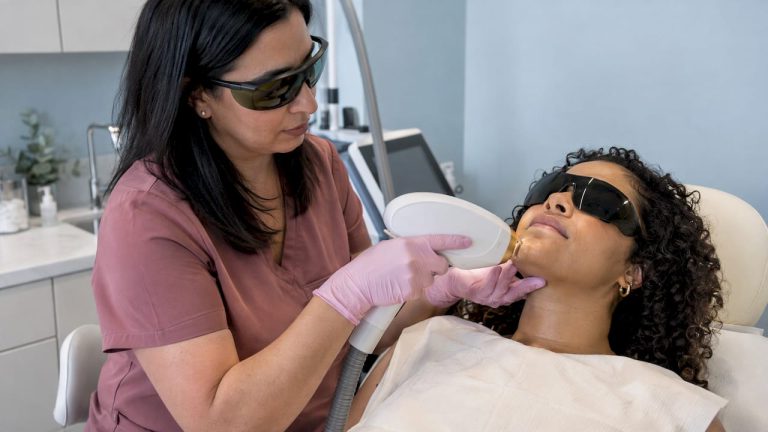
The Canadian Dermatology Association describes each pulse as a rubber band snapping against the skin, and says most people do not need numbing cream. The chin is a small area, so a visit is short. You will need to arrive with the hair shaved; a $25 shaving fee applies if we need to do it for you.
If a session ever feels sharply more painful than the last, tell your practitioner right away. A dermatologist quoted in The Cut advises asking them to stop, because the settings may need adjusting.
When chin hair is hormonal
Many women ask whether laser works on hormonal chin hair. It can, but the response is less predictable. A review of laser treatment in hirsutism reports that untreated hormonal conditions such as PCOS or thyroid dysfunction can lead to variable or poorer response and more sessions, and that dark, thick hair responds better than fine hair.
Two practical points follow:
- Get checked if the hair is new or increasing. The Cut quotes a dermatologist saying sudden or increasing chin hair warrants blood work to check for PCOS or other causes. Your family doctor is the right first stop.
- Laser and medical care work together. The 2023 Canadian hirsutism guideline describes the most effective approach as combining physical hair removal with medical therapy, and notes growth tends to return if medical therapy stops.
For planning, a facial laser review suggests that PCOS patients may need roughly 10 to 15 sessions with two to four maintenance sessions a year. There is also a benefit beyond appearance: a 2017 evidence review reports improved psychological well-being in women with PCOS after laser hair removal. Our page on laser hair removal with PCOS covers maintenance planning in more detail.
Skin tone, light hair and device choice
Pigment problems such as white spots are a greater risk with tanned or darker skin, according to the Canadian Dermatology Association. That does not rule treatment out. The dermatologist in The Cut stresses that people with darker skin are candidates when the right laser and settings are used. We explain how this works in our guide to Nd:YAG laser hair removal for dark skin.
Fine, pale or vellus (peach-fuzz) hair is the harder case, because there is little pigment to target. If your chin hair is light, read our overview of devices that can treat blonde hair before assuming it is out of reach.
Preparing and healing safely
Before your session
- Avoid tanning, in the sun or a bed, before and after treatment. Health Canada advises against it.
- Shave the area. Do not wax or pluck in the weeks beforehand, since the laser needs the hair root in place.
- Tell your practitioner about medications, skin conditions and any history of cold sores or scarring.
- Wear the eye protection you are given.
Afterward
Redness and swelling often resemble a mild sunburn. The American Academy of Dermatology advises avoiding direct sunlight, following your aftercare instructions and using cool compresses. Treated hairs may seem to grow for a week or two before shedding. Wear daily sunscreen on the area.
Call your provider if redness persists beyond a few days or you see blistering.
Risks, stated plainly
Health Canada lists pain, redness, bruising, swelling, blisters, burns and infection. Skin lightening or darkening is rarely permanent, and scarring is possible when the wrong device is used or the procedure is done improperly. The Canadian Dermatology Association also mentions rare paradoxical hair stimulation, where hair grows thicker. Choosing a trained operator and a device licensed for the procedure is the safeguard. Health Canada recommends asking about the operator’s training and confirming the device’s licence.
Is it permanent?
Lasers are approved for permanent reduction, not total removal. The Canadian Dermatology Association explains they permanently disrupt hair production but do not remove 100% of hair, and that hair appearing after 12 months is new growth that can come with age, medical conditions or hormonal change. Health Canada says about 30% permanent reduction is possible depending on operator and system, with no guarantee for every person.
So plan for a large reduction, finer and lighter regrowth, and the occasional top-up. Our article on whether laser is permanent or temporary walks through this.
What it costs
Our laser hair removal is listed from $25 to $579 depending on the area, and the chin sits at the small end of that scale. Pricing across clinics varies with the device, the number of sessions and whether you buy a package. One US report puts a chin session at roughly $50 to $250 USD, which gives a sense of range only. Because you need a series, the useful comparison is the total for the whole plan, not the price of one visit.
Where we come in
Our treatments are performed by experienced nurse-level injectors and aestheticians, and we start with a consultation and clear pre- and post-care guidance. If you are in Woodbridge, Vaughan or East Gwillimbury, you can see our laser hair removal service page and book a consultation to talk through your skin, your hair and a realistic number of sessions.
Our perspective
Most people who ask us about chin hair have been managing it for years, and they are tired of it. Our first goal is a realistic plan, not a promise.
We look at hair colour, skin tone and whether the hair has changed recently. If it has appeared suddenly, we encourage a conversation with your doctor, because laser works best alongside answers about what is driving the growth.
We would rather you commit to a full series spaced properly than rush it. Results build over months, and a calm, steady plan with sun care in between is what gives the skin the time it needs.
Felix
FAQ
Does laser work on hormonal chin hair?
Often yes, but it can take more sessions and ongoing maintenance, especially with untreated PCOS or thyroid issues. Pairing laser with medical care from your doctor gives the most durable result.
Is laser hair removal 100% permanent?
No. It is approved for permanent reduction, meaning treated follicles stop producing most hair. New hair can still appear later with age or hormonal change, so occasional maintenance sessions are common.
How many sessions will my chin need?
The Canadian Dermatology Association says six to eight treatments, spaced eight to 12 weeks apart, are usually required. Hormonal hair can need more. We confirm a plan at your consultation.
Does it hurt?
Most people describe a quick snap on the skin, similar to a rubber band, and do not need numbing cream. Tell your practitioner if anything feels unusually painful.
Sources
- Laser hair removal, Mayo Clinic
- Cosmetic Laser Treatments, Health Canada
- Hair Removal & Reduction, Canadian Dermatology Association
- Laser hair removal FAQs, American Academy of Dermatology
- Laser Treatment in Hirsutism: An Update, PMC
- Guideline No. 444: Hirsutism, JOGC
- Methods to Overcome Poor Response in Facial Laser Hair Reduction, PMC
- Laser-assisted hair removal for facial hirsutism, PubMed
- How Do I Get Rid Of My Chin Hairs?, The Cut