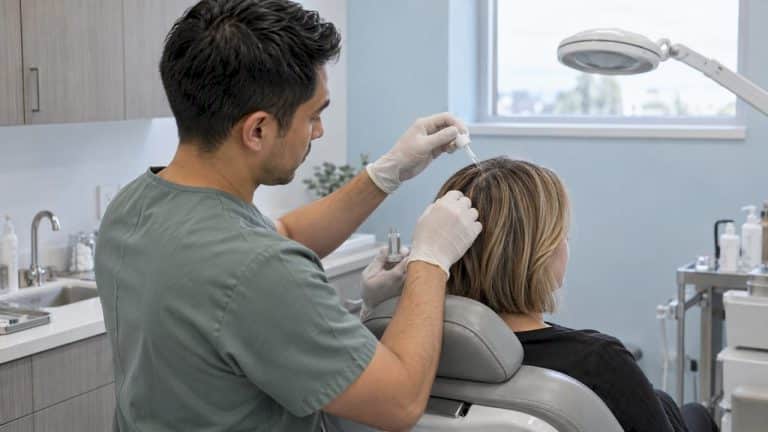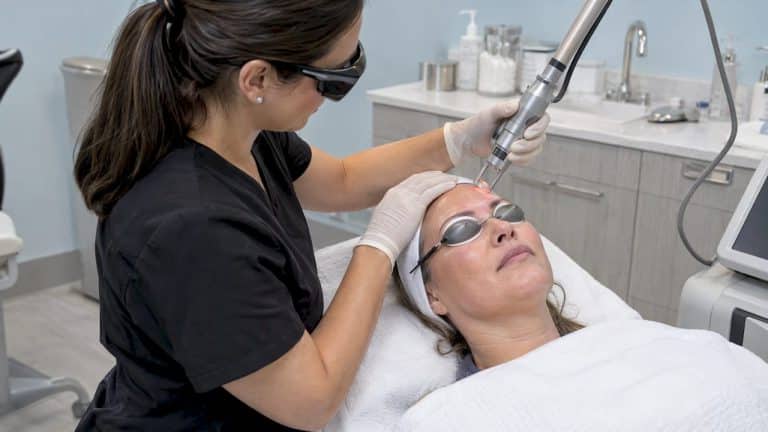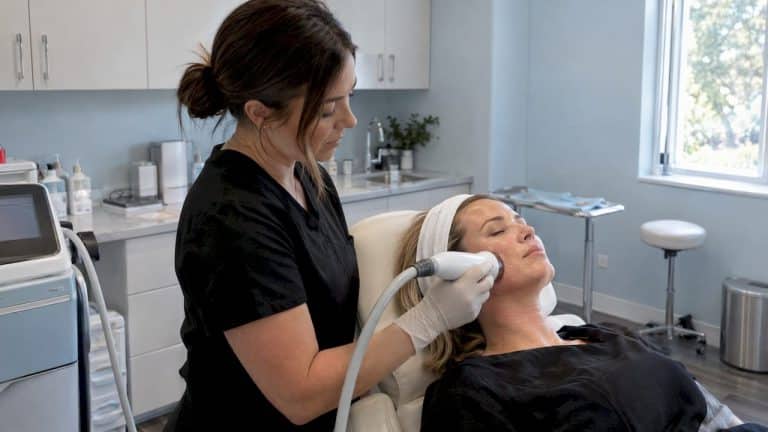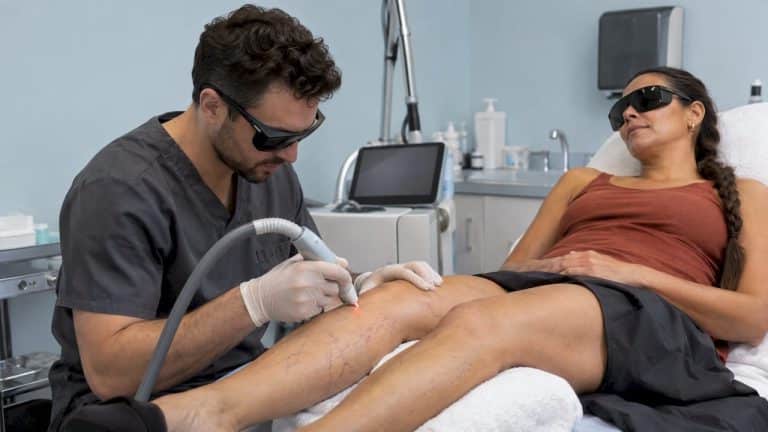
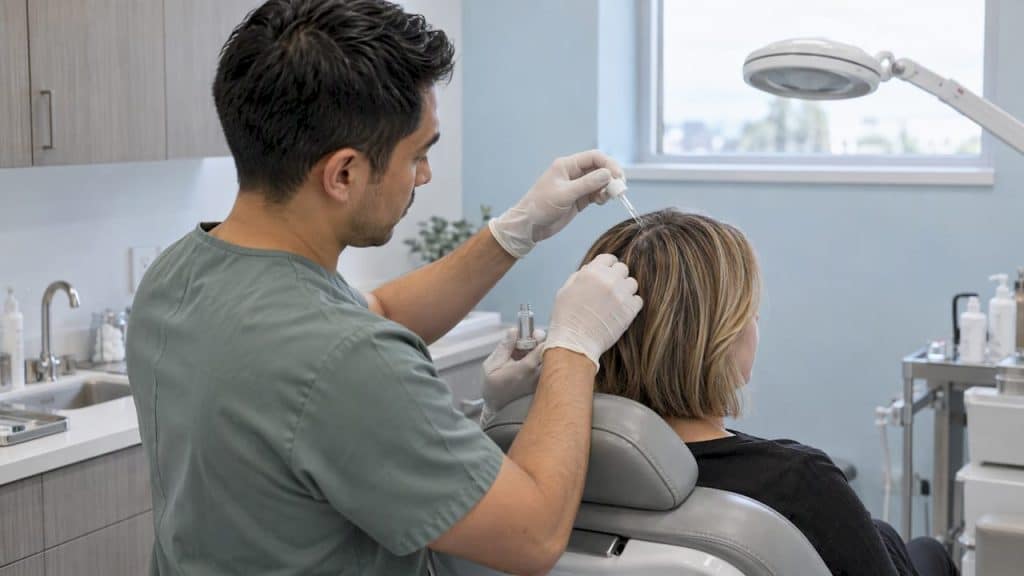
Exosome therapy is not risk-free, and it is not authorized in Canada the way a prescription drug is. Short-term studies on topical use and microneedling mostly report mild, temporary reactions. Serious problems have been reported mainly after injections of poorly defined products. How safe a treatment is depends heavily on what the product is, where it came from, how it is prepared and how it is applied. This guide explains each of those points so you can ask good questions before you book.
TL;DR
- Public Health Ontario reported that, as of April 2, 2025, Health Canada had not approved or authorized any exosome-based product, yet exosomes were already widely used in Ontario aesthetic services.
- Studies of exosomes with microneedling or topical use mostly report temporary redness, swelling or dryness. Case reports of nodules, necrosis and scarring involve intradermal injections.
- The long-term picture is incomplete: most human studies are small, short and often not randomized.
- Before treatment, ask what the product is, where the exosomes come from, how the product is applied and who is responsible for your care.
Table of Contents
- What exosomes are and where they come from
- How exosomes are regulated in Canada
- Reported side effects of exosome therapy
- Topical, microneedling or injection: does the route change the risk?
- What the research does and does not show yet
- Exosomes for hair: where our approach fits
- Who should be extra careful
- Questions worth asking before you book
- Perspective
- Booking a consultation with us
- FAQ
- Sources
What exosomes are and where they come from
Exosomes are tiny vesicles that cells release. They carry proteins and other molecules that pass signals between cells. In cosmetic treatments, they are usually collected from cultured cells and prepared as a liquid or freeze-dried product, which is then applied to the skin or scalp.
According to a 2026 review in Dermatological Reviews, most commercial products come from mesenchymal stem cells, often from fat tissue or umbilical cord. The same review notes that cells from different tissues, and from donors of different ages and health, produce different molecular profiles. Culture conditions and isolation methods can change both the yield and the contents.
This is the core of the safety question. Exosome products are not all the same thing. A comprehensive review for practising dermatologists points out that current isolation and profiling methods make it hard to know exactly what a patient is receiving, and hard to compare one product with another.
Why the source matters
Public Health Ontario explains that the source of an exosome product influences which pathogens could be present. It says donors need thorough screening, whether the source is human or animal, and that manufacturing must ensure sterility and filter out pathogens (Public Health Ontario presentation). Improperly prepared exosomes can carry viral proteins or microbes such as mycoplasma, and can contain cellular material that triggers immune reactions, according to the same dermatology review.
In plain terms: the exosomes themselves are only part of the story. The donor, the lab and the sterility of the final product all matter just as much.

How exosomes are regulated in Canada
This is the part most clinic websites skip, so it is worth reading carefully.
Public Health Ontario stated that, as of April 2, 2025, Health Canada had not approved or authorized any exosome-based product. That covers human, animal and plant sources and every route of administration, topical or injectable. No notice of compliance or drug identification number had been issued, which means these products cannot be legally marketed or sold as drugs (source).
In April 2026, Health Canada published a final notice on topical products containing human-derived exosomes. Its main points:
- Human-derived exosomes are not inherently drugs. Whether a product is a cosmetic or a drug depends on how it is represented, its level of action and its composition.
- To qualify as a cosmetic, a topical product must show a lack of percutaneous absorption and must not need to be absorbed systemically to work.
- Products given by injection are not cosmetics, and products represented for use with microneedling are not consistent with cosmetics.
- Health Canada names potential toxic effects, unsubstantiated therapeutic claims and the risk of transmitting infectious disease or adventitious agents from human-origin material.
A regulatory-affairs firm’s analysis of the notice adds that Health Canada looks at the whole representation of a product, including marketing copy, before-and-after images and route of administration, whatever the stated source.
What this means for you as a patient
An authorized drug shows an 8-digit DIN, NPN or DIN-HM on its label. The same notice explains that when a health care professional uses a product outside the manufacturer’s intended purpose, that falls outside Health Canada’s jurisdiction. Concerns about a professional’s activities go to their licensing body.
That is a reason to understand exactly what you are being offered, not a reason to stop asking questions. Products sold under a research use only label are a different category from products authorized for treating people, and the difference is worth understanding whenever a beauty treatment mentions a biologic ingredient.
Reported side effects of exosome therapy
The side effects fall into two groups: common, mild and temporary reactions, and rare but serious complications.
Mild and temporary reactions
A 2026 systematic review of exosome therapies for skin rejuvenation found that most managed clinical trials reported no severe adverse effects. They reported only temporary local reactions such as redness, swelling, dryness or mild discomfort, especially with microneedling or injections (Flores Rodríguez et al.). A separate review of 19 studies with 624 patients likewise found no serious adverse effects, only transient minor reactions such as erythema (Jafarzadeh et al.).
In a 12-week randomized split-face study that combined adipose-derived exosomes with microneedling, no serious adverse events were seen. Redness, swelling and small pinpoint bleeding spots resolved within a week, and there were no permanent skin changes or scarring (Park et al., 2023).
Rare but serious complications
The more worrying reports involve intradermal injection of exosome products, often off-label:
- Delayed hypersensitivity and granulomas. Case reports describe firm plaques, facial swelling, itching and persistent redness appearing weeks after injection. These granulomatous reactions can be hard to treat and may not respond to corticosteroids, laser or surgical drainage. Some leave permanent texture changes or scarring (Dermatological Reviews, 2026).
- Skin necrosis. One case report describes necrosis after intradermal injection of lyophilized exosomes (Tawanwongsri and Vachiramon, 2024). Another describes ischemic necrosis after dermal injection for acne scars, leaving atrophic scarring and pigmentation that improved only modestly after three laser sessions (AlBargawi, 2025).
- Persistent nodules. A 2026 case series describes a woman who developed lasting redness and nodules after injections at a non-dermatological clinic, despite steroids and laser (Journal of Cosmetic Dermatology).
- Infection. Public Health Ontario notes reports of serious infection, including sepsis with intravenous use.
A scoping review of 17 studies from 2020 to 2025, by authors in Canada, found adverse events were uncommon but included granulomas, necrosis and allergic reactions after injection (Wang, Bajwa and Rivers, 2026).
If you notice spreading redness, hard lumps, increasing pain, fever or skin that darkens or blisters after any treatment, contact your treating clinic and a physician promptly. Do not wait for it to settle.
Topical, microneedling or injection: does the route change the risk?
Yes, according to the evidence. The systematic review above found most studies reported a positive safety profile for topical application, with individual reports of risk from off-label injections.
Public Health Ontario groups exosome use into three broad routes:
| Route | Examples | What to understand |
|---|---|---|
| Topical on intact skin | Serums, masks, creams | Health Canada’s cosmetic pathway applies only if the product is not absorbed systemically |
| Topical on disrupted skin | Microneedling, RF microneedling, laser or RF resurfacing, peels | Skin barrier is open, so product sterility matters more |
| Intradermal, subcutaneous or intravenous | Injections, infusions | Most serious case reports sit here |
The logic is simple. When the skin barrier is intact, less of the product reaches deeper tissue. When the barrier is opened with needles or lasers, or bypassed with injection, whatever is in the vial has direct access. That is why sterility, donor screening and product quality become more important with each step.
What the research does and does not show yet
It is fair to say the early results are encouraging and the evidence is still young. A systematic review of 19 human studies found short-term links with improved skin outcomes, but the evidence was varied, most studies were not randomized and follow-up was limited (Flores Rodríguez et al.). In the scoping review, 76% of studies recorded improvements in wrinkles, pigmentation, elasticity, hydration or scars, although the studies had small samples, short follow-up and potential conflicts of interest.
Two gaps matter for safety:
- Long-term data. Most trials look at short-term cosmetic outcomes. The Dermatological Reviews authors note there is little extended follow-up, and that the true rate of complications is uncertain because adverse events are inconsistently reported.
- Repeated use. Researchers state that effects of repeated use remain unclear, including immune or allergic responses (Jafarzadeh et al.).
So set your expectations accordingly. Exosome treatments are an emerging category. Results vary, they are not guaranteed, and a good practitioner will say so.
Exosomes for hair: where our approach fits
Many of the people who ask us about exosome safety are asking about hair. They have noticed thinning at the part line or a wider ponytail gap, and they want to know whether a newer option is worth considering.
We offer DERIVE Exosomes Hair Restoration at $950 per treatment, alongside PRP Hair Restoration at $800. Both are described on our hair restoration page. If you want the background first, we have written about what exosome hair therapy is and what the evidence shows and about what clinics in Canada charge for it.
PRP uses a concentrate prepared from your own blood. Exosome treatments use a different kind of product. Which suits you depends on your hair pattern, health history and goals, and that is a conversation we have in consultation rather than a decision to make from a web page.
Who should be extra careful
Some situations call for a conversation with your physician before any biologic or regenerative cosmetic treatment:
- You have an autoimmune condition, or you take medication that affects your immune system.
- You have a history of keloids, granulomas or unusual reactions to injectables.
- You have active skin infections, cold sores or open lesions in the treatment area.
- You are pregnant or breastfeeding.
The research above does not set out formal screening rules for these groups, so your own physician is the right person to advise you. Tell your clinic about all of it at the start. A thorough consultation is where these details surface.
Questions worth asking before you book
You are entitled to understand a treatment before it happens. A good consultation should cover:
- What exactly is the product? Ask for its name, its manufacturer and whether it is a cosmetic, a drug or something else.
- Where do the exosomes come from? Human or other source, and how donors are screened.
- How is it applied? Topically, with microneedling or by injection. Health Canada’s notice treats these differently.
- What does the label show? Authorized drugs carry an 8-digit DIN, NPN or DIN-HM.
- Who performs the treatment? Their training, and what happens if you have a reaction.
- What are realistic results and timelines? Hair and skin change slowly, and maintenance is part of the plan.
- What aftercare should you follow? Clear instructions reduce irritation and infection risk.
If something concerns you about a professional’s activities, Health Canada directs you to their licensing body.
Perspective
Many clients come to us tired of conflicting information. They have seen exosomes described as a miracle online and as a danger elsewhere, and they want someone to explain it calmly.
Our view is that safety starts with the consultation, not the device. We take a history, explain what a treatment can and cannot do, and talk through timelines and maintenance before anything is booked. Treatments are performed by experienced nurse-level injectors and aestheticians, and we put pre- and post-care guidance in writing, because your skin needs time to recover and good aftercare protects your results.
For hair, we think it helps to have options. PRP and DERIVE exosomes each have a place, and we would rather match the treatment to your pattern of thinning than promise a result. The research on exosomes is encouraging and still developing, so we talk about it that way, with no guarantees and no hype.
Felix
Booking a consultation with us
If you are in Woodbridge, Vaughan or East Gwillimbury and want to talk through hair restoration or skin treatments, you can book a consultation through our hair restoration page. We will go through your history and goals, explain the options we offer and help you decide on a plan at a pace that feels right. You can also look at our full list of treatments if you are comparing lighter options such as peels and microneedling with more advanced ones.
Microneedling on its own, without added products, is a well-established treatment, and we offer it at $359. Our guide on whether microneedling is safe explains preparation and aftercare in detail.
FAQ
Are exosomes safe?
It depends on the product, the source and how it is used. Most human studies of topical use and microneedling report only temporary redness, swelling or dryness. Serious reactions such as granulomas and necrosis have been reported mainly after injections of poorly defined products. Long-term data are still limited.
What are the side effects of exosome therapy?
The common ones are short-lived: redness, swelling, dryness and mild discomfort, usually settling within days. Rare reports include delayed lumps, allergic reactions, necrosis and scarring after injection. Contact your clinic and a physician if you develop spreading redness, hard lumps, fever or worsening pain.
Are exosomes approved by Health Canada?
As of April 2025, Public Health Ontario reported that Health Canada had not approved or authorized any exosome-based product. In April 2026, Health Canada published a final notice on how topical human-derived exosome products are classified. Authorized drugs show a DIN, NPN or DIN-HM on the label.
Is exosome therapy safe for hair?
Studies specifically on scalp use are limited, and the broader skin research is short-term. Reactions reported in trials were mostly mild and temporary, but injection-related complications have been described elsewhere. A consultation about your health history, the product and the method of application is the right starting point.
Sources
- Public Health Ontario: Novel Aesthetic Treatments, Introduction to Exosomes
- Public Health Ontario: Novel Aesthetic Treatments, routes of administration
- Health Canada: Final notice on topical products containing human-derived exosomes
- Regulatory, Ethical, and Safety Considerations of Exosomes (Dermatological Reviews)
- Exosomes: A Comprehensive Review for the Practicing Dermatologist
- Efficacy of Exosome-Based Therapies for Skin Rejuvenation
- Effectiveness of regenerative medicine for skin lightening (Stem Cell Research & Therapy)
- Exosome-Based Therapies in Dermatology: A Scoping Review
- Park et al.: Exosomes and microneedling, split-face study
- Skin necrosis after intradermal injection of lyophilized exosomes
- Necrosis following dermal injection of lyophilized exosomes
- Adverse reactions following intradermal injection of exosome-containing formulations
- Are exosome skincare products cosmetics or drugs in Canada?