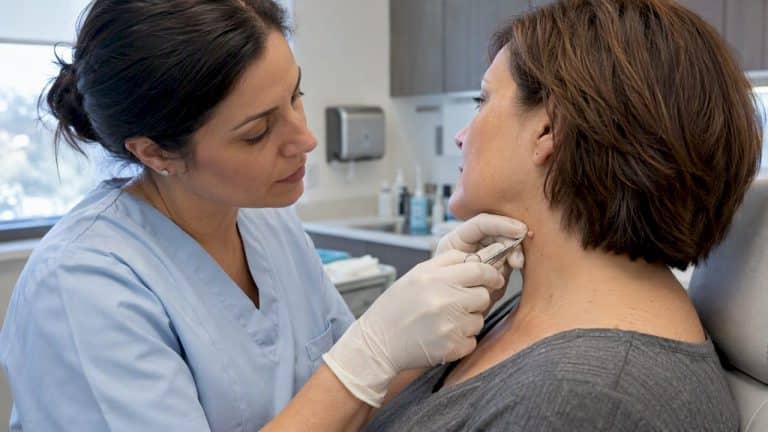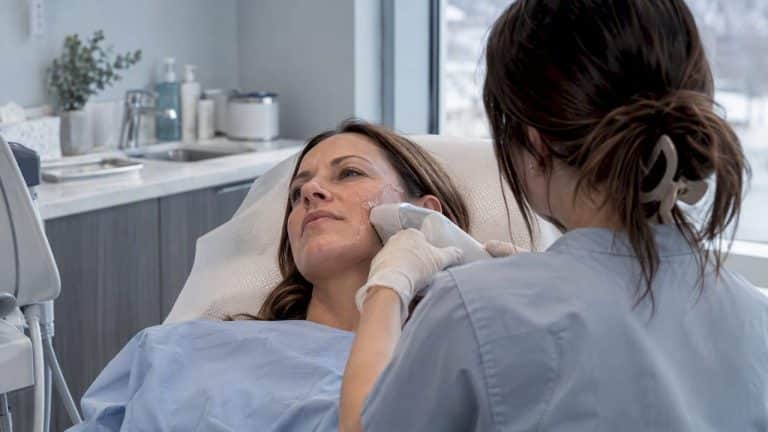
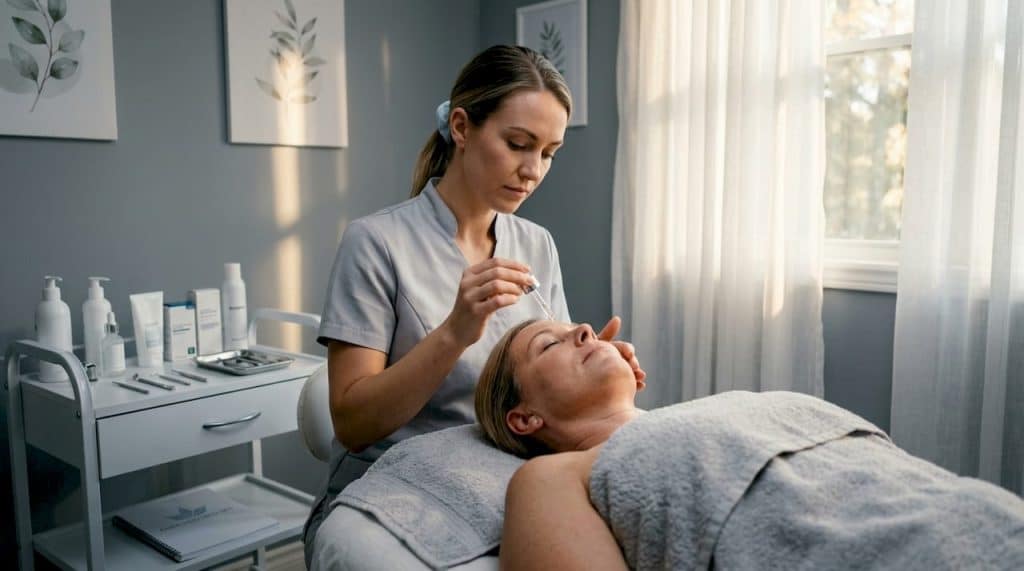
Medical-grade facials are professional skin treatments that use pharmaceutical-strength active ingredients and clinical technologies to produce measurable, structural improvements in your skin. Unlike standard spa facials, they are delivered by medically trained practitioners who assess your skin, identify contraindications, and adapt the treatment in real time. If you are between 25 and 55 and wondering why choose medical-grade facials over the options at your local spa, the answer comes down to depth, biology, and lasting results. These treatments reach the living layers of your skin, not just the surface.
What measurable skin improvements can medical-grade facials provide?
Medical-grade facials produce clinically documented results that standard spa treatments cannot replicate. Studies show a 30% improvement in skin elasticity, a 31% to 47% reduction in wrinkle depth, and measurable improvements in skin evenness after a structured course of treatments. Those are not cosmetic claims. They reflect real biological change in the dermis.
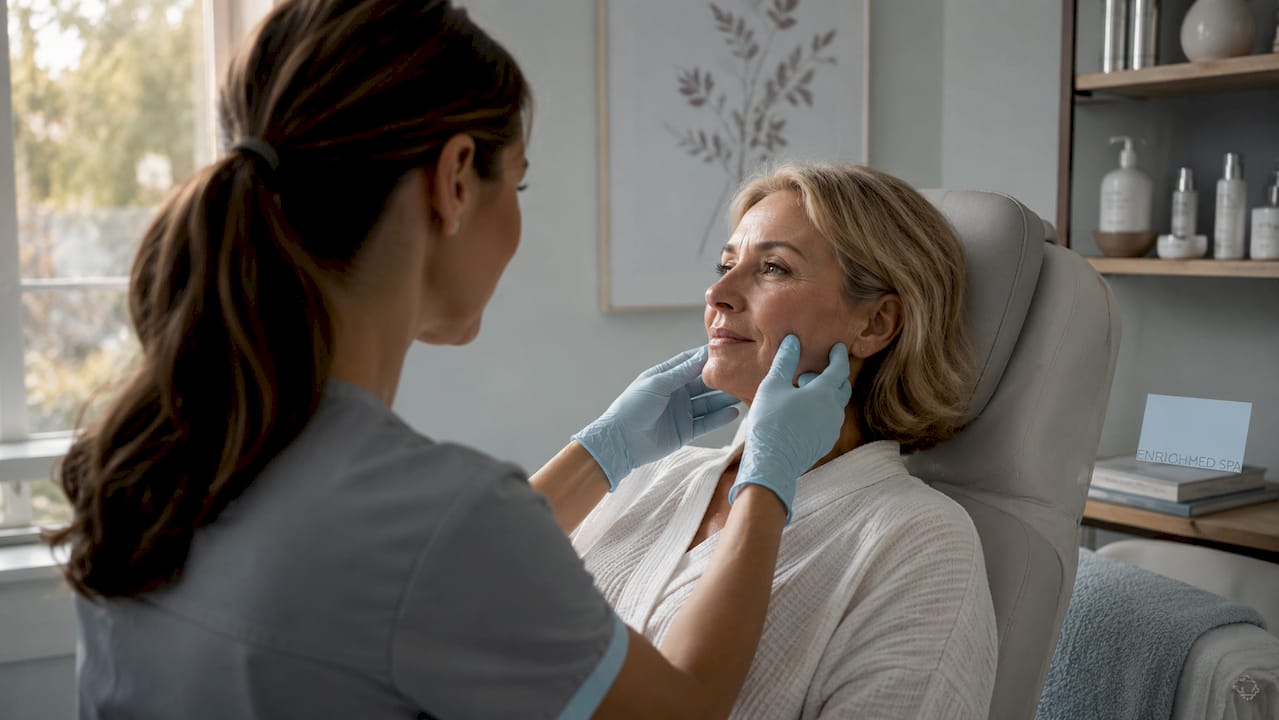
The cellular data is equally compelling. Elastin levels increase by 130% and hyaluronic acid production rises by 230% following medical facial protocols. Elastin is what gives skin its ability to snap back after movement. Hyaluronic acid is what keeps it plump and hydrated from within. When both increase together, the visible result is firmer, smoother, more hydrated skin.
The timeline of results follows a two-phase pattern:
- Immediate phase (24–48 hours): Visible brightness, improved hydration, and a more even skin tone appear quickly after treatment.
- Structural phase (4–8 weeks): Collagen synthesis matures over this period, producing firmer skin texture and reduced fine lines.
- Cumulative phase (multi-session): Results compound with each session, building what practitioners sometimes call a collagen “bank” that supports skin firmness for years.
This compounding effect is what separates medical facials from a relaxing spa afternoon. A spa facial can leave you glowing for a few days. A structured medical facial programme builds lasting skin architecture over months.
How do medical-grade facials differ from regular spa facials?
The core difference between medical facials and spa facials is clinical intention and depth. Spa facials work on the epidermis, the outermost layer of skin. They cleanse, hydrate, and polish the surface. Medical facials target the dermis, the living layer beneath, where collagen, elastin, and new skin cells are produced.
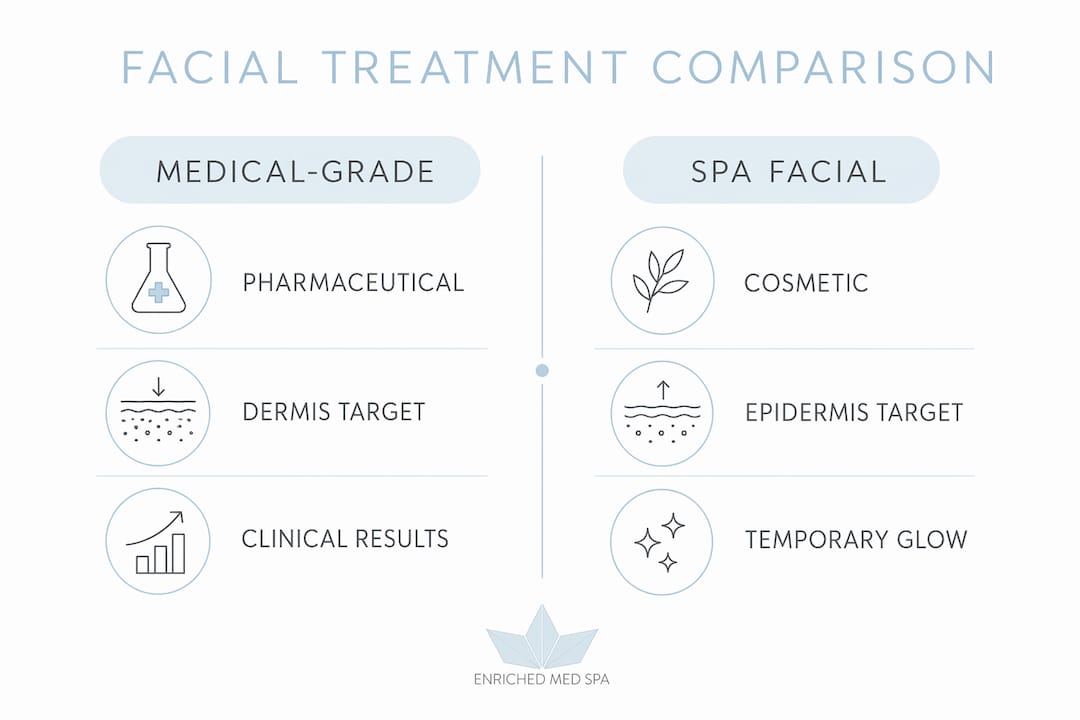
This difference in depth is made possible by pharmaceutical-strength active ingredients. Retinoids, glycolic acid at clinical concentrations, and growth factors used in medical settings are not available in standard spa products. Clinical-grade ingredients penetrate deeper than anything a spa can legally apply, which is precisely why they require trained oversight.
| Feature | Medical-Grade Facial | Spa Facial |
|---|---|---|
| Ingredient strength | Pharmaceutical-grade actives | Cosmetic-grade products |
| Depth of action | Dermis (structural layer) | Epidermis (surface layer) |
| Practitioner | Medically trained professional | Aesthetician |
| Primary goal | Biological remodelling | Surface hydration and relaxation |
| Results timeline | Cumulative over weeks to months | Temporary glow lasting days |
| Cost model | Higher per session, better long-term value | Lower per session, surface maintenance only |
The investment model for medical facials reflects this difference. The per-session cost is higher, but the cumulative benefit to your skin’s architecture makes it more cost-effective over time. You are not paying for a pleasant hour. You are paying for structural change.
Pro Tip: If you are comparing options, ask the provider which skin layer the treatment targets. If the answer is only the epidermis, you are looking at a cosmetic facial, not a medical one.
Why is medical oversight important in medical-grade facials?
Medical oversight is not a formality. Medically trained providers reduce risks that are genuinely present when high-concentration actives are applied to skin. A trained practitioner can identify rosacea, active acne, compromised skin barrier, or medication sensitivities before treatment begins. A spa aesthetician typically cannot.
The safety advantages of clinical oversight include:
- Contraindication screening: Conditions like active cold sores, isotretinoin use, or recent laser treatments can make certain facials unsafe. A medical provider identifies these before treatment.
- Adverse reaction management: If your skin responds unexpectedly during a session, a trained clinician can adjust or stop the treatment and manage the reaction appropriately.
- Sterile environment: Clinical settings follow infection control protocols that reduce the risk of post-treatment breakouts or complications.
- Medical-grade numbing agents: Because higher active concentrations cause more intense sensation, including tingling and warmth, medical providers can apply numbing creams to keep you comfortable throughout.
“Medical supervision transforms a facial from a cosmetic service into a clinical treatment. The difference is not just in the products used. It is in the professional’s ability to read your skin and respond to it in real time.”
The bespoke, adaptable treatment approach used in medical settings means your session is not a fixed menu. Practitioners combine modalities like laser, LED therapy, microneedling, and chemical exfoliation based on how your skin responds during the appointment. That level of real-time customisation simply does not exist in a standard spa setting. You can read more about what this looks like in practice by exploring the benefits of a medical aesthetician.
Is a medical-grade facial right for you? what to expect
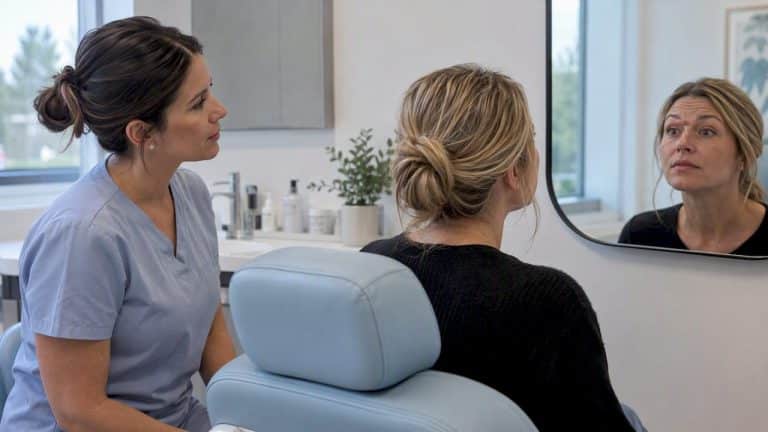
Most clients who come to us are noticing early signs of ageing, persistent dullness, uneven skin tone, or fine lines that their current skincare routine is not addressing. Medical-grade facials are well-suited to these concerns, but the right approach depends on a thorough skin analysis first.
Here is what a realistic treatment journey looks like:
- Initial consultation: A practitioner assesses your skin type, identifies active concerns, and reviews your medical history and current products. This is where your treatment plan is built. The role of consultation in a med spa setting is foundational, not optional.
- First session: Your skin may go through a stabilisation phase. Some clients experience mild redness or sensitivity as the skin barrier adjusts to clinical-strength actives. This is normal and temporary.
- Sessions 2–4: Structural benefits begin to build. Collagen synthesis is underway, and you will likely notice improved firmness and hydration between appointments.
- Ongoing maintenance: Most practitioners recommend a maintenance session every 4–6 weeks, adjusted based on your skin’s response and goals.
Pro Tip: Do not judge a medical facial by the first session alone. The real results appear over a structured course of treatments, not after a single appointment.
Sustainable skin health also depends on what you do between sessions. Your practitioner will guide you on home care, including the right cleanser, SPF, and active serums for your skin type. Treatments cannot fully counter environmental stressors like UV exposure, pollution, and poor sleep on their own. Think of your at-home routine as the foundation, and your medical facial sessions as the structural work built on top of it.
For clients who want to address volume loss or dynamic lines alongside skin texture, combining medical facials with dermal fillers or Botox can produce more complete results. These are separate conversations with your provider, but worth raising during your consultation.
Key takeaways
Medical-grade facials produce lasting structural skin improvements because they target the dermis with pharmaceutical-strength actives under trained clinical oversight, unlike spa facials that address only the surface.
| Point | Details |
|---|---|
| Clinical depth matters | Medical facials target the dermis for biological change, not just surface hydration. |
| Measurable results | Studies show up to 47% wrinkle reduction and a 230% increase in hyaluronic acid production. |
| Safety requires oversight | Medically trained providers screen for contraindications and manage reactions that spa settings cannot. |
| Results are cumulative | Structural benefits compound over a multi-session programme, not after a single treatment. |
| Home care is part of the plan | Sustainable skin health requires combining clinical sessions with a guided at-home skincare routine. |
What i have learned after years of watching clients choose medical facials
I want to be direct about something most articles skip over. Medical-grade facials are not a luxury upgrade on a spa day. They are a clinical investment, and clients who treat them that way get dramatically better outcomes than those who book a single session expecting a transformation.
The clients I see get the most out of these treatments are the ones who commit to a plan. They show up for their follow-up sessions, they follow the home care guidance, and they are honest with their provider about what they are using on their skin between appointments. The ones who are disappointed are usually those who expected one session to undo years of sun damage or collagen loss.
There is also a tendency to think that more aggressive always means better. It does not. A well-calibrated medical facial that matches your skin’s current tolerance will outperform an overly intense treatment that compromises your skin barrier. The skill of the practitioner matters as much as the products being used.
One more thing worth saying: combining treatments thoughtfully produces better results than stacking them randomly. Microneedling, for example, works well alongside medical facials because microneedling stimulates collagen through a different mechanism. Your provider should be helping you build a treatment plan that makes sense for your skin, not just booking you for whatever is available. If they are not having that conversation with you, ask for it.
— Felix
How Enrichedmedspa can help you get started
At Enrichedmedspa, our licensed medical professionals in Woodbridge and East Gwillimbury, Ontario, build personalised treatment plans based on your skin’s actual condition, not a one-size-fits-all menu. We offer medical-grade skin treatments including chemical peels, microneedling, laser resurfacing, and radiofrequency skin tightening, all delivered with clinical oversight and a patient-first approach. If you are curious about combining facials with injectables, our team can walk you through your skin treatment options and explain how treatments like dermal fillers can complement your facial programme. Book a consultation with us to start with a thorough skin analysis and a plan built around your goals.
FAQ
What makes a facial “medical-grade”?
A medical-grade facial uses pharmaceutical-strength active ingredients and clinical technologies that target the dermis, delivered by a medically trained practitioner. This distinguishes it from cosmetic spa facials, which work only on the surface epidermis.
How many sessions are needed to see results?
Visible brightness and hydration appear within 24–48 hours of the first session, but structural improvements in collagen and elastin build over 4–8 weeks and compound across a multi-session programme.
Are medical-grade facials safe for sensitive skin?
Yes, when delivered by a trained medical provider who screens for contraindications and adjusts the treatment to your skin’s real-time response. Medical-grade numbing agents are also available to manage discomfort from stronger actives.
Can medical facials be combined with botox or fillers?
Combining medical facials with injectables like Botox or dermal fillers is a common and effective approach. Your provider can advise on sequencing and timing to get the best results from both treatments.
How do medical-grade facials compare to home skincare?
Home skincare maintains your skin between sessions but cannot replicate the depth of clinical treatments. Professional treatments vs. DIY differ significantly in ingredient concentration and biological impact.
Recommended
- Are Home Facials Effective? Comparing DIY to Professional Treatments – Botox Laser Hair Removal OxyGeneo Medi Facial Microneedling – Enriched Med Spa – Vaughan Woodbridge Maple Vellore Village
- Are Facials Good for Sensitive Skin? Gentle Care for Delicate Complexions – Botox Laser Hair Removal OxyGeneo Medi Facial Microneedling – Enriched Med Spa – Vaughan Woodbridge Maple Vellore Village
- Why You Should Choose Medi-Facial Over Spa Facial | Facials Vaughan
- How Facial Treatments Benefit More Than Just Your Skin | Toronto