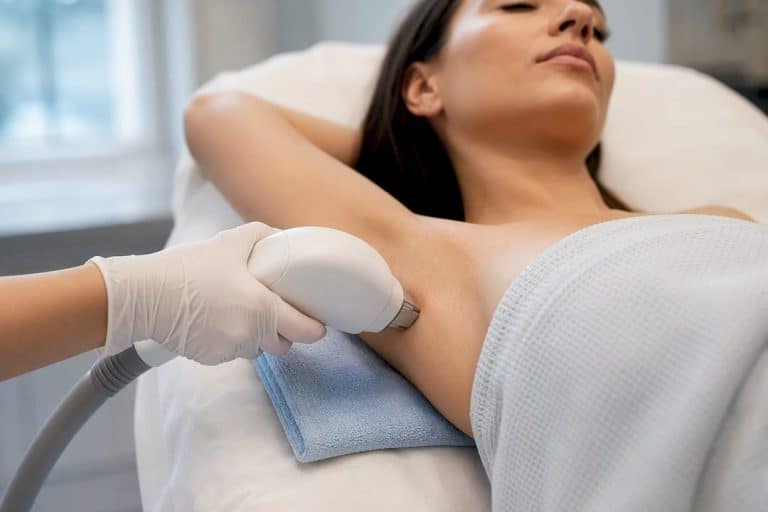
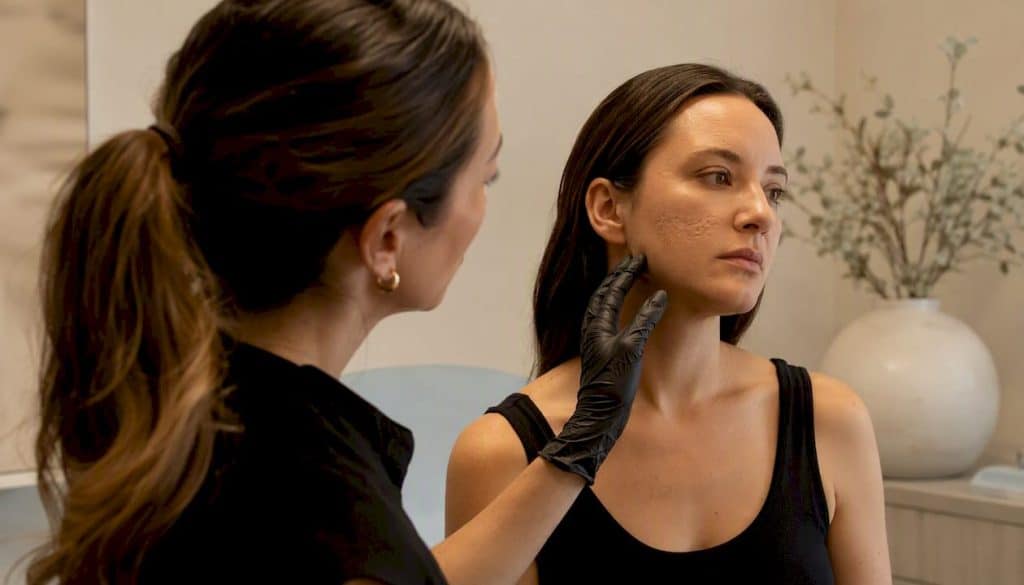
Acne scars form when inflamed acne lesions damage the deeper layers of skin, and the healing process deposits collagen unevenly. The result is either a depression (atrophic scar) where collagen is lost, or a raised ridge (hypertrophic or keloid scar) where too much collagen accumulates. Research confirms this abnormal wound-healing response is the core mechanism behind virtually all acne scarring.
The main treatment groups that address acne scars are:
- Topical and medical therapies (retinoids, azelaic acid, alpha-hydroxy acids)
- Minimally invasive procedures (microneedling, microneedling RF, subcision, chemical peels)
- Injectables (dermal fillers to lift depressed scars, intralesional steroids for raised ones)
- Energy-based devices (ablative and non-ablative lasers, radiofrequency)
- Surgical techniques (punch excision, punch grafting, dermabrasion)
No single treatment removes scars completely. Clinical guidance is clear that a multimodality approach, spread across multiple sessions, produces the best outcomes. Expect gradual improvement over months, not a single dramatic result.
Table of Contents
- What causes acne scars?
- What types of acne scars are there?
- How do clinicians assess acne scarring?
- What treatment options work for acne scars?
- How do you choose the right treatment at a consultation?
- How do you prevent new scars and manage active acne first?
- How Enrichedmedspa approaches acne scar treatment
- Key takeaways
- A note on realistic outcomes
- Ready to get a personalised acne scar assessment?
- Useful sources and further reading
What causes acne scars?
Acne becomes a scar through a specific sequence of events. When a pore becomes blocked with sebum and dead skin cells, bacteria proliferate and trigger an inflammatory response. If that inflammation is intense enough, the follicle wall ruptures, spilling debris into the surrounding dermis. The body then attempts to repair the damage through collagen remodelling.
The outcome of that repair determines the scar type. When the body produces less collagen than it lost, a depressed atrophic scar forms. When it overproduces collagen, the result is a raised hypertrophic or keloid scar. Peer-reviewed pathogenesis research describes this as an abnormal wound-healing response, not simply a cosmetic side effect.
Several factors increase the likelihood of scarring:
- Picking or squeezing: Manually rupturing a lesion forces inflammation deeper and widens the zone of damage. The NHS identifies this as one of the most preventable causes of permanent scarring.
Pro Tip: Control active acne before starting any scar revision procedure. Many resurfacing treatments are incompatible with active breakouts and can provoke new lesions or worsen pigmentation. Stabilising your acne first is not a delay — it is part of the treatment plan.
What types of acne scars are there?
Correctly identifying your scar type is the single most important step before choosing any treatment. A modality that works well for rolling scars can be ineffective or even harmful for icepick scars. According to the Acne and Rosacea Society of Canada, the vast majority of acne scars (80–90%) are atrophic, meaning they sit below the surrounding skin surface.
Atrophic scars
Icepick scars are narrow, deep, V-shaped channels that extend into the dermis or subcutaneous tissue. They look like the skin was punctured with a sharp instrument. Because of their depth and narrow opening, surface resurfacing alone rarely reaches the base.
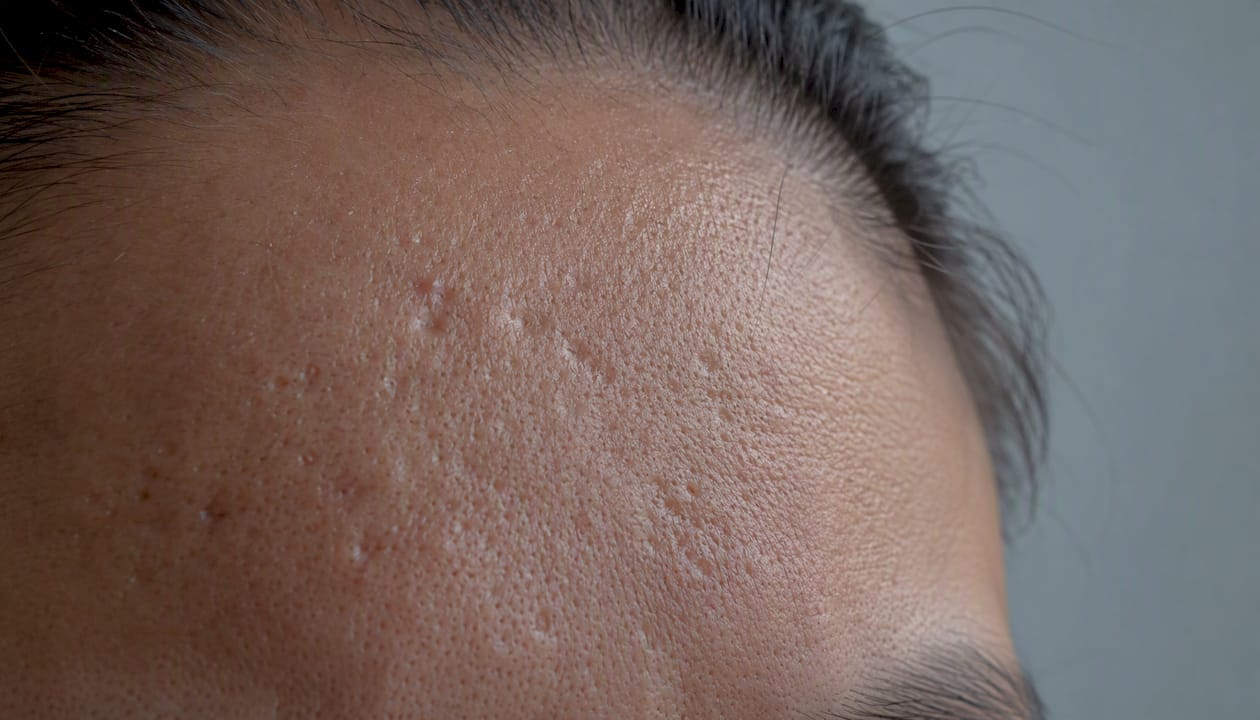
Boxcar scars are wider, U-shaped depressions with sharply defined vertical walls. They can be shallow or deep and are most common on the cheeks and temples. Their flat base makes them more responsive to resurfacing than icepick scars.
Rolling scars have a wave-like, undulating appearance caused by fibrous bands tethering the skin surface to deeper tissue. They tend to look worse in raking light and improve significantly when those bands are released (subcision).
Hypertrophic and keloid scars
Hypertrophic scars are raised, firm, and stay within the original lesion boundary. Keloid scars extend beyond it, sometimes growing considerably larger than the original pimple. Both are more common on the jawline, chest, and back, and occur more frequently in people with darker skin tones. They require a fundamentally different treatment approach from atrophic scars.
| Scar type | Appearance | Depth | Best-matched approaches |
|---|---|---|---|
| Icepick | Narrow, deep, V-shaped pore | Deep dermis | Punch excision, TCA cross, combination resurfacing |
| Boxcar | Wide, flat-based depression | Shallow to mid-dermis | Fractional laser, RF microneedling, fillers |
| Rolling | Undulating, wave-like surface | Superficial dermis (tethered) | Subcision, fillers, resurfacing |
| Hypertrophic | Raised, firm, within lesion boundary | Superficial | Intralesional steroids, silicone, laser |
| Keloid | Raised, extends beyond lesion | Superficial | Intralesional steroids, cryosurgery, surgical excision |
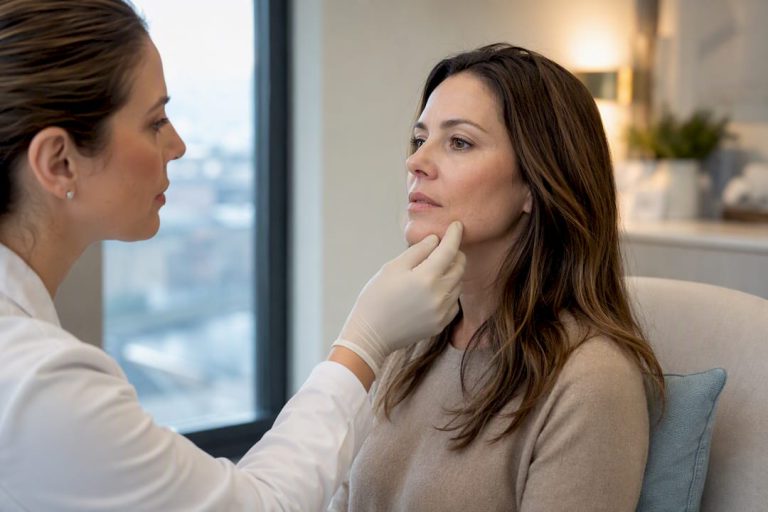
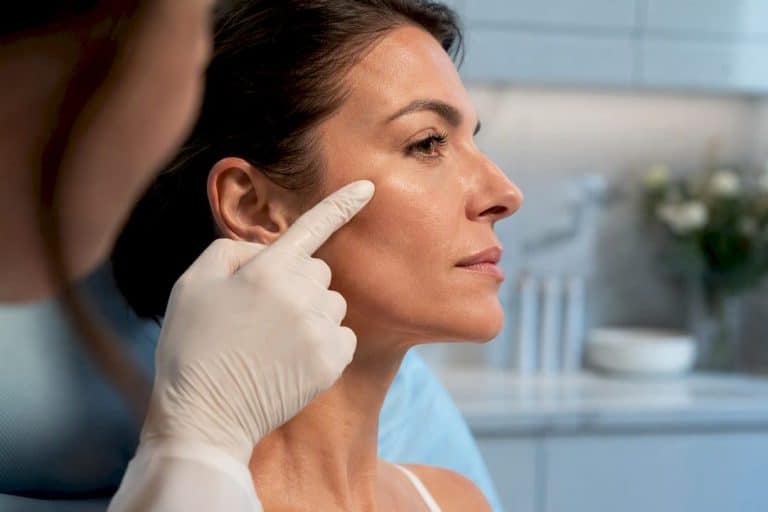
How do clinicians assess acne scarring?
A thorough clinical assessment shapes every treatment decision. Walking into a consultation with a clear picture of what to expect helps you ask better questions and set realistic goals.
A standard assessment typically includes:
- Scar typing and mapping: The clinician visually classifies each scar by morphology (icepick, boxcar, rolling, hypertrophic) and notes their distribution across the face or body.
- Depth assessment: Scars are evaluated under different lighting angles to gauge depth and the degree of tethering.
- Photographic documentation: Baseline photos allow objective comparison across treatment sessions.
- Skin tone evaluation: The Fitzpatrick scale (I–VI) guides device selection and pigment-risk management. Darker skin tones require modified protocols to reduce the risk of post-inflammatory hyperpigmentation.
- Acne activity review: Active breakouts must be under control before most resurfacing procedures begin. Cleveland Clinic guidance emphasises that treating scars while acne is still active risks new lesions and undermines results.
- Medical history: Prior isotretinoin use, current medications, previous treatments, and healing history all influence timing and modality selection.
Book a professional consultation when:
- Scarring has persisted for more than six months with no improvement from over-the-counter products
- Scars are causing emotional distress or affecting confidence
- You have complex, deep, or keloidal lesions that clearly need clinical management
- OTC retinoids and sun protection have not produced visible change after consistent use
What treatment options work for acne scars?
No single therapy removes acne scars completely, but a well-sequenced combination of the following modalities can produce meaningful, lasting improvement. Here is how each category works, and what to realistically expect.
Topical and medical therapies
Retinoids (tretinoin, adapalene) stimulate collagen synthesis and accelerate cell turnover, gradually improving shallow atrophic scars and post-inflammatory discolouration. Alpha-hydroxy acids (glycolic, lactic) exfoliate the surface and can soften mild textural irregularities. These are maintenance tools, not primary scar revision treatments, but they are a sensible starting point and support the results of in-office procedures.
Chemical peels
Superficial peels (glycolic, salicylic) address pigmentation and mild texture. Medium-depth peels (TCA 20–35%) reach the papillary dermis and can improve shallow boxcar scars. Deep peels (phenol) are rarely used today given the downtime and pigment risk. Expect several sessions for superficial peels; medium-depth peels may require fewer but carry more recovery time (5–10 days of peeling and redness).
Microneedling and RF microneedling
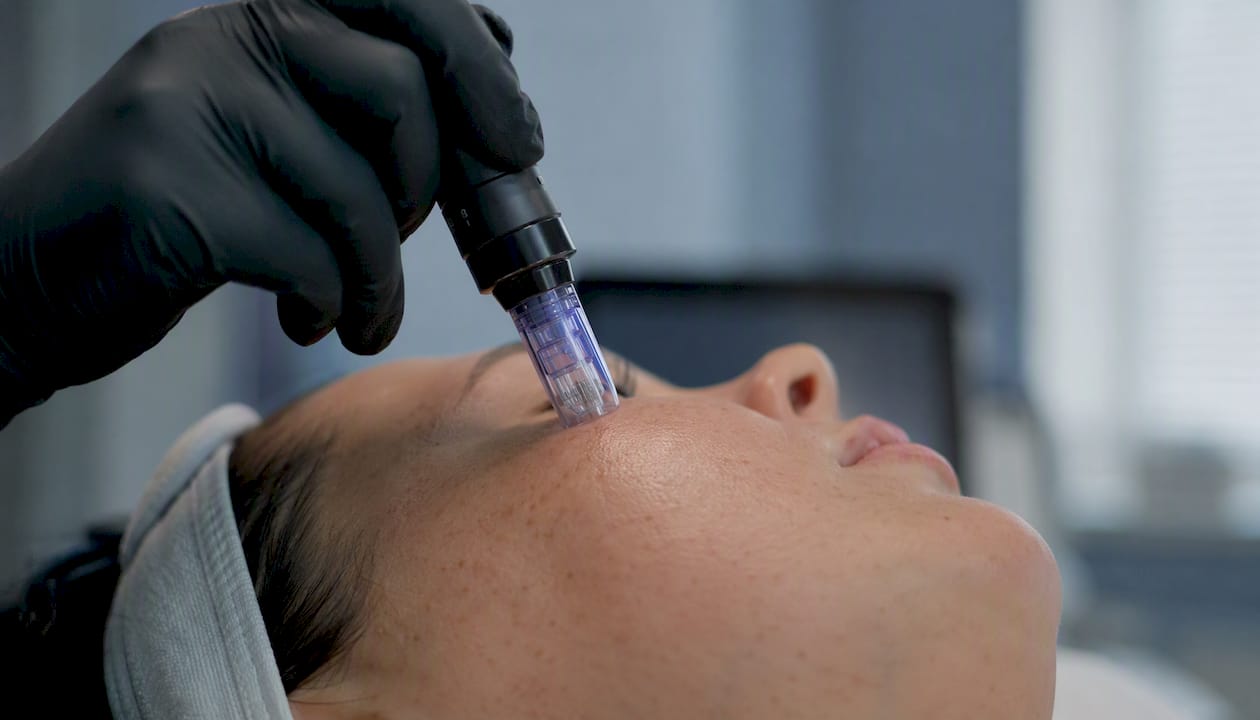
Microneedling creates controlled micro-injuries that trigger collagen and elastin production. It is well-tolerated across all skin tones, making it a first-line option for clients with Fitzpatrick IV–VI skin. Radiofrequency microneedling (RF microneedling) adds thermal energy at the needle tip, driving deeper collagen remodelling and producing more pronounced improvement in rolling and boxcar scars. Typically multiple sessions spaced weeks apart, with a few days of redness and mild swelling.
Subcision
A minimally invasive technique where a needle or cannula is inserted beneath a rolling scar to physically sever the fibrous bands tethering it to deeper tissue. Often combined with fillers or platelet-rich plasma (PRP) to support the lifted tissue. One or more sessions are typical, with mild bruising for a few days.
Dermal fillers
Hyaluronic acid fillers can temporarily lift depressed rolling and boxcar scars, providing immediate visible improvement. Results last several months depending on the product used. Dermal fillers are most effective when combined with subcision and a resurfacing modality rather than used alone.
Intralesional steroids
Injected directly into hypertrophic or keloid scars, corticosteroids (typically triamcinolone acetonide) flatten raised tissue by suppressing collagen overproduction. Repeat injections spaced weeks apart are usually required, and the treatment is often combined with cryosurgery or laser for keloidal lesions.
Laser resurfacing
Ablative lasers (CO2, Er:YAG) vaporise the outer skin layers, triggering significant collagen remodelling. They produce significant improvement for moderate-to-severe atrophic scars but carry about one to two weeks of downtime and higher pigment risk in darker skin tones. Non-ablative lasers (Nd:YAG, 1550 nm fractional) heat the dermis without removing the surface, offering a gentler profile with less downtime (2–5 days) and better tolerability across skin tones. Fractional delivery (ablative or non-ablative) treats columns of tissue while leaving surrounding skin intact, accelerating healing. Laser resurfacing typically requires 1–3 sessions for ablative and 3–6 for non-ablative fractional approaches. For a broader overview of laser types and their clinical applications, this aesthetic laser guide provides useful context.
Radiofrequency devices (non-needling)
Standalone RF devices deliver thermal energy to the dermis to stimulate collagen without surface injury. Downtime is minimal (1–2 days of mild redness), making them a good maintenance option between more intensive sessions.
Punch excision and grafting
For deep icepick scars, a punch tool removes the scar entirely and the wound is closed with a fine suture or replaced with a small skin graft. The resulting flat scar is then resurfaced. This is a targeted surgical technique, not a whole-face treatment.
Pro Tip: Combination approaches consistently outperform single-modality treatment. A common and effective sequence is subcision to release tethered scars, followed by filler to support the lifted tissue, then RF microneedling or fractional laser to resurface and stimulate new collagen. Spacing these steps 4–8 weeks apart allows healing between sessions.
| Treatment category | Typical sessions | Downtime | Efficacy tier | Best scar types |
|---|---|---|---|---|
| Topical retinoids/AHAs | Ongoing | None | Low | Mild texture, pigmentation |
| Chemical peels | 3–6 | 1–10 days | Low–Medium | Shallow boxcar, pigmentation |
| Microneedling | 3–6 | 1–3 days | Medium | Rolling, boxcar |
| RF microneedling | 3–6 | 1–3 days | Medium–High | Rolling, boxcar |
| Subcision | 1–3 | 2–5 days | Medium–High | Rolling |
| Dermal fillers | 1–2 | Minimal | Medium | Rolling, shallow boxcar |
| Non-ablative fractional laser | 3–6 | 2–5 days | Medium–High | Boxcar, rolling |
| Ablative fractional laser | 1–3 | — | High | Moderate-to-severe atrophic |
| Intralesional steroids | 2–4 | Minimal | High | Hypertrophic, keloid |
| Punch excision | 1 per scar | — | High | Deep icepick |
How do you choose the right treatment at a consultation?
Clinicians weigh several factors simultaneously when building a treatment plan. Understanding these helps you arrive at your consultation prepared to have a productive conversation.
Clinical decision factors, in order of priority:
- Scar morphology: Icepick, rolling, boxcar, and raised scars each have distinct first-line treatments. Mixing types is common and usually means combining modalities.
- Scar depth: Superficial scars respond to peels and microneedling; deep scars often need punch excision or ablative resurfacing.
- Skin tone (Fitzpatrick type): Darker skin tones require lower-energy or non-ablative approaches first, with careful pigment-risk management throughout.
- Active acne status: Acne must be well-controlled before most resurfacing procedures. This may mean treating acne for several months first.
- Downtime tolerance: A patient who cannot take time off work may prioritise non-ablative options even if ablative would be faster.
- Budget: Combination plans spread across multiple sessions represent a real financial commitment. Discussing this openly at consultation helps set a realistic roadmap.
Questions worth asking your clinician:
- What percentage improvement is realistic for my scar types?
- How many sessions do you recommend, and how far apart?
- Can I see before-and-after photos of similar scar types and skin tones?
- Are any of my current medications (including isotretinoin) contraindicated?
- What does aftercare look like, and how long is recovery?
Red flags to watch for: any clinic that guarantees complete scar removal, recommends the same laser for every patient regardless of skin tone, or offers no medical oversight of the treatment plan.
How do you prevent new scars and manage active acne first?
Preventing new scars is considerably easier than treating existing ones. The most effective prevention strategy is controlling active acne early and consistently.
Do:
- Start acne treatment as soon as breakouts appear rather than waiting for them to resolve on their own.
- Use a broad-spectrum SPF 30–50 daily. UV exposure worsens post-inflammatory pigmentation and slows healing.
- Apply topical retinoids consistently. They reduce new comedone formation and support skin cell turnover.
- See a clinician if over-the-counter products are not controlling breakouts within 8–12 weeks.
Don’t:
- Pick, squeeze, or pop lesions. This is the single most preventable cause of deeper scarring.
- Skip moisturiser. Compromised skin barrier function prolongs inflammation.
- Start resurfacing treatments while acne is still active.
For moderate-to-severe acne, medical options that meaningfully reduce scarring risk include topical retinoids (tretinoin, adapalene), benzoyl peroxide, topical or oral antibiotics used appropriately, hormonal therapies (oral contraceptives, spironolactone), and isotretinoin for severe or treatment-resistant cases. The Canadian Dermatology Association outlines these options within a Canadian clinical framework and recommends working with a physician or dermatologist to select the right combination.
A practical timeline: most clinicians consider acne stable enough for resurfacing or invasive scar procedures when there have been no new active lesions for at least 3–6 months. If isotretinoin was used, most practitioners wait 6–12 months after completing the course before performing ablative procedures, as the drug affects wound healing during and shortly after treatment.
How Enrichedmedspa approaches acne scar treatment
Many clients arrive at Enrichedmedspa having tried over-the-counter products for months without seeing meaningful change in their scar texture. Some come in with a mix of scar types across the cheeks and jawline; others have a single area of concern they have been self-conscious about for years. The starting point is always the same: a thorough clinical assessment before any treatment is recommended.
At the initial consultation, we review your scar types and depth, assess your skin tone using the Fitzpatrick scale, document your acne history and current activity, and discuss any medications or prior treatments. Photographic documentation is taken at baseline and at each follow-up so we can track progress objectively.
In terms of cost, acne scar treatments in Canada vary considerably by modality and clinic. Microneedling and RF microneedling sessions vary in price depending on the clinic and location; fractional laser from $500–$1,500; and dermal fillers from $600–$1,200 per syringe. Combination plans represent a cumulative investment, and we discuss realistic budgets openly at consultation so you can plan accordingly.
When a case requires surgical excision, dermabrasion, or dermatologist-level management beyond our scope, we recommend referral. Our goal is the right outcome for your skin, not the most procedures we can offer.
Pro Tip: Bring a list of your current skincare products and any prescription medications to your first consultation. Some ingredients (high-strength retinoids, certain acids) need to be paused before procedures, and knowing your full regimen helps us plan safely.
Key takeaways
Acne scars form through inflammation-driven collagen damage, and the most effective treatment plans match each scar type to the right modality, sequence treatments carefully, and account for skin tone throughout.
| Point | Details |
|---|---|
| Cause of scarring | Inflamed lesions damage the dermis; uneven collagen repair creates atrophic or raised scars. |
| Match treatment to scar type | Icepick scars need punch excision or TCA cross; rolling scars respond to subcision; boxcar scars improve with fractional laser or RF microneedling. |
| Skin tone safety | Darker skin tones (Fitzpatrick IV–VI) require lower-energy approaches, test patches, and topical preconditioning to reduce pigmentation risk. |
| Realistic expectations | Most clients need 3–6 sessions across several months; no single treatment removes scars completely. |
| Enrichedmedspa pathway | Enrichedmedspa offers a sequenced clinical approach, from assessment and acne control through microneedling, RF, subcision, filler, and laser resurfacing, tailored to your scar type and skin tone. |
A note on realistic outcomes
We see a consistent pattern at Enrichedmedspa: clients who commit to a sequenced, multi-session plan and keep their acne well-controlled between treatments see the most satisfying results. The improvement is rarely dramatic after a single session, but by session three or four, the cumulative change in texture and depth is often striking.
Clients with darker skin tones sometimes come in having been told they are not good candidates for scar treatment. That is rarely true. It means the approach needs to be staged more carefully, with lower-energy devices first and strict pigment-suppression protocols throughout. Patience and the right sequencing matter far more than skin tone alone.
Scar revision is not about achieving perfect skin. It is about meaningful, lasting improvement that makes you feel more comfortable in your skin. That is a realistic and achievable goal for most people, with the right plan.
Ready to get a personalised acne scar assessment?
Enrichedmedspa offers clinical acne scar consultations at our Woodbridge and East Gwillimbury locations. Rather than a one-size-fits-all approach, we build a sequenced treatment plan around your specific scar types, skin tone, and lifestyle. Whether you are considering dermal fillers for depressed scars or laser resurfacing for broader texture improvement, the first step is understanding exactly what you are working with.
To make your consultation as productive as possible, bring:
- Recent photos of the affected area in natural light
- A list of your current skincare products and any prescription medications
- Notes on previous acne treatments (topical, oral, or in-office)
- Your questions, including concerns about downtime, cost, and expected results
Book your consultation through enrichedmedspa.com and come in ready to talk through your options.
This article is for general informational purposes and does not constitute medical advice. Please consult a licensed dermatologist or qualified medical professional for guidance specific to your skin and health history.
Useful sources and further reading
The following sources informed this article and are recommended for further reading:
- Acne Scars: Pathogenesis, Classification and Treatment – PMC
- Post-Acne Scars: What Really Works to Smooth and Fade …
- Acne – Complications
- How to get rid of acne marks and scars? | BIODERMA | Official website Canada
- Management of acne scars – UpToDate
- Acne scars: What’s the best treatment?
- Acne – Canadian Dermatology Association
- Types of Acne Scars – Acne Action – Acne and Rosacea Society of Canada
- Acne Scarring—Pathogenesis, Evaluation, and Treatment Options
For personalised advice, consult a licensed dermatologist or a qualified medical aesthetic clinic in your area.
Recommended
- What are the Best Facial Treatments for Acne Removal?
- Can Facials Help with Acne? Exploring Treatments for Clearer Skin – Botox Laser Hair Removal OxyGeneo Medi Facial Microneedling – Enriched Med Spa – Vaughan Woodbridge Maple Vellore Village
- Microneedling: how it revives skin safely and effectively
- Laser resurfacing benefits for smoother, clearer skin