If you want clinically proven eyelash growth, the answer is straightforward: topical bimatoprost is the only Health Canada-approved, evidence-backed medical treatment for eyelash hypotrichosis. Everything else, from drugstore serums to lash extensions, falls into cosmetic or supportive care.
Here’s the short version of what to do with that information:
- Want documented follicle-level change? Book a consultation to discuss a bimatoprost prescription.
- Want a temporary cosmetic boost instead? Mascara, lifts, tints, or extensions can help without a prescription.
- Prefer to start gently? Evidence-informed home care protects the lashes you already have.
Clinical trials show visible change at 4 to 8 weeks, with full results by 16 weeks. Watch for redness, itching, or skin darkening around the lash line. These affect roughly 3 to 4 percent of users and are usually mild.
Key Takeaways
Bimatoprost remains the only regulated medical treatment for eyelash hypotrichosis, while cosmetic and home-care routes offer real but different benefits and require realistic expectations about timelines and maintenance.
| Point | Details |
|---|---|
| Only approved medical option | Bimatoprost is the sole Health Canada-approved prescription treatment for eyelash hypotrichosis. |
| Results take time | Visible change starts at 4 to 8 weeks; full effect is reached by 16 weeks of nightly use. |
| Side effects are usually mild | Itching, redness, and skin darkening occur in roughly 3 to 4 percent of users; rare iris pigmentation needs monitoring. |
| OTC serums lack equivalent evidence | Cosmetic status means weaker safety and efficacy data than prescription bimatoprost. |
| Enrichedmedspa offers guided assessment | Consultations screen for medication interactions and eye health before recommending a bimatoprost pathway. |
Table of Contents
- How eyelash growth works and why treatment for eyelashes takes time
- Prescription treatment: bimatoprost and how it’s used safely
- Over-the-counter lash serums: what the ingredients actually do
- Cosmetic and procedural options for fuller-looking lashes
- Daily habits that protect the lashes you already have
- When to see an eye-care or medical professional
- What happens when you book a lash assessment at a clinic
- How we guide clients through eyelash treatment choices
- Ready to talk to someone about your lashes?
- Frequently asked questions
- Sources
How eyelash growth works and why treatment for eyelashes takes time
Every eyelash cycles through three phases: anagen (active growth), catagen (transition), and telogen (rest and shedding). Eyelash anagen phases are short, often just a few weeks, which is why lashes never get as long as scalp hair and why any treatment for eyelashes needs patience.
Bimatoprost and similar prostaglandin analogs work by extending the anagen phase. More follicles stay in active growth mode longer, so lashes grow visibly longer, thicker, and darker before they naturally shed.
- Weeks 4 to 8: early thickening and darkening, often noticed before length changes.
- Weeks 12 to 16: full effect, matching the primary endpoint used in clinical trials.
- After stopping: lashes gradually return to baseline over several months, since the treatment doesn’t create new follicles, it just changes how long existing ones stay active.
That last point matters more than most people expect. Bimatoprost isn’t a one-time fix. It’s a maintenance therapy, similar in logic to how ongoing skin treatments work: the biology resets once you stop.
Prescription treatment: bimatoprost and how it’s used safely
Bimatoprost 0.03 percent, sold under the brand Latisse, is a prescription-only medication. It’s approved specifically for eyelash hypotrichosis, meaning thin or sparse lashes, and its regulatory status sets it apart from every over-the-counter product on the market.
The clinical evidence behind it is solid. Randomized, vehicle-controlled trials found statistically significant improvements in eyelash length, thickness, and darkness by week 16 compared to placebo. That’s a meaningfully higher bar than most cosmetic lash products can meet.
How it’s applied correctly:
- Remove eye makeup and contact lenses first.
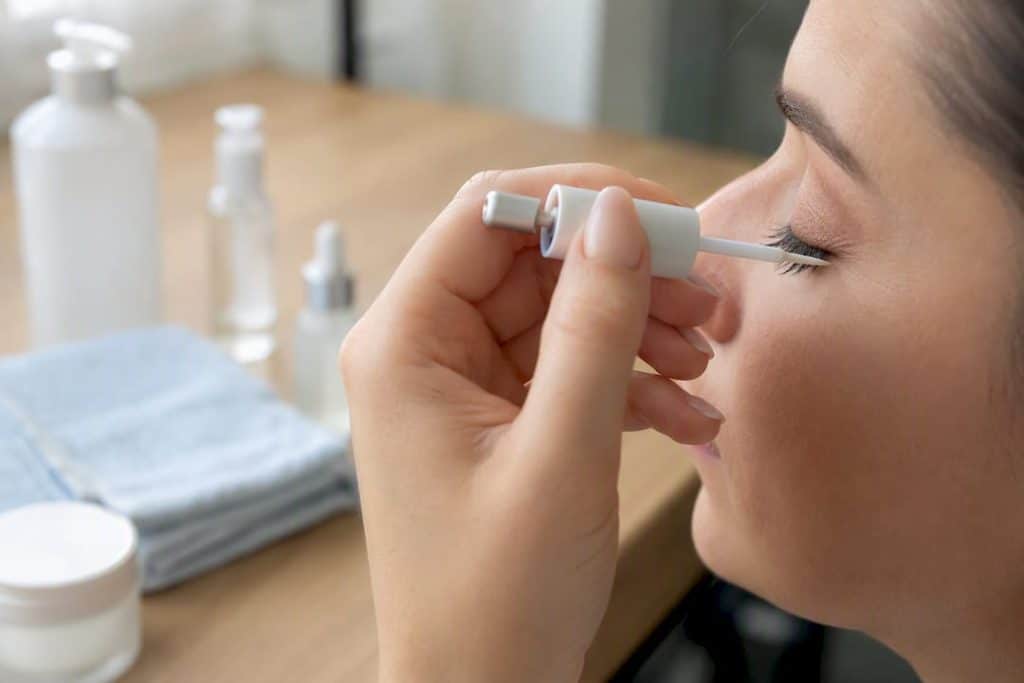
- Place one drop on the sterile applicator provided.
- Draw the applicator along the upper eyelid margin, from inner to outer corner, the same way you’d apply liquid eyeliner.
- Blot any excess with a tissue to keep it off the lower lid and surrounding skin.
- Discard the applicator. Use a fresh one for the other eye to avoid contamination.
The product monograph is explicit that it’s for the upper lid only, never the lower lid, and never inside the eye itself.
Pro Tip: If you tend to over-apply, use less product, not more. Excess solution running onto the lower lid or cheek is the most common cause of unwanted stray hair growth or skin darkening beyond the lash line.
Side effects are usually mild. Eye itching, redness, and localized skin hyperpigmentation show up in roughly 3 to 4 percent of users. A rarer but more serious concern is permanent iris pigmentation changes, meaning eye colour can shift, particularly in people with mixed-colour irises. If you notice any change to your iris colour, stop and see your eye-care provider.
Before prescribing, a clinician will ask about current glaucoma medications (since several use the same drug class), any history of eye disease, and whether you’re prone to skin irritation. Telehealth prescribing is a viable pathway for many patients, though an initial screening and periodic follow-up still matter, especially in the first few months.
Over-the-counter lash serums: what the ingredients actually do
Walk down any beauty aisle and you’ll find dozens of “lash growth” serums. Most fall into a few ingredient categories, and it’s worth knowing which is which before you spend money on one.
- Prostaglandin-like compounds: chemically similar to bimatoprost but sold as cosmetics, meaning they haven’t gone through the same clinical trials.
- Peptide and growth-factor blends: marketed as follicle stimulants, though the evidence base is generally weaker than prescription data, often relying on small or non-randomized studies.
- Conditioning agents: panthenol, biotin, pumpkin seed oil, and castor oil, which coat and strengthen existing lashes rather than stimulate new growth.
- Botanical extracts: included for texture and marketing appeal more than proven follicle activity.
Here’s the regulatory gap that matters: cosmetics don’t require the same safety and efficacy trials as prescription drugs. Health Canada’s own guidance on cosmetic ingredient rules reflects that products marketed as cosmetics face a lower evidentiary bar than a prescribed medication. Some serums even quietly include prostaglandin analogs without the safety monitoring a prescription requires, which means you could be exposed to similar side effect risks without a clinician tracking them.
Pro Tip: Patch-test any new lash serum on the inner forearm for 48 hours before applying it near your eyes. If you notice redness, swelling, or itching anywhere on the lash line after starting a product, stop immediately rather than pushing through it.

If your goal is conditioning brittle, breakage-prone lashes, a well-formulated serum can genuinely help. If your goal is true follicle-level growth, only bimatoprost has the clinical-trial data to back that claim.
Cosmetic and procedural options for fuller-looking lashes
Not everyone wants or needs a prescription. Cosmetic and procedural routes offer immediate or near-immediate visual improvement, with very different maintenance demands and risk profiles.
- Mascara is the simplest option: temporary, inexpensive, and reversible by nightly removal. Waxes, pigments, and resins coat the lash to add volume and length illusion, with essentially no systemic risk.
- Lash lifts and tints curl and darken natural lashes using a chemical process similar to a perm. Effects typically last several weeks to a few months depending on your natural lash cycle and aftercare.
- Eyelash extensions attach synthetic fibres to individual natural lashes, giving instant fullness. They require refills roughly every two to four weeks and carry real risk of mechanical breakage to natural lashes if applied too heavy or removed improperly. Adhesive allergies are also a documented concern.
- Eyelash transplantation is a surgical option, grafting hair follicles (often from the scalp) into the lash line. It’s described in surgical literature as longer-lasting than any non-surgical option, but it comes with real surgical risk, downtime, and a higher cost than any of the above.
If you’re considering extensions regularly, it’s worth reading up on proper extension maintenance and aftercare before committing, since improper removal is the most common cause of lasting lash damage. Choosing a licensed, experienced technician matters more here than almost anywhere else in cosmetic lash care.
Daily habits that protect the lashes you already have
Good lash care outside the clinic is mostly about reducing damage, not adding products. Small daily choices add up over months.
- Remove eye makeup gently with an oil-free cleanser, especially if you’re using bimatoprost, since oil-based removers can affect how well the product absorbs.
- Avoid rubbing your eyes. It’s one of the most common, and most overlooked, causes of lash breakage.
- Replace mascara every 3 to 6 months to avoid bacterial buildup near the lash line.
- Skip waterproof mascara for everyday wear. It requires harder rubbing to remove, which stresses the lash shaft.
- A generally balanced diet and avoiding smoking support hair health broadly, though neither substitutes for a targeted treatment for eyelashes if hypotrichosis is your actual concern.
Pro Tip: Never apply prescription lash serum to your lower lash line, “just to be thorough.” It increases the risk of stray hair growth and skin darkening without adding any benefit to the upper lashes.
Avoid unapproved ophthalmic drops of any kind near the eyes, don’t sleep in extensions unless your technician specifically says the product is designed for it, and go easy on the eyelash curler if your lashes already feel brittle or thin.
When to see an eye-care or medical professional
Most lash concerns are cosmetic. Some aren’t, and it’s worth knowing the difference.
See an optometrist or ophthalmologist promptly if you notice vision changes, a new colour change in your iris, persistent eye redness that doesn’t settle, or any signs of infection along the lash line, like swelling, warmth, or discharge. Sudden, patchy lash loss can also signal an underlying condition worth investigating rather than treating cosmetically.
For general lash thinning without those red flags, a dermatologist or medical-aesthetics clinician can assess whether bimatoprost is appropriate. Before your visit, bring a list of current eye medications (glaucoma drops especially), note any past allergic reactions, and be ready to describe when you first noticed the change.
What happens when you book a lash assessment at a clinic
A proper consultation isn’t just a prescription hand-off. It starts with intake and a medical history review, including a careful check for glaucoma medications, since drug interactions in that class matter clinically. From there, expect a brief ocular health screening and a conversation about your actual goals, whether that’s genuine growth, a cosmetic refresh, or both.
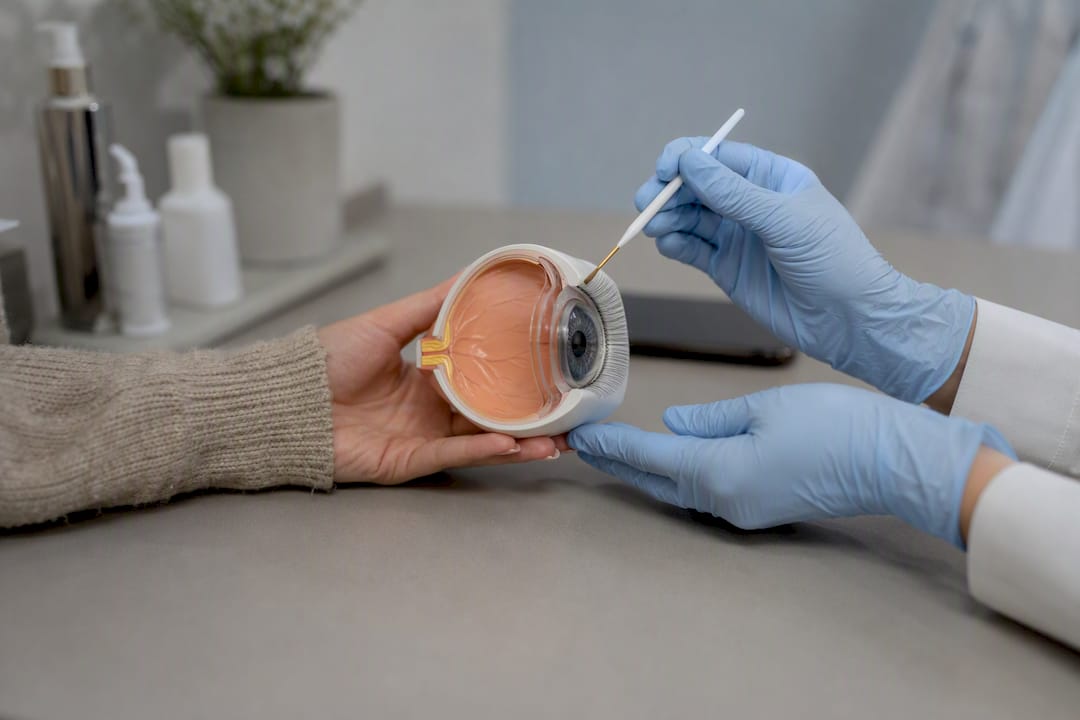
If bimatoprost is appropriate, most clinics will demonstrate the application technique in person before you leave, since technique errors are the most common reason people don’t see expected results. Follow-up is typically scheduled around the 8 to 12 week mark to confirm progress and check for side effects.
Pro Tip: Ask your clinician whether telehealth follow-up is available for ongoing monitoring. It’s a convenient way to stay on track without repeat in-person visits every few months.
Many clients pair a lash consultation with a broader conversation about seeing a medical aesthetician, since eye-area concerns rarely exist in isolation from the rest of the face.
How we guide clients through eyelash treatment choices
Clients who come in about their lashes usually fall into one of two groups: people who want proven, measurable change and are comfortable with a nightly routine, and people who want a low-effort refresh before an event. Neither is wrong, but they need different guidance.
We lean safety-first every time. That means being upfront that bimatoprost is genuinely effective but requires ongoing use, that cosmetic fixes need regular upkeep, and that home care is protective, not transformative. A short consult almost always clarifies which path actually fits someone’s expectations and routine, rather than guessing from a product label at the pharmacy.
Ready to talk to someone about your lashes?
If you’ve read this far, you already know that a real treatment for eyelashes means matching the option to your goals, not just picking whatever’s on the shelf. Enrichedmedspa gives you what a drugstore aisle can’t: a clinician who screens for glaucoma medications and eye health history before recommending bimatoprost, so you’re not guessing whether it’s right for you.
A consultation here starts the same way as any of our other cosmetic treatment consultations: a conversation about your goals, a look at your medical history, and an honest read on whether a prescription pathway, a cosmetic approach, or a mix of both makes sense. If you’re also curious about broader eye-area rejuvenation, we can talk through options like an eyebrow lift with Botox in the same visit.
Book a consultation to get a proper assessment of your lashes and find out whether a bimatoprost prescription fits your situation.
Frequently asked questions
Is there a real treatment for eyelashes that actually works, or is it all marketing?
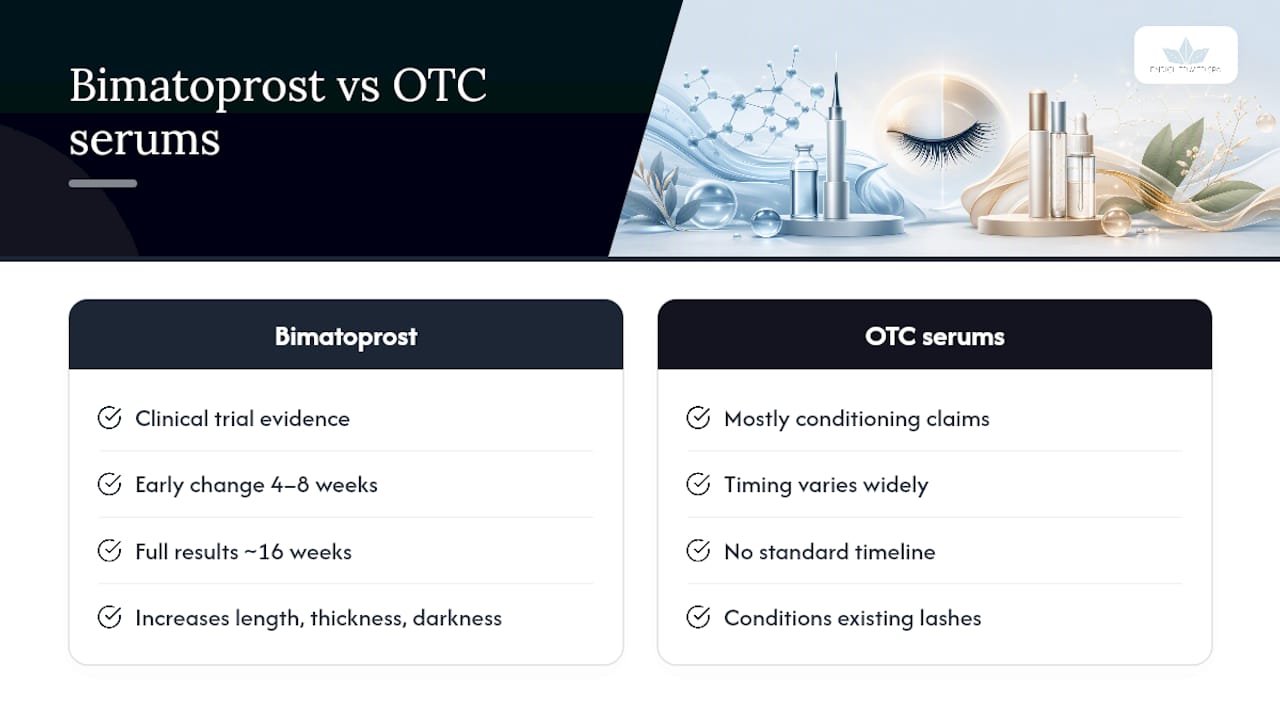
Bimatoprost has genuine clinical trial data behind it, showing measurable improvements in length, thickness, and darkness by 16 weeks. Most other lash products rely on conditioning claims rather than proven follicle-level change.
How long does an eyelash growth serum take to show results?
Prescription bimatoprost typically shows early change at 4 to 8 weeks, with full results around 16 weeks. Over-the-counter serums vary widely, and many primarily condition existing lashes rather than stimulate measurable new growth.
Can I combine mascara or extensions with a prescription treatment?
Yes, many clients do. Just remove makeup gently and use oil-free removers, since certain oils can interfere with how well bimatoprost absorbs into the skin.
Are eyelash extensions bad for natural lash health?
They can cause mechanical breakage if applied too heavy or removed improperly. Choosing a licensed technician and following aftercare instructions significantly reduces that risk.
What’s the safest way to strengthen eyelashes naturally at home?
Gentle makeup removal, avoiding rubbing your eyes, and replacing mascara every 3 to 6 months all help protect existing lashes, though none of these will stimulate genuinely new follicle growth the way bimatoprost can.
This article is general information, not a substitute for advice from a qualified doctor. Consult a qualified healthcare professional about your own circumstances before acting on anything here.
Sources
- Dailymed: bimatoprost ophthalmic solution monograph
- Peer-reviewed review summarizing bimatoprost clinical trials and eyelash enhancement evidence
- NHS: side effects of bimatoprost
- TeleDirectMD: eyelash growth (bimatoprost) treatment guide
- Surgical literature referencing eyelash transplantation and techniques