Yes, injectable fillers can noticeably soften nasolabial folds, and hyaluronic acid formulas remain the most common choice because they give reliable, measurable improvement for months at a time. The main caveat isn’t whether they work. It’s that vascular occlusion, while rare, is a serious complication, which is why the skill of the injector matters more than the brand name on the syringe.
TL;DR:
- Hyaluronic acid fillers provide reliable, measurable improvement for nasolabial folds lasting up to 12 months, with peak results between three and six months.
- Vascular occlusion is a rare but serious risk, requiring injector skill and immediate treatment with hyaluronidase if symptoms like pain or skin discoloration occur.
- Durability of results depends on product rheology, with high G’ gels offering structural lift, and proper aftercare includes ice, avoiding strenuous activity, and touch-up scheduling.
- Candidates with deep, severe folds often need midface support first, as volume loss in the cheek area can deepen the crease rather than the fold itself.
- Alternatives like skin tightening or surgical procedures exist but typically involve longer recovery and are most appropriate for more extensive facial aging.
Table of Contents
- What filler types are used for nasolabial folds, and how do they differ?
- How effective is filler for nasolabial folds, and how long does it last?
- Who is a good candidate for nasolabial fold filler?
- What happens during a nasolabial fold filler appointment?
- What are the risks of nasolabial fold filler, and how are emergencies handled?
- How do you care for filler results after treatment?
- Are there alternatives to filler for nasolabial folds?
- Enriched Med Spa perspective: our assessment and safety-first approach
- Book a consultation at Enriched Med Spa
- Sources
What filler types are used for nasolabial folds, and how do they differ?
Most patients who come to us asking about nasolabial fold correction have already heard of hyaluronic acid, or “HA,” fillers. Fewer know there are other categories, each with its own trade-offs in longevity, feel, and reversibility.
Hyaluronic acid fillers dominate the nasolabial fold market for good reason. They’re reversible with hyaluronidase if something goes wrong or the result isn’t right, which gives both patient and injector a safety net that other filler classes don’t offer. HA gels also come in a range of viscosities and crosslink densities, so an injector can pick a firmer product for structural support along the fold or a softer one for subtler blending near the surface.
Calcium hydroxylapatite (CaHA) and poly-L-lactic acid (PLLA) are considered when a patient wants longer-lasting volume and has realistic expectations about the trade-off: neither is reversible the way HA is. CaHA also stimulates some of the body’s own collagen production over time, which can extend results beyond what the injected volume alone would predict. We tend to reserve these for patients who’ve already had good experiences with HA and want to space out their visits.
Autologous fat grafting sits at the other end of the spectrum. It’s harvested from the patient’s own body, so there’s no allergy risk, and results can last years. But it requires a surgical harvesting step, recovery is longer, and outcomes are less predictable because fat survival rates vary by technique and by individual.
A concept that matters more than most patients realize is rheology, specifically a gel’s G’ (elastic modulus) and cohesivity. A filler with high G’ holds its shape and resists deformation, which makes it useful for structural correction along a deep fold. Lower cohesivity gels spread more and blend better in thinner skin. This is part of why one HA product isn’t interchangeable with another for the nasolabial area, even when both are labelled “for moderate to severe folds.”
- HA fillers: reversible, versatile viscosity range, most commonly used
- CaHA/PLLA: longer duration, some collagen stimulation, not reversible
- Autologous fat: longest potential duration, surgical harvest required, variable graft survival
- Rheology (G’, cohesivity): determines whether a gel structurally lifts or simply fills
How effective is filler for nasolabial folds, and how long does it last?
The clinical evidence here is more robust than most people expect for a cosmetic procedure. A systematic review and meta-analysis of randomized clinical trials tracking outcomes on the Wrinkle Severity Rating Scale (WSRS) found that pooled scores improved from a baseline average of 3.23 to 1.79 within just one month of treatment. That’s a meaningful shift on a scale that typically runs from 1 (no visible fold) to 5 (extreme fold), and it corresponds to patients moving from a moderate-to-severe fold into mild-to-moderate territory.
Peak benefit generally shows up between three and six months, once any post-injection swelling has fully resolved and the gel has integrated with surrounding tissue. From there, most HA products show a gradual decline in volume, though the same meta-analysis and a separate 52-week multicentre randomized study both found durable improvement persisting out to 12 months, even as some retraction from peak volume occurs.
By the numbers: Pooled data from randomized trials shows that lumpiness, tenderness, swelling, and bruising are commonly reported complications, with many patients experiencing one or more mild and self-resolving issues. Serious vascular events are rare.
It’s a reminder that “complication” in a clinical trial context includes far more than the emergencies patients worry about. Durability also depends heavily on the specific product and technique used, which a prospective double-blinded clinical trial confirmed when comparing a newer HA formula against established comparators and finding it both effective and well tolerated over the study period.
Who is a good candidate for nasolabial fold filler?
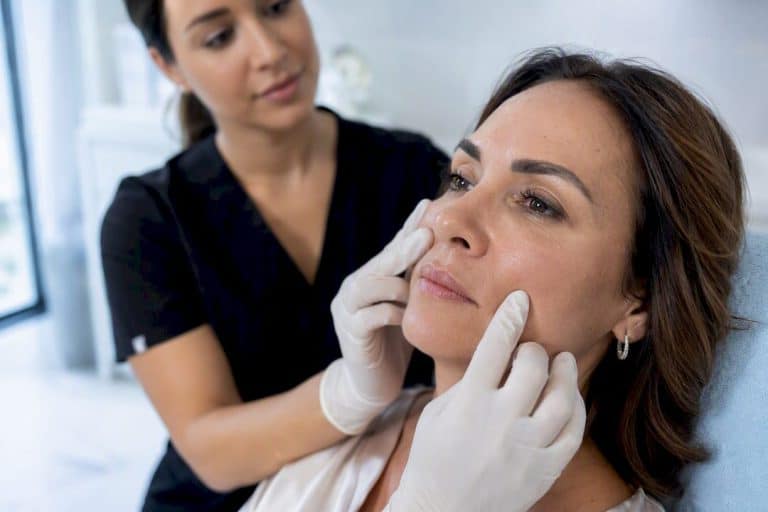
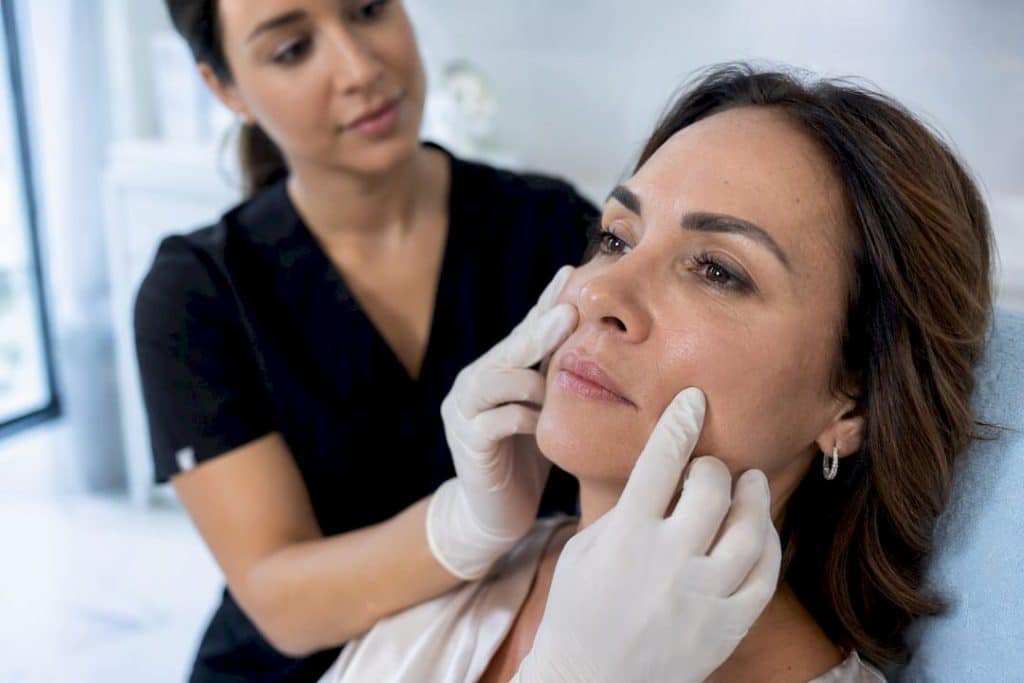
Not every fold responds the same way to filler, and part of a proper consultation is figuring out why yours is there in the first place. Many clients come in assuming their nasolabial folds are purely a skin issue, when in a lot of cases the real driver is midface volume loss pulling the cheek tissue downward and deepening the crease underneath.
Clinicians commonly use the WSRS to grade severity before deciding on a strategy:
- Mild folds often respond well to conservative, direct filling with a softer gel, sometimes combined with skin quality treatments rather than heavier structural correction.
- Moderate folds usually call for a more deliberate technique, often blending midface support with targeted filling directly in the crease.
- Severe folds, especially where cheek volume has visibly dropped, tend to respond best when the injector restores midface projection first and treats the fold itself as a secondary step.
This is why, when someone books a consultation, the assessment isn’t just “how deep is the line.” It’s an evaluation of overall facial anatomy, including skin elasticity and where volume has actually been lost, using guides like our facial anatomy for injectables primer as a starting reference for patients who want to understand their own structure before treatment.
Some patients aren’t good candidates, at least not right away. Active skin infection near the treatment area, recent use of permanent fillers in the same region, or expectations that don’t match what filler can realistically achieve are all reasons a responsible injector will pause and reassess rather than proceed.
What happens during a nasolabial fold filler appointment?
A typical session follows a predictable rhythm, and knowing the steps ahead of time tends to ease most of the nervousness first-time patients bring in.
- Consultation and consent. The injector reviews medical history, current medications, and prior filler or surgical history, then walks through realistic outcomes and material risks before anything is signed.
- Photography and marking. Standardized photos are taken for planning and later comparison, and the fold is marked with the patient upright and using natural facial expressions, since folds shift with movement.
- Numbing. Topical anesthetic is applied, and many modern HA products come pre-mixed with lidocaine, which trial data shows delivers comfort similar to established comparators with reduced periprocedural pain in many cases.
- Injection. The injector chooses between a fine needle for precise, small-volume placement and a blunt-tipped cannula, which many practitioners prefer for the nasolabial area because it moves around blood vessels rather than through them, reducing bruising and vascular risk.
- Immediate assessment. The area is checked for symmetry, skin colour, and capillary refill before the patient leaves, confirming there’s no early sign of vascular compromise.
Volume varies by fold severity, but many clinical protocols work within a range of roughly 0.5 to 2.5 mL per fold per session, with touch-ups scheduled once initial swelling resolves rather than immediately after treatment.
Pro Tip: Ask your injector directly whether they’re using a cannula or a needle for your fold, and why. A confident, specific answer tells you a lot about how much they’ve thought through your individual anatomy.
What are the risks of nasolabial fold filler, and how are emergencies handled?
Most side effects from nasolabial fold filler are minor and expected. Bruising, mild swelling, tenderness, and small lumps under the skin are common in the first one to two weeks and typically resolve on their own without treatment. These aren’t signs that something has gone wrong; they’re a normal tissue response to needle or cannula trauma.
Vascular occlusion is the complication that deserves real attention, even though it’s rare. It happens when filler is accidentally injected into or compresses a blood vessel, cutting off circulation to the surrounding tissue.
- Warning signs include severe, disproportionate pain, skin blanching (turning white), or a mottled, lace-like discolouration called livedo.
- If any of these appear, the injection stops immediately.
- For HA fillers, hyaluronidase is administered promptly to dissolve the product and restore blood flow.
- Any change in vision is treated as a medical emergency requiring immediate referral, since it can indicate the occlusion has affected a vessel closer to the eye.
By the numbers: across pooled trial data, vascular events occurred in approximately 1% of treatments, almost always managed successfully when caught early and treated with hyaluronidase.
Health Canada guidance on cosmetic injections is direct about this: patients should only be treated by a trained medical professional, and informed consent must include a discussion of material risks, including rare but irreversible complications. That’s not a formality. It reflects the fact that the nasolabial region sits close to branches of the facial artery, and a morphological study of nasolabial fold anatomy has documented how variable that vascular architecture can be from one patient to the next. An injector’s anatomy training, and a clinic’s readiness to respond within minutes rather than hours, is what actually keeps a rare risk rare.
How do you care for filler results after treatment?
The first two weeks matter more for your final result than most patients expect, and the aftercare routine is straightforward if you follow it consistently.
- Apply ice in short intervals during the first 24 to 48 hours to limit swelling and bruising.
- Avoid strenuous exercise, saunas, and extended sun exposure for about a week.
- Sleep on your back where possible for the first few nights to reduce pressure on the treated area.
- Hold off on alcohol, aspirin, and other NSAIDs for a short window after treatment if your doctor has confirmed it’s safe to pause them, since these can increase bruising risk.
Final settling generally takes two to four weeks, once any injection swelling fully resolves and the gel integrates with surrounding tissue. Touch-ups, if needed, are usually done between four and eight weeks rather than immediately, so the injector can see the true result before adding more product. Our dermal filler longevity guide breaks down what affects how long results hold, and our lip filler aftercare tips cover the same core principles that apply across most injectable treatments.
Are there alternatives to filler for nasolabial folds?
Filler isn’t the only tool, and for some patients it isn’t even the best first step. When midface volume loss is the primary driver of a deep fold, restoring cheek projection through structured filler placement or surgical augmentation often reduces the crease more naturally than treating the fold directly, according to anatomical research on the nasolabial region.
- Radiofrequency skin tightening adds value for patients with looser skin but minimal volume loss, and pairs well with filler rather than replacing it.
- CO2 laser resurfacing improves skin texture and fine surface lines around the fold, though recovery runs longer than injectables.
- Thread lifts and surgical facelifts offer more dramatic, longer-lasting repositioning for patients who’ve outgrown what filler alone can achieve.
Downtime varies significantly: fillers typically involve a few days of visible swelling or bruising, while surgical options mean one to two weeks of recovery. Supporting skin structure with topical care, including peptide-based approaches to collagen support, can complement in-clinic treatments between sessions.
Enriched Med Spa perspective: our assessment and safety-first approach
Every consultation starts the same way here: we look at the whole face before we look at the fold. A crease that seems like it needs direct filling often traces back to volume loss higher up in the cheek, and treating that first, then addressing the fold conservatively, usually produces a more natural outcome than filling the line in isolation.
We favour a staged approach: assess with standardized photography, correct midface support where indicated, fill the fold conservatively, then reassess at the follow-up before considering any touch-up. It’s slower than a one-visit fix, but it’s how you avoid overcorrection, which is far harder to walk back than undercorrection.
— Felix
Book a consultation at Enriched Med Spa
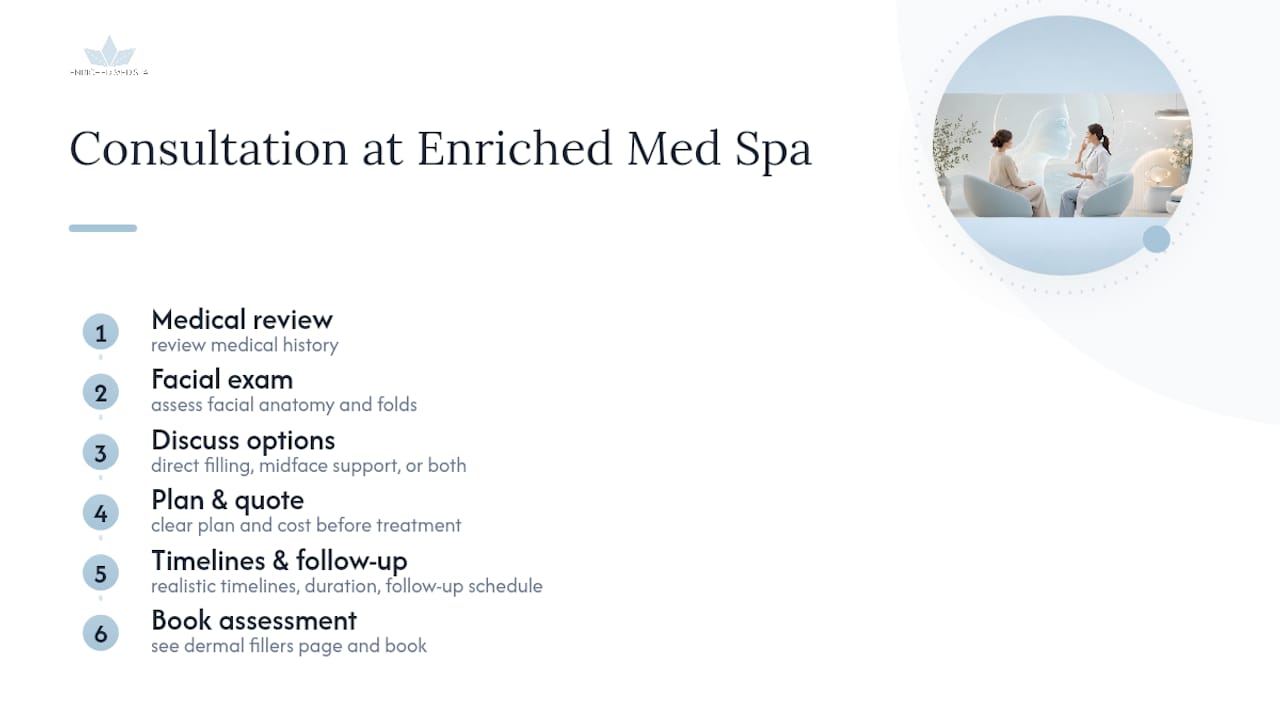
This clinic offers a straightforward approach to treating nasolabial folds without the guesswork of comparing products online. During a consultation, an injector examines facial anatomy, discusses whether direct filling, midface support, or a combination fits the situation, and provides a clear plan and quote before treatment. Appointments include a review of medical history and a straightforward conversation about realistic timelines, expected duration, and follow-up scheduling to keep expectations clear. If you’d like to understand what filler could realistically do for your nasolabial folds, visit our dermal fillers service page to see treatment details and book your assessment.
Sources
This guide draws on the Health Canada guidance for cosmetic injections, a systematic review and meta-analysis of randomized clinical trials on nasolabial fold fillers, and a prospective double-blinded clinical trial on newer HA filler formulations. Each source informs the efficacy, safety, and regulatory guidance discussed throughout.
This article is general information, not a substitute for advice from a qualified doctor. Consult a qualified healthcare professional about your own circumstances before acting on anything here.
- Health Canada — Cosmetic injections
- Tissue fillers for the nasolabial fold area: a systematic review and meta-analysis of randomized clinical trials