A superficial peel in Canada typically runs $150 to $350 per session, a medium-depth peel usually falls between $250 and $1,000, and deep or medical-grade resurfacing often starts around $1,000 and can climb into the thousands depending on the setting. Your quoted price rarely covers everything. Priming products, follow-up visits, and post-care skincare add to the total, and a consultation is the only way to get an exact number for your skin.
TL;DR:
- Superficial peels typically cost $150 to $350 per session, but the total price increases with the need for multiple treatments and post-care products.
- Medium peels, which target pigmentation and sun damage, usually range from $250 to $1,000 per session, with costs rising in clinics with higher medical oversight.
- Deep peels are less common and can start at around $1,000, often requiring only one session but involving higher recovery time and additional expenses.
- Prices vary significantly depending on provider credentials, clinic setting, geographic location, and treatment area, often affecting the overall cost.
- Clients should budget for extra expenses like priming, aftercare, and follow-up visits, which can add $75 to $150 or more to the base treatment cost.
Table of Contents
- How much does a chemical peel cost by depth?
- What drives the price of a chemical peel?
- What do chemical peel prices look like across Canada?
- What’s actually included in your quoted price?
- Three realistic budgets: economy, mid-range, and medically intensive
- What downtime and risk should you expect at each depth?
- How do you choose a provider and what should you ask?
- How does Enriched Med Spa approach peel pricing?
- When are you likely to book, and how is cost typically spread?
- What’s the real total cost across a full treatment plan?
- When is a peel actually worth the cost?
- How Enriched Med Spa can help you plan the right treatment
- Sources
How much does a chemical peel cost by depth?
The depth of the peel is the single biggest driver of price, and it also determines how much your skin will actually change. Chemical peels are generally grouped into light, medium, and deep categories, each using different acids and reaching different layers of skin.
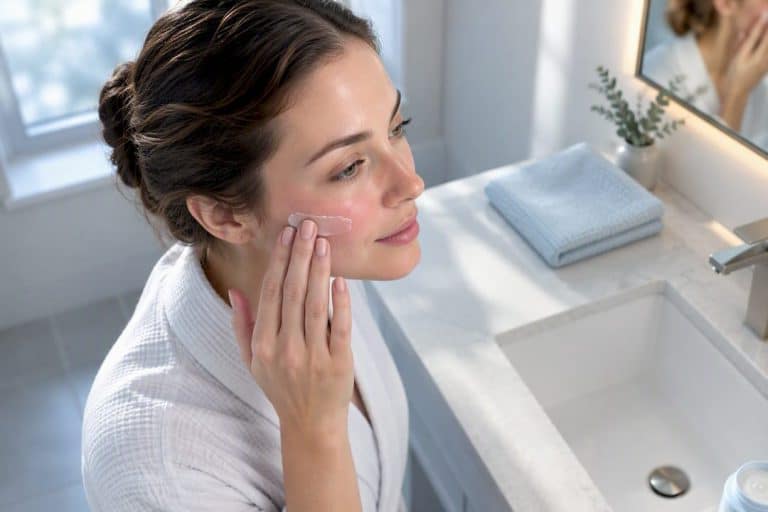
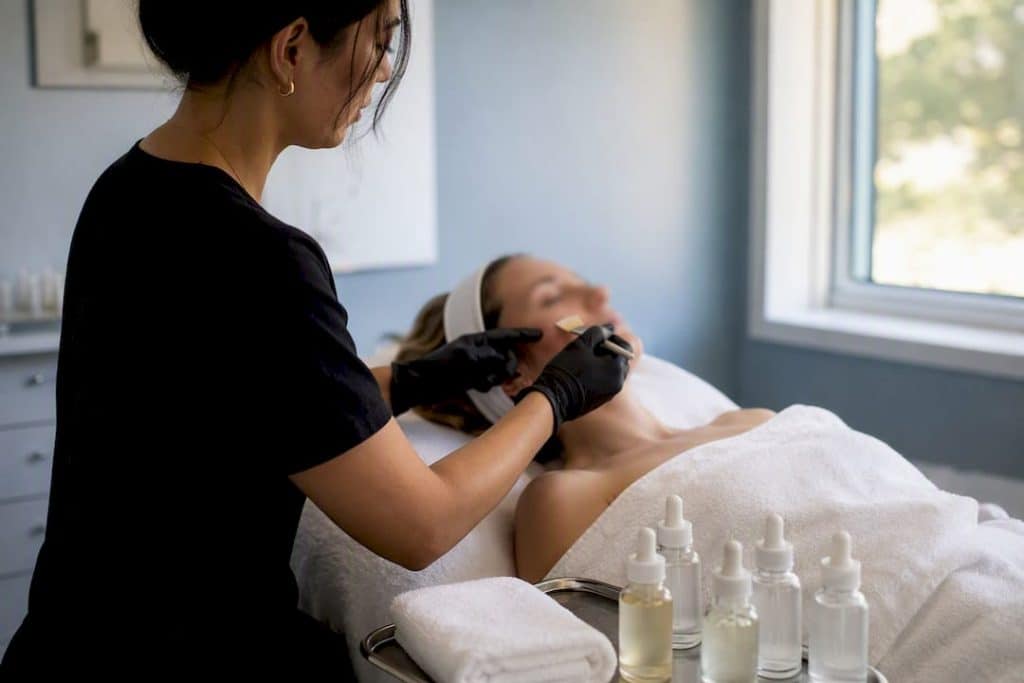
Superficial (light) peels use mild acids, glycolic, salicylic, or lactic, and only affect the outermost layer of skin. Clients often book these as “lunchtime peels” for mild dullness, early acne, or a quick pre-event glow. Because the exfoliation is shallow, one session rarely creates dramatic change, and most clients need a series of four to six treatments spaced a few weeks apart to see a real shift in tone and texture. In Canadian clinics, these typically run $150 to $350 per visit.
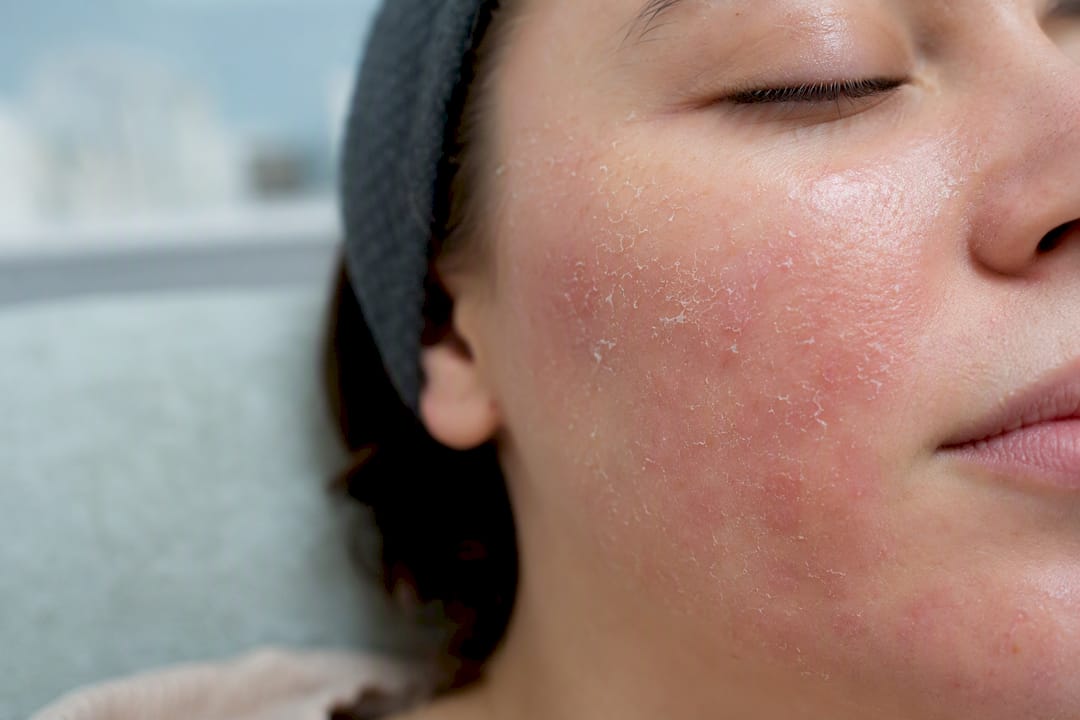
Medium peels usually rely on trichloroacetic acid (TCA) blends, and they reach deeper into the skin to target pigmentation, sun damage, and superficial acne scarring. This is where results become more visible after a single treatment, but it also means more visible peeling and a higher price. Expect a moderate to high price per session, with costs increasing at clinics with strong medical oversight or for extended treatment areas beyond the face.
Deep peels, often phenol-based or high-concentration TCA, are far less common today. They reach the deeper dermis, produce dramatic, long-lasting results, and are typically a one-time procedure rather than a series. Mayo Clinic notes that deeper peels deliver more dramatic outcomes but come with longer recovery and greater risk than lighter options, and pricing reflects that: typically starting at higher price levels, sometimes significantly more depending on the procedure setting such as hospital, specialist clinic, or sedation use.
A few things push any of these ranges higher:
- Custom-blended formulas mixed to your skin type, rather than an off-the-shelf peel
- Treatment area size, face only versus face, neck, and chest
- Provider credentials, with physician- or nurse-led clinics often pricing above aesthetician-only settings
- Clinic tier and geography, which we cover in more detail below
Most people considering a peel for the first time land somewhere in the light-to-medium category. If you’re unsure which depth actually suits your concern, our guide to types of medical grade peels breaks down which formula addresses which issue.
What drives the price of a chemical peel?
Two clinics offering the “same” peel can charge very different amounts, and the difference usually comes down to a handful of factors rather than random markup.
- Provider credentials and medical oversight. A peel performed or supervised by a physician or registered nurse typically costs more than one done by an aesthetician alone, largely because that oversight matters more as depth increases.
- Clinic setting and overhead. Hospital-affiliated dermatology clinics and specialist medical spas carry higher operating costs than smaller, boutique-style clinics, and that shows up in the invoice.
- Geography. Major urban centres, particularly Toronto, tend to price at the higher end of national ranges, while smaller Ontario communities and other regional markets often land lower.
- Treatment area and session length. Face-only treatments cost less than combined face, neck, and chest sessions, which take longer and use more product.
- Formula complexity. A custom-blended peel designed around your skin type and concerns generally costs more than a standard, pre-mixed solution.
- Add-ons. Numbing cream, sedation for deeper procedures, histology fees if a skin lesion is biopsied, prescription aftercare, and the total number of sessions in your plan all layer onto the base price.
Pro Tip: Ask every clinic for a full breakdown before comparing quotes. A $250 “medium peel” that excludes priming products and follow-up visits can end up costing more than a $400 quote that includes both.
What do chemical peel prices look like across Canada?
Where you live changes what “normal” pricing looks like, and it helps to know that before you assume a quote is too high or suspiciously low.
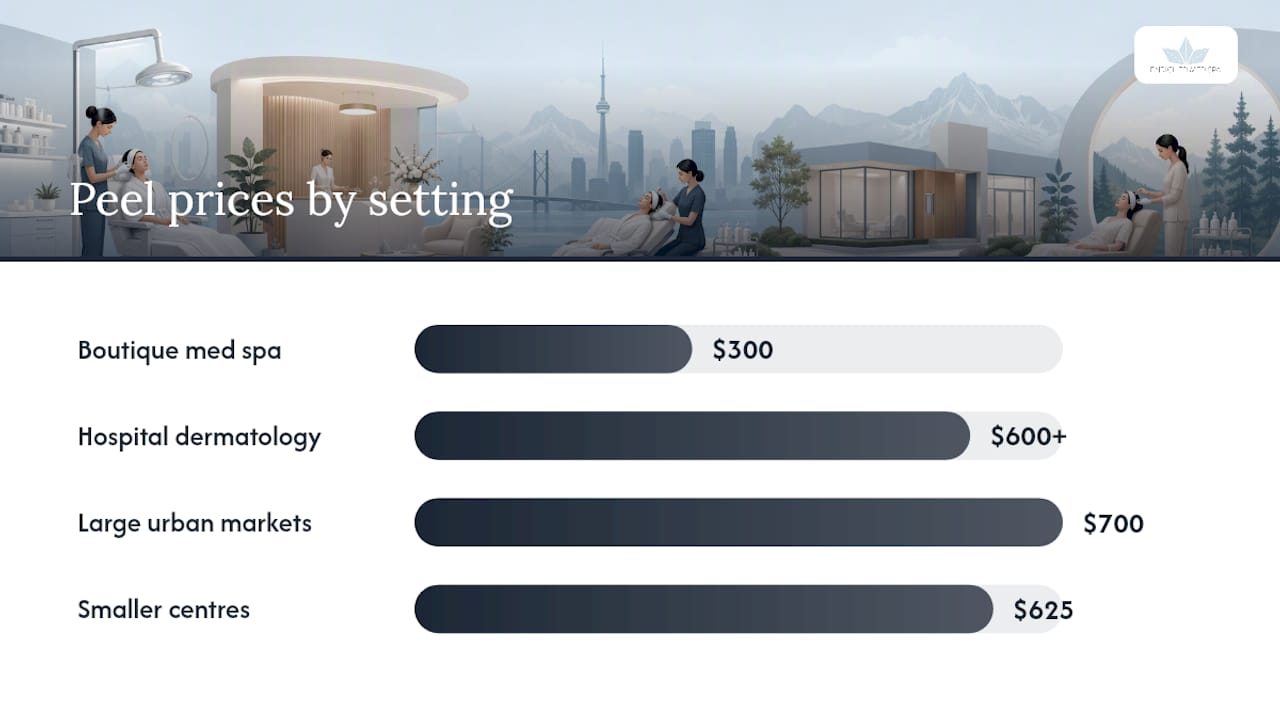
In Toronto and other large urban markets, superficial peels commonly sit near the upper end of the national range, and medium peels frequently approach or exceed $600 to $800 per session at clinics with strong medical staffing. Vancouver and Calgary show similar patterns, driven by higher clinic overhead and demand. Smaller centres across Ontario and other provinces tend to price more conservatively, sometimes $50 to $100 lower per session for a comparable treatment, simply because rent and staffing costs are lower.
Clinic tier matters as much as city. A boutique med spa focused on cosmetic peels may price a medium peel closer to $300, while a hospital-affiliated dermatology practice offering the same acid concentration might charge $600 or more, reflecting physician time and facility fees rather than a different product.
- Boutique or independent med spas: generally the most accessible entry point for light and medium peels
- Hospital-based dermatology clinics: higher fees, but often necessary for deep peels or complex skin concerns
- Package or series pricing: many clinics discount a bundle of four to six sessions compared to paying per visit, though you should always confirm what happens if you need to pause or transfer the package
Package pricing can be genuinely cost-effective for superficial peels, since most people need several sessions anyway. Just confirm the refund and transfer policy before committing, since not every clinic handles unused sessions the same way.
What’s actually included in your quoted price?
A quoted price usually covers your initial consultation, the treatment itself, and basic aftercare instructions, sometimes with one short follow-up included. What it often does not cover is everything you need to protect the results afterward.
- Medical-grade cleansers and barrier-repair moisturizers, often $30 to $80 combined
- Broad-spectrum SPF, which is non-negotiable after any peel and typically $30 to $50
- Antiviral prophylaxis, when a provider recommends it for medium or deep peels
- Priming products like tretinoin or hydroquinone, used in the weeks before treatment for higher-risk skin
Post-care spend often surprises people more than the treatment price itself. Clients often underestimate how much medically recommended skincare adds to the total, and since chemical peels are generally considered cosmetic and not covered by provincial or private health insurance, every dollar of that comes out of pocket. Budgeting an extra $75 to $150 for aftercare products on top of your session price is a realistic starting point.
Three realistic budgets: economy, mid-range, and medically intensive
Ranges only become useful once you turn them into an actual plan. Here’s how three common client profiles might budget:
- Economy plan: One superficial glycolic peel ($150 to $250) plus a basic moisturizer and SPF ($60), for a total near $210 to $310. Good for a single event or a first-time trial.
- Mid-range plan: A series of four medium TCA peels ($1,200 to $2,400 total) plus priming products and medical-grade sunscreen ($150 to $200), landing around $1,350 to $2,600 for a full treatment plan targeting pigmentation or texture.
- Medically intensive plan: A deep or combined resurfacing procedure ($1,000 to $3,000+) with physician follow-up visits and prescription aftercare ($200 to $400), often totalling $1,200 to $3,400 depending on setting.
Many clinics, including Enrichedmedspa, offer financing or payment-plan options for higher-cost treatment plans, which makes the medically intensive tier more manageable if you’re spreading a series over several months.
What downtime and risk should you expect at each depth?
Recovery time scales directly with peel depth, and it’s worth weighing against the price you’re paying. Light peels cause mild redness and flaking lasting a few hours to a couple of days, so most clients return to normal activity almost immediately. Medium peels involve visible peeling for several days up to two weeks, and you’ll want to plan around that if you have events or work commitments. Deep peels require weeks of healing under closer medical monitoring, which is part of why they cost more.
- Hyperpigmentation, particularly in medium to deep peels on melanin-rich skin
- Infection or delayed healing if aftercare instructions aren’t followed
- Scarring, rare but possible with deeper procedures
- Reactivation of herpes simplex virus (HSV), which is why antiviral prophylaxis is often prescribed before medium or deep peels
Priming the skin two to four weeks before a medium or deep peel with retinoids or mild acids reduces complications and lowers the risk of post-inflammatory hyperpigmentation, particularly for clients prone to pigment issues. Deep phenol peels are now rare specifically because of risks like cardiac toxicity and scarring, and they’re typically reserved for cases where a physician determines the benefit outweighs that risk.
Pro Tip: If a clinic quotes a deep peel without mentioning priming, antiviral coverage, or a follow-up schedule, treat that as a gap in the plan, not a bargain.
How do you choose a provider and what should you ask?
Price comparisons only work if you’re comparing equivalent care. Start by prioritizing a clinic with a medical director or physician oversight, documented experience treating skin of colour if that applies to you, and a visible before-and-after portfolio specific to the peel depth you’re considering.
At your consultation, ask directly:
- What formula and concentration will be used, and why is it right for my skin?
- How many sessions will I realistically need to see results?
- What priming is required beforehand, and for how long?
- What follow-up is included, and what happens if I have a reaction?
- What is the total expected cost across the full plan, not just this visit?
Walk away from a quote that skips a consultation entirely, offers no portfolio, or comes in noticeably below market with no itemized breakdown. A price that reflects proper medical oversight and follow-up planning is generally a safer bet than the cheapest option on offer.
| What to compare | Why it matters |
|---|---|
| Written price breakdown | Confirms whether priming, follow-up, and products are included |
| Provider credentials | Higher oversight generally means safer handling of deeper peels |
| Before-and-after portfolio | Shows real outcomes on skin similar to yours |
| Follow-up and refund policy | Protects you if a package needs to pause or a reaction occurs |
How does Enriched Med Spa approach peel pricing?
Many clients come to us noticing dullness, uneven tone, or texture that’s stopped responding to at-home products, and a peel is often the first medical-grade step we discuss. We offer a range of medical-grade peels alongside the Tetra CO2 Cool Peel for clients who need deeper resurfacing without the downtime of traditional CO2 laser.
We believe pricing transparency starts before you sit in the chair, which is why our pricing card for the Tetra CO2 Cool Peel lays out exactly what’s included. Every plan we build starts with a real consultation, because the right depth and formula depend entirely on your skin, not a one-size-fits-all package.
When are you likely to book, and how is cost typically spread?
Most peel plans in Canada aren’t a single appointment, they’re a schedule. Superficial peels are usually spaced two to four weeks apart across a series, which naturally spreads cost over two to three months rather than hitting your budget all at once. Medium peels need more recovery time between sessions, often four to six weeks, so a four-session plan can stretch across four to six months.
Seasonal timing matters more in Canada than many clients expect. Fall and winter are the most common windows for medium and deep peels, since lower UV exposure reduces the risk of post-treatment hyperpigmentation and shortens the sun-avoidance period after treatment. Booking a deep peel in July, when UV index is highest, adds risk and often means a longer stretch of diligent SPF use before you can safely return to normal outdoor time.
If you’re planning around a specific event, wedding season is a good example, work backward from the date. A single superficial peel needs only a week or two of buffer, while a medium peel series should start three to four months ahead to allow for full healing and a visible result. Clinics often build this scheduling into your first consultation, spacing sessions to match both your skin’s recovery needs and your calendar.
What’s the real total cost across a full treatment plan?
A single-session price rarely reflects what you’ll actually spend, because most visible improvement comes from a series rather than one visit. For superficial peels, four to six sessions at $150 to $350 each puts a full plan somewhere between $600 and $2,100 before aftercare products. For medium peels, three to five sessions at $250 to $1,000 each can total $750 to $5,000, with most clients landing in the $1,500 to $3,000 range once priming and post-care are factored in.
Deep peels are the exception, since they’re usually a single procedure rather than a series, but the higher per-session cost, often $1,000 to $3,000 or more, needs to include follow-up visits and extended aftercare in your mental total. Across all depths, the pattern holds: the number on a clinic’s price list is the starting point for your budget, not the finish line.
When is a peel actually worth the cost?
Peels earn their price when the concern is genuinely surface-level, tone, texture, mild scarring, and when you’re prepared to commit to a series rather than expecting one session to fix everything. For deeper wrinkles or significant volume loss, laser resurfacing or injectables often deliver more change per dollar, though usually at a higher upfront cost and longer downtime. Stage your plan: start conservative, and combine light peels with maintenance skincare before jumping to something more intensive.
— Felix
How Enriched Med Spa can help you plan the right treatment
If you’ve read this far, you already know that the right peel depends on your skin, your budget, and how much downtime you can realistically manage, not just the lowest number on a price list. Enrichedmedspa is the practical alternative to guessing your way through online price ranges: our consultations translate your specific concern into an actual treatment plan with a written cost breakdown, not a generic quote.
At your consultation, we’ll assess your skin, walk through formula options from light to medical-grade, and outline exactly what’s included, priming, sessions, and follow-up. Bring a list of any skincare actives you’re currently using and any recent sun exposure history, since both affect which peel is appropriate. If you’re also weighing longer-term options like cosmetic injectables alongside a peel series, we can map both into one plan. Book a consultation with Enrichedmedspa to get a personalized quote and start your treatment plan with a clear sense of total cost from day one.
Sources
For safety classifications, see StatPearls on chemical peel resurfacing and Mayo Clinic’s peel overview. For post-care routines, see this skincare routine guide.
This article is general information, not a substitute for advice from a qualified doctor. Consult a qualified healthcare professional about your own circumstances before acting on anything here.
- Chemical Peels for Skin Resurfacing – StatPearls (NCBI Bookshelf)
- Chemical peel – Mayo Clinic
- Chemical peels – Cleveland Clinic
- How Much Does Chemical Peel Cost in Toronto? Full Price Guide – The Mom Loft
Recommended
- Chemical peel benefits: what you need to know in 2026
- What Is a Chemical Peel? Benefits and Considerations for Your Skin – Botox Laser Hair Removal OxyGeneo Medi Facial Microneedling – Enriched Med Spa – Vaughan Woodbridge Maple Vellore Village
- Lip Flip Cost in Ontario | What to Expect and Budget For – Botox Laser Hair Removal OxyGeneo Medi Facial Microneedling – Enriched Med Spa – Vaughan Woodbridge Maple Vellore Village