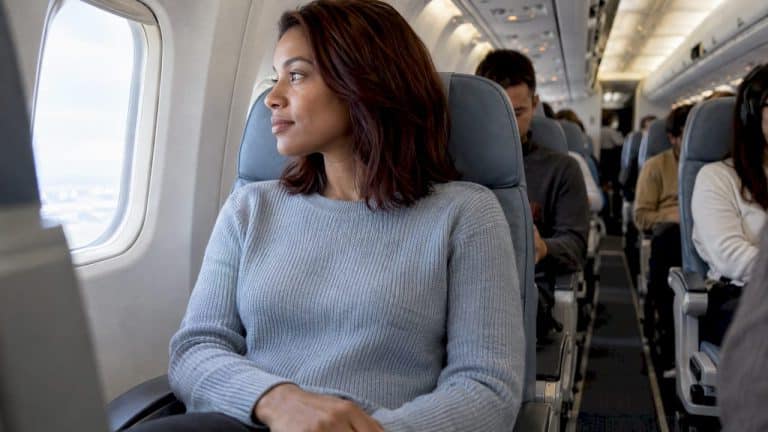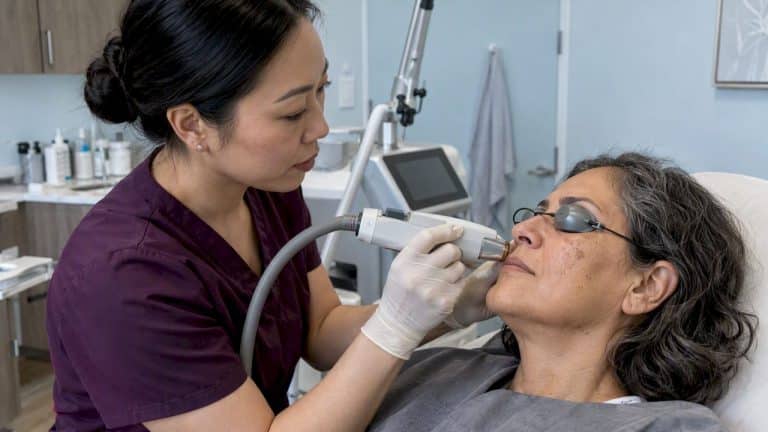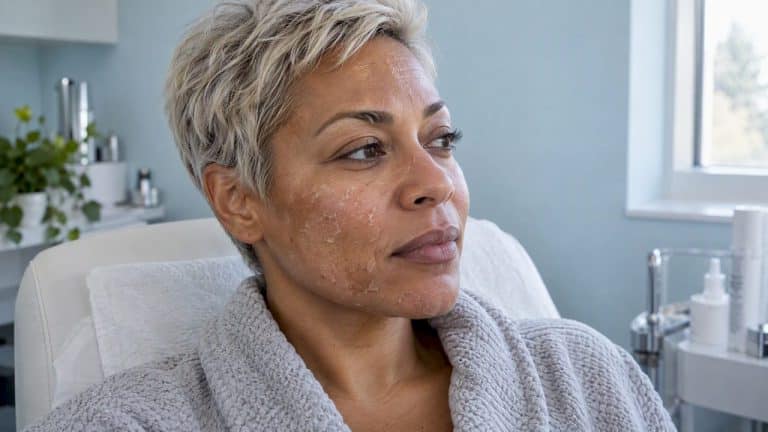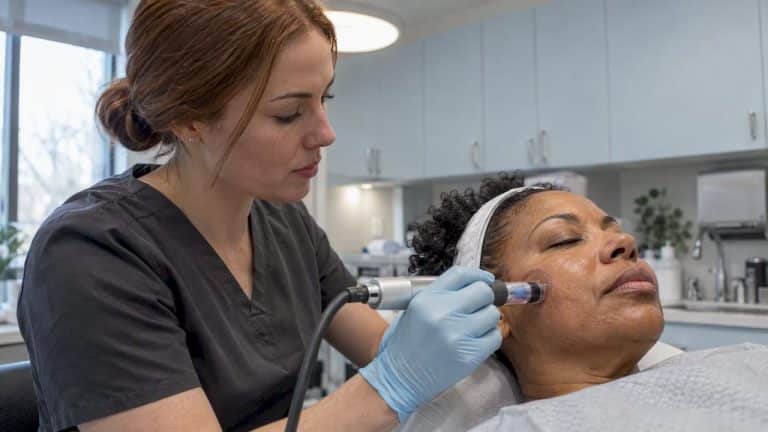
Yes, you can fly after Botox. Cabin pressure does not undo the treatment, and there is no evidence that it moves the product. The real question is comfort and timing: a flight can make mild swelling or bruising more noticeable, so most injectors suggest leaving a buffer of at least a day, and ideally a week or two when you are travelling for an event.
This guide explains what the research says, how to plan around a flight, and when to call your clinic. It also covers long-haul trips, migraine treatment and the “four-hour rule” you may have heard about.
TL;DR
- Flying after Botox is generally considered safe, and there is no evidence that cabin pressure makes Botox migrate.
- Many injectors suggest waiting 24 to 48 hours before a flight to give any bruising or swelling time to settle. Your own injector’s advice comes first.
- For a wedding, photoshoot or holiday, book Botox about two weeks before you travel. Results take days to appear, so this also protects the look you want.
- Contact your clinic if you notice a drooping eyelid, spreading swelling or anything that worries you. Seek emergency care for trouble swallowing or breathing.
Table of Contents
- The short answer: how soon can you fly after Botox?
- What flying can and cannot do to Botox
- The “four-hour rule”: what it actually means
- How to plan Botox around a trip
- Botox for migraine and flying
- Side effects to know before you board
- A practical aftercare checklist for travel days
- Fillers are a different conversation
- Our perspective
- Planning Botox before a trip with us
- FAQ
- Sources
The short answer: how soon can you fly after Botox?
There is no single official waiting period. Medical News Today reports that it is likely safe to fly soon after treatment, and that a doctor may recommend waiting anywhere from one day to two weeks to help prevent side effects from getting worse. That wide range reflects how different patients and treatment areas are.
In practice, we find the guidance falls into three tiers:
| Situation | A sensible approach |
|---|---|
| Short, simple trip, small treatment area, no bruising | Many people fly the same day or next day, if their injector agrees |
| First-time Botox, or a larger area such as the forehead and frown lines together | Wait 24 to 48 hours so you can see how your skin responds |
| Event or holiday where you want to look your best on arrival | Treat about two weeks before departure |
The reason for caution is not that the plane harms the Botox. It is that treated skin can bruise, and the early days are when bruises and small bumps are most visible. If you would rather not arrive with a mark on your forehead, give yourself time.
What flying can and cannot do to Botox
Cabin pressure does not move the product
A common worry is that Botox will “migrate” at altitude. According to Medical News Today, there is no evidence that cabin pressure causes this. Where spread does happen, it is usually linked to technique, dose, or pressing and rubbing the area soon after injection, not to air travel.
That is why aftercare advice focuses on what you do with your hands and body in the hours after treatment. We cover those habits in our guide to things to avoid after Botox.
Pressure and circulation may affect bruising
The more plausible effect is on your skin. The same source notes that changes in air pressure and lower blood pressure during a flight could potentially increase swelling or bruising. Dry cabin air, a long time sitting still and sometimes a glass of wine do not help either.
Many clients come in assuming that anything unusual after a flight must be Botox “going wrong”. Most of the time it is a small bruise that was already forming, or tired skin from travel. That is worth knowing before you panic in a hotel bathroom mirror.
Results take time, whatever you do
A flight also cannot speed up or slow down the way Botox works. HealthLink BC explains that it can take three to four days to notice the effects, that the full effect may take up to a week, and that results last about three to four months on average. If you land on day two and look unchanged, that is normal, not a sign of failure.
The “four-hour rule”: what it actually means
You may have read about a four-hour rule after Botox. It is not a regulation or an official flight clearance. It is a common clinic habit: for roughly the first four hours after injections, stay upright, avoid lying flat, skip strenuous exercise, and do not rub or press the treated areas.
The idea is to keep the product where your injector placed it while it begins to bind to the muscle. Practices differ on the exact number of hours, so treat four as a typical figure, not a universal one. Your injector will tell you what they prefer.
Here is how it connects to flying:
- Sitting upright on a plane is not the issue. It is the leaning, pressing and napping against a headrest or travel pillow that can put pressure on treated areas.
- Leave the face alone. Avoid pushing a neck pillow into your forehead or pulling a tight eye mask over fresh injections for the first several hours.
- Skip the in-flight facial. Sheet masks are generally fine later, but do not massage or press your skin early on.
If your appointment is in the morning and your flight is in the evening, you will usually clear the four-hour window comfortably. A flight booked within an hour or two of your appointment is the scenario to avoid.
How to plan Botox around a trip
If you are travelling for an event
For weddings, photoshoots and reunions, we suggest treating about two weeks before you leave. That gives you time to:
- Let any bruising fade before you are photographed.
- See the full result, since effects can take up to a week to fully develop.
- Return to us for a small touch-up if one is needed, rather than discovering an asymmetry in another city.
This timing matters more than the flight itself. A good result at your destination is mostly about the weeks beforehand.
If you are leaving within a few days
It is still possible, and many people do it. A few steps make it easier:
- Tell your injector your travel date at the consultation, so the treatment plan and the aftercare conversation account for it.
- Book the earliest appointment of the day if you can.
- Pack a small bottle of arnica gel or concealer only if your injector is comfortable with you using it. Ask first, since some products are best left off the treated area at first.
- Avoid alcohol the day before and the day of treatment, since it may increase bruising.
- Stay hydrated on the plane and keep your head upright without pressing on the injection sites.
If you are flying long-haul
A twelve-hour flight is not riskier for the Botox itself. It is simply a longer stretch of sitting still, dry air and limited access to your clinic if something looks unusual. For that reason we recommend a longer buffer, ideally several days, before long trips, especially if it is your first time having Botox. You will know how your skin responds, and you will have had a chance to ask us any questions in person.
If you are travelling for work
Professionals who fly often tend to do well with a regular schedule. Because results last roughly three to four months, you can time maintenance for a quieter stretch of the calendar instead of the day before a conference. Our guide to aesthetic treatments for professionals explains how to build that rhythm without a visible “just had it done” look.
Botox for migraine and flying
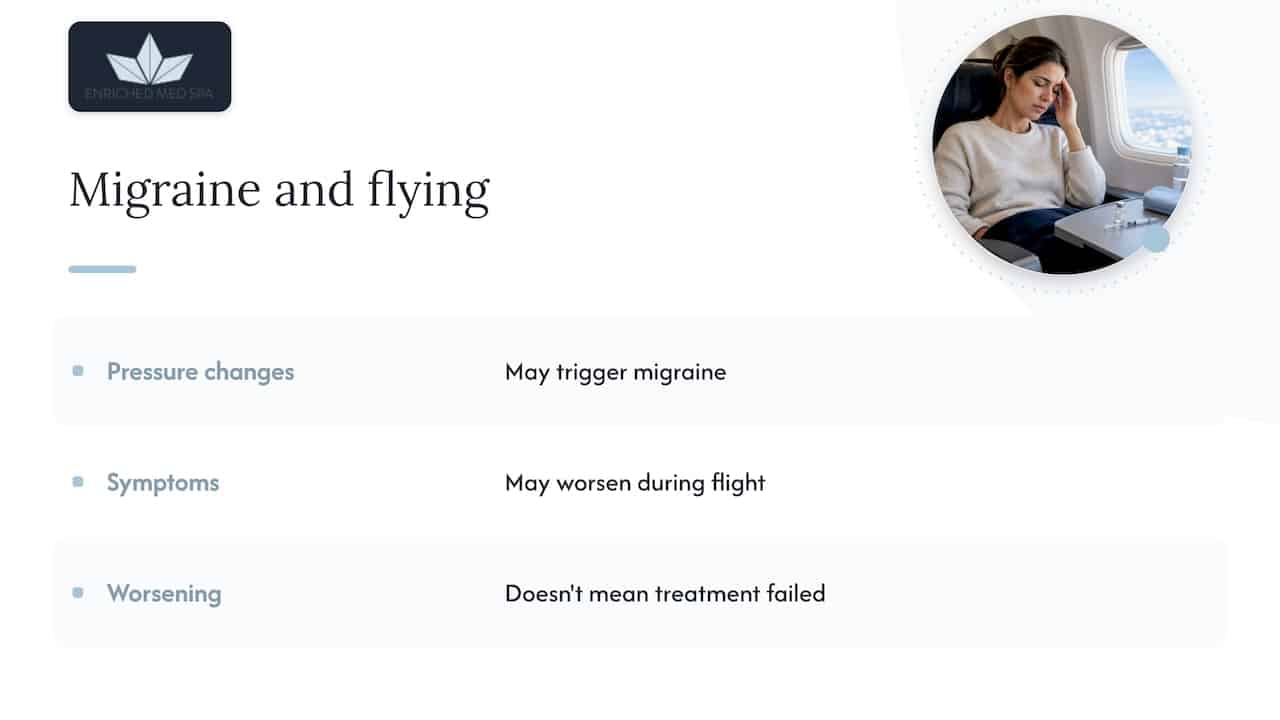
If your Botox is for chronic migraine rather than cosmetic reasons, the picture is a little different. Medical News Today notes that atmospheric pressure changes can trigger migraine more often, so symptoms could worsen while flying. That is a feature of the flight and your migraine pattern, not a sign that the treatment has failed.
If you manage migraine, bring your usual medication in your carry-on, and ask your prescribing physician about travel timing. We explain how this treatment works in our article on Botox for chronic migraines.
Side effects to know before you board
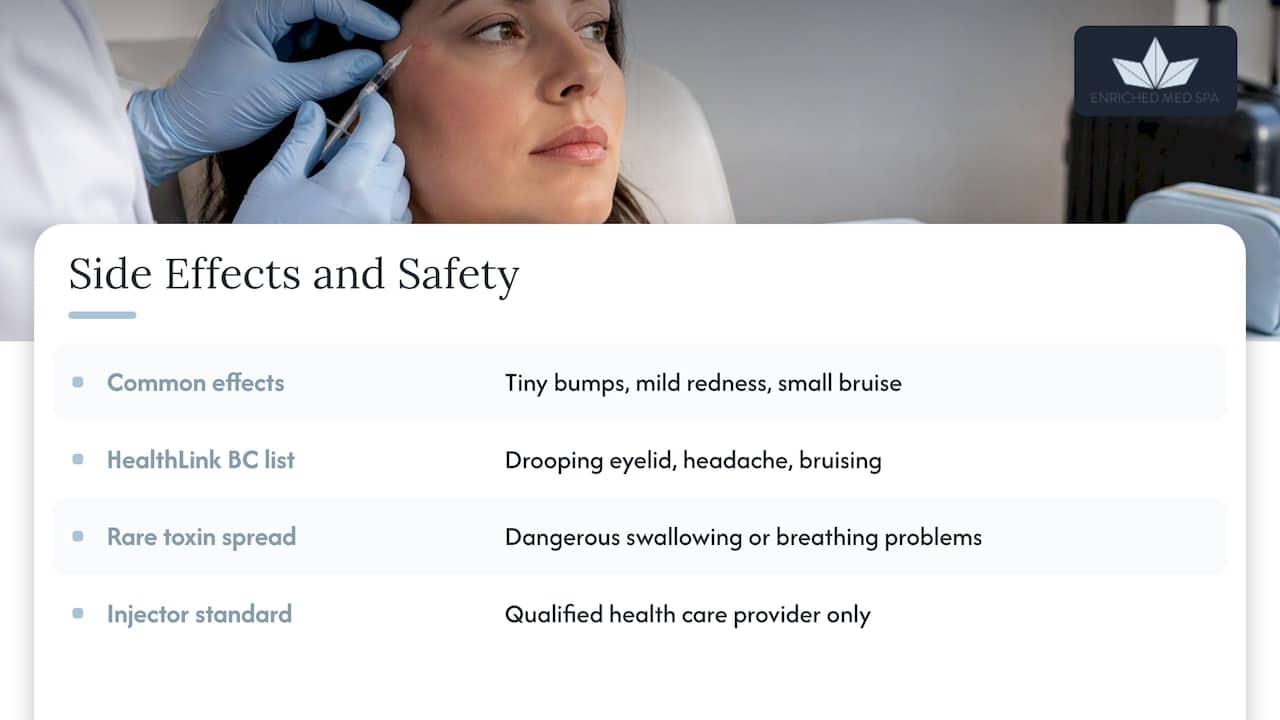
Most people have nothing more than tiny bumps at the injection sites, mild redness or a small bruise. HealthLink BC lists the common side effects as drooping eyelid, headache and bruising, and notes that rare spread of the toxin can cause dangerous swallowing or breathing problems.
Health Canada adds that incorrect injections can cause droopy eyelids or swallowing difficulties, and that Botox Cosmetic should only be given by a qualified health care provider. That is why the choice of injector matters more than any travel rule. If you are comparing clinics, our pages on the qualifications of Botox injectors and questions to ask during a consultation will help.
When to call your clinic
Contact your injector, or your doctor, if you notice any of these, before or after your flight:
- A drooping eyelid or brow that is new or worsening
- Swelling that is spreading instead of settling
- A bruise that is growing, very painful or hot
- A headache that does not ease with your usual remedies
- Anything that makes you unsure whether it is safe to fly
Medical News Today advises contacting your doctor if you have side effects and are unsure about flying, and seeking emergency help for serious or life-threatening effects. Trouble swallowing or breathing needs emergency care immediately, wherever you are. Call 911 in Canada, or the local emergency number abroad.
For longer-term questions about repeat treatments, see our article on whether Botox is safe for long-term use.
A practical aftercare checklist for travel days
Whether you fly or not, the first day follows the same pattern. This is the version we would give you at a consultation, though your injector’s instructions override any general list:
- Stay upright for the first several hours. Sitting is fine. Lying flat or bending forward for long periods is what to avoid.
- Do not rub, press or massage the treated areas. That includes tight hats, goggles and neck pillows pushed against the forehead.
- Skip strenuous exercise on the day. Airport sprints count.
- Go easy on alcohol. It may increase bruising.
- Wear sunscreen. Travel means more sun, and treated skin should be protected.
- Keep your skincare simple. Gentle cleanser, moisturizer and broad-spectrum SPF. Hold off on strong exfoliants or new products until your skin has settled.
- Photograph your face at home on day three or four. It gives you a fair comparison when the effect starts to show.
Fillers are a different conversation
Botox relaxes muscles. Dermal fillers add volume, and they can swell and bruise differently. Many clinics advise a longer buffer before flying after filler, especially around the lips and under-eyes, and your injector will tell you what applies to your product and area. If you are combining both treatments before a trip, mention it when booking so we can sequence them sensibly. Our comparison of fillers and Botox explains how the two differ.
Our perspective
Travel questions come up at nearly every Botox consultation, and the honest answer is rarely “never” or “always”. Flying does not undo good injections. What it can do is make a small bruise more noticeable, which matters if you are walking into a wedding or a photoshoot.
Our approach is to plan backwards from your date. We ask when you are leaving, what you are doing when you arrive, and how much downtime you are comfortable with. Then we choose the treatment area, the dose and the timing to suit. For a first-time patient we generally prefer a conservative plan and a longer buffer, since you learn how your face responds without a deadline hanging over you.
Our treatments are performed by experienced, nurse-level injectors, and we walk through aftercare in detail before you leave. We would rather spend ten extra minutes making sure you know what normal looks like than have you worry in an airport lounge. If anything seems off, you can contact us and we will help you decide what to do next.
Felix
Planning Botox before a trip with us
If you live in Woodbridge, Vaughan or East Gwillimbury and have a trip coming up, the easiest step is to tell us your travel date when you book your Botox, Nuceiva or Xeomin consultation. We will map out timing, treatment areas and aftercare together, so you head to the airport knowing what to expect. If you are also thinking about fillers or skin treatments before a big date, we can build a sequence that suits your calendar.
FAQ
Can you fly right after Botox?
It is generally considered safe, and cabin pressure is not known to affect the product. Even so, many injectors suggest waiting 24 to 48 hours so any bruising or swelling can settle before you spend hours in dry, recirculated air. Ask your injector, since the right advice depends on your treatment area and how your skin reacts.
What is the four-hour rule after Botox?
It is a common aftercare guideline, not an official regulation. For about four hours after injections, you stay upright, avoid strenuous exercise and do not rub or press the treated areas. Clinics vary on the exact timing, so follow what your injector tells you.
Can Botox migrate on a plane?
There is no evidence that cabin pressure causes Botox to migrate. Unwanted spread is more often related to technique, dose or pressure on the area soon after treatment. If you notice a drooping eyelid or brow after treatment, contact your injector.
Can I get Botox before a holiday or wedding?
Yes, and many clients do. Aim for about two weeks before you travel, because effects take three to four days to appear and up to a week to fully develop. That window also leaves time for bruising to fade and for a touch-up if needed.
Does flying affect how long Botox lasts?
No. Botox results last around three to four months on average, and a flight does not shorten that. Your metabolism, dose, treatment area and how often you have treatment are bigger factors.
Sources
- Can you fly after Botox? Tips for safety and myths explained, Medical News Today
- Botulinum Toxin (Botox), HealthLink BC
- Cosmetic injections, Health Canada