Fractional CO2 laser treatment can meaningfully improve many atrophic acne scars, with systematic reviews reporting a 30% to 70% improvement in scar appearance. It tends to work best on boxcar and rolling scars, while ice pick scars often need additional techniques. The trade-off is real: expect one to two weeks of downtime and a genuine risk of temporary pigment changes.
TL;DR:
- Most plans involve two to four sessions spaced four to six weeks apart, while collagen remodeling continues for three to twelve months.
- Ice pick scars often need TCA CROSS or subcision because they extend deeper than the laser’s usual treatment zone; boxcar and rolling scars respond better.
- People with deeper skin tones or a history of pigmentation need conservative settings, sometimes a test patch, and an experienced, licensed operator.
- A meta analysis found greater scar improvement and satisfaction with CO2 than with microneedling radiofrequency, but also more pain and pigment changes.
- Postpone treatment during active acne, pregnancy, or recent isotretinoin use, and choose a licensed, trained operator to reduce preventable complications.
Table of Contents
- How CO2 (fractional ablative) lasers work for acne scars
- What the evidence shows: clinical outcomes and key studies
- Which scar types and skin tones see the best results
- Treatment process: consultation, what happens in a session, and typical session plan
- Recovery, downtime, and realistic timeline for visible improvement
- Risks, how they’re managed, and who should be cautious
- Combination protocols and adjuncts that change outcomes or downtime
- Realistic results: how many sessions most people need and what maintenance looks like
- Enriched Med Spa’s approach to CO2 resurfacing
- Cost considerations for CO2 laser acne scar treatment
- A clinician’s view on when CO2 makes sense
- How we can help: next steps if you’re considering CO2 resurfacing
- FAQ
- Sources
How CO2 (fractional ablative) lasers work for acne scars
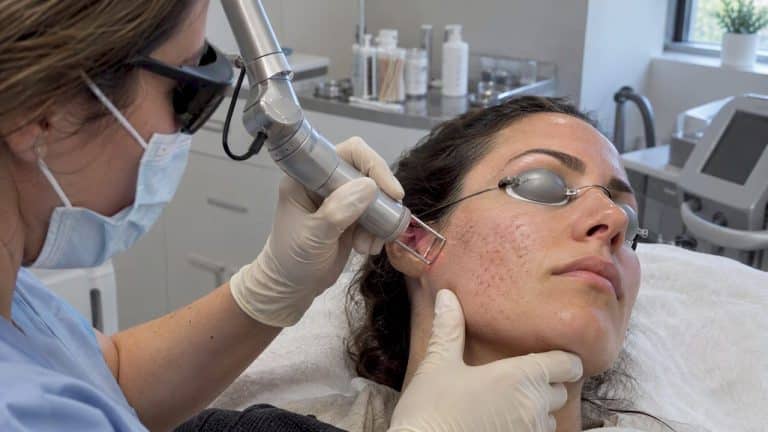
A fractional CO2 laser uses a 10,600 nanometre wavelength to create thousands of tiny columns of controlled thermal injury across the skin, a process called fractional ablative photothermolysis. Each microthermal zone ablates the epidermis and part of the dermis, while the surrounding tissue stays intact, which is what allows the skin to heal relatively quickly despite the depth of injury.
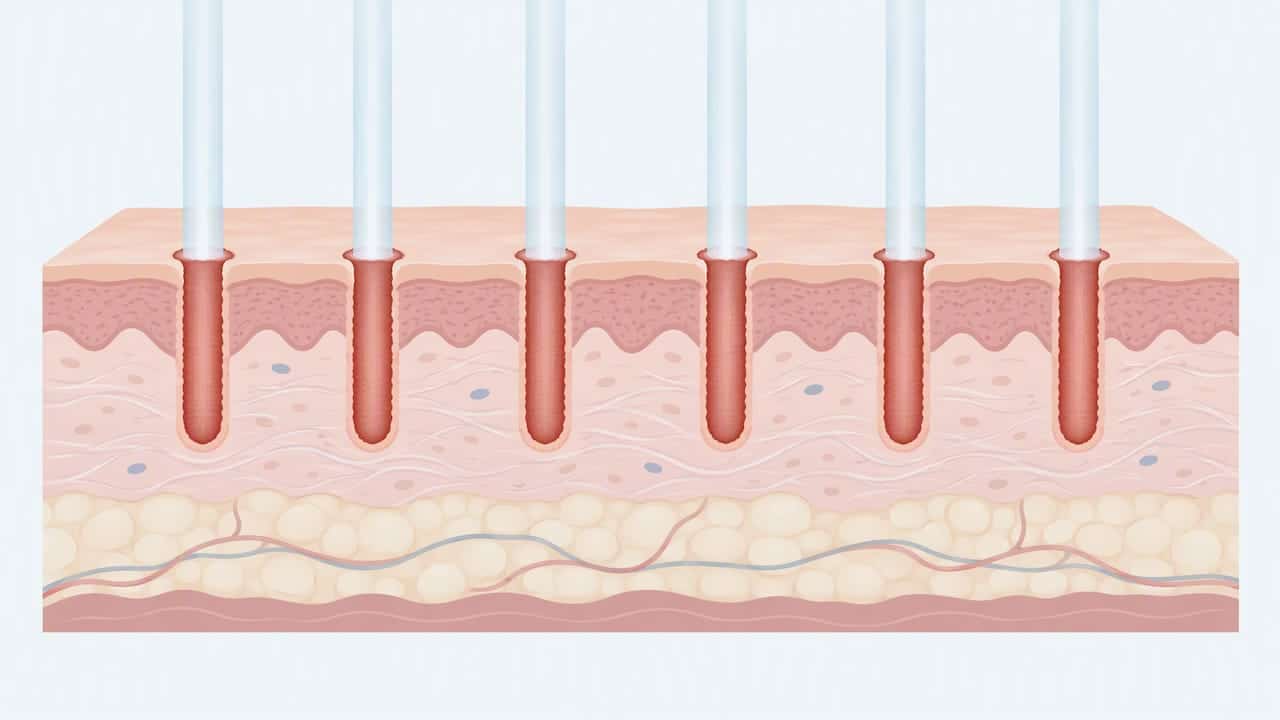
That controlled injury triggers a wound-healing response. Your body replaces the ablated columns with new collagen and elastin, which thickens the dermis and gradually smooths the stepped or sloped edges that make a scar visible. This remodelling is why results build over months rather than appearing overnight.
Not all resurfacing lasers work the same way, and the differences matter for your decision:
- Fully ablative CO2: treats the entire skin surface at once, offering strong results but with the longest downtime and highest risk profile.
- Fractional ablative CO2: treats only a percentage of the skin per pass, balancing meaningful remodelling with a shorter, more manageable recovery.
- Non-ablative lasers: heat the dermis without removing the epidermis, which means less downtime but also more modest scar improvement per session.
Generally, the more power and depth a device delivers, the more collagen remodelling you can expect, and the longer your skin needs to recover. This is the central trade-off we walk through with every client considering laser resurfacing.
What the evidence shows: clinical outcomes and key studies
The clinical literature on fractional CO2 for acne scars is fairly consistent on direction, even when exact numbers vary between studies.
30 to 70% is the improvement range most systematic reviews report for scar appearance after a course of fractional CO2 sessions, which reflects differences in scar severity, skin type, and the specific laser settings used.
A 2026 meta-analysis comparing fractional CO2 laser to microneedling radiofrequency found CO2 came out ahead on both scar improvement and patient satisfaction. The same analysis reported CO2 came with more pain and a substantially higher risk of post-inflammatory hyperpigmentation than microneedling radiofrequency. That pattern holds across much of the research: CO2 tends to deliver stronger results per session, but the recovery and pigment risk are the price of that power.
A few things to keep in mind when reading these numbers:
- Study parameters vary widely: wavelength is fixed at 10,600 nanometres, but energy, pulse duration, and density differ between trials, which affects how directly results transfer from one study to another.
- Many trials follow patients for only a few months, so long-term collagen remodelling beyond a year is less documented than the early improvement.
- Patient satisfaction tracks closely with scar improvement in most trials, though tolerance for downtime and pigment risk varies by individual.
None of this makes CO2 a guaranteed fix. It makes it one of the better-supported options for atrophic scarring, with outcomes that depend heavily on scar type, skin tone, and how closely post-treatment care is followed.
Which scar types and skin tones see the best results
Scar shape matters more than most people expect when predicting how well CO2 resurfacing will work.
- Boxcar scars (sharp, defined edges) and rolling scars (shallow, wavy depressions) generally respond well to fractional CO2 because the laser’s dermal remodelling smooths the surrounding tissue effectively.
- Ice pick scars (narrow, deep, tunnel-like) are harder for any resurfacing laser to fully correct on their own, since the defect runs deeper than the laser’s typical treatment zone; these often need TCA CROSS or subcision added to the plan.
- Older, deeper scarring may require more sessions, or a combination of techniques, rather than relying on CO2 alone.
- Higher Fitzpatrick skin types (naturally deeper skin tones) carry a higher risk of post-inflammatory hyperpigmentation, so settings need to be adjusted conservatively, sometimes with a test patch first.
The Canadian Dermatology Association notes that laser resurfacing can help established acne scars, but that skin which tans easily needs careful handling and an experienced operator. If your scars are mostly ice pick, or your skin tends to pigment easily after minor injuries, it is often worth discussing a staged or combined approach before committing to CO2 as a first step. We cover scar morphology in more detail in our guide to acne scar types and treatments, which is a useful read before any consultation.
Treatment process: consultation, what happens in a session, and typical session plan
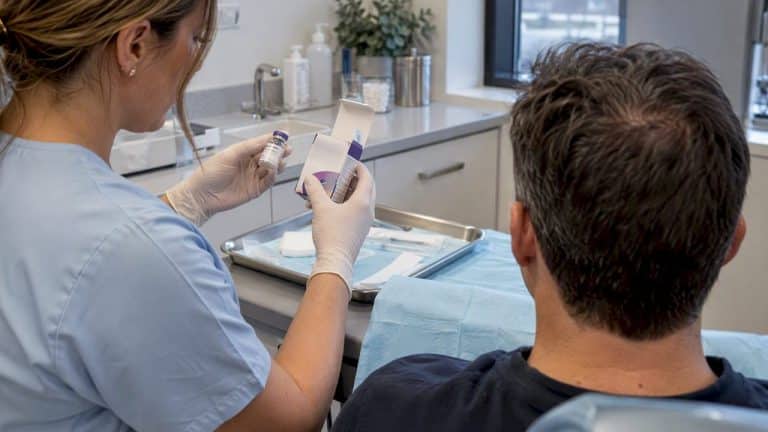
Before any laser touches your skin, a thorough assessment comes first.
- Medical history review: we ask about recent isotretinoin use, current medications, pregnancy status, history of cold sores, and any tendency toward keloid scarring or hyperpigmentation.
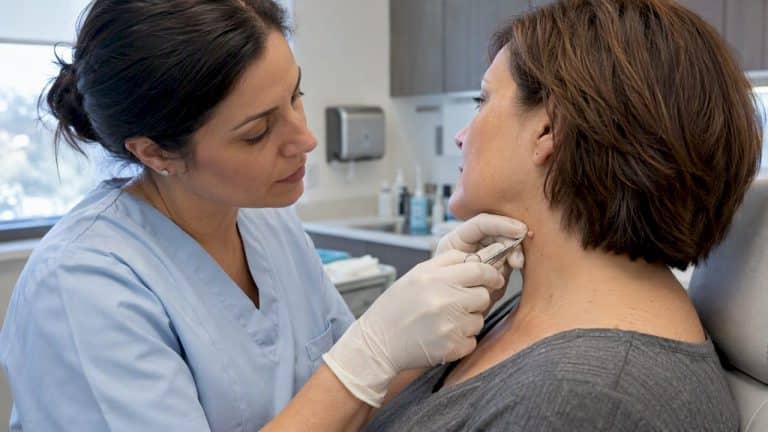
- Skin examination: a clinician classifies your scar types, assesses your Fitzpatrick skin type, and checks for active acne, which needs to settle before resurfacing.
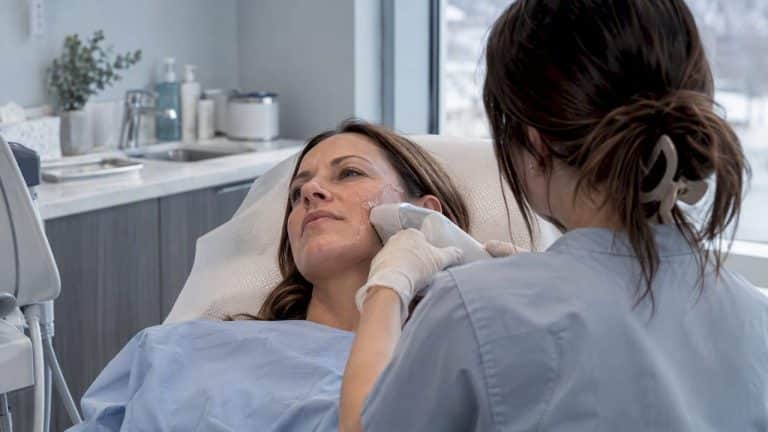
- Topical anaesthetic application: a numbing cream is applied and given time to take effect, since fractional CO2 is uncomfortable without it.
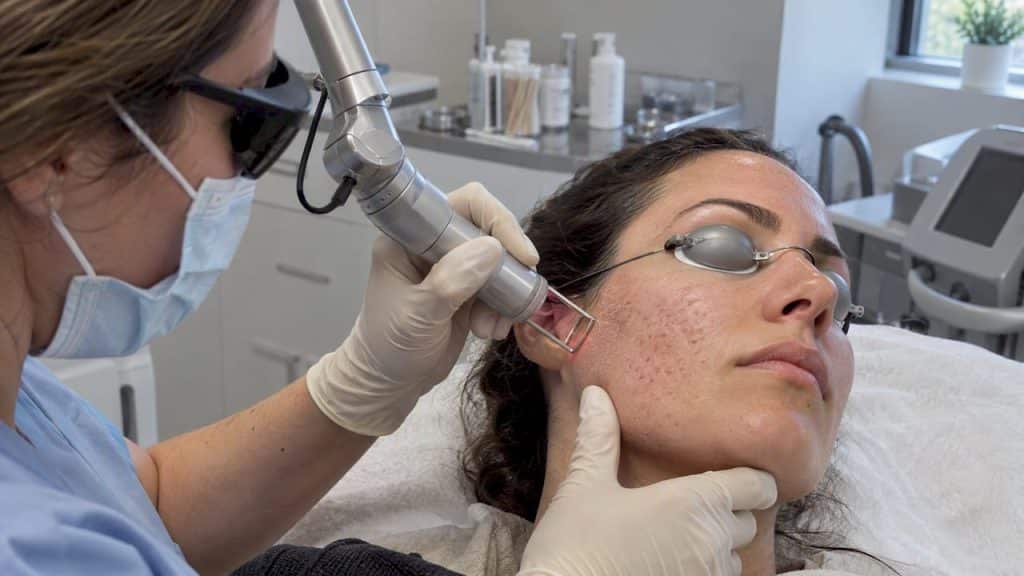
- Laser passes: the device is moved across the treatment area at settings chosen for your scar depth and skin tone, often in one to a few passes depending on the plan.
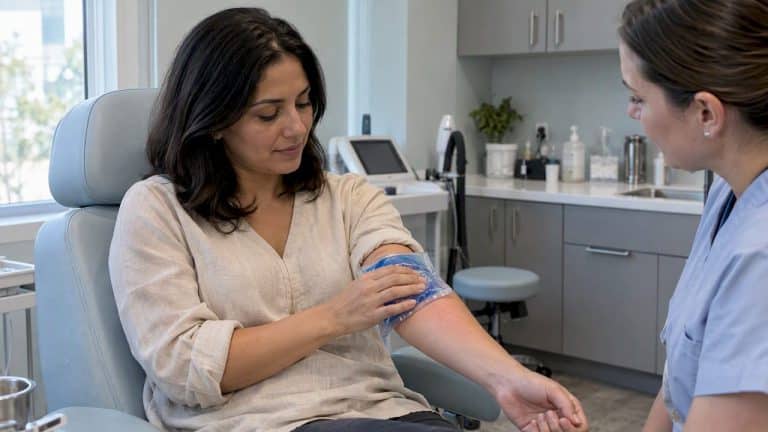
- Immediate cooling and post-care: cool compresses and a soothing ointment are applied right after treatment to calm the skin.
Most treatment plans use two to four sessions spaced four to six weeks apart, which gives the skin time to fully heal between visits and allows the clinician to adjust settings based on how you responded. Immediately after a session, expect visible redness, warmth, and some pinpoint bleeding, with crusting developing over the following day or two.
Pro Tip: Book your consultation when your skin is calm and acne-free; treating over active breakouts increases irritation and complicates healing.
Recovery, downtime, and realistic timeline for visible improvement
Healing happens in stages, and it helps to know what is normal at each point.
- Days 1 to 7: crusting forms and begins to shed as new skin re-epithelializes underneath.
- Up to 1 to 2 weeks: redness and some swelling can persist, which lines up with Health Canada’s guidance that recovery from cosmetic laser treatments may take up to two weeks.
- Weeks 2 to 4: early smoothing becomes noticeable as swelling resolves and the skin settles.
- 3 to 12 months: the bulk of collagen remodelling happens here, with scars continuing to improve gradually.
Aftercare matters as much as the procedure itself. Keeping the area protected with the dressing your clinician recommends, applying broad-spectrum SPF diligently, and following a gentle topical regimen all support healing and reduce pigment risk. Most people return to work within about a week, once crusting has mostly resolved, though makeup is usually held off until the skin barrier has fully closed.
Risks, how they’re managed, and who should be cautious
Fractional CO2 is an effective tool, and like any resurfacing procedure, it carries risks that are worth understanding clearly before you book.
Health Canada outlines the main risks associated with cosmetic laser treatments:
- Post-inflammatory hyperpigmentation (PIH): the most common concern, especially in medium to deep skin tones.
- Prolonged redness: can last beyond the typical one to two week window in some people.
- Infection: rare when aftercare instructions are followed, but possible with any skin-barrier disruption.
- Blistering or burns: linked to incorrect settings or inexperienced operators.
- Rare scarring: uncommon, but a reason device calibration and operator training matter.
Up to two weeks is the recovery window Health Canada cites for cosmetic laser procedures, and the agency is explicit that device safety and operator qualification are central to reducing these risks.
A few practical steps lower your risk meaningfully: choosing a licensed clinical setting with trained operators, avoiding sun exposure before and after treatment, and flagging any history of pigment changes so settings can be adjusted. Treatment should be postponed if you have an active acne flare, have used isotretinoin recently, or are pregnant, since all three change how your skin responds to thermal injury.
Combination protocols and adjuncts that change outcomes or downtime
Several add-on treatments are increasingly used alongside fractional CO2 to improve results or shorten recovery.
- PRP (platelet-rich plasma): systematic review evidence shows that combining AFCL with PRP often improves scar texture and patient satisfaction compared with CO2 alone, and may reduce downtime in some studies.
- Hyaluronic acid dressings: a meta-analysis on fractional CO2 plus HA dressing found reduced crusting time and lower rates of hyperpigmentation compared with CO2 alone.
- Subcision or TCA CROSS: useful additions when ice pick scars or tethered scar tissue are part of the picture, since these address depth that resurfacing alone cannot fully correct.
It’s worth knowing that PRP protocols are not standardized. Preparation methods, delivery routes, and timing vary across studies, so results depend partly on the specific protocol your clinician uses. We offer microneedling with PRP as part of a broader scar management conversation, since PRP’s remodelling benefits apply across several delivery methods.
Realistic results: how many sessions most people need and what maintenance looks like
Translating study numbers into what you might actually see helps set the right expectations. A 30% to 70% improvement typically looks like softer scar edges, less visible shadowing under normal lighting, and smoother skin texture overall rather than a complete disappearance of scarring.
Most clinical protocols use around three sessions spaced about a month apart, though some studies use as few as two or as many as four to six, depending on scar severity and how the skin responds between visits.
- Boxcar and rolling scars often show their clearest improvement within the first two to three sessions.
- Ice pick scars frequently need a multimodal approach, combining CO2 with subcision or TCA CROSS rather than relying on laser sessions alone.
- Occasional touch-up sessions, sometimes a year or more after the initial course, help maintain results as skin continues to age.
Enriched Med Spa’s approach to CO2 resurfacing
We treat CO2 resurfacing as one part of a broader scar management conversation rather than a one-size-fits-all fix. Every consultation starts with mapping your scar types and skin tone, since those two factors drive which settings and session plan make sense. Depending on what we find, we may layer in microneedling, PRP, or a chemical peel alongside laser sessions, with follow-up visits to track healing and adjust the plan as your skin responds.
Cost considerations for CO2 laser acne scar treatment
Pricing for fractional CO2 resurfacing varies by clinic, the number of sessions your scars require, and the area being treated, so cost is generally quoted after an in-person assessment rather than a flat rate. Expect the total cost of a full course to reflect several sessions rather than a single visit, since most treatment plans involve two to four sessions spaced weeks apart. Add-ons like PRP or hyaluronic acid dressings typically carry their own separate cost, which should be outlined clearly before committing to a plan. Numbing cream, aftercare products, and follow-up visits are sometimes included in overall packages, but what is covered varies between providers. Because pricing depends so heavily on your specific scarring and the number of sessions recommended, the most reliable way to get an accurate number is a consultation where your skin is actually assessed rather than relying on a general price range found online.
A clinician’s view on when CO2 makes sense
CO2 resurfacing earns its place for deeper atrophic scars when a patient can accept real downtime. For mixed scarring or darker skin tones, we lean toward staged or combined approaches rather than one aggressive session. The right call always comes from a conversation about your goals, your skin, and your tolerance for recovery time.
— Felix
How we can help: next steps if you’re considering CO2 resurfacing
If you’re weighing whether fractional CO2 fits your scars, a consultation gives you something no article can: an assessment of your actual skin, scar type, and tone, with a plan built around what you can realistically expect. We walk through your history, your scarring pattern, and whether a combined approach, such as microneedling with PRP, might serve you better than laser alone.
Our broader service menu covers everything from peels to radiofrequency skin tightening, so if CO2 turns out not to be the right first step for you, we can talk through gentler options in the same visit. Book a consultation with us to get a personalized read on your scars and a clear plan for what comes next.
This article is general information, not a substitute for advice from a qualified doctor. Consult a qualified healthcare professional about your own circumstances before acting on anything here.
FAQ
Does CO2 laser actually work for acne scars?
Yes, for many atrophic scars. Systematic reviews report a 30% to 70% improvement in scar appearance after a course of fractional CO2 treatments, though results depend on scar type and skin tone.
How many sessions of CO2 laser for deep acne scars?
Most treatment plans typically involve multiple sessions spaced about four to six weeks apart, with three sessions being a common approach in clinical studies. Deeper or ice pick scars sometimes need additional sessions or combined techniques like subcision.
Can a CO2 laser go wrong?
Like any cosmetic laser treatment, it carries risks. Health Canada notes that possible complications include prolonged redness, blistering, infection, and temporary pigment changes, with recovery taking up to two weeks, which is why treatment by a trained, licensed operator matters.
Which is better for acne scars, PRP or CO2 laser?
They are not direct competitors; PRP is typically used alongside CO2 rather than instead of it. Systematic review evidence shows that combining AFCL with PRP often improves scar texture and patient satisfaction, and may shorten downtime, compared with CO2 alone.
Sources
- The Use of a Fractional Laser in Acne Scar Treatment—A Systematic Review
- Meta-analysis comparing fractional CO2 laser to microneedling radiofrequency (2026)
- Cosmetic laser treatments — Health Canada
- Platelet-rich plasma and ablative fractional carbon dioxide laser therapy for chronic scar management: a systematic review