Professional removal is quick and safe, and clinicians typically use one of three approaches: excision (snipping), cryotherapy (freezing) or electrocautery (burning). Most appointments take only minutes, use a local anaesthetic, and come with straightforward aftercare. We always recommend having a trained professional assess the tag first, since proper identification matters just as much as the removal method itself.
TL;DR:
- Excision suits narrow stalks and larger raised tags, while cryotherapy fits smaller, flatter tags but may need repeating; electrocautery limits bleeding.
- A clinical comparison of benign lesions found higher satisfaction with electrosurgery than cryotherapy, although both methods worked and most side effects were minor.
- Seek a specialist opinion for a tag that grows quickly, changes shape or color, bleeds, itches persistently, or feels tender without an obvious cause.
- Most small wounds heal within one to two weeks; clean the site twice daily with gentle soap and water, avoiding alcohol and hydrogen peroxide.
- Have a trained clinician identify the lesion before removal; home cutting, tying, or unregulated pastes can cause bleeding, infection, and scarring.
Table of Contents
- Professional removal methods and when each one is used
- What each procedure involves and what to expect from the outcome
- Who should remove your skin tags and when to see a specialist
- What to expect during your appointment
- Aftercare, healing timelines, and what your skin needs
- How we think about assessment and treatment
- Cost overview of professional skin tag removal methods
- Results and the chance of new tags forming later
- Why the home-removal conversation deserves more honesty
- How we can help with skin tag removal
- FAQ
- Sources
Professional removal methods and when each one is used
Skin tags are harmless, but the right removal method depends on their size, location, and how they are attached to the skin. A clinician will look at all of this before deciding how to proceed, which is part of why we discourage trying to handle it at home.
The three main clinician methods each work a little differently:
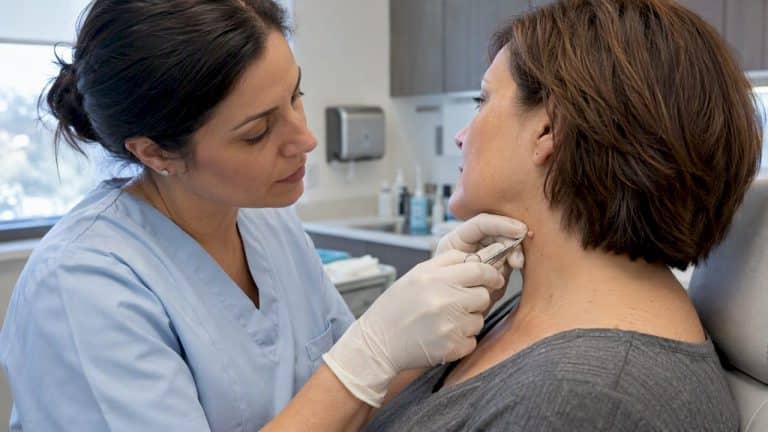
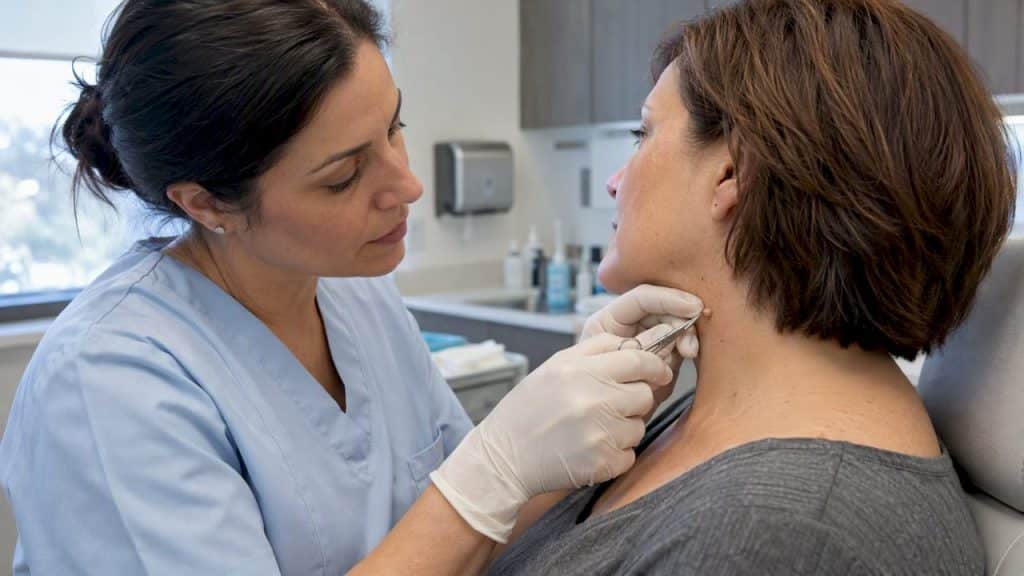
- Excision (snipping): a small pair of surgical scissors or a scalpel removes the tag, which works well for tags with a narrow stalk.
- Cryotherapy: liquid nitrogen freezes the tissue, causing it to die and fall off over the following days, a good fit for smaller, flatter tags.
- Electrocautery: a heated instrument burns through the base of the tag while sealing the tissue as it goes, which helps control bleeding at the same time.
Location often guides the choice. A tag on the eyelid or near the eye usually calls for a gentler, more precise technique, while one on the neck or underarm, where friction is common, may do well with any of the three methods. Larger or more raised tags often respond better to excision or electrocautery, since freezing can take longer to fully resolve bigger lesions.
Each approach has trade-offs. Excision gives an immediate result but carries a small risk of a tiny scar. Cryotherapy is fast to apply but can sometimes need a second session. Electrocautery controls bleeding well and suits small to medium tags, though it is less commonly used on very thin-stalked ones where a simple snip is more efficient. Canadian guidance on removing skin tags confirms these three methods, cutting, freezing, and burning, as the standard professional options.
What each procedure involves and what to expect from the outcome
Here is roughly what happens with each method, from the moment you sit down for the procedure to how your skin responds afterward:
- Excision: the clinician numbs the area with a local anaesthetic, then snips the tag off with sterile scissors or a scalpel. Bleeding is usually minor and stops quickly with light pressure.
- Cryotherapy: liquid nitrogen is applied directly to the tag for a few seconds, producing a cold, sometimes stinging sensation. A small blister can form within a day or two, and some tags need a repeat application to fully resolve.
- Electrocautery: a heated wire or electrosurgical device burns through the base of the tag. Because heat cauterizes the tissue as it cuts, bleeding is minimal, which makes this method popular for tags in areas prone to friction.
The choice between these three often comes down to practical factors beyond the tag itself. Lesion size, location, your skin tone, and your personal risk of scarring all play into the decision. Darker skin tones, for example, can be more prone to pigment changes after aggressive freezing, so a clinician may lean toward excision or electrocautery instead.
One notable finding: a comparative clinical analysis of cryotherapy and electrosurgery for benign skin lesions, including skin tags, found that electrosurgery achieved higher patient and physician satisfaction than cryotherapy in that study sample. Both methods were effective overall, and most side effects were minor, but the satisfaction gap is worth knowing if you are weighing your options with your provider.
Who should remove your skin tags and when to see a specialist
Skin tags can be removed by a dermatologist, a family physician, or a trained clinic provider such as a nurse injector or aesthetic clinician, depending on where you live and what your clinic offers. Dermatologists bring additional training in distinguishing benign tags from other skin lesions that may need a closer look, which matters if something seems unusual, according to the Canadian Dermatology Association.
Watch for signs that call for a specialist opinion rather than routine removal:
- A lesion that has grown quickly or changed shape in recent weeks.
- A colour that looks uneven, dark, or different from your other skin tags.
- A spot that bleeds, itches persistently, or feels tender without an obvious cause.
Pro Tip: Ask your provider directly about their training and how often they perform skin tag removal, a confident, specific answer is a good sign you are in experienced hands.
What to expect during your appointment
A professional removal appointment is brief and follows a predictable pattern:
- The clinician examines the tag and confirms it is a good candidate for in-office removal.
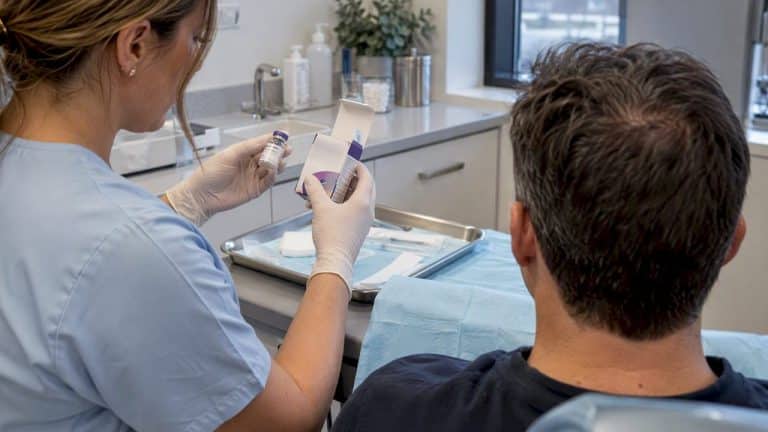
- You review and sign a consent form once the method and any risks are explained.
- A local anaesthetic numbs the area, so the procedure itself is largely painless.
- The removal takes just a few minutes, whether by snipping, freezing, or cauterizing.
- The site is cleaned and bandaged, and you receive aftercare instructions before you leave.
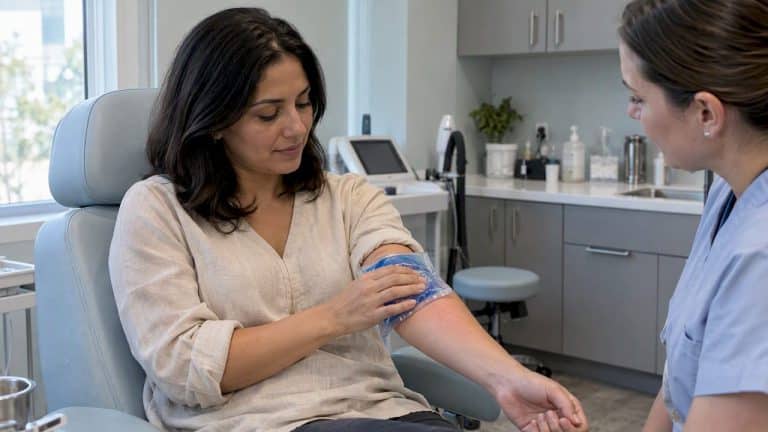
Once the anaesthetic wears off, mild tenderness is normal. You may notice a small scab, a blister, or light crusting over the following days depending on the method used. Most people resume normal activities the same day. Call your clinic if you notice spreading redness, increasing pain, pus, or a fever, since these can be early signs of infection that need prompt attention.
Aftercare, healing timelines, and what your skin needs
Aftercare is simple but matters for how well the area heals. Clean the site twice daily with gentle soap and water, and avoid hydrogen peroxide or alcohol, which can slow healing rather than help it, according to HealthLink BC. If your clinician recommends it, a thin layer of petroleum jelly under a non-stick bandage can keep the area protected while it closes.
Most small wounds from skin tag removal heal within one to two weeks. A little redness or a faint mark is common early on, and any pigment change usually fades over the following weeks to months. MyHealth Alberta notes that clinicians manage bleeding during the procedure itself and recommend simple wound care afterward.
- Watch for increasing pain, swelling, or warmth around the site.
- Note any discharge or a foul odour, which can signal infection.
- Follow up with your clinic if healing seems slower than expected.
How we think about assessment and treatment
Many clients come to us after noticing a tag catching on jewellery or clothing, or simply wanting it gone for comfort or appearance. Our approach starts with a short consultation where we look at the tag’s size, location, and your skin before recommending a method. We are upfront that removal addresses the tags you have now. New ones can form later, and that is a normal part of skin aging rather than a failed treatment.
Cost overview of professional skin tag removal methods
Pricing for professional skin tag removal varies by clinic, the number of tags treated, their size, and the method used. Many clinics price per tag or offer a flat fee for small clusters, and larger or more numerous tags generally cost more than a single small one. For a detailed breakdown of typical price ranges and what drives them, our guide on skin tag removal costs walks through the main factors.
Because pricing structures differ so much between clinics and regions, the most reliable way to know what your own removal will cost is a consultation, where the provider can examine your specific tags and quote accordingly. This is also the point where you can ask about the method being recommended and why, so there are no surprises on either the bill or the outcome.
Results and the chance of new tags forming later
Professional removal typically resolves the treated tag completely, whether it is snipped, frozen, or cauterized away. Once the area heals, most people see a smooth patch of skin, possibly with a faint mark depending on the method and your skin’s healing tendencies.
What professional removal does not do is prevent new skin tags from forming elsewhere. According to HealthLink BC, developing new tags over time is common, even for people who have had others removed. This is simply part of how skin changes with age, friction, and other individual factors, rather than a sign that the original treatment failed. If new tags appear and bother you, the same consultation and removal process applies again.
Why the home-removal conversation deserves more honesty
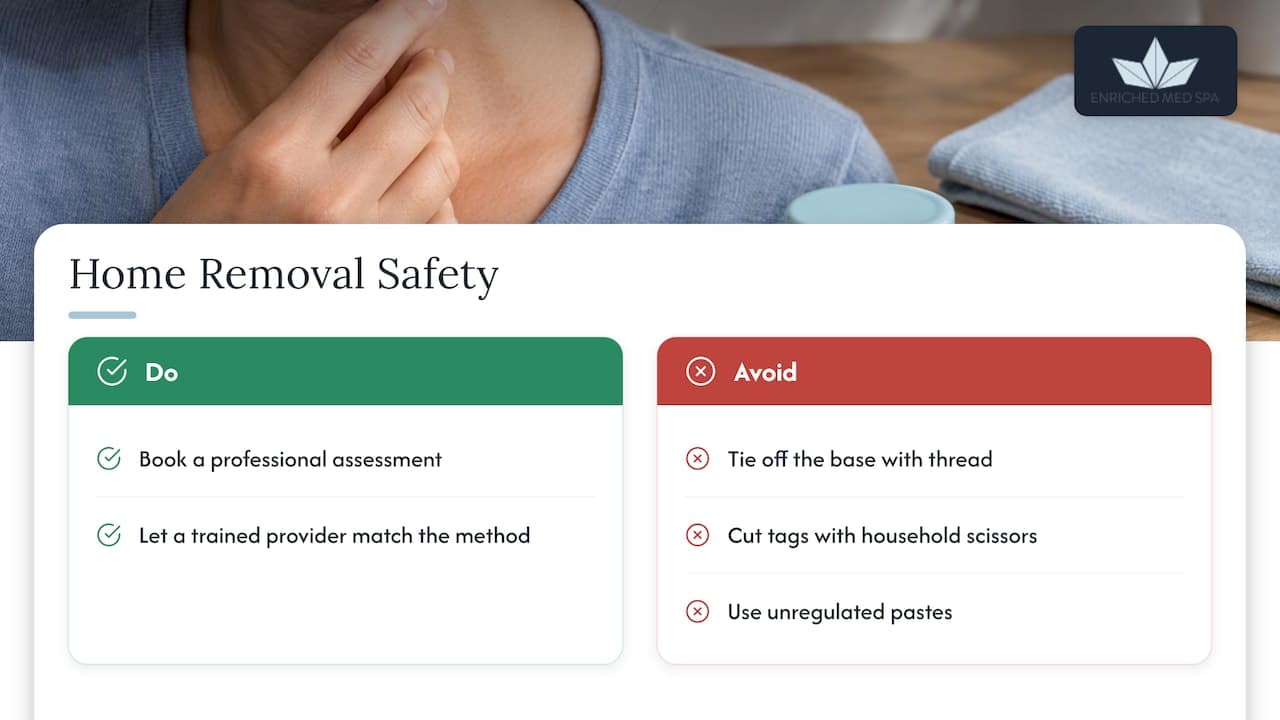
The most overlooked part of this topic is not which clinician method works best. It is how often people try to handle skin tags themselves first, with over-the-counter freezing kits, tying off the base with thread, or simply cutting them with household scissors. Canadian health guidance is clear that cutting tags at home or using unregulated pastes carries real risks of bleeding, infection, and scarring, and that identification by a professional matters before anything is removed at all.
Conventional advice tends to focus on comparing the three clinician methods against each other, as though the real decision is excision versus cryotherapy versus electrocautery. In practice, the bigger decision is simply booking a professional assessment at all, rather than reaching for a home remedy because the tag seems minor. A trained provider can rule out anything that needs closer attention and match the method to your skin and the tag itself, which a kit from a pharmacy shelf cannot do. If you take one thing from this, let it be that the assessment matters more than the specific technique.
— Felix
How we can help with skin tag removal
We offer clinician-performed skin tag removal, starting with an assessment to determine which method suits your tags and skin. A booking includes a consultation, informed consent, the procedure itself, and clear aftercare instructions before you leave. If you are ready to have a tag looked at and removed properly, our team can walk you through the next step.
This article is general information, not a substitute for advice from a qualified doctor. Consult a qualified healthcare professional about your own circumstances before acting on anything here.
FAQ
What is the best skin tag remover that actually works?
The most reliable approach is professional removal by a clinician using excision, cryotherapy, or electrocautery, since these methods allow proper identification of the lesion first. Over-the-counter removal products are generally less predictable and are not recommended as a first option by Canadian health guidance.
What dries up skin tags fast?
In a clinical setting, cryotherapy causes the tag to dry out and fall off within several days by freezing the tissue with liquid nitrogen. Home remedies claiming similar results are not recommended, since they lack the precision and safety oversight of a professional application, according to the Cleveland Clinic.
How big is too big for a skin tag?
There is no fixed size cutoff, but larger or rapidly growing tags are better suited to excision or electrocautery than to freezing, and any tag that changes quickly in size or shape warrants a professional look. A dermatologist or your clinician can assess whether size, shape, or appearance suggests something beyond a typical skin tag.
What kind of doctor should remove a skin tag?
Skin tags can be removed by a dermatologist, a family physician, or a trained clinic provider such as a nurse injector, depending on availability and the tag’s complexity. Dermatologists bring extra training for distinguishing benign tags from other skin lesions, per the Canadian Dermatology Association.
Sources
- Removing moles and skin tags | HealthLink BC
- Comparative analysis of cryotherapy and electrosurgery for benign skin lesions (includes skin tags) | PMC
- How to remove skin tags | Cleveland Clinic