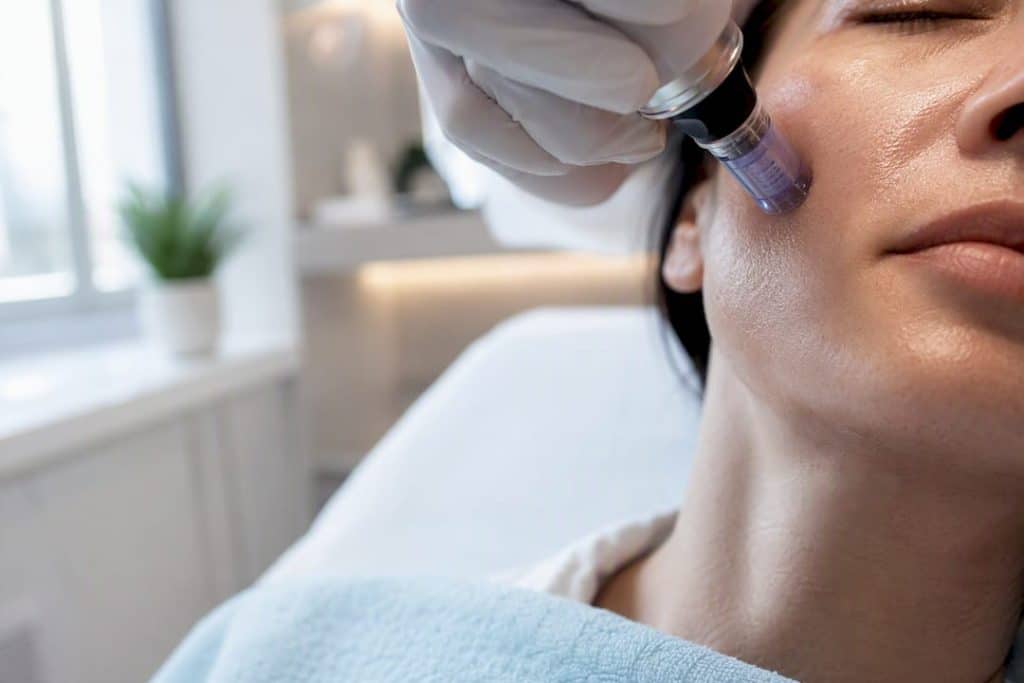
Microneedling can meaningfully improve melasma when it’s used alongside clinician-prescribed topical treatment, not in place of it. Systematic reviews show the combination outperforms topicals alone, with visible change often starting around 4 to 8 weeks and peak results between 12 and 24 weeks. It is not a cure, and results depend heavily on supervised technique, conservative needle depth, and strict sun protection to prevent relapse.
TL;DR:
- Microneedling’s effectiveness for melasma relies heavily on combining it with clinician-prescribed topicals; it is not effective as a standalone treatment.
- Visible improvements usually start around 4 to 8 weeks, with peak results between 12 and 24 weeks, emphasizing gradual progress over immediate change.
- Risks include post-inflammatory hyperpigmentation, especially if treatment is too aggressive or skin is not properly cared for, requiring conservative needle depth and careful monitoring.
- Study protocols vary widely in needle length, device type, and session frequency, which makes standardized treatment guidelines currently unavailable.
- Consistent sun protection and proper maintenance with topical therapies are essential to sustain results and prevent melasma relapse after microneedling.
Table of Contents
- Does microneedling actually help melasma?
- How does microneedling actually affect melasma pigmentation?
- What treatment protocols do studies actually use?
- Is microneedling safe for melasma, and what are the risks?
- How do you protect results and prevent melasma from coming back?
- Who is a good candidate for microneedling and melasma treatment?
- What clinicians actually do differently once they know the research
- Where the melasma conversation usually goes wrong
- Book a microneedling consultation for melasma care
- Sources
- FAQ
Does microneedling actually help melasma?
The strongest evidence says yes, but only as part of a broader plan, not as a solo fix. A 2021 systematic review and meta-analysis published in the Journal of the American Academy of Dermatology pooled 12 prospective comparative studies involving 459 patients and found that microneedling combined with topical therapy improved melasma severity beyond topical therapy alone, with the strongest benefit showing up around 12 weeks and continued gains through 12 to 16 weeks.
That timing matters. Melasma doesn’t respond overnight to anything, and patients who expect a dramatic change after one or two sessions are usually disappointed. What the data actually supports is a gradual fading of pigment intensity as microneedling helps topical agents work more efficiently, not an instant erasure of discolouration.
A broader 2024 systematic review looked at 64 studies covering more than 1,000 people and reported generally promising results with limited adverse effects. But it also flagged real problems with the evidence base: needle lengths varied wildly across studies, from 0.25 mm to 2.0 mm, sample sizes were often small, and there is still no single, validated protocol that researchers agree works best. That’s an important caveat for anyone reading glowing before-and-after photos online and assuming the treatment is standardized.
More recent data adds nuance rather than certainty. A 2024 meta-analysis of 18 randomized studies involving 1,245 participants found mild, manageable side effects and no serious adverse events in supervised settings, reinforcing that the treatment is generally well tolerated when done properly. A 2025 retrospective study of 27 patients treated over 3 to 6 months with microneedling plus a topical tranexamic acid and arbutin solution reported a mean melasma severity score reduction of 37.6%, with a high proportion of patients rated as responders by their physicians.

The study had no control group, so we can’t be certain how much of that improvement came from the microneedling itself versus the topical agents, natural fluctuation in melasma, or simply more diligent sun protection during the study period. It’s a promising signal, not proof of a specific effect size you should expect to replicate.
A few consistent threads run through this research:
- Combination therapy (microneedling plus topicals) consistently outperforms topicals used alone.
- Improvement tends to be gradual, with meaningful change typically visible between 12 and 24 weeks.
- Study quality is uneven. Most trials are small, device protocols differ, and few use long-term follow-up.
- No adverse events were classified as serious in supervised clinical settings, though mild irritation is common.
Where the evidence is weakest: long-term relapse data. Melasma is widely recognized as a chronic, relapsing condition, and clinical guidance frames realistic treatment goals as control and maintenance rather than permanent cure. Older clinical case reports have documented some pigment lightening with microneedling used alone in select patients, but those results aren’t consistent or predictable enough to treat monotherapy as a reliable strategy.
How does microneedling actually affect melasma pigmentation?
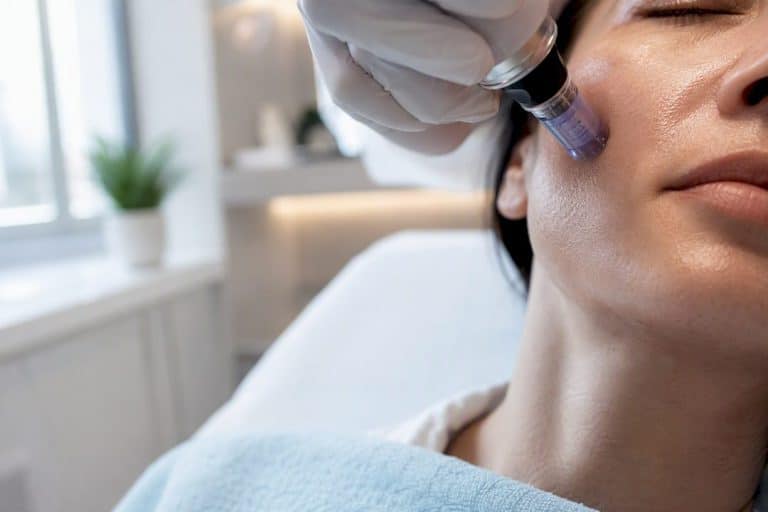
Microneedling doesn’t target melanin production directly. What it does is create controlled, microscopic channels in the skin that change how the skin absorbs and responds to treatment.
Those microchannels temporarily increase the penetration of topical agents like tranexamic acid, vitamin C, and prescription-strength lightening agents. Instead of a cream sitting mostly on the surface, active ingredients reach deeper layers of skin more efficiently. This is the primary reason microneedling shows up so often paired with topical tranexamic acid in the research: the device is doing delivery work, and the topical is doing the pigment-modulating work.
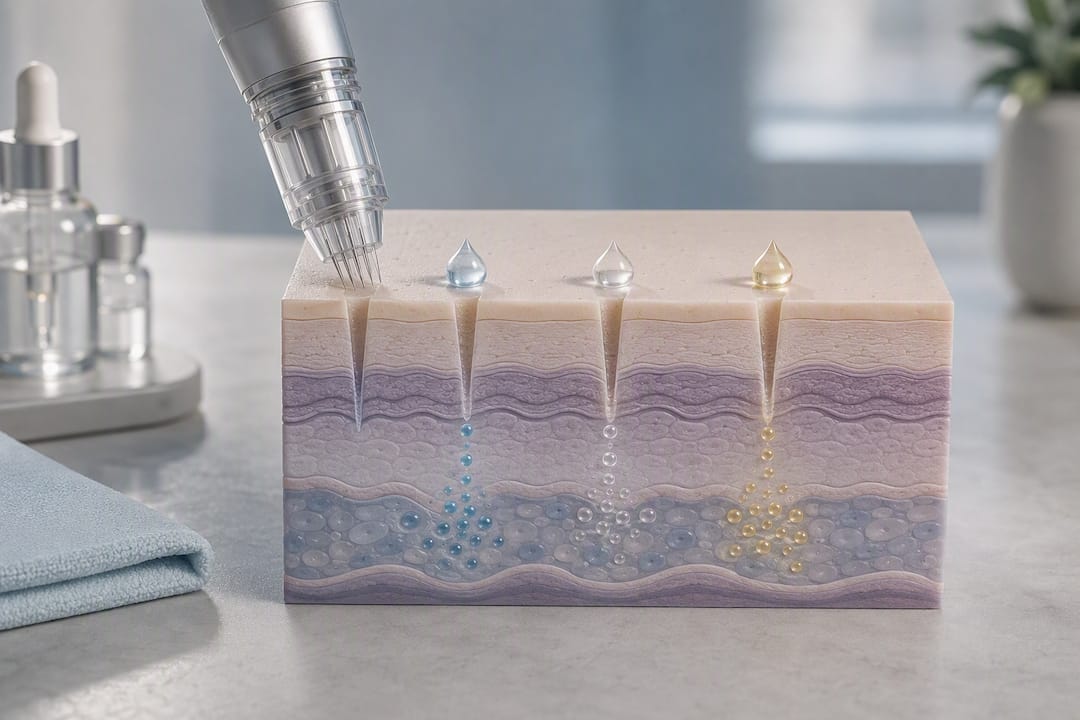
There’s a second mechanism at play, one that’s more structural than chemical. Melasma involves disruption to the basement membrane, the thin layer separating the epidermis from the dermis. Some evidence suggests that the controlled injury from microneedling can prompt repair processes in this layer along with increased collagen remodelling and faster epidermal turnover, which may help reduce the visible appearance of pigment over time.
Here’s the part that gets skipped in a lot of online explainers: inflammation control is central to whether this helps or hurts.
- Controlled, minimal trauma can support skin remodelling and improve topical absorption.
- Excessive trauma triggers a stronger inflammatory response, and inflammation is one of the known drivers of melasma flare-ups.
- Melanocytes in melasma-prone skin are already hyperreactive, so overly aggressive needling can provoke more pigment rather than less.
This is why microneedling for melasma is most defensibly understood as a delivery and adjunctive tool. It enhances the effect of clinician-selected topicals rather than permanently altering the underlying tendency of skin to overproduce pigment when triggered by sun, heat, or hormones.
What treatment protocols do studies actually use?
There is no single validated protocol for microneedling in melasma, and that’s not a gap in your research. It’s the honest state of the science right now.
Studies most commonly use manual dermarollers or motorized pen devices like the Dermapen, with needle depths ranging from 0.25 mm on the shallow end up to 2.0 mm for deeper protocols. Several major reviews specifically excluded radiofrequency microneedling from their analysis because it introduces a heat-based mechanism that behaves differently in melasma-prone skin. That distinction matters if you’re comparing treatment options: not all “microneedling” devices work the same way or carry the same risk profile.
The most evidence-supported combinations pair microneedling with:
- Topical tranexamic acid — the pairing with the most direct supporting data, including the 2025 retrospective study showing meaningful score reduction over 3 to 6 months.
- Vitamin C serums — commonly used for their antioxidant and mild brightening properties alongside microneedling sessions.
- PRP (platelet-rich plasma) — sometimes layered in for its wound-healing and skin-quality benefits, though evidence specific to melasma is thinner than for TXA.
- Prescription hydroquinone — used under supervision given its regulatory status, discussed further below.
Session counts in the literature vary, but many protocols use several sessions spaced roughly 2 to 4 weeks apart, with clinical assessments at 4, 12, and 24 weeks to track change. Earliest signals of improvement tend to show up around 4 to 8 weeks, with the most consistent gains reported closer to the 12 to 24 week mark.
Pro Tip: Deeper needling is not automatically better. A shallower, more conservative depth used consistently over several sessions is often safer and just as effective for melasma as a single aggressive treatment, especially in melasma-prone or darker skin.
If you want more detail on how devices, depth, and spacing are chosen in a clinical setting, our overview of how microneedling revives skin safely walks through that decision process in more depth.
Is microneedling safe for melasma, and what are the risks?
Supervised microneedling for melasma carries a generally mild safety profile, but melasma-prone skin has one specific risk that deserves its own conversation: post-inflammatory hyperpigmentation, or PIH.
The 2024 meta-analysis of randomized studies found that adverse effects across 1,245 participants were generally mild, things like temporary redness, itching, and swelling, with no serious adverse events reported in any of the included trials. That’s a reassuring baseline for a supervised clinical protocol.
PIH is the risk that matters most for people with melasma specifically. It happens when trauma to the skin triggers an inflammatory response strong enough to stimulate melanocytes into overproducing pigment, which is essentially the opposite of the goal. Common triggers include:
- Needle depth or pressure that’s too aggressive for the patient’s skin tone and reactivity.
- Infection from poor aftercare or non-sterile equipment.
- Applying the wrong topical too soon after treatment, while microchannels are still open.
- Sun exposure in the days immediately following a session.
Darker or more reactive skin tones need a more conservative approach across the board: shallower needle depth, longer spacing between sessions, and closer monitoring for early signs of PIH before it becomes established.
There’s also a meaningful gap between what studies test and what happens at home. Nearly all of the safety data referenced above comes from supervised clinical settings with controlled devices, sterile technique, and structured aftercare. Home dermarollers introduce more variability in needle quality, depth control, and hygiene, and they remove the clinical judgment that adjusts treatment based on how skin is actually responding session to session. If you’re weighing that option, this breakdown of home microneedling kits is worth reading before buying anything.
Red flags that call for prompt clinical review include persistent or worsening redness beyond a few days, signs of infection like warmth or discharge, or new dark patches appearing where treatment occurred rather than fading.
How do you protect results and prevent melasma from coming back?
Melasma relapses easily, and the biggest reason isn’t the treatment failing. It’s what happens after treatment ends.
Health Canada’s UV-safety guidance recommends broad-spectrum sunscreen of at least SPF 30, reapplied every two hours or immediately after swimming or heavy sweating. For melasma specifically, this isn’t optional maintenance advice. Ultraviolet exposure is one of the primary triggers that reactivates hyperpigmentation, so consistent photoprotection is the single factor most likely to determine whether results from microneedling last.
Topical maintenance matters just as much, and this is where Canadian regulation shapes what’s realistic. Hydroquinone above 2% concentration is regulated in Canada as a prescription drug, which means higher-strength formulations require clinician oversight rather than over-the-counter use. That regulation exists for a reason: hydroquinone can cause adverse reactions when used incorrectly, and supervision helps catch problems early.
In the days right after a session, skin needs a specific kind of care:
- Avoid applying new or untested topicals while microchannels are still open, generally the first 24 to 48 hours.
- Skip active ingredients like retinoids or high-strength acids until skin has settled.
- Reintroduce clinician-approved topicals gradually, watching for irritation before increasing frequency.
- Keep sunscreen application non-negotiable from day one, even indoors near windows.
Pro Tip: Microchannels temporarily increase how much of a product your skin absorbs. That’s exactly why household products that were never tested for post-procedure use, including some fragranced or highly active serums, can cause more irritation right after microneedling than they would on undisturbed skin. For more detail on staging aftercare properly, this guide to preventing skin complications after treatments covers the reasoning in more depth, and our own pre-procedure preparation guide walks through what to do before your first session.
Who is a good candidate for microneedling and melasma treatment?
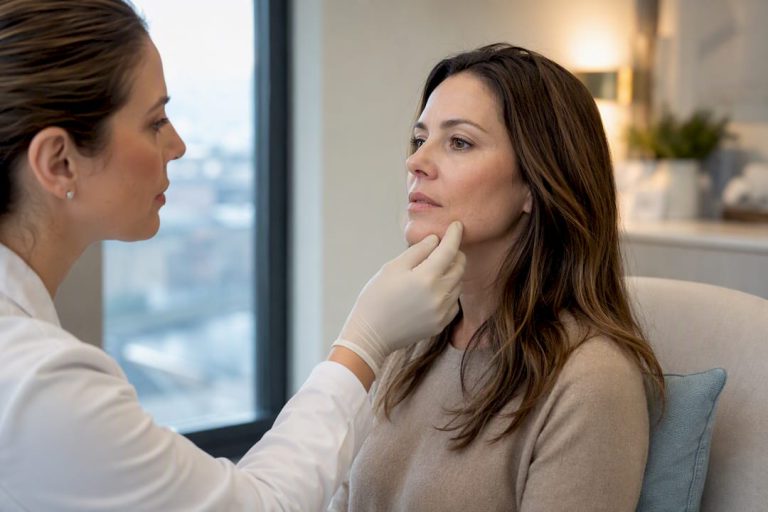
Not everyone with melasma is a straightforward candidate, and a proper consultation should rule out a few specific things before treatment begins.
Common caution factors include active dermatitis or eczema in the treatment area, recent tanning or significant sun exposure, pregnancy or breastfeeding, and recent use of isotretinoin, which affects how skin heals. None of these necessarily rule out treatment permanently, but they usually mean waiting or adjusting the plan.
Before your consultation, come prepared with a clear picture of your skin history. Bring a list of every topical product and medication you’re currently using, including over-the-counter items, and disclose any prior experience with post-inflammatory hyperpigmentation or unusual reactions to skin treatments. That history shapes how conservative your provider needs to be with needle depth and pacing.
A focused consultation should walk through:
- What device type and needle depth is planned, and why that depth was chosen for your skin.
- What topical agent will be paired with treatment, whether that’s tranexamic acid, vitamin C, or a prescription option.
- What timeline to expect for visible change, based on the 4 to 24 week window seen in clinical studies.
- What the maintenance plan looks like once active treatment ends, including sunscreen routine and any ongoing topicals.
What clinicians actually do differently once they know the research
Translating trial protocols into real patient care means being more conservative than the most aggressive study you’ll find online. Candidate evaluation starts with skin tone, reactivity, and melasma history before anything is decided about needle depth or session spacing.
We generally favour shallower settings and combination topical support over deep, aggressive needling, particularly for clients whose skin has a history of reacting strongly to irritation. Many clients come in expecting a fast fix and are surprised to learn that visible change usually builds gradually across several sessions, often becoming noticeable between 4 and 12 weeks, with maintenance planning built in from the very first appointment rather than added on afterward.
One caution we’re consistent about: home dermarollers are not an equivalent substitute for supervised treatment when melasma is involved. The margin for error is smaller than it looks, and uneven pressure or depth can do more harm than good in pigment-prone skin.
Where the melasma conversation usually goes wrong
Most of what circulates about microneedling and melasma treats the procedure like a switch you flip, on or off, cured or not. That framing sets people up to feel like a treatment “failed” when what actually happened is that maintenance lapsed, or expectations were calibrated to a best-case study result rather than a typical one.
The judgment the evidence actually supports is narrower and, frankly, more useful: microneedling earns its place as a delivery mechanism that makes topical treatment work harder, not as a stand-alone answer to a condition driven by hormones, heat, and UV exposure. Where conventional advice falls short is in treating “microneedling for melasma” as a single, interchangeable product rather than a variable I’m-going-to-adjust-this-to-your-skin process. Needle depth, topical pairing, and session spacing all move the outcome, and none of them should be decided by a generic protocol pulled from a study on a different population.
If there’s one thing worth prioritizing above all else, it’s this: line up your photoprotection and maintenance topical plan before your first session, not after your last one. Melasma doesn’t stay treated on its own, and the studies showing real improvement all assumed diligent sun habits in the background. Skip that part, and even the best-executed treatment plan has a shorter shelf life than it should.
— Felix
Book a microneedling consultation for melasma care
Enriched Med Spa offers clinician-delivered microneedling paired with pigment-focused consultation, the same combination the research consistently points to as more effective than either approach alone. Rather than a generic package, your provider reviews your skin tone, melasma history, and current topicals before recommending a needle depth and pairing agent suited to your specific case.
A consultation starts with a straightforward conversation: what you’ve tried before, what’s triggered flare-ups in the past, and what a realistic timeline looks like for your skin. Come prepared with a list of your current skincare products and medications so we can build a plan around what you’re already using, not against it. From there, we outline session spacing, expected milestones around the 4 to 24 week window seen in clinical data, and a maintenance plan that starts on day one.
If you’re ready to talk through whether microneedling fits your melasma, visit our microneedling service page to see what’s included and book a consultation.
This article is general information, not a substitute for advice from a qualified doctor. Consult a qualified healthcare professional about your own circumstances before acting on anything here.
Sources
- Microneedling as an adjuvant to topical therapies for melasma: A systematic review and meta-analysis
- Review of Applications of Microneedling in Melasma
- Health Canada sunscreen and UV-safety guidance
FAQ
Is microneedling recommended for melasma?
Yes, but generally as an add-on to topical treatment rather than a stand-alone solution. Systematic review data shows microneedling combined with topical therapy outperforms topical treatment alone, with meaningful improvement often visible by 12 weeks.
What is the best treatment for melasma?
There’s no single best treatment; melasma typically responds better to combination approaches than any one method alone. Microneedling paired with topical tranexamic acid has some of the strongest supporting data, while chemical peels and laser therapies each carry their own benefits and risks depending on skin tone and melasma depth, and a clinician needs to match the approach to your specific skin.
What do Koreans do for melasma?
Skincare routines commonly associated with Korean dermatology practice emphasize layered sun protection, gentle exfoliation, and consistent use of brightening topicals rather than a single aggressive procedure. That general philosophy, prioritizing daily photoprotection and gradual topical treatment over one dramatic intervention, lines up closely with what the clinical evidence on melasma maintenance actually supports.
Is it normal for melasma to look worse after microneedling?
Yes, temporarily. The first few days after a session can involve redness, pinpoint bleeding, or swelling that makes existing pigment look more obvious before it improves. Persistent worsening beyond a few days, or any sign of infection, should prompt a follow-up with your provider rather than waiting it out.