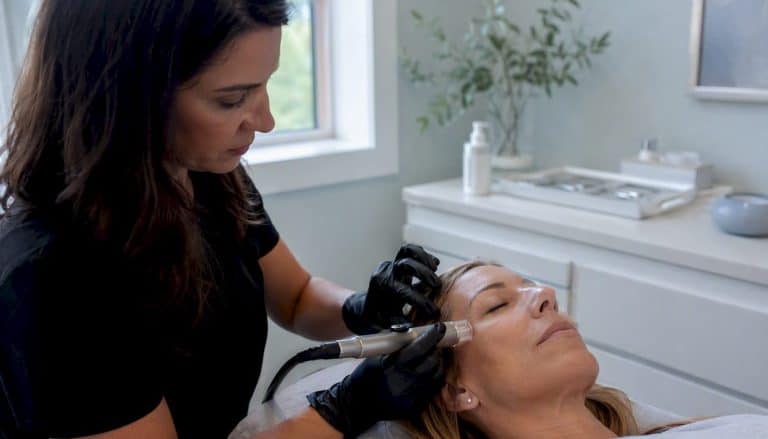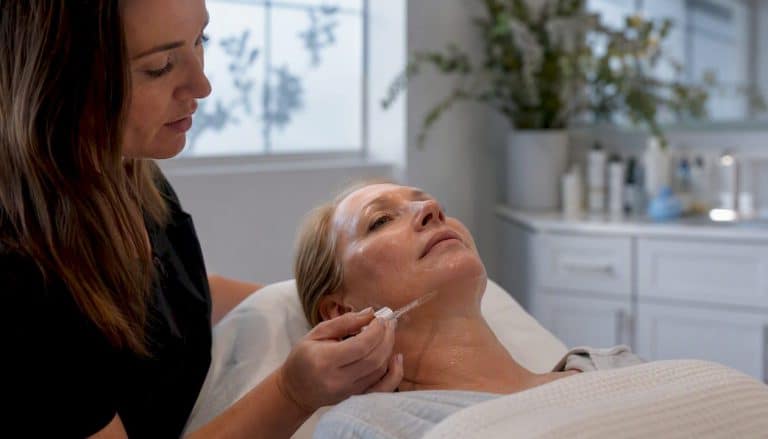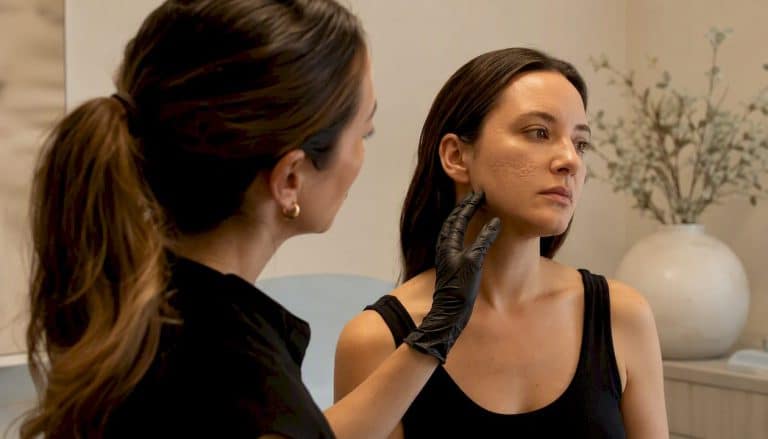
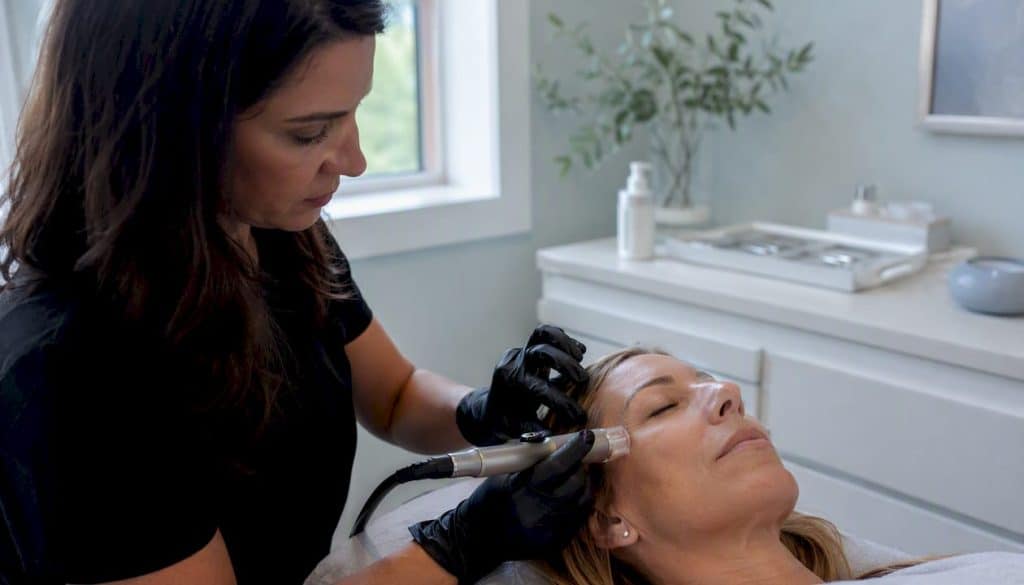
Non-surgical blepharoplasty approaches can deliver meaningful eyelid rejuvenation for mild-to-moderate concerns, though they work differently from excisional surgery and suit a specific range of problems. If you have early upper eyelid hooding, crow’s feet, tear-trough hollows, or mild skin laxity around the eyes, a well-chosen non-surgical plan can produce noticeable, natural-looking improvement. If you have significant redundant skin that folds over the lash line or large structural fat herniation pushing through the lower lid, surgery remains the more reliable path. The distinction matters, and a proper assessment is what separates a good outcome from a frustrating one.
Non-surgical approaches that tend to help:
- Upper hooding (mild to moderate): botulinum toxin for a lateral brow lift, radiofrequency (RF) tightening, HIFU
- Crow’s feet and fine lines: neuromodulators, fractional laser resurfacing, microneedling with RF
- Tear-trough hollows and infraorbital volume loss: hyaluronic acid dermal fillers
- Mild lower eyelid skin laxity and texture: RF devices, helium plasma RF, fractional CO2 laser, chemical peels
- Skin pigment and overall periorbital quality: PRP/PRF, chemical peels, non-ablative lasers
Problems that usually require surgery:
- Redundant upper eyelid skin that obstructs vision
- Severe structural fat herniation in the lower lids
- Significant eyelid malposition or laxity affecting lid function
Pro Tip: Before booking any treatment, request a clinical assessment with a provider who has specific periocular anatomy experience. The eye area is unforgiving, and the right starting point is an honest conversation about what your anatomy actually needs.
Key takeaways
Non-surgical blepharoplasty alternatives can produce meaningful periocular rejuvenation for mild-to-moderate laxity, volume loss, and skin texture concerns, but they cannot replicate the anatomical change of excisional surgery.
| Point | Details |
|---|---|
| Mild-to-moderate laxity responds well | Non-surgical options suit early hooding, tear-trough hollows, crow’s feet, and mild skin laxity. |
| Energy devices show measurable results | Monopolar RF produced greater than 50% eyelid tightening in 73% of participants at two months; HIFU reduced mean eyelid length by approximately 0.94 mm in one cohort. |
| Surgery has a clear threshold | Redundant skin obstructing vision, large fat herniation, or significant eyelid malposition typically require excisional blepharoplasty. |
| Combination plans outperform single treatments | Pairing a neuromodulator, filler, and an energy device addresses brow position, volume, and skin quality simultaneously. |
| Enrichedmedspa offers personalised assessments | Enrichedmedspa in Woodbridge and East Gwillimbury builds staged, combination plans based on objective measurements and photographic analysis. |
Table of Contents
- What are the main non-surgical eyelid options?
- How do Botox and dermal fillers help around the eyes?
- What can energy-based devices actually do for your eyelids?
- Are thread lifts a useful option for the eye area?
- How do microneedling, PRP/PRF, and chemical peels help the periorbital area?
- Who is a good candidate for non-surgical eyelid rejuvenation?
- Risks, safety, and what Health Canada’s role means for you
- What do non-surgical eyelid treatments cost in Canada?
- Before and after care for non-surgical eyelid treatments
- When does surgery become the right answer?
- How we assess and build a non-surgical eyelid plan at Enrichedmedspa
- What we hear from clients, and what it tells us
- Ready to find out which non-surgical options suit you?
- Sources
What are the main non-surgical eyelid options?
The periocular area responds to a wider range of non-surgical modalities than most people expect. Each one targets a different layer of tissue or a different concern, which is why combination plans often outperform single-modality approaches.
- Botulinum toxin (Botox, Nuceiva, Xeomin): Relaxes the orbicularis oculi and depressor muscles to lift the lateral brow and soften crow’s feet. Results appear within days, last 3–4 months, and require no downtime. Primary indication: brow elevation, crow’s feet, mild upper hooding.
- Dermal fillers (hyaluronic acid): Restore volume to the tear trough and infraorbital hollow. Results are immediate, last 9–18 months depending on the product and anatomy. Primary indication: tear-trough hollows, under-eye shadowing.
- Monopolar and bipolar RF: Deliver volumetric heat to stimulate collagen remodelling and produce gradual tissue tightening. Minimal downtime. Primary indication: mild-to-moderate upper and lower eyelid skin laxity.
- Fractional CO2 laser: Ablative resurfacing that removes thin columns of tissue and triggers significant collagen remodelling. 5–10 days of visible downtime. Primary indication: skin texture, fine lines, mild tightening.
- Non-ablative lasers (1064 nm, 1320 nm, 1540 nm): Stimulate collagen without surface wounding. Minimal downtime, more gradual results. Primary indication: fine lines, mild laxity, pigment.
- Helium plasma RF: Delivers rapid focal coagulation and tissue contraction with minimal surrounding thermal spread. Primary indication: lower eyelid skin laxity and texture.
- HIFU / microfocused ultrasound (MFU): Delivers focal thermal coagulation zones at precise depths to stimulate deep collagen and lift tissue. Primary indication: mild brow and eyelid lifting, skin tightening.
- Thread lifts (absorbable PDO or PLLA): Mechanical suspension plus collagen stimulation. Primary indication: lateral orbital lift, mild midface support.
- Microneedling with RF: Combines controlled microinjury with RF energy for deeper collagen stimulation. Primary indication: skin texture, mild laxity, fine lines.
- PRP / PRF: Growth-factor-rich plasma injected or applied topically to support tissue quality and hydration. Primary indication: skin quality, fine lines, periorbital glow.
- Chemical peels (superficial to medium-depth): Resurface the epidermis and upper dermis. Primary indication: pigment, texture, mild fine lines.
- Plasma pen: Delivers micro-arcs of plasma energy to contract and resurface skin. Primary indication: fine lines, mild skin tightening.
Providers frequently combine modalities. A common pairing is a neuromodulator for brow lift plus a hyaluronic acid filler for the tear trough, sometimes with an RF or laser session added for skin quality. These combinations address different tissue layers simultaneously and tend to produce more complete results than any single treatment alone.
How do Botox and dermal fillers help around the eyes?
Injectables are often the first step in a non-surgical eyelid plan, and for good reason. They address two of the most common periocular complaints, volume loss and muscle-driven lines, with relatively predictable outcomes and minimal recovery.
Botulinum toxin: lifting the brow and softening lines
Botulinum toxin works by temporarily blocking acetylcholine release at the neuromuscular junction, relaxing the targeted muscle. Around the eye, small doses placed in the lateral orbicularis oculi and the depressor supercilii allow the frontalis to lift the lateral brow unopposed, creating a subtle but visible reduction in upper eyelid hooding. Crow’s feet soften within 3–7 days of treatment. Results typically last 3–4 months, and most people find two to three sessions per year maintains the effect comfortably.
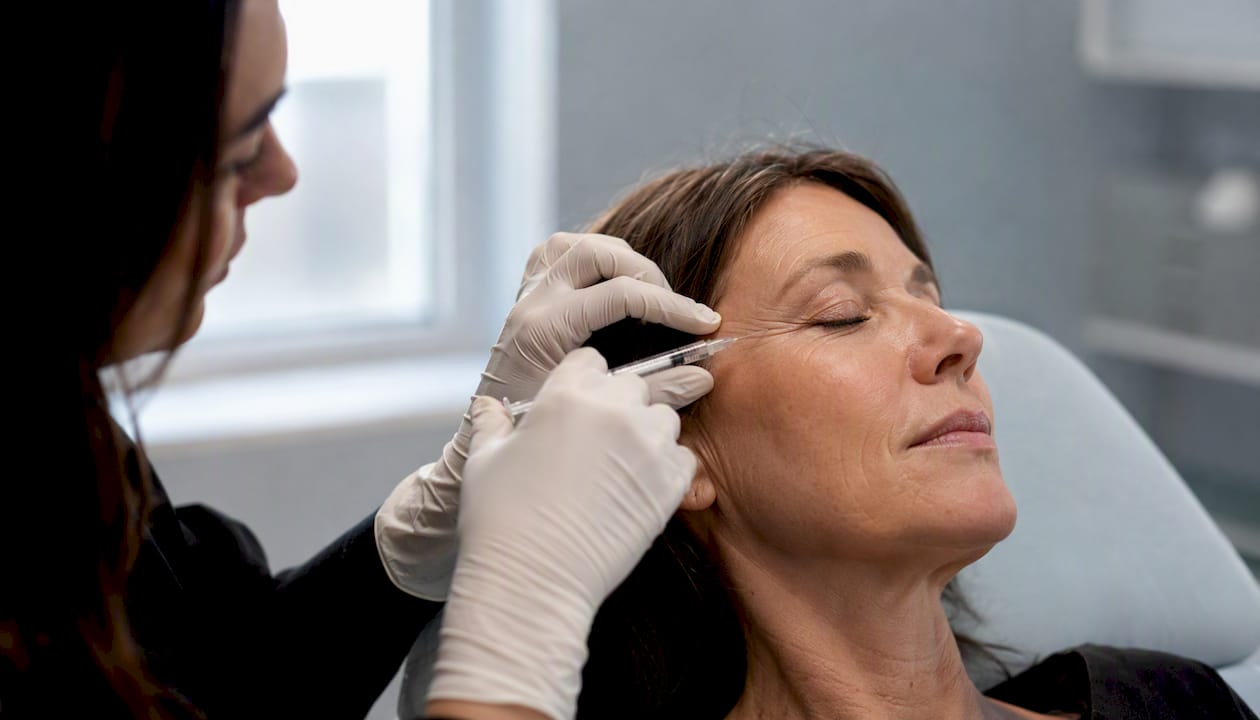
Downtime is minimal. You may notice mild redness or a small wheal at injection sites for an hour or two. The safety considerations specific to the eye area include avoiding injections too close to the levator palpebrae superioris, which can cause temporary ptosis, and respecting the orbicularis oculi’s role in protecting the cornea.
Dermal fillers: restoring the tear trough and infraorbital hollow
Volume loss in the tear trough creates the shadowed, hollowed appearance that makes people look tired regardless of how much sleep they get. Hyaluronic acid fillers placed carefully in the infraorbital hollow can soften this shadow and improve the transition between the lower lid and cheek. Results are visible immediately and typically last 9–18 months, though individual variation is significant.
The tear trough is one of the more technically demanding filler sites in the face. The skin is thin, the orbicularis oculi sits close to the surface, and the infraorbital vessels run nearby. Common complications include bruising (expected and temporary), the Tyndall effect (a bluish discolouration from filler placed too superficially), and, rarely, vascular occlusion. Choosing a provider with specific periocular anatomy training is not optional here. For a detailed overview of technique and aftercare, the under-eye filler guide at Enrichedmedspa covers what to expect before and after treatment.
A note on fillers and lower-lid bags: Filler can reduce the appearance of tear-trough hollowing that creates a shadow beneath a mild fat pad, but it cannot remove a fat bulge. Placing filler directly over a prominent fat herniation can make the area look fuller and worse. Candidate selection for tear-trough filler requires an honest assessment of whether the concern is primarily volume loss or structural fat.
Candidate tips for injectables:
- Good candidates have volume loss, mild laxity, or muscle-driven lines with good underlying tissue support
- Thin, crepey skin with no underlying volume loss responds poorly to filler alone
- Active skin infections, bleeding disorders, or certain autoimmune conditions are contraindications
- Disclose all medications, especially blood thinners and supplements, before any injectable treatment
What can energy-based devices actually do for your eyelids?
Energy-based devices occupy a meaningful middle ground between injectables and surgery. They work by heating tissue to stimulate collagen remodelling, and the clinical evidence, while still building, supports their use for mild-to-moderate periocular laxity.
RF, HIFU, fractional lasers, and helium plasma RF
Radiofrequency (monopolar and bipolar) delivers electrical energy that generates heat within the dermis and subdermis, triggering a wound-healing response that produces new collagen and elastin over weeks to months. A single-centre study using a 0.25 cm² monopolar RF tip found that 73% of participants reported greater than 50% eyelid tightening at two months, rising to 86% at six months, with a mean lateral brow elevation of approximately 1.2–1.4 mm and no adverse events in the cohort. Results are modest but sustained. For a fuller explanation of how RF devices work and what a session involves, the RF skin tightening guide at Enrichedmedspa is a useful starting point.
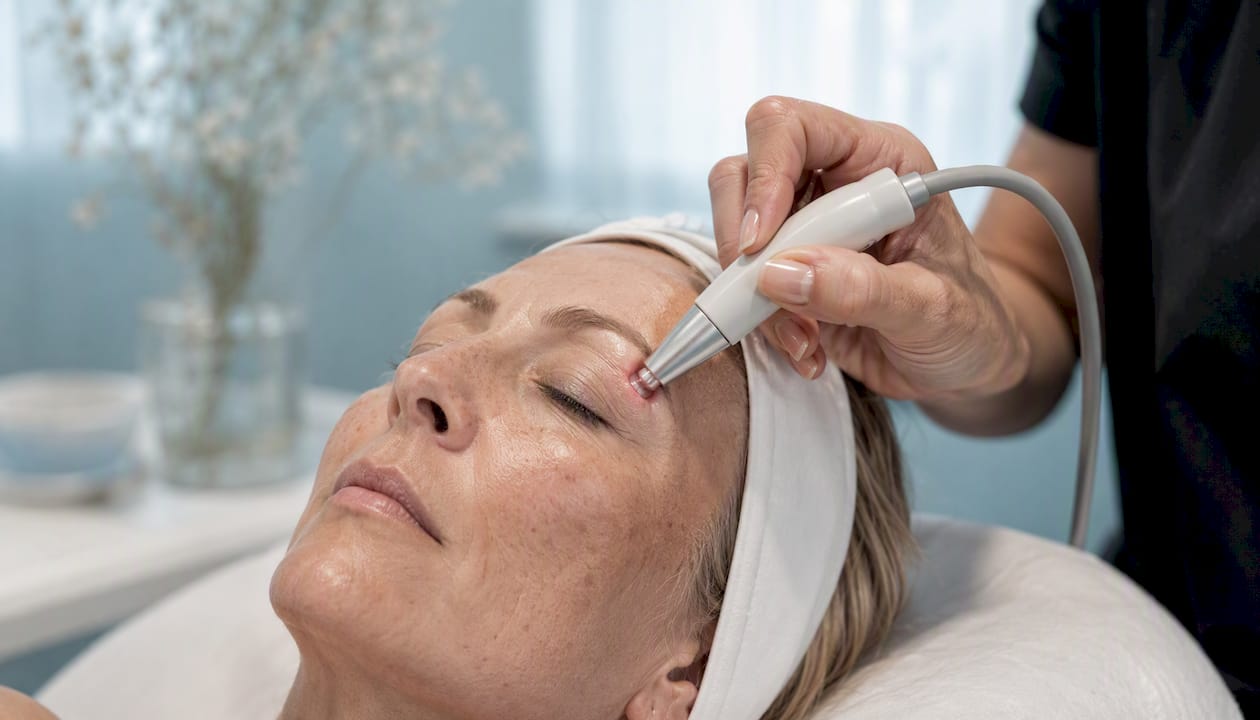
HIFU / microfocused ultrasound (MFU) creates focal thermal coagulation zones at precise tissue depths, bypassing the epidermis and targeting the deeper dermis and superficial musculoaponeurotic system. A prospective cohort reported that a single HIFU session produced a mean eyelid length reduction of approximately 0.94 mm with high patient satisfaction and only mild transient erythema. The sample sizes in these early cohorts are modest, but the direction of evidence is consistently positive for mild laxity.
Fractional CO2 laser ablates thin columns of tissue while leaving surrounding skin intact, producing both surface resurfacing and deeper collagen contraction. It is the most aggressive non-surgical option for periorbital skin quality and mild tightening, with 5–10 days of visible recovery. It addresses texture, fine lines, and mild laxity but cannot remove redundant skin folds the way excisional blepharoplasty does.
Helium plasma RF delivers rapid focal tissue coagulation at temperatures above 85°C, producing predictable tissue contraction with minimal lateral thermal spread. A case series evaluating this modality for lower eyelid skin laxity found notable improvements in texture and laxity with high patient satisfaction, though the authors appropriately called for larger studies before drawing firm conclusions.
The honest benchmark: A review of lasers and energy-based devices for periorbital rejuvenation concluded that these technologies are safe and can improve periorbital appearance, but most non-surgical procedures currently lack the depth of evidence that excisional surgery carries. They are genuinely useful, not equivalent to surgery.
Safety callouts for energy devices around the eyes:
- Ocular shields (metal corneal protectors) are required for any energy device used near the orbital rim
- Shallow, periocular-specific tips must be used; standard body tips deliver too much energy to thin eyelid skin
- Darker skin types (Fitzpatrick IV–VI) carry higher risk of post-inflammatory hyperpigmentation (PIH) and require conservative energy settings
- Clinicians should use Health Canada-cleared devices and follow manufacturer protocols for periocular application
- Results develop gradually over 2–3 months as collagen remodelling progresses; a single session often shows improvement, but a series of 2–3 sessions is common
Are thread lifts a useful option for the eye area?
Thread lifts occupy a specific niche in the non-surgical toolkit. They are not the right answer for everyone, but for the right candidate, they offer something injectables and energy devices cannot: a mechanical lift with simultaneous collagen stimulation.
Absorbable threads made from PDO (polydioxanone) or PLLA (poly-L-lactic acid) are inserted under the skin using a fine cannula and anchored to create a physical suspension of tissue. Around the eye, threads are most useful for lifting the lateral orbital area and providing mild midface support that indirectly reduces the appearance of lower eyelid heaviness. They do not remove skin and cannot address fat herniation.
What to expect:
- Lift effect is visible immediately but settles over 2–4 weeks as swelling resolves
- Collagen stimulation from the thread material continues for months after the thread absorbs
- Durability varies by material and anatomy: PDO threads typically last 6–12 months; PLLA threads can stimulate collagen for up to 18–24 months
- Common side effects include temporary asymmetry, palpability of threads under the skin, bruising, and, less commonly, infection or thread extrusion
Threads are frequently combined with neuromodulators and fillers for a more complete result. A good candidate has mild-to-moderate skin laxity with reasonable tissue quality. Thin, very lax skin does not hold threads well and tends to show the thread outline. Severe hooding or significant fat herniation will not respond meaningfully to a thread lift alone.
How do microneedling, PRP/PRF, and chemical peels help the periorbital area?
These treatments work at the level of skin quality rather than structural lift, which makes them excellent adjuncts but not standalone solutions for significant laxity.
Microneedling creates controlled micro-channels in the dermis, triggering a wound-healing cascade that produces new collagen and elastin. RF-microneedling adds radiofrequency energy through the needle tips, heating the deeper dermis for more pronounced tightening. Around the eyes, microneedling with RF is particularly useful for crepey skin texture, fine lines, and mild laxity. A course of 3–4 sessions spaced 4–6 weeks apart is typical, with maintenance every 6–12 months.
PRP and PRF (platelet-rich plasma and platelet-rich fibrin) concentrate growth factors from your own blood and deliver them via injection or topical application after microneedling. The growth factors support tissue repair, hydration, and overall skin quality. Results are gradual and cumulative, making PRP/PRF a good complement to microneedling or laser treatments rather than a primary lifting modality.
Chemical peels range from superficial (glycolic, lactic acid) to medium-depth (TCA). Around the eyes, superficial peels address pigment, dullness, and very fine lines with minimal downtime. Medium-depth peels can improve mild laxity and more significant texture concerns but require 5–7 days of recovery. Peels do not lift tissue or address volume loss.
All three of these options work best for:
- Skin texture and crepiness
- Fine lines and mild pigment irregularity
- Improving overall periorbital skin quality as part of a combination plan
- Maintenance between more intensive treatments
They have limited effect on significant upper eyelid hooding or structural fat bulges.
Who is a good candidate for non-surgical eyelid rejuvenation?
Most people who come in asking about a non-surgical eyelid lift fall into one of two groups: those who are genuinely good candidates for non-surgical care, and those whose anatomy will not respond meaningfully without surgery. Knowing which group you are in before spending money on treatments is the most useful thing a consultation can do.
Features that suggest non-surgical approaches will help:
- Mild-to-moderate upper eyelid skin laxity without significant skin folding over the lash line
- Early hooding that is partly driven by brow descent rather than true excess skin
- Tear-trough hollowing and infraorbital volume loss
- Crow’s feet, fine lines, and periorbital skin texture concerns
- Good overall skin quality and tissue elasticity
- Realistic expectations about gradual, modest improvement rather than surgical-level change
Red flags that suggest surgery is the more appropriate path:
- Redundant upper eyelid skin that rests on or near the lashes, or that obstructs the visual field
- Large, structural lower eyelid fat herniation that creates a persistent bulge regardless of lighting
- Significant eyelid malposition (ectropion, entropion) or laxity affecting lid function
- History of prior eyelid surgeries that have altered normal anatomy
- Dermatochalasis severe enough that non-surgical tightening would produce only marginal change
Questions worth bringing to your consultation:
- Does my hooding come from brow descent, excess skin, or both?
- Is my under-eye concern primarily volume loss, fat herniation, or skin laxity?
- What combination of treatments would address my specific anatomy?
- What realistic improvement can I expect, and over what timeline?
- Am I a candidate for non-surgical care, or would surgery give me a meaningfully better outcome?
A thorough consultation includes photographic analysis, assessment of brow position and lid length, and a frank discussion of what non-surgical approaches can and cannot achieve for your specific anatomy. The advanced skin treatment guide at Enrichedmedspa outlines how to match treatment options to individual goals.
Risks, safety, and what Health Canada’s role means for you
Treating the periocular area carries a different risk profile than treating the cheek or forehead. The skin is thinner, the anatomy is more complex, and the consequences of errors are more visible and potentially more serious. Understanding the safety framework helps you ask the right questions before committing to any treatment.
Core safety checklist:
- Metal corneal shields must be in place for any energy-based treatment near the orbital rim; this is non-negotiable
- Injectable treatments near the eye require a provider who understands the course of the infraorbital artery and angular vessels to avoid vascular occlusion
- Signs of vascular compromise after filler (blanching, severe pain, skin colour change) require immediate hyaluronidase reversal; confirm your provider carries it
- Infection prevention protocols (sterile technique, no treatment over active skin infections) apply to all modalities
- Post-treatment sun avoidance is particularly important for darker skin types to reduce PIH risk after laser or energy treatments
The Health Canada regulatory context:
Health Canada regulates medical devices, including energy-based aesthetic devices, under the Medical Devices Regulations. Devices used in aesthetic clinics should carry Health Canada clearance for their intended use. When you are considering an energy-based treatment, it is reasonable to ask your provider whether the device is Health Canada-cleared for periocular application specifically, not just for general skin tightening.
Provider credentials matter more around the eyes than almost anywhere else on the face. Periocular work should be performed by or under the direct supervision of a board-certified dermatologist, plastic surgeon, or a registered nurse or medical aesthetician working within a medically supervised clinic with specific training in eyelid anatomy. The monopolar RF cohort study specifically notes that shallow periocular tips and operator experience are critical to avoiding adverse events.
What do non-surgical eyelid treatments cost in Canada?
Pricing varies by provider, region, and the complexity of your treatment plan, but the following bands reflect what you can reasonably expect at a reputable medical aesthetics clinic in Ontario and across Canada.
Typical Canadian price ranges (approximate, per session or treatment):
- Botox for brow lift / crow’s feet: $200–$500, depending on units required
- Hyaluronic acid tear-trough filler: $600–$1,200 per syringe; most tear-trough treatments use 0.5–1 mL per side
- Single-session monopolar or bipolar RF (periocular): $300–$700
- HIFU / MFU (full periorbital area): $500–$1,200 per session
- Fractional CO2 laser (periorbital): $600–$1,500 per session
- Thread lift (lateral orbital area): $800–$2,000 depending on thread type and number
- Microneedling with RF (periorbital): $400–$900 per session
- Chemical peel (superficial to medium-depth): $150–$400
These are general ranges. Combination plans, which most providers recommend for comprehensive results, will be priced accordingly. Always request an itemised quote during your consultation.
Timeline expectations:
- Immediate results: fillers (visible same day), Botox (3–7 days to full effect)
- Gradual remodelling: RF, HIFU, microneedling, and laser treatments produce peak results 2–3 months after the final session as collagen remodelling completes
- Maintenance: neuromodulators every 3–4 months; fillers every 9–18 months; energy device series repeated annually or as needed
A standard consultation at a reputable clinic includes a full medical history review, photographic analysis, discussion of your goals, a proposed treatment plan with staged options, informed consent, and aftercare planning. Budget 45–60 minutes for a thorough first visit.
Before and after care for non-surgical eyelid treatments
Getting the most from any periocular treatment starts before you arrive at the clinic and continues for days to weeks afterward.
Before your appointment:
- Avoid aspirin, ibuprofen, and NSAIDs for 5–7 days before injectable or energy treatments if medically safe to do so; these increase bruising risk
- Pause fish oil, vitamin E, and high-dose vitamin C supplements for the same period
- Arrive with clean skin and no eye makeup
- Arrange transportation if your provider uses topical anaesthetic that affects vision temporarily
- Disclose all medications, including anticoagulants, to your provider
Immediately after injectables:
- Apply a cold compress gently (not directly on the eye) to reduce swelling
- Avoid lying flat for 4 hours after Botox to reduce migration risk
- Do not rub or massage the treated area for 24 hours
- Avoid strenuous exercise, alcohol, and heat (saunas, hot yoga) for 24–48 hours
- Bruising is normal and typically resolves within 7–10 days; arnica gel or oral arnica can help
After energy-based treatments (RF, laser, HIFU):
- Expect redness, mild swelling, and warmth for 24–72 hours; fractional CO2 may produce 5–10 days of visible peeling
- Use a gentle, fragrance-free moisturiser and avoid active ingredients (retinoids, AHAs, BHAs) until the skin has fully healed
- Broad-spectrum SPF 50 is non-negotiable from day one of recovery and for at least 4 weeks post-treatment
- Avoid direct sun exposure, tanning beds, and heat-generating activities during the healing period
Maintenance signs to watch for:
- Botox results fading before 3 months may indicate a need for dosage adjustment
- Filler asymmetry or lumpiness that persists beyond 2 weeks warrants a follow-up
- Any signs of infection (increasing redness, warmth, discharge) after any treatment require prompt medical attention
When does surgery become the right answer?
Non-surgical approaches have real limits, and being clear about those limits is part of responsible care. Surgery is not a failure of non-surgical treatment; it is simply the appropriate tool for a different set of problems.
Clinical signs that typically require excisional blepharoplasty:
- Upper eyelid skin that folds over the lash line and rests on the lashes, or that obstructs the superior visual field
- Large, structural lower eyelid fat herniation that creates a persistent bulge independent of lighting or hydration
- Significant eyelid laxity that risks malposition (ectropion or entropion) if tissue is further tightened non-surgically
- Dermatochalasis (true excess skin) severe enough that tightening devices would produce only a marginal, temporary change
What surgery offers that non-surgical care cannot:
Excisional blepharoplasty removes redundant skin and, where indicated, repositions or removes fat. Professional society resources confirm that surgical blepharoplasty delivers definitive anatomical change and long-lasting results, which is the benchmark against which non-surgical options are measured. The trade-off is recovery time (typically 1–2 weeks of visible bruising and swelling) and the permanence of the change, which is generally 5–10 years or longer.
It is worth noting that “no-touch blepharoplasty” is a term sometimes used in marketing to describe non-surgical devices, but in surgical literature it refers to a transconjunctival approach that avoids orbicularis dissection. Transconjunctival blepharoplasty is a surgical technique for addressing infraorbital fat pads without an external skin incision. It is not a non-surgical alternative.
Combining non-surgical and surgical care:
Many people benefit from non-surgical treatments before surgery (to optimise skin quality and reduce recovery time) or after surgery (to maintain results and address residual texture concerns). A staged plan that uses non-surgical modalities to extend surgical results is a practical and increasingly common approach.
How we assess and build a non-surgical eyelid plan at Enrichedmedspa
At Enrichedmedspa, a non-surgical eyelid assessment starts with a structured intake that covers your medical history, current medications, prior treatments, and your specific goals. We take standardised photographs under consistent lighting before any discussion of treatment, because the camera often reveals asymmetries and tissue characteristics that are easy to miss in conversation.
Our assessment process includes:
- Objective measurements of lid length, brow position, and the relationship between the brow and orbital rim
- Evaluation of skin quality, elasticity, and fat anatomy
- Assessment of whether hooding is driven by brow descent, true excess skin, or a combination
- Review of prior treatments and how the tissue has responded
Decision factors we weigh:
- Skin quality and degree of laxity (mild, moderate, or severe)
- Presence and degree of fat herniation
- Patient goals and tolerance for downtime
- Medical history and any contraindications to specific modalities
- Whether a staged plan or a single comprehensive session is more appropriate
Combination plans are the norm rather than the exception. A typical plan for someone with early upper hooding, tear-trough hollowing, and periorbital skin texture concerns might include a neuromodulator for brow lift, a hyaluronic acid filler for the tear trough, and a series of RF or microneedling sessions for skin quality. Each element addresses a different layer of the problem.
Outcomes are tracked with repeat photography at 4–6 weeks and again at 3 months, which is when collagen remodelling from energy-based treatments reaches its peak. We adjust plans based on what the photographs show, not just how you feel about the result.
Pro Tip: Bring a photograph of yourself from 5–10 years ago to your consultation. It gives your provider a clearer picture of what your natural anatomy looked like before volume loss and laxity set in, which helps calibrate a realistic and personalised treatment goal.
What we hear from clients, and what it tells us
Many clients come in describing the same thing: they look tired even when they feel fine, or they notice their eyes look heavier in photographs than they feel in the mirror. These are not vanity concerns. The periorbital area is where most people read emotion and energy in a face, and changes there tend to affect how others perceive you before you have said a word.
What we find, consistently, is that modest non-surgical improvements often meet the goal. A lateral brow lift from a neuromodulator, combined with tear-trough filler that softens the shadow under the eye, can produce a change that feels significant to the person living in that face, even though no single measurement is dramatic. The cumulative effect of addressing brow position, volume, and skin quality together is usually more satisfying than any one treatment in isolation.
We also see clients who come in hoping non-surgical care will be enough, and for whom an honest assessment points toward surgery. Those conversations are not easy, but they are the most useful thing we can offer. Spending money on treatments that will not address the underlying anatomy is not good care, and we would rather have that conversation early.
The realistic emotional frame is this: non-surgical eyelid treatments work best when you are treating early change, maintaining results after surgery, or addressing specific concerns like volume loss or skin texture. They require patience, because most of the improvement from energy-based treatments arrives over weeks to months. And they require maintenance, because none of these results are permanent. Clients who understand that going in tend to be the most satisfied with their outcomes.
Ready to find out which non-surgical options suit you?
At Enrichedmedspa, serving Woodbridge and East Gwillimbury, Ontario, a clinical eyelid assessment gives you a clear picture of what non-surgical care can realistically achieve for your anatomy. We combine neuromodulators, dermal fillers, RF skin tightening, laser resurfacing, and microneedling into personalised plans designed around your specific concerns, not a one-size approach. Our non-surgical lifting treatments page outlines the core options we offer. All treatments are medical procedures; results vary by individual anatomy, and a consultation determines whether you are a suitable candidate. Book a clinical assessment at Enrichedmedspa to receive standardised photographs, objective measurements, and a proposed treatment plan tailored to your goals.
Sources
- Efficacy of high-intensity focused ultrasound for treating upper and lower eyelid sagging
- Helium plasma radiofrequency for lower eyelid skin laxity (case series)
- Monopolar radiofrequency for upper eyelid tightening in an Asian cohort
- Transconjunctival blepharoplasty — indications, techniques and complications
- Eyelid surgery results — The Aesthetic Society
This article is general information, not a substitute for advice from a qualified doctor. Consult a qualified healthcare professional about your own circumstances before acting on anything here.
Recommended
- Can BOTOX provide a brow lift and reduce droopy eyebrows? – Botox Laser Hair Removal OxyGeneo Medi Facial Microneedling – Enriched Med Spa – Vaughan Woodbridge Maple Vellore Village
- Buccal fat removal non surgical: what actually works
- Non-surgical facelift options: a complete 2026 guide
- Anti-aging treatment benefits: what to expect