
The most effective approach to reducing pigmentation is a stepwise, medical-first strategy: identify the cause, establish strict photoprotection, begin with evidence-based topical therapy, and add in-clinic procedures only when topicals alone are insufficient. Skipping any of these steps, particularly the diagnostic and photoprotection phases, is the most common reason treatments fail or worsen the skin.
Quick-take: three things to do right now
- Apply a broad-spectrum SPF 50+ sunscreen daily, ideally a tinted formula with iron oxide to block high-energy visible light (HEVL) as well as UV rays.
- Start an evidence-based topical agent: azelaic acid, niacinamide, or vitamin C are good first choices if you are pregnant, sensitive, or not yet under clinical care; hydroquinone-based combinations require a clinician’s guidance.
- Consult a clinician before booking any laser or resurfacing procedure. The Merck Manual and global expert consensus both confirm that unguided procedural treatment carries real risk of worsening pigmentation, particularly in darker skin tones.
Enriched Med Spa, serving Woodbridge and East Gwillimbury, Ontario, follows exactly this sequence with every client who presents with uneven skin tone.
Table of Contents
- What types of pigmentation exist and what causes them?
- How to approach pigmentation treatment step by step
- Which topical treatments actually work for hyperpigmentation?
- What in-clinic procedures treat pigmentation most effectively?
- Advanced treatments and darker skin tones: what to know before you proceed
- How does sun protection prevent pigmentation from coming back?
- What results can you expect, and what does treatment cost in Canada?
- When should you stop self-treating and see a clinician?
- How Enriched Med Spa approaches pigmentation treatment in Ontario
- Key takeaways
- Why patience matters more than intensity in pigmentation treatment
- Personalised pigmentation care at Enriched Med Spa
- Useful sources and further reading
What types of pigmentation exist and what causes them?
Pigmentation disorders fall into a few distinct categories, and knowing which one you have determines everything about how you treat it. The two broadest divisions are epidermal pigmentation (melanin deposited in the upper skin layers, which tends to respond well to topicals and superficial procedures) and dermal pigmentation (melanin deeper in the dermis, which is harder to reach and slower to clear).
Within those categories, the most common presentations are:
- Melasma: Symmetrical, blotchy patches typically appearing on the cheeks, upper lip, forehead, and chin. Strongly linked to hormonal influences, including pregnancy and oral contraceptives, and reliably worsened by UV and visible light exposure. Under a Wood’s lamp, epidermal melasma shows enhanced contrast; dermal melasma does not.
- Post-inflammatory hyperpigmentation (PIH): Dark marks left behind after skin inflammation, most often from acne, eczema, or injury. PIH is more pronounced and more persistent in people with Fitzpatrick skin types III–VI.
- Solar lentigines and freckles: Flat, well-defined spots caused by cumulative UV exposure. They appear most often on the face, hands, and décolleté, and tend to respond well to targeted laser and light-based treatments.
- Drug or substance-induced pigmentation: Certain medications, including minocycline, antimalarials, and amiodarone, can deposit pigment in the skin or trigger melanin overproduction. This type requires identifying and addressing the causative agent first.
Common triggers across all types include UV and visible light exposure, hormonal fluctuations, skin trauma or inflammation, genetic predisposition, and certain medications. Understanding which trigger applies to your situation is the foundation of any effective treatment plan.
How to approach pigmentation treatment step by step
A clinician-style framework helps you move through treatment logically rather than jumping straight to the most aggressive option available.
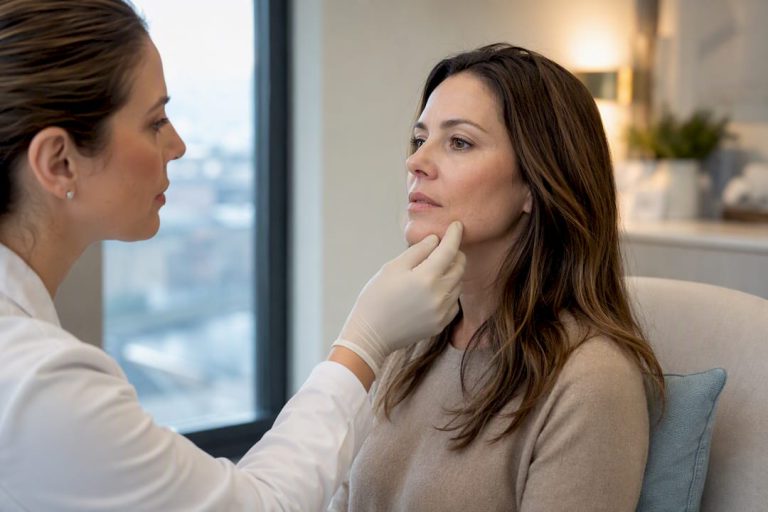
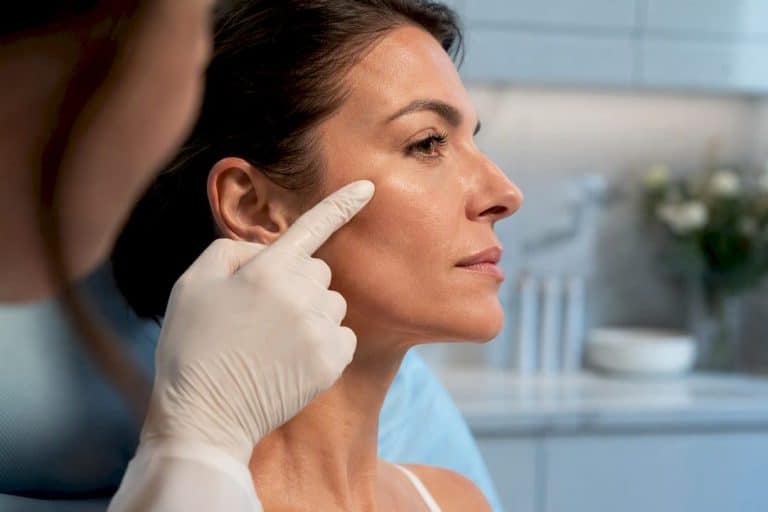
- Assess and diagnose. Determine whether pigmentation is epidermal or dermal, identify any active inflammation (acne, eczema, rosacea), review your medication history, and confirm pregnancy or breastfeeding status. This step is non-negotiable before any treatment begins.
- Establish photoprotection immediately. Broad-spectrum SPF 50+ with HEVL coverage is the single most important step. Without it, any topical or procedural treatment is working against an ongoing trigger. Strict photoprotection is central to melasma and hyperpigmentation management, and tinted sunscreens with iron oxide or titanium dioxide are specifically recommended for higher phototypes.
- Begin first-line medical topical therapy. Hydroquinone-based combinations remain the traditional gold standard; azelaic acid, topical tranexamic acid, cysteamine, and niacinamide are effective alternatives. Allow 8–16 weeks before assessing response.
- Escalate to combination protocols and procedural adjuncts if needed. Superficial chemical peels, microneedling, or conservative laser settings can be layered in once the skin is stable and well-prepped. Sequencing matters: topicals first, procedures second.
- Plan for maintenance. Pigmentation recurs without ongoing photoprotection and periodic topical use. A maintenance plan, including seasonal touch-ups, is part of the treatment, not an afterthought.
When to consult a clinician promptly: sudden or widespread new pigmentation; a lesion that is rapidly changing in size, shape, or colour; pigmentation that worsens despite consistent treatment; any concern during pregnancy or breastfeeding; or a history of keloids before considering any resurfacing procedure.
The StatPearls guidance on post-inflammatory hyperpigmentation is clear: treat underlying inflammation, such as active acne or eczema, before introducing any resurfacing procedure. Skipping this step increases the risk of worsening PIH significantly.
Which topical treatments actually work for hyperpigmentation?
Topical therapy is the backbone of hyperpigmentation management. Medscape’s clinical guideline identifies topical medical-grade therapy as the recommended first-line intervention, with hydroquinone-based combinations as the traditional gold standard and azelaic acid and newer agents as effective alternatives.
Prescription and medical-grade topicals
Hydroquinone (2–4%) works by inhibiting tyrosinase, the enzyme central to melanin production. Triple combination therapy, pairing hydroquinone with tretinoin and a mild topical corticosteroid, is one of the most studied formulations for melasma. In Canada, 4% hydroquinone requires a prescription; 2% formulations are available over the counter in some provinces but are less commonly stocked. Hydroquinone is contraindicated in pregnancy, and prolonged unsupervised use carries a risk of exogenous ochronosis, a paradoxical darkening of the skin.
Tretinoin (a retinoid) accelerates cell turnover and enhances penetration of other agents. It is prescription-only in Canada and requires a gradual introduction to avoid irritation-induced PIH, particularly in darker skin tones.
Azelaic acid (15–20%) inhibits tyrosinase and has anti-inflammatory properties, making it well-suited for PIH and melasma in sensitive or pregnant skin. It is available by prescription at higher strengths and in some over-the-counter formulations at lower concentrations.
Second-line and alternative topicals
Research published in PMC identifies azelaic acid, topical tranexamic acid, kojic acid, and cysteamine as reasonable alternatives or adjuncts, particularly for patients who cannot tolerate hydroquinone or are pregnant. Stabilised cysteamine is noted as a potent option for PIH, and combination therapy consistently outperforms monotherapy for most patients.
- Topical tranexamic acid: Reduces melanin transfer; well-tolerated, suitable for sensitive skin and during pregnancy (topical form only).
- Kojic acid: Tyrosinase inhibitor derived from fungi; often combined with other agents; can cause contact sensitisation in some people.
- Niacinamide (5–10%): Reduces melanosome transfer from melanocytes to keratinocytes; anti-inflammatory; widely available over the counter and well-tolerated across skin types.
- Vitamin C (L-ascorbic acid, 10–20%): Antioxidant that interrupts melanin synthesis; choose stabilised formulations (ascorbic acid in an anhydrous or low-pH base) for efficacy, as vitamin C degrades quickly when exposed to air and light.
Pro Tip: Layer your topicals in the correct order: thinnest to thickest consistency, with vitamin C serum applied to clean skin before moisturiser, and sunscreen as the final step in the morning. At night, retinoids or azelaic acid go on after cleansing and before a barrier-focused moisturiser.
Topical comparison at a glance
| Agent | Best for | Effectiveness | Time to results | Skin-tone suitability | Typical Canadian cost | Safety notes |
|---|---|---|---|---|---|---|
| Hydroquinone 4% (Rx) | Melasma, PIH | High | 8–12 weeks | All types; caution Fitzpatrick V–VI | $30/tube (Rx) | Pregnancy contraindicated; ochronosis risk with prolonged use |
| Triple combination (Rx) | Moderate-severe melasma | Very high | 8–16 weeks | Caution in darker tones | $60/tube | Requires clinician supervision |
| Azelaic acid 15–20% (Rx) | PIH, melasma, sensitive skin | Moderate-high | 12–16 weeks | All types including pregnancy | $40/tube | Generally well-tolerated |
| Topical tranexamic acid | Melasma, PIH | Moderate | 8–12 weeks | All types | $30–$70 (OTC/Rx) | Very safe; suitable in pregnancy (topical) |
| Niacinamide 5–10% | Mild PIH, uneven tone | Moderate | 8–16 weeks | All types | $15–$50 (OTC) | Excellent tolerability |
| Vitamin C (stabilised) | Solar pigmentation, prevention | Moderate | 8–16 weeks | All types | $30 (OTC) | Unstable formulations lose efficacy quickly |
| Kojic acid | Mild melasma, lentigines | Moderate | 12+ weeks | All types; patch test advised | $20 (OTC) | Contact sensitisation possible |
| Cysteamine (stabilised) | PIH, melasma | Moderate-high | 12–16 weeks | All types | $60 | Newer agent; well-tolerated |
Cost ranges are approximate and vary by province, pharmacy, and clinic. Prescription agents require a clinician visit.
What in-clinic procedures treat pigmentation most effectively?
Procedural treatments work best as the second layer of a plan, not the first. When topicals and photoprotection have stabilised the skin, in-clinic options can accelerate results or address pigment that topicals alone cannot reach.
Chemical peels
Superficial peels using glycolic acid (20–70%) or salicylic acid (20–30%) work primarily on epidermal pigmentation. They accelerate cell turnover, enhance penetration of topical agents, and are generally safe across skin types when used conservatively. Medium-depth peels using trichloroacetic acid (TCA) at 15–35% reach the upper dermis and can address more stubborn pigmentation, but they carry a higher risk of PIH in Fitzpatrick types III–VI and require more downtime. Understanding peel depths before booking is worth your time.
Microneedling
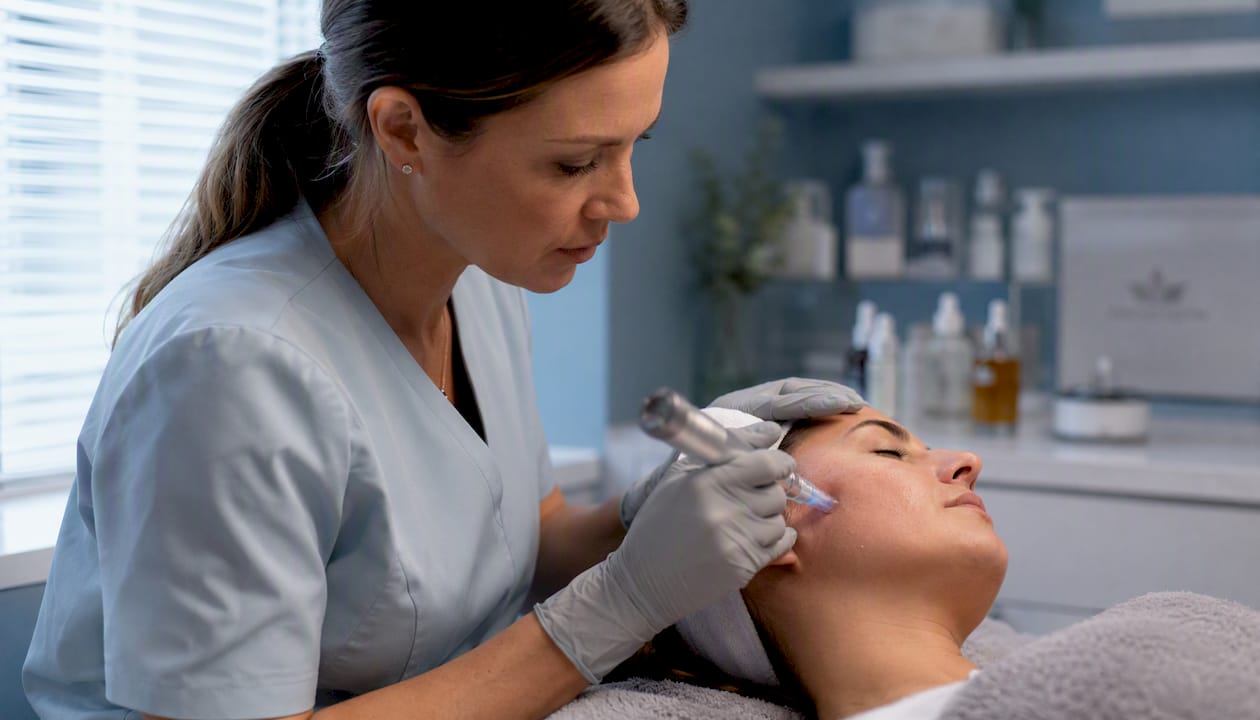
Microneedling creates controlled micro-injuries that stimulate collagen remodelling and, when combined with topical boosters such as tranexamic acid or vitamin C, can deliver these agents deeper into the skin. A published comparative study found that microneedling with tranexamic acid and vitamin C produced greater improvements in melasma severity scores and fewer adverse effects than 15% TCA peeling over 12 weeks. Microneedling is often favoured for darker skin tones precisely because it stimulates repair without the thermal injury that triggers PIH in higher Fitzpatrick types. Recovery typically involves 24–72 hours of redness and mild swelling.
Microneedling revives skin through a mechanism that suits a wide range of clients, including those who have been told they are not good laser candidates.
Laser and light-based treatments
- IPL (Intense Pulsed Light): Effective for solar lentigines and mild diffuse pigmentation in lighter skin tones (Fitzpatrick I–III). Not ideal for melasma, as it can trigger a rebound flare.
- Q-switched Nd:YAG laser: Targets melanin with short pulses; used for lentigines, PIH, and some melasma. Low-fluence settings are safer for darker skin tones.
- Picosecond lasers: Deliver energy in ultra-short pulses, reducing thermal damage and PIH risk compared with nanosecond devices; increasingly used for melasma and PIH in a range of skin tones.
- Non-ablative fractional lasers: Effective for melasma but carry recurrence and PIH risk in darker skin; settings and spacing must be carefully optimised to reduce complications.
- Ablative CO2 resurfacing: Powerful but carries the highest PIH risk; generally reserved for lighter skin tones and specific indications under specialist supervision.
Combination protocols
Clinicians often sequence treatments for synergy: a 6–12 week topical pre-treatment phase, followed by a superficial peel or microneedling session, then reassessment before considering laser. Combination approaches using medical-grade microneedling alongside a pigment-targeting peel often produce superior outcomes to single intense procedures, with careful sequencing being the key to both safety and efficacy.
Skin-tone suitability and PIH risk by Fitzpatrick type
| Fitzpatrick type | Recommended first-line procedure | Higher-risk procedures | Precautions |
|---|---|---|---|
| I–II (very fair) | IPL, superficial peels, microneedling | Ablative CO2 (use conservatively) | Standard photoprotection |
| III (medium) | Superficial peels, microneedling, Q-switched Nd:YAG | IPL (risk of rebound), medium TCA | Pre-treat with topicals; test patch |
| IV (olive) | Microneedling, low-fluence Q-switched Nd:YAG | IPL, high-fluence fractional laser | Mandatory topical pre-treatment; conservative settings |
| V–VI (dark to very dark) | Microneedling, topical-only protocols | Ablative lasers, high-strength TCA, IPL | Specialist referral strongly advised; test patch always |
Advanced treatments and darker skin tones: what to know before you proceed
Aggressive ablative lasers and high-strength chemical peels carry a real risk of worsening PIH when the skin barrier is compromised or active inflammation is present. For people with Fitzpatrick types IV–VI, this risk is not theoretical; it is one of the most common reasons clients present to clinics after a procedure gone wrong elsewhere.
Safer alternatives for darker skin include low-fluence Q-switched Nd:YAG laser, microneedling-based combination protocols, conservative superficial peels, and topical-first approaches. The Springer article on microneedling-assisted therapies notes higher patient satisfaction with microneedling-based approaches compared with aggressive laser-only pathways, partly because the controlled stimulation of repair produces safer pigment outcomes.
Pro Tip: Always stabilise inflammation and complete a topical pre-treatment phase of at least 4–6 weeks before any resurfacing procedure. A conservative test patch on a small, inconspicuous area is standard practice before treating the full face in anyone with Fitzpatrick type III or above.
A concise risk checklist before any procedural treatment:
- History of keloid or hypertrophic scarring
- Active inflammatory skin condition (acne, eczema, rosacea)
- Recent isotretinoin use (most clinicians advise waiting 6–12 months after stopping before resurfacing)
- Pregnancy or breastfeeding
- Current use of photosensitising medications
- Uncontrolled hormonal triggers (e.g., ongoing oral contraceptive use without photoprotection)
If any of these apply, a referral to a dermatologist or specialist is the appropriate next step before booking a procedural treatment.
How does sun protection prevent pigmentation from coming back?
Photoprotection is not optional. Without it, any improvement from topicals or procedures will fade within weeks as UV and visible light re-stimulate melanin production. Global expert consensus recommends tinted sunscreens and topical depigmenting agents as the foundation of any management plan, with cautious procedural use tailored to skin type.
Daily photoprotection essentials:
- Use a broad-spectrum SPF 50+ sunscreen every morning, rain or shine, indoors or out. UVA passes through glass.
- Choose a tinted formula containing iron oxide or a combination of zinc oxide and titanium dioxide. These physical filters block HEVL, which is particularly important for melasma and for Fitzpatrick types III–VI.
- Apply generously: roughly a quarter teaspoon for the face and neck. Most people apply far less than the tested amount, which significantly reduces effective SPF.
- Reapply every two hours when outdoors, or after sweating and swimming.
- Wear a wide-brim hat and UV-protective clothing during peak sun hours (10 AM to 4 PM).
- Avoid tanning beds entirely. There is no safe tanning dose for someone managing pigmentation.
Lifestyle factors that support outcomes:
- Manage acne and dermatitis promptly. Every inflammatory episode is a potential trigger for new PIH.
- Stop smoking. Smoking impairs skin repair and can worsen uneven tone.
- Avoid or discuss with your doctor any photosensitising medications (certain antibiotics, diuretics, NSAIDs) when pigmentation is an active concern.
- Oral Polypodium leucotomos extract has supportive evidence as an adjunct photoprotective measure, though it does not replace topical sunscreen.
Understanding the skin barrier’s role in pigmentation control is equally relevant here: a compromised barrier amplifies UV sensitivity and slows recovery from any treatment.
What results can you expect, and what does treatment cost in Canada?
Pigmentation management takes months, not weeks. Topical regimens often require at least 8–16 weeks to show meaningful change, and maintenance is commonly necessary to prevent relapse. Setting this expectation early prevents frustration and premature abandonment of an effective plan.
Timeline and typical Canadian cost ranges
| Method | Time to visible improvement | Typical sessions needed | Approximate Canadian cost | Downtime |
|---|---|---|---|---|
| Medical topicals (Rx) | 8–16 weeks | Ongoing (daily use) | $40/month | None |
| OTC topicals (niacinamide, vitamin C) | 8–16 weeks | Ongoing | $15/month | None |
| Superficial chemical peel | 4–8 weeks (series) | 3–6 sessions | $100/session | 2–5 days mild peeling |
| Medium-depth TCA peel | 4–12 weeks | 1–3 sessions | $250/session | 5–10 days peeling/redness |
| Microneedling | 6–12 weeks | 3–6 sessions | $250/session | 24–72 hours redness |
| IPL | 4–8 weeks | 3–5 sessions | $200/session | Minimal to 3 days |
| Q-switched / picosecond laser | 4–12 weeks | 3–8 sessions | $200/session | 1–3 days depending on settings |
| Non-ablative fractional laser | 8–16 weeks | 3–5 sessions | $400/session | 3 days |
Prices are approximate ranges for Ontario and vary by clinic, geographic location, and individual treatment plan. A consultation is required to confirm suitability and pricing.
What to expect during recovery:
- Topicals: no downtime, but initial irritation (redness, flaking) is common in the first 2–4 weeks with retinoids or azelaic acid.
- Peels: expect visible peeling and sensitivity for several days; avoid active ingredients and sun exposure during healing.
- Microneedling: redness and mild swelling resolve within 1–3 days for most people; avoid makeup for 24 hours.
- Lasers: recovery varies widely by device and settings; some treatments cause only mild redness while others require a week of social downtime.
Maintenance typically means continuing daily photoprotection indefinitely, using topical agents seasonally or year-round, and scheduling clinic touch-ups every 3–12 months depending on the method and individual response. Knowing how to protect your skin after pigmentation treatment is as important as the treatment itself.
This article provides general information only. Consult a qualified clinician or dermatologist to confirm current treatment options, pricing, and suitability for your specific situation.
When should you stop self-treating and see a clinician?
Most people can begin photoprotection and over-the-counter topicals on their own. But there are clear signals that self-management is no longer appropriate.
Common side effects to watch for by modality:
- Topicals: Irritation, dryness, and peeling are expected in the early weeks. Persistent redness, worsening pigmentation, or a paradoxical darkening after prolonged hydroquinone use (exogenous ochronosis) require clinical review.
- Chemical peels: Excessive blistering, prolonged redness beyond 10 days, or scarring are not normal and need prompt attention.
- Lasers and energy devices: PIH, hypopigmentation (loss of colour), or prolonged crusting beyond the expected recovery window all warrant follow-up.
Red-flag checklist: stop and seek specialist care if you notice:
- A lesion changing rapidly in size, shape, or colour (rule out melanoma)
- Excessive blistering or crusting after any procedure
- Pigmentation that is worsening consistently despite 12+ weeks of appropriate treatment
- Any new pigmentation during pregnancy or breastfeeding
- Signs of infection at a treated site
Practical safe-use tips:
- Always patch test a new active ingredient on the inner arm for 48 hours before applying to the face.
- Do not combine strong actives (e.g., high-dose vitamin C with retinoids and AHA in the same routine) without clinician guidance; layering too many exfoliants increases irritation and PIH risk.
- Stop isotretinoin at least 6 months before any resurfacing procedure; many clinicians advise 12 months.
- Inform your clinician of all medications, including oral contraceptives and supplements, before any procedural treatment.
A note on self-treatment limits: Over-the-counter products can maintain results and manage mild pigmentation, but prescription agents and procedural treatments carry real risks when used without proper assessment. If your pigmentation has not responded after three to four months of consistent OTC care, a clinician consultation is the most efficient next step, not a stronger product purchased online.
How Enriched Med Spa approaches pigmentation treatment in Ontario
Many clients arrive at Enriched Med Spa after months of trying over-the-counter products with inconsistent results. The pattern is familiar: a good skincare routine, a reasonable sunscreen, but no clear diagnosis of what type of pigmentation they are dealing with or what is driving it. That missing step, the clinical assessment, is where a structured protocol makes a real difference.
The approach at Enriched Med Spa follows a clear sequence:
- Initial consultation and assessment: A thorough skin history, review of medications and hormonal factors, and photographic documentation. Where appropriate, Wood’s lamp or dermatoscopic assessment helps distinguish epidermal from dermal pigmentation and guides treatment selection.
- Topical pre-treatment phase (6–12 weeks): Clients begin with a medical-grade topical regimen tailored to their skin type and pigmentation cause. This phase stabilises the skin, reduces inflammation, and prepares it for any procedural work that follows.
- Conservative procedural escalation: Once the skin is stable, options such as medical-grade microneedling, superficial chemical peels, or laser resurfacing are introduced in a sequenced, conservative manner. Darker skin tones are managed with particular care, favouring microneedling and low-fluence laser settings over aggressive ablative approaches.
- Maintenance plan: Clients leave with a clear plan for ongoing photoprotection, topical maintenance, and scheduled follow-up appointments. Pigmentation is a long-term management challenge, and the clinic communicates this honestly from the first visit.
Many clients who have controlled their inflammation first, and committed to daily photoprotection, respond well within the first treatment cycle. The ones who see the most durable results are those who treat the maintenance phase with the same seriousness as the active treatment phase.
Key takeaways
A medical-first, stepwise approach to pigmentation reduction, starting with photoprotection and evidence-based topicals before any procedural escalation, produces the safest and most durable outcomes for the widest range of skin types.
| Point | Details |
|---|---|
| Diagnose before treating | Identify pigmentation type (epidermal vs. dermal) and active triggers before starting any treatment. |
| Photoprotection is non-negotiable | Use SPF 50+ tinted sunscreen with iron oxide daily; reapply every two hours outdoors. |
| Start with topicals | Allow 8–16 weeks for medical-grade topicals to show meaningful change before escalating to procedures. |
| Procedures require preparation | Pre-treat with topicals for 6–12 weeks and stabilise inflammation before any resurfacing treatment. |
| Enriched Med Spa | Offers a structured, assessment-first protocol in Ontario, including microneedling, peels, and laser resurfacing with personalised maintenance plans. |
Why patience matters more than intensity in pigmentation treatment
Clients often come in hoping for a single session that clears everything. We understand that impulse completely. Pigmentation can feel discouraging, especially when you have already tried products that promised results and delivered little. But the evidence, and our clinical experience, consistently points in the same direction: the clients who do best are the ones who commit to the slower, more deliberate path.
Aggressive early interventions, particularly lasers applied before the skin is properly prepared, frequently produce a short-term improvement followed by a rebound that is worse than the original pigmentation. The global expert consensus on melanin hyperpigmentation disorders describes this well: pigment management is a marathon, and “less is more” at the start. Robust photoprotection and barrier health set the stage for effective later procedures.
What this means practically is that the first two months of a well-structured plan often look unimpressive from the outside. You are applying sunscreen, using a topical, being consistent. The skin is stabilising. That groundwork is what makes the procedural phase, when it comes, actually work. Combining modalities thoughtfully, rather than stacking them aggressively, is where the real gains happen. We favour that approach not because it is cautious for caution’s sake, but because the outcomes are genuinely better and the risk of setbacks is meaningfully lower.
Personalised pigmentation care at Enriched Med Spa
For clients in Woodbridge and East Gwillimbury who want a clear, personalised plan rather than a generic product recommendation, Enriched Med Spa offers a structured consultation process that covers assessment, topical protocol design, and procedural options tailored to your skin type and pigmentation cause. The clinic’s skin treatment options include medical-grade microneedling, chemical peels, and CO2 laser resurfacing, all delivered within a sequenced, safety-first framework. Prescription topical consultations and maintenance packages are also available for clients who need ongoing clinical support between procedural sessions. Book a consultation to get a treatment plan built around your specific skin, not a one-size-fits-all protocol.
Useful sources and further reading
The following resources were used to build this article and are recommended for further reading:
- Postinflammatory Hyperpigmentation, StatPearls / NCBI Bookshelf: Covers PIH causes, stepwise treatment, and the importance of treating inflammation before resurfacing. Referenced throughout the stepwise approach and safety sections.
- Dermatology: how to manage facial hyperpigmentation in skin of colour, PMC: Detailed clinical review of topical alternatives, laser risks in darker skin, and combination protocols. Primary source for the topical treatments and procedural sections.
- Hyperpigmentation, Merck Manual Professional Edition (Canadian edition): Covers photoprotection requirements, oral tranexamic acid evidence, and topical timelines. Referenced in photoprotection and timeline sections.
- Global consensus on the management of melanin hyperpigmentation disorders, Beiersdorf PDF: International expert consensus on photoprotection, topical agents, and conservative procedural use. Referenced in prevention and perspective sections.
- Management of melanin hyperpigmentation disorders, Medscape: Guideline-style clinical reference for first-line topical therapy and hydroquinone-based combinations.
- Comparative study: microneedling vs TCA peel for melasma, PubMed: Interventional study showing superior MASI improvements and fewer adverse effects with microneedling plus tranexamic acid versus 15% TCA peel over 12 weeks.
- Combination approach to hyperpigmentation, JCAD: Supports combination protocol sequencing and synergy between microneedling and peels.
- Skin Pigmentation Types, Causes and Treatment, PMC: Broad review of pigmentation types, mechanisms, and treatment categories.
- Enriched Med Spa, skin treatment options: Local Ontario clinic reference for consultation booking and available pigmentation treatments.
Recommended
- Do Facials Help with Dark Spots? Brightening Your Complexion Naturally – Botox Laser Hair Removal OxyGeneo Medi Facial Microneedling – Enriched Med Spa – Vaughan Woodbridge Maple Vellore Village
- Why choose advanced skin treatments: a clear guide
- Microneedling: how it revives skin safely and effectively
- Laser Hair Removal While Pregnant: Is It Safe? – Enriched Med Spa