Medical-grade chemical peels fall into three core categories: superficial, medium, and deep. Each penetrates a different tissue layer, uses distinct active agents, and suits different skin concerns. Superficial peels (glycolic or salicylic acid) address brightness and texture with minimal downtime. Medium-depth peels (trichloroacetic acid, or TCA) target pigmentation and acne scarring with several days of recovery. Deep peels (phenol) treat severe photoageing and deep wrinkles but require weeks of healing and strict patient selection.
One safety point applies to all three: medical-grade peels require clinician oversight. The single most important safety consideration before any peel is your Fitzpatrick skin type, because darker phototypes carry a meaningfully higher risk of post-inflammatory hyperpigmentation (PIH).
At a glance:
- Superficial peels (glycolic at concentrations commonly used for superficial peels, salicylic, lactic, mandelic): mild exfoliation, no real downtime, best for acne, dull skin, and mild texture concerns
- Medium peels (TCA at concentrations typical for medium-depth peels, Jessner + TCA combinations): penetrate to the papillary dermis, 5–7 days of peeling, best for pigmentation, acne scarring, and early photoageing
- Deep peels (phenol, TCA at concentrations typical for deep peels): reach the mid-reticular dermis, weeks of recovery, reserved for severe sun damage and deep wrinkles in carefully selected patients
Table of Contents
- What actually makes a peel “medical grade”?
- How do the types of medical grade peels compare by depth?
- Which peel chemistry is right for your skin concern?
- Which skin concerns do medical peels treat best?
- Fitzpatrick skin types and PIH risk: what you need to know
- What happens at a medical peel appointment?
- What to expect during recovery
- Risks, complications, and who should not have a peel
- How to choose the right peel: a practical framework
- Enrichedmedspa: medical-grade peels in Woodbridge and East Gwillimbury
- Key takeaways
- When to choose a peel over laser or injectables
- Ready to find the right peel for your skin?
- Useful sources and further reading
What actually makes a peel “medical grade”?
The difference between a spa peel and a medical-grade peel comes down to two measurable factors: concentration and pH. Spa peels typically use AHAs at 5–15% with a pH around 3.5–4.0. Medical-grade peels use higher concentrations and a lower pH, which increases free acid activity and drives deeper dermal penetration to stimulate collagen remodelling. That chemistry shift is what produces measurable clinical results — and what creates real risk if applied without proper training.
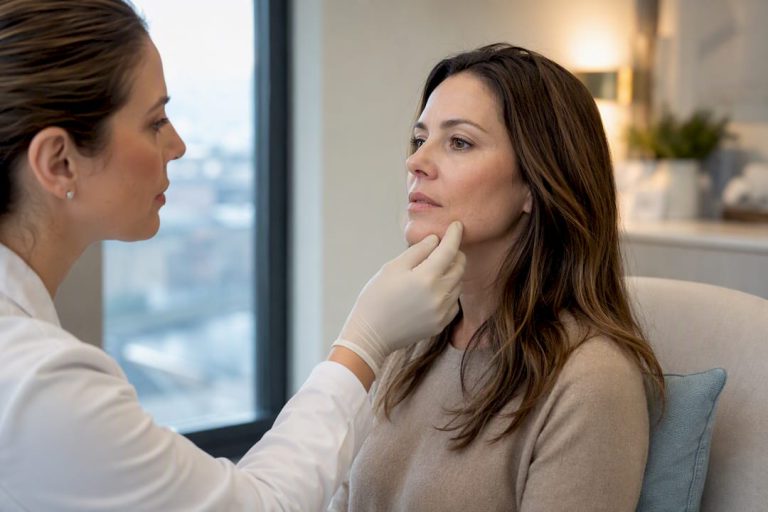
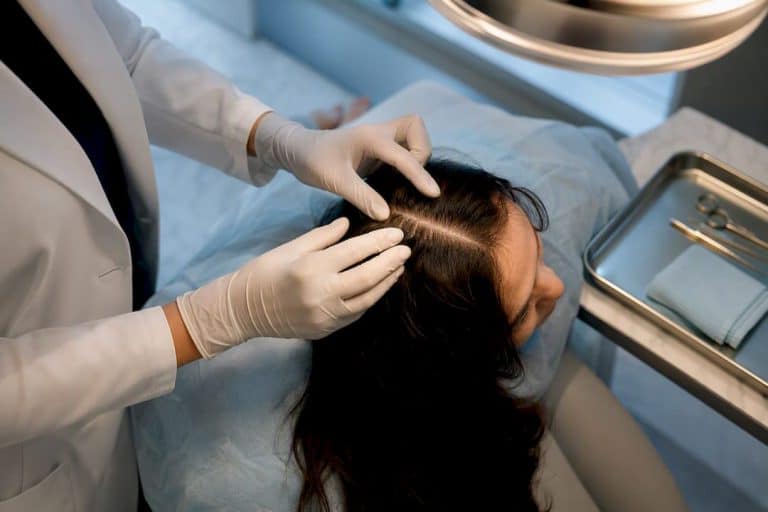
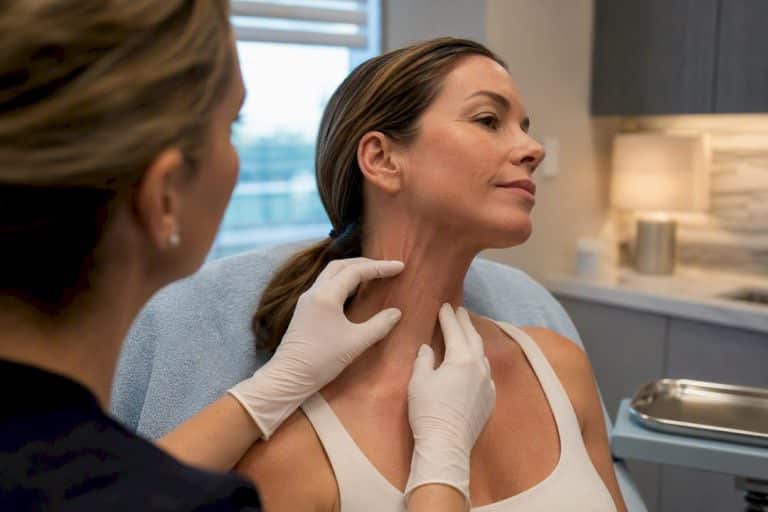
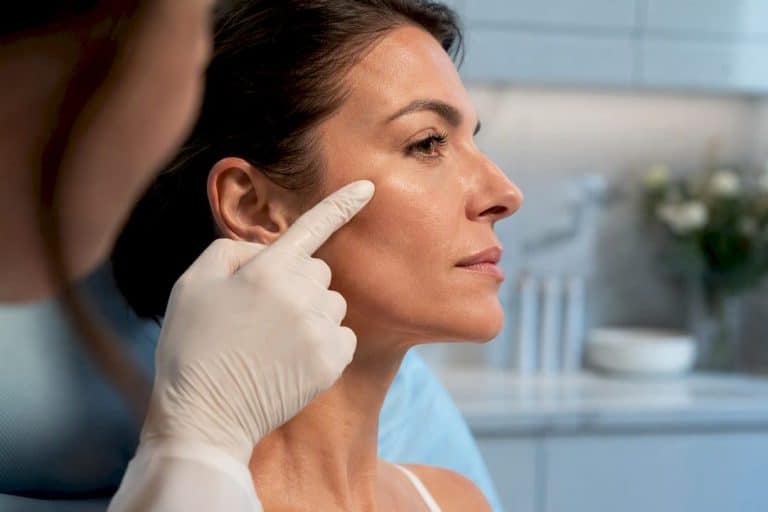
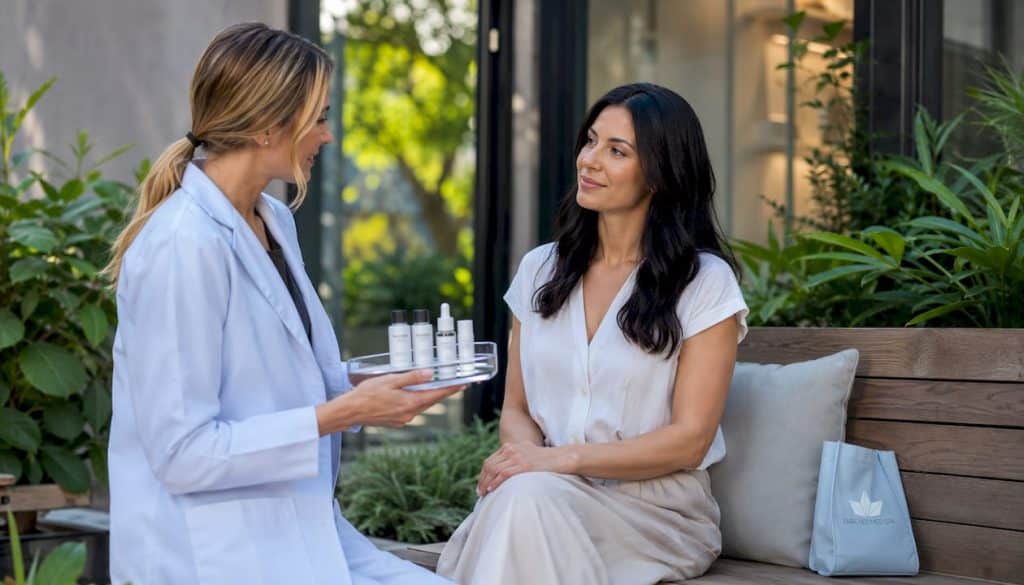
Clinician oversight is not a formality. During a medical peel, a trained practitioner actively monitors your skin’s response: watching for the degree of frosting (the white precipitate that signals protein coagulation), assessing erythema, and deciding in real time whether to neutralise or continue. That intra-procedure decision-making is what separates a safe outcome from a complication. A clinician can also manage adverse reactions on the spot — something no at-home kit provides.
A clinician would recommend a medical peel over a spa treatment when your concern requires genuine dermal remodelling: persistent pigmentation, acne scarring, photoageing, or texture that has not responded to topical products. For mild maintenance, a lighter clinical facial may be sufficient. The recommendation depends on your skin’s baseline, your tolerance for downtime, and your goals.
Pro Tip: At your consultation, ask specifically about priming. A pre-treatment regimen with topical retinoids or hydroquinone for 2–4 weeks before a medium or deep peel can reduce PIH risk and improve the evenness of the result. Also ask your clinician to walk you through realistic downtime so you can plan around work and social commitments.
How do the types of medical grade peels compare by depth?
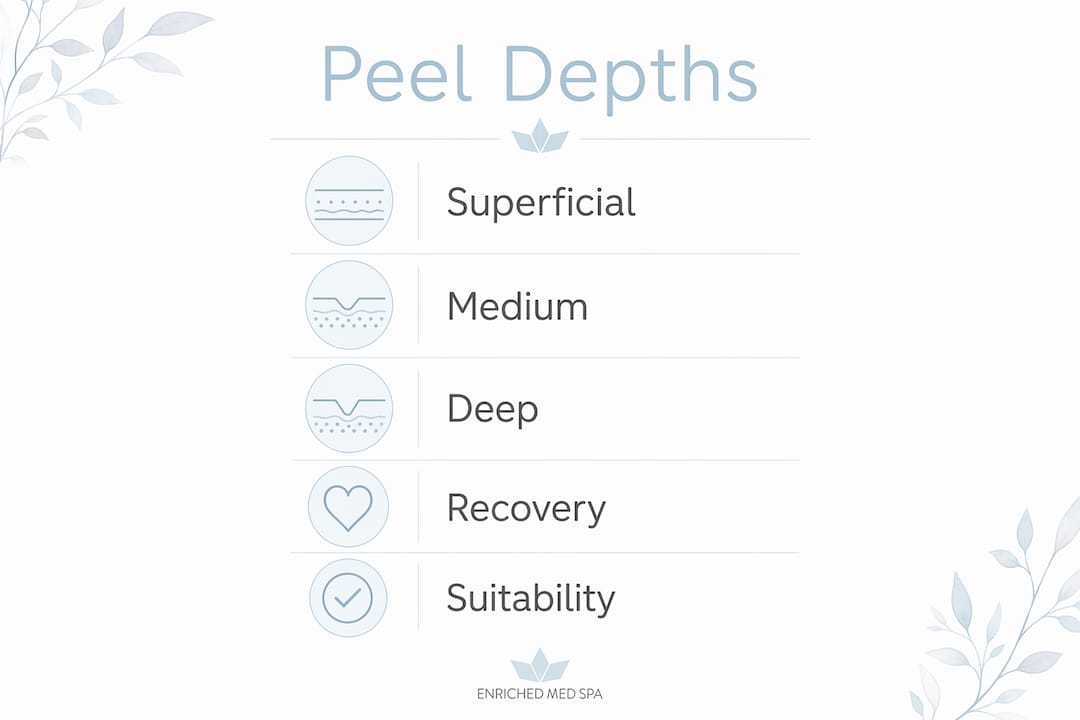
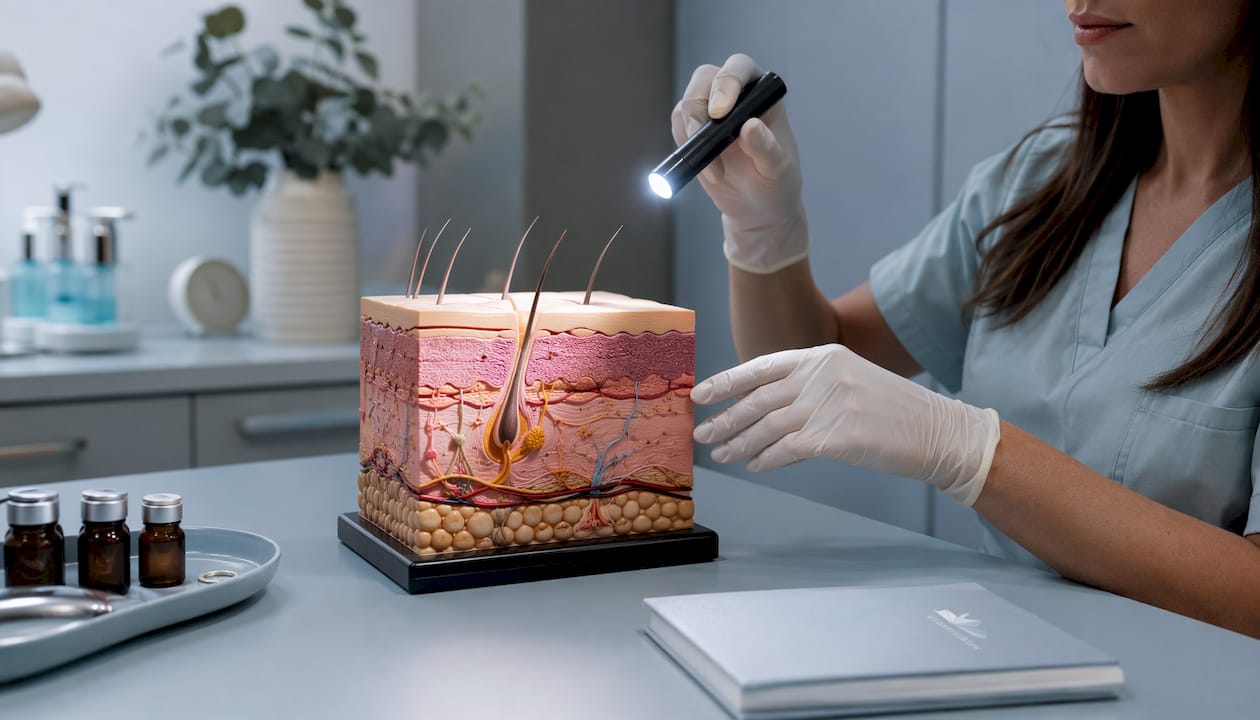
Chemical peels are classified as superficial, medium, or deep based on the tissue layer they reach. Depth determines intensity, recovery time, and the range of concerns each peel can address.
| Peel depth | Tissue layer reached | Active agents / chemistry | Best for / primary indications | Sessions typically needed | Downtime / recovery | Risks and skin-type suitability |
|---|---|---|---|---|---|---|
| Superficial | Epidermis only | Glycolic 20–50%, salicylic, lactic, mandelic, low-potency TCA 10–20% | Acne, mild hyperpigmentation, dull texture, enlarged pores | Series of 4–6, every 2–4 weeks | Minimal; mild redness 1–2 days, light flaking | Suitable for all Fitzpatrick types with appropriate agent selection |
| Medium | Epidermis through papillary dermis into upper reticular dermis | TCA at concentrations typical for medium-depth peels, Jessner + TCA, 70% glycolic + TCA | Hyperpigmentation, melasma, actinic keratoses, superficial acne scars, shallow wrinkles | 1–3 sessions spaced months apart | 5–7 days of visible peeling and redness | Higher PIH risk for Fitzpatrick III–VI; priming required |
| Deep | Mid-reticular dermis | Phenol (Baker-Gordon solution), TCA at concentrations typical for deep peels | Severe photoageing, deep wrinkles, significant acne scarring | Typically one treatment every few years | Several weeks; crusting, re-epithelialization | Restricted to Fitzpatrick I–II; systemic risks with phenol; physician oversight mandatory |
A few practical notes on reading this table. Superficial peels are the workhorses of a peel programme: low risk, repeatable, and suitable for maintaining results between more intensive treatments. Medium peels offer a meaningful step up in clinical effect without the prolonged recovery of a deep peel, which is why they are the most commonly recommended option for visible pigmentation or early scarring. Deep peels are genuinely rare in modern practice, reserved for cases where other modalities have not achieved the needed result.
Which peel chemistry is right for your skin concern?
The active ingredient in a peel determines how it interacts with your skin, which conditions it targets, and how much discomfort or downtime to expect. Clinicians often combine agents or adjust concentrations to tailor the outcome.
- Glycolic acid (AHA): Derived from sugar cane, glycolic is the most widely studied peel agent. At 20–50% it produces superficial exfoliation; concentrations approaching 70% can reach medium depth. Best for fine lines, dull skin, and mild hyperpigmentation. Its small molecular size means rapid penetration, so timing during application is critical.
- Lactic acid (AHA): A gentler alternative to glycolic, with a larger molecular size and a more forgiving penetration rate. Well suited to sensitive or dry skin types, and often used in introductory peel programmes.
- Mandelic acid (AHA): The largest AHA molecule, making it the slowest to penetrate and the most tolerable for reactive or darker skin. A practical first-line option for Fitzpatrick IV–VI clients who want an AHA peel with reduced PIH risk.
- Salicylic acid (BHA): Oil-soluble, which means it penetrates the follicle rather than staying at the surface. The go-to choice for oily, acne-prone skin; it reduces comedones and calms inflammation. Typically used at 20–30%.
- Pyruvic acid (alpha-keto acid): Bridges AHA and BHA properties. Useful for acne and mild photoageing, with some antimicrobial activity that makes it relevant for active breakout management.
- TCA (trichloroacetic acid): The most versatile medium-depth agent. Concentration drives depth: 10–20% for very light to light effects, 35% for medium-depth work, and above 50% for deep resurfacing. TCA addresses photodamage, lentigines, fine lines, and superficial acne scars effectively.
- Phenol: A potent aromatic compound used in deep peels, often formulated as the Baker-Gordon solution (phenol 88% with croton oil). Reserved for severe photoageing and deep rhytides in Fitzpatrick I–II patients. Croton oil enhances depth and uniformity of the result.
- Jessner’s solution: A combination of resorcinol, salicylic acid, and lactic acid in ethanol. Commonly used as a primer layer before TCA to improve penetration evenness and reduce the TCA concentration needed for a medium-depth effect.
pH matters as much as concentration. The pKa of an acid determines the proportion in its active, free-acid form at a given pH. A lower pH means more free acid, more activity, and deeper penetration. Two products with the same percentage of glycolic acid can behave very differently if one is buffered to pH 3.5 and the other to pH 2.0.
Pro Tip: Combination peels (such as Jessner + TCA at concentrations typical for medium-depth peels) often outperform single-agent peels at equivalent concentrations because the primer layer improves uniform penetration. If your clinician recommends a combination approach, that is a sign of thoughtful protocol design, not an upsell.
Which skin concerns do medical peels treat best?
Most clients who come in for a peel consultation are dealing with one of a handful of overlapping concerns: uneven tone, acne or its aftermath, early signs of ageing, or skin that simply looks tired and rough. The peel depth and chemistry a clinician recommends will depend on which of these is the primary driver.
Photoageing and fine lines. Superficial peels improve surface texture and mild rhytides with repeated sessions. For more established fine lines and sun-induced pigmentation, a medium-depth TCA peel tends to produce more noticeable improvement in a single treatment. Deep wrinkles and significant solar damage are the domain of deep peels, though CO2 laser resurfacing is often a comparable or preferred alternative with a more controllable depth profile.
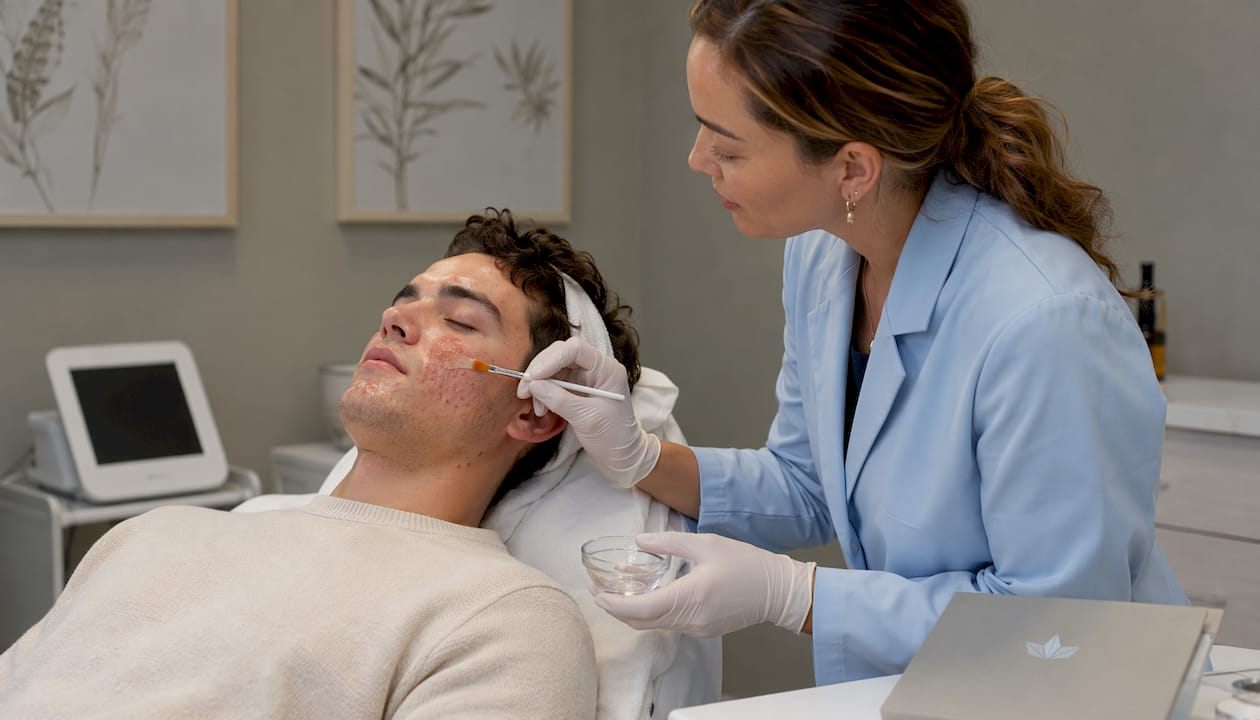
Hyperpigmentation and melasma. Medium peels are the most commonly recommended option here. TCA at 35%, or a Jessner + TCA combination, can address post-inflammatory pigmentation, lentigines, and melasma more effectively than a superficial series alone. That said, melasma is a chronic condition that tends to recur with sun exposure, so realistic expectations and ongoing sun protection are part of any treatment plan. For readers exploring topical approaches alongside peels, hyperpigmentation management often involves a combination of in-clinic and at-home strategies.
Active acne and congestion. Salicylic acid peels are the most targeted option for oily, acne-prone skin because of their follicular penetration. A series of superficial salicylic or pyruvic peels, spaced every 2–4 weeks, can reduce active breakouts, minimise pore appearance, and improve overall clarity.
Acne scarring. Shallow rolling or boxcar scars respond to medium-depth peels, often as part of a programme that may also include microneedling or laser. Deeper, ice-pick scars typically require more targeted interventions. A single medium peel rarely resolves scarring completely; most clients see meaningful improvement after a planned series. For a broader look at acne treatment options, combining modalities usually produces the best outcome.
Rough texture and dullness. This is where superficial peels shine. A consistent programme of light peels accelerates cell turnover, smooths surface irregularities, and restores a healthy glow without any significant downtime.
Fitzpatrick skin types and PIH risk: what you need to know
The Fitzpatrick scale classifies skin into six phototypes based on melanin content and response to UV exposure. Types I–II are fair, burn easily, and rarely tan. Types III–IV are medium, tan moderately. Types V–VI are darker, tan easily, and rarely burn. This classification matters enormously in peel selection because melanocytes in darker skin are more reactive to injury. Aggressive peels in higher Fitzpatrick types can trigger PIH, where the skin produces excess melanin in response to inflammation, leaving dark patches that can persist for months.
Clinicians working with darker skin phototypes typically follow a structured approach:
- Pre-treatment priming with topical agents (such as hydroquinone, kojic acid, or azelaic acid) for 2–4 weeks before the peel to suppress melanocyte activity
- Agent selection favouring mandelic or low-concentration lactic acid over glycolic, which penetrates more aggressively
- Test patching on a small area before a full treatment to assess individual reactivity
- Staged series rather than a single aggressive peel, building depth gradually over multiple sessions
- Strict sun avoidance before and after treatment, with broad-spectrum SPF 50 applied daily
Beyond Fitzpatrick type, other factors affect suitability. Active herpes simplex (cold sores) is a contraindication for any peel, as the procedure can trigger an outbreak. Current or recent isotretinoin use (within 6–12 months) impairs wound healing and is generally a contraindication for medium and deep peels. Pregnancy, active skin infections, and recent ablative laser treatments also require a delay or alternative approach. Your clinician will review all of these at consultation.
What happens at a medical peel appointment?
Understanding the appointment process removes a lot of the uncertainty. Here is how a typical session unfolds, from consultation through to the days after.
Before your appointment
| Timeframe | What to do |
|---|---|
| 2–4 weeks before | Begin priming regimen if prescribed (retinoids, hydroquinone, SPF) |
| 1 week before | Stop exfoliating acids (AHAs, BHAs), retinoids, and vitamin C serums |
| 48 hours before | Avoid waxing, threading, or any mechanical exfoliation on the treatment area |
| Day of appointment | Arrive with clean skin, no makeup, sunscreen, or active products |
Pre-appointment checklist:
- Disclose all current medications, including topical prescriptions
- Inform your clinician of any history of cold sores (prophylactic antivirals may be prescribed)
- Confirm you have not had recent laser, IPL, or dermabrasion in the past 4–6 weeks
- Arrange for someone to drive you home if sedation or a deep peel is planned
- Have your post-care products ready at home (gentle cleanser, bland moisturiser, SPF 50)
During the procedure
Your clinician will begin by thoroughly cleansing the skin to remove oils and residue, which ensures even acid penetration. The peel solution is then applied in controlled layers, typically with gauze, a brush, or cotton-tipped applicators. For superficial peels, the clinician monitors the skin for mild erythema and a light tingling sensation before neutralising with water or a bicarbonate solution. For TCA-based medium peels, the endpoint is a specific degree of frosting: a white precipitate that indicates the acid has reached the intended depth. Phenol peels require cardiac monitoring and are performed in a physician’s office or surgical setting.
The entire application typically takes 10–30 minutes depending on depth and the area treated. You may feel warmth, stinging, or tightening during the process. This is normal and expected.
What to expect during recovery
Recovery looks very different depending on peel depth, and setting accurate expectations is one of the most important parts of the consultation process.
Superficial peels produce mild redness for 24–48 hours and light flaking over days 2–4. Most people return to normal activities the same day or the next morning. Improvements in brightness and texture are often visible after 2–3 sessions, with optimal results from a full series of 4–6 treatments spaced every 2–4 weeks.
Medium peels involve a more visible healing process. Expect significant redness and swelling in the first 48 hours, followed by tight, bronzed skin that begins peeling in sheets around days 3–5. By day 7, most of the peeling is complete and new skin is visible, though some pinkness may persist for another week or two. Clients typically see noticeable improvement in pigmentation and texture after a single session, with further gains from 1–3 treatments spaced several months apart.
Deep peels require the most planning. The first week involves crusting, oozing, and significant swelling, particularly around the eyes. Re-epithelialization takes 10–14 days, and residual pinkness can last several weeks to months. Results are dramatic and long-lasting, but the recovery commitment is substantial. Deep peels are typically a single treatment, repeated only every few years if at all.
Aftercare essentials for all depths include: a gentle, fragrance-free cleanser twice daily; a bland, occlusive moisturiser to support barrier repair; and broad-spectrum SPF 50 applied every morning without exception. Avoid all active ingredients (retinoids, AHAs, BHAs, vitamin C) until your clinician clears you to reintroduce them, usually 2–4 weeks post-treatment. If you notice unusual pain, spreading redness, pustules, or blistering beyond what your clinician described, contact the clinic promptly.
For a detailed guide on preparing for skin treatments, including what to stock at home before your appointment, that resource covers the practical side in full.
Risks, complications, and who should not have a peel
Expected side effects after any peel include erythema, peeling, temporary sensitivity, and mild swelling. These are part of the healing process, not complications. The distinction matters: a complication is something that falls outside the expected healing trajectory.
Less common but possible complications:
- Post-inflammatory hyperpigmentation (PIH), particularly in Fitzpatrick III–VI
- Prolonged erythema beyond the expected recovery window
- Bacterial or viral infection (including herpes simplex reactivation)
- Milia (small white cysts) during healing
- Hypopigmentation, more common after deep peels and in darker skin types
- Scarring, rare but possible with deep peels or if post-care instructions are not followed
Rare but serious risks with phenol/deep peels. Phenol is absorbed systemically through the skin. Historical literature documents systemic complications including cardiotoxicity and arrhythmia, which is why phenol peels require cardiac monitoring, careful patient selection, and are restricted to Fitzpatrick I–II. This is not a treatment to approach casually.
Contraindications checklist:
- Active herpes simplex or bacterial skin infection in the treatment area
- Current isotretinoin use, or use within the past 6–12 months
- Pregnancy or breastfeeding
- Recent ablative laser or dermabrasion (within 4–6 weeks for superficial; longer for medium/deep)
- Known allergy to any peel component
- Unstable medical conditions (cardiac disease for phenol peels specifically)
- Unrealistic expectations or inability to follow post-care instructions
Clinicians mitigate risk through test patches, thorough medical history review, priming protocols, and staged treatment planning. If you have any of the above factors, your clinician may recommend an alternative approach or a modified protocol rather than declining treatment outright.
This article provides general information about medical-grade chemical peels and is not a substitute for professional medical advice. Please consult a qualified clinician for guidance specific to your skin type, health history, and treatment goals.
How to choose the right peel: a practical framework
Before booking, it helps to work through a short decision checklist. This is the same kind of triage a clinician will guide you through at consultation.
Your pre-booking checklist:
- Define your primary goal. Brightness and texture? Pigmentation? Acne? Scarring? Fine lines? The answer points directly to a depth and chemistry.
- Know your Fitzpatrick type. If you are type III or above, flag this early. It shapes agent selection and priming requirements.
- Assess your downtime tolerance. If you cannot take a week away from work or social commitments, a medium peel may not be the right timing even if it is the right treatment.
- Review your recent treatments. Recent laser, retinoid use, or isotretinoin history all affect what is safe and when.
- Consider your budget and timeline. A series of superficial peels spread over 3–4 months costs differently than a single medium peel. Neither is inherently better; the right choice depends on your goals and lifestyle.
Questions to ask your clinician at consultation:
- What is the concentration and pH of the peel you are recommending, and why?
- Do I need a priming regimen before treatment?
- How many sessions do you expect I will need to see meaningful improvement?
- What does my recovery look like day by day?
- What aftercare products do you recommend, and when can I reintroduce my usual actives?
- What are the realistic results I should expect, and over what timeframe?
When peels are not the answer: laser resurfacing (CO2 or fractional) tends to outperform peels for deeper scarring and more significant photoageing, with a more controllable depth profile. Injectables address volume loss and dynamic wrinkles, which peels cannot. Skin rejuvenation options span a wide range of modalities, and the best outcome often comes from combining approaches rather than relying on a single treatment. For a broader comparison of non-surgical skin treatments, including how peels fit within a full resurfacing plan, that overview is a useful reference.
Enrichedmedspa: medical-grade peels in Woodbridge and East Gwillimbury
Enrichedmedspa is a medical aesthetics clinic serving Woodbridge and East Gwillimbury, Ontario. Our team includes qualified medical aestheticians and clinicians who design peel programmes based on your skin type, concern, and realistic goals — not a one-size approach.
What we offer for chemical peel treatments:
- Superficial peel series using glycolic, salicylic, lactic, and mandelic acids, tailored to skin type and concern
- Medium-depth peel protocols for pigmentation, acne scarring, and photoageing, with priming plans included
- Combination approaches pairing peels with microneedling, laser resurfacing, or radiofrequency skin tightening for enhanced outcomes
- Fitzpatrick-specific protocols for clients with darker skin tones, including pre-treatment priming and conservative staging
- Referral pathways for deep phenol peels when indicated, ensuring appropriate physician oversight
At your consultation, we assess your skin under clinical lighting, review your medical history and current skincare regimen, and discuss what is realistic for your concern and timeline. We take photos at baseline so you can track your progress objectively. You will leave with a clear treatment plan, a priming schedule if applicable, and a full understanding of what recovery looks like before you commit to anything.
We also offer cosmetic injectables for clients whose concerns include volume loss or dynamic lines alongside texture and pigmentation, and we can discuss how to sequence these treatments to avoid overlap in downtime.
Key takeaways
Medical-grade peels require clinician selection and oversight because depth, chemistry, and skin type together determine both the clinical outcome and the safety profile.
| Point | Details |
|---|---|
| Three core depths | Superficial, medium, and deep peels each target different tissue layers and suit different concerns and downtime tolerances. |
| Chemistry drives the outcome | Agent choice (glycolic, salicylic, TCA, phenol) and pH determine penetration depth and which skin conditions respond best. |
| Fitzpatrick type is critical | Darker phototypes (III–VI) face higher PIH risk and require priming, conservative agent selection, and staged treatment. |
| Realistic expectations matter | A series of superficial peels suits maintenance; medium peels address pigment and scarring; deep peels are rare and recovery-intensive. |
| Enrichedmedspa offers personalised plans | Clients in Woodbridge and East Gwillimbury can book a consultation for a Fitzpatrick-specific, clinician-designed peel programme. |
When to choose a peel over laser or injectables
Peels are genuinely excellent for a specific set of concerns, and knowing where they fit in the broader treatment picture helps you make a more confident decision.
My honest view, after seeing many clients work through these choices: peels are underused for pigmentation and acne management, and overused as a substitute for treatments that would serve the client better. A series of well-chosen superficial peels for active acne and congestion is often more effective than people expect. A medium TCA peel for post-inflammatory hyperpigmentation can produce results that topical products alone rarely achieve. But when a client comes in with significant volume loss, deep dynamic wrinkles, or ice-pick scarring, a peel is not the primary answer.
Laser resurfacing, particularly fractional CO2, reaches depths and remodelling targets that even a medium peel cannot match for textural scarring. Injectables address the structural changes of ageing — volume deflation, brow descent, lip thinning — that no amount of resurfacing will correct. The most effective treatment plans tend to combine modalities: a peel series to address tone and surface texture, laser resurfacing for deeper structural concerns, and injectables for volume and dynamic lines. These are staged over time, not done simultaneously, so the skin heals fully between interventions and you are not managing multiple recovery periods at once.
The other thing worth saying plainly: a deeper peel is not automatically a better peel. A tailored series of superficial treatments, done consistently with proper priming and aftercare, often produces excellent results with a much safer profile and far less disruption to daily life. The goal is the right depth for your concern, not the most aggressive option available.
Ready to find the right peel for your skin?
Choosing between peel depths and chemistries is genuinely complex, and the right answer depends on factors that only a clinical assessment can determine. At Enrichedmedspa, we take the time to understand your skin’s history, your goals, and your lifestyle before recommending any treatment.
A consultation at our Woodbridge or East Gwillimbury clinic includes a full skin assessment, Fitzpatrick evaluation, and a personalised treatment plan with realistic timelines. If a peel is right for you, we will outline the exact protocol, priming schedule, and expected recovery. If another modality would serve you better, we will tell you that too. You can explore your full skin treatment options on our website, or book directly to speak with one of our clinicians about where to start.
Useful sources and further reading
The following sources informed this article. We recommend them for readers who want to verify clinical details or read further.
- Chemical Peels for Skin Resurfacing — StatPearls, NCBI Bookshelf: A peer-reviewed clinical reference covering patient selection, peel classification, active agents, contraindications, and complications. The most authoritative general reference for this topic.
- A practical approach to chemical peels — PMC/NIH: A clinical review with concentration ranges, agent classifications, and documented systemic risks for phenol peels. Useful for readers who want the evidence base behind depth and chemistry recommendations.
- Chemical peels: how to know which strength is right for your skin — KNTR Clinic: A Canadian clinic resource covering medical-grade versus spa peel distinctions, Fitzpatrick-specific priming, and clinician oversight. Relevant for Canadian readers comparing clinical options.
- Chemical Peel Skin Rejuvenation Treatments — Cerulean Medical Institute: A Canadian clinic overview of peel depth, pH and concentration differences, and downtime expectations.
For Canada-specific clinical advice, always consult a qualified medical aesthetician or physician who can assess your individual skin type, health history, and treatment goals in person.
Recommended
- Why choose medical-grade facials for better skin
- Chemical peel benefits: what you need to know in 2026
- What Is a Chemical Peel? Benefits and Considerations for Your Skin – Botox Laser Hair Removal OxyGeneo Medi Facial Microneedling – Enriched Med Spa – Vaughan Woodbridge Maple Vellore Village
- Top skin rejuvenation treatments: your 2026 guide