What are the key benefits of chemical peels?
Chemical peels deliver real, measurable improvements to skin texture, tone, and overall appearance. Whether you’re dealing with early sun damage, persistent acne, or fine lines that no topical cream seems to touch, a well-chosen peel can address concerns that surface-level skincare simply cannot reach.
Here’s what a professional chemical peel can do for your skin:
- Smoother texture: Exfoliates damaged outer layers, revealing softer, more refined skin underneath
- More even tone: Reduces hyperpigmentation, sun spots, and uneven colouring caused by UV exposure or hormonal changes
- Fewer fine lines: Stimulates collagen and elastin production, softening shallow wrinkles and rhytides
- Clearer skin: Reduces active acne and minimises the appearance of acne scars
- Brighter complexion: Removes dull, dead skin cells to restore a healthy, radiant glow
- Smaller-looking pores: Clears congestion and reduces the visibility of enlarged pores
- Collagen boost: Triggers a healing response in the dermis that firms and thickens the skin over time
Results range from subtle to noticeable depending on peel depth, your skin type, and the number of sessions. A superficial peel refreshes and brightens; a medium or deep peel can produce more significant structural changes.
How do chemical peels actually work?
A chemical peel works by creating a controlled injury to the skin, which then triggers the body’s natural healing response. The caustic agents used cause keratocoagulation and protein denaturation within the epidermis and, depending on depth, the dermis. That targeted inflammation activates a healing cascade: new dermal collagen and elastin are deposited, structural proteins reorganise, and fresh keratinocytes regenerate. The result is thicker, firmer, more youthful-looking skin.
“The goal of a chemical peel is to remove a predictable, uniform thickness of damaged skin, which subsequently allows for normal wound healing and skin rejuvenation to occur, while simultaneously minimising complications such as scarring and unwanted pigmentary change.” — PMC, A Practical Approach to Chemical Peels
Peel depth is the single most important variable in this process. Superficial peels work within the epidermis only, making them ideal for mild photodamage, fine lines, and acne. Medium-depth peels reach the papillary dermis, addressing more pronounced discolouration and superficial scarring. Deep peels penetrate into the mid-reticular dermis and are reserved for significant sun damage or deep wrinkles.
Deeper peels produce more dramatic results, but they also carry longer recovery times and greater risk. That trade-off is why patient selection and clinician skill are so central to a safe outcome.
Specific skin benefits, explained by concern
The advantages of chemical peels go well beyond a general “refresh.” Each skin concern responds to peels in a distinct way, and understanding that helps you set realistic expectations.
- Fine lines and wrinkles: Medium-depth peels stimulate collagen remodelling in the papillary dermis, visibly softening shallow rhytides around the eyes and mouth
- Hyperpigmentation and melasma: Glycolic acid at concentrations of 20%–35% is a first-line option for melasma, working by removing epidermal pigmentation and inhibiting tyrosinase activity
- Sun damage: Superficial peeling agents like glycolic acid effectively treat mild photodamage with minimal downtime
- Acne and acne scars: Glycolic and salicylic acid peels reduce follicular hyperkeratinisation, lower bacterial load, and over a series of treatments, soften the texture of acne scars
- Dull or uneven complexion: Even a light peel removes the outermost layer of dead cells, immediately improving radiance and skin clarity
- Enlarged pores: Salicylic acid’s lipophilic properties allow it to penetrate pore openings directly, clearing congestion and reducing their visible size
Chemical peels rank among the top three noninvasive cosmetic procedures in North America, reflecting widespread acceptance and clinical endorsement. That level of clinical use reflects decades of evidence supporting their safety and efficacy across a wide range of skin concerns.
Pro Tip: If you’re managing melasma, ask your clinician about combining a glycolic acid peel with a topical agent like hydroquinone. Research shows this pairing improves outcomes and reduces the risk of post-inflammatory hyperpigmentation.

What happens during a professional chemical peel, step by step
Knowing what to expect makes the experience far less daunting. Here’s how a typical session unfolds at a medical aesthetics clinic:
- Skin preparation: Your clinician cleanses the skin thoroughly to remove oils, makeup, and surface debris. Some protocols include a pre-treatment phase of several weeks using retinoids or brightening agents to prime the skin.
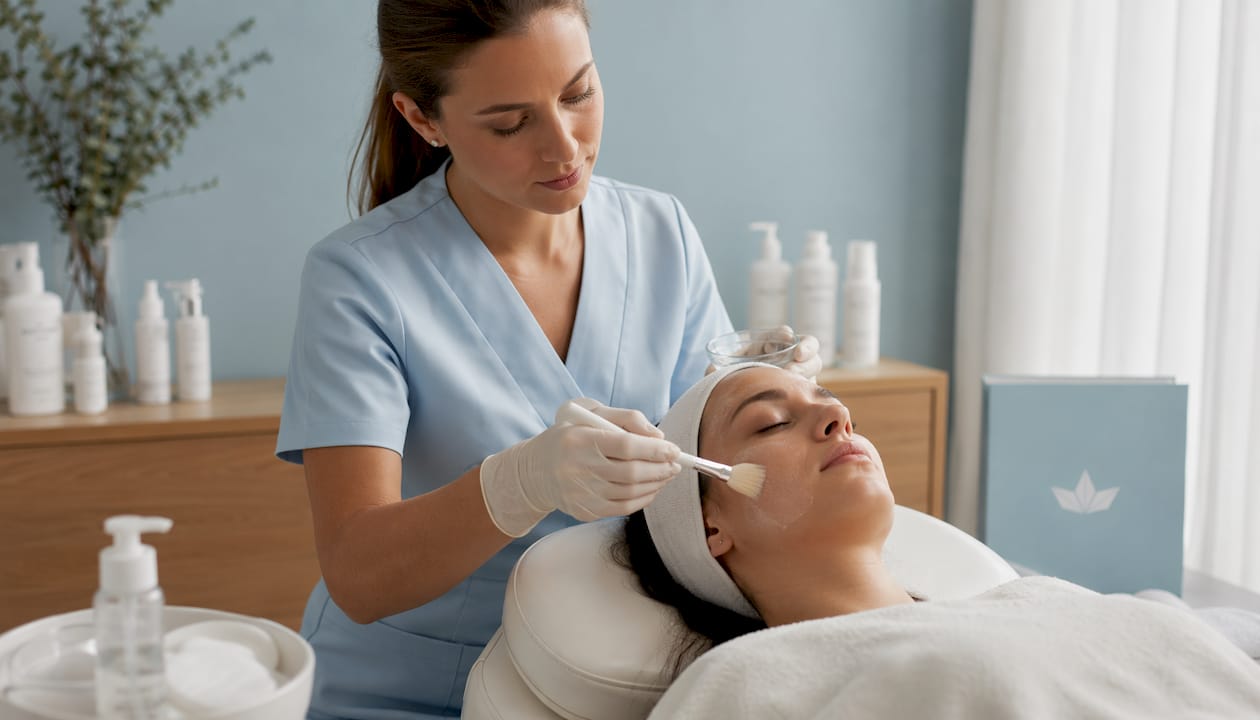
- Application of the peel solution: The chemical agent is applied evenly using a brush, gauze, or cotton applicator. Your clinician monitors your skin’s response in real time, watching for erythema and frosting as indicators of reaction completion.
- Exposure timing: Time on the skin is carefully controlled. Higher concentrations reach the target depth faster, so timing and concentration are always calibrated together.
- Neutralisation: For non-self-neutralising acids like glycolic acid, an alkaline agent such as sodium bicarbonate is applied to stop the reaction. Note that neutralisation is an exothermic process, so a brief sensation of warmth or stinging is normal at this stage.
- Post-peel care: A soothing, non-comedogenic moisturiser and broad-spectrum SPF are applied immediately. Your clinician will walk you through your at-home aftercare routine before you leave.
- Number of sessions: Superficial peels are typically performed in a series of 4–6 treatments spaced 2–4 weeks apart. Medium and deep peels may achieve significant results in fewer sessions, sometimes just one.
We always recommend reviewing your skin treatment preparation well before your appointment so your skin is in the best possible condition going in.
Risks, side effects, and why professional supervision matters
Chemical peels are safe when performed correctly, but they are not without risk. Understanding what’s normal versus what warrants concern helps you recover with confidence.
Common, expected side effects include:
- Redness (erythema): Occurs in approximately 52% of cases, typically resolving within days for superficial peels
- Swelling (oedema): Affects roughly 37% of patients, usually mild and short-lived
- Peeling and flaking: A normal part of the exfoliation process; picking at peeling skin increases scarring risk
- Temporary sensitivity: Sun sensitivity is heightened during healing and requires diligent SPF use
Less common but more serious risks include post-inflammatory hyperpigmentation (PIH), particularly in clients with darker skin tones, and scarring with deeper peels. Superficial peels are safe even for clients on low-dose isotretinoin when performed under proper supervision, contradicting older concerns about complications in this group.
Deep chemical peels carry the most significant risk profile and are generally suited only to Fitzpatrick skin types I or II. They also require prophylactic antiviral therapy for anyone with a history of oral herpes simplex virus.
Pro Tip: Never attempt a chemical peel at home using pharmacy-grade acids without clinical guidance. The difference between a safe outcome and a chemical burn often comes down to concentration, timing, and real-time monitoring — none of which a DIY kit can provide.
Recovery timeline and when you’ll see results
Recovery varies significantly by peel depth, and setting accurate expectations from the start makes the process much easier to manage.
After a superficial peel, most clients experience mild redness and light flaking for 1–3 days. There’s little to no downtime, and many people return to their regular routine the same day. Gradual improvements in brightness and texture become visible over the following 1–2 weeks.
Medium-depth peels involve more pronounced peeling and redness lasting 7–10 days. Swelling is common in the first 48 hours. Noticeable improvement in skin smoothness and diminished discolouration appears gradually over several weeks as the new skin matures.
“Peel depth correlates directly with recovery time and potential risks; deeper peels offer more dramatic improvements but demand longer healing and risk management.” — PMC, Depth-related effects and risks of chemical peels
Sun protection is non-negotiable throughout the healing phase. Freshly treated skin is highly vulnerable to UV-induced pigmentation changes, so a broad-spectrum SPF 30 or higher applied daily is part of every post-peel protocol. Results from a well-maintained series of superficial peels can last months, with periodic maintenance treatments keeping the skin looking its best.
How Enrichedmedspa approaches chemical peel treatments
Many clients arrive at Enrichedmedspa noticing tired-looking skin, early signs of ageing, or stubborn discolouration that hasn’t responded to their at-home routine. The clinical team’s first step is always a thorough assessment: skin type, Fitzpatrick classification, active skin conditions, and treatment history all factor into which peel is appropriate.
“When used for the appropriate indication with the proper technique, nearly all peel solutions and depths have demonstrated excellent clinical success in improving skin tone and texture, and are cost-effective compared to invasive procedures.” — PMC, A Practical Approach to Chemical Peels
At Enrichedmedspa, medical-grade peels are selected and applied by trained clinicians who understand how to match peel strength to individual skin concerns. That clinical precision is what separates a medical aesthetics setting from a spa environment.
A few principles that guide the approach:
- Peel selection is based on skin type, concern, and tolerance — not a one-size-fits-all protocol
- Clients with darker skin tones receive conservative peel depths to minimise PIH risk
- Chemical peels are often combined with complementary treatments like microneedling or laser resurfacing for clients whose concerns go beyond what a peel alone can address
- Realistic timelines are always discussed upfront, because trust is built on honest expectations
If you’re weighing a peel against other options, exploring your full skin treatment options at Enrichedmedspa is a good starting point.
What is a chemical peel?
A chemical peel, also called chemoexfoliation or dermapeeling, is a skin resurfacing procedure in which a chemical solution is applied to the skin to cause controlled exfoliation of the outer layers. As the treated skin peels away, fresher, smoother skin regenerates in its place. The procedure can be performed on the face, neck, and hands, and it addresses both cosmetic concerns and certain medical skin conditions such as actinic keratosis.
The term “chemical peel” covers a wide range of treatments, from a gentle lunchtime peel that causes barely any visible flaking to a deep phenol-based peel requiring weeks of recovery. What they share is the underlying mechanism: a targeted chemical injury that prompts the skin to rebuild itself with improved tone, texture, and clarity.
Different types of chemical peels and their specific benefits
Peel type determines both the depth of treatment and the skin concerns it can realistically address.
Superficial peels use agents like glycolic acid (an alpha-hydroxy acid derived from sugar cane), salicylic acid, lactic acid, or mandelic acid at lower concentrations. They work within the epidermis, making them well-suited for mild acne, uneven tone, dullness, and early photodamage. Downtime is minimal, and they’re safe for most skin types.
Medium-depth peels typically use trichloroacetic acid (TCA) or higher-concentration glycolic acid. They penetrate through the epidermis into the papillary dermis, making them effective for moderate sun damage, acne scarring, melasma, and fine-to-moderate wrinkles. Recovery takes about a week.
Deep peels use phenol-based solutions and reach the mid-reticular dermis. They produce the most dramatic results for severe photoageing, deep wrinkles, and significant scarring, but they carry the longest recovery and the most stringent patient selection criteria.
Which skin types and conditions respond best to chemical peels?
Chemical peels work across a broad range of skin types, but the right peel depth and agent depend heavily on your individual profile.
Clients with Fitzpatrick skin types I–III (lighter skin tones) can generally tolerate the full spectrum of peel depths, including medium and deep options. Those with types IV–VI (medium to darker skin tones) benefit most from superficial peels, which carry a lower risk of triggering post-inflammatory hyperpigmentation.
Conditions that respond well to chemical peels include acne vulgaris, melasma, post-inflammatory hyperpigmentation, sun spots, fine rhytides, superficial acne scars, enlarged pores, and rosacea. Clients managing actinic keratosis (precancerous skin changes) may also benefit, as medium-depth peels have demonstrated efficacy as field therapy for these lesions.
Chemical peels are generally not recommended for clients who are pregnant, have active cold sores, have used high-dose isotretinoin recently, or have open wounds or active infections in the treatment area. A thorough consultation with a qualified clinician is the only way to determine whether a peel is appropriate for your skin at a given time.
Key takeaways
Chemical peels improve skin texture, tone, and signs of ageing by inducing controlled exfoliation and stimulating new collagen and elastin production, with results and recovery time scaling directly with peel depth.
| Point | Details |
|---|---|
| Peel depth drives results | Superficial peels refresh and brighten; medium and deep peels address wrinkles, scarring, and significant sun damage. |
| Collagen stimulation is the core mechanism | Controlled chemical injury triggers new dermal collagen and elastin, firming and thickening the skin over time. |
| Side effects are common but manageable | Redness (erythema) occurs in approximately 52% of cases and swelling (oedema) affects roughly 37%; both typically resolve quickly with proper aftercare. |
| Skin type determines peel choice | Darker skin tones require conservative peel depths to reduce the risk of post-inflammatory hyperpigmentation. |
| Professional supervision is essential | Patient selection and clinician expertise are the primary factors in achieving safe, predictable outcomes. |