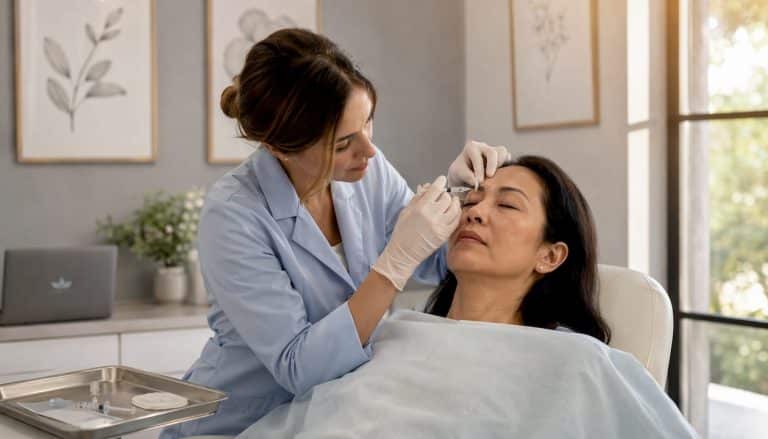

Radiofrequency facial treatment is a non-invasive procedure that uses electromagnetic waves to heat the deeper layers of your skin, triggering collagen renewal and gradual skin tightening. Clinically, this is known as radiofrequency (RF) skin tightening or RF thermal therapy. Many clients come in noticing early signs of laxity, fine lines around the eyes, or a softening of the jawline, and they want results without surgery or significant downtime. This radiofrequency facial guide covers how the treatment works, what types are available, realistic timelines, safety considerations, and what it typically costs, so you can walk into any consultation feeling genuinely informed.
How does radiofrequency facial treatment work on your skin?
RF therapy works by delivering controlled electromagnetic energy into the dermis, the layer of skin beneath the surface. Professional devices heat the dermis to 40°C–43°C, a precise therapeutic range that stimulates collagen contraction without damaging the outer skin layer. That immediate contraction creates a firmer scaffold, and over the following weeks, your body responds by producing new collagen and elastin fibres through a process called neocollagenesis.
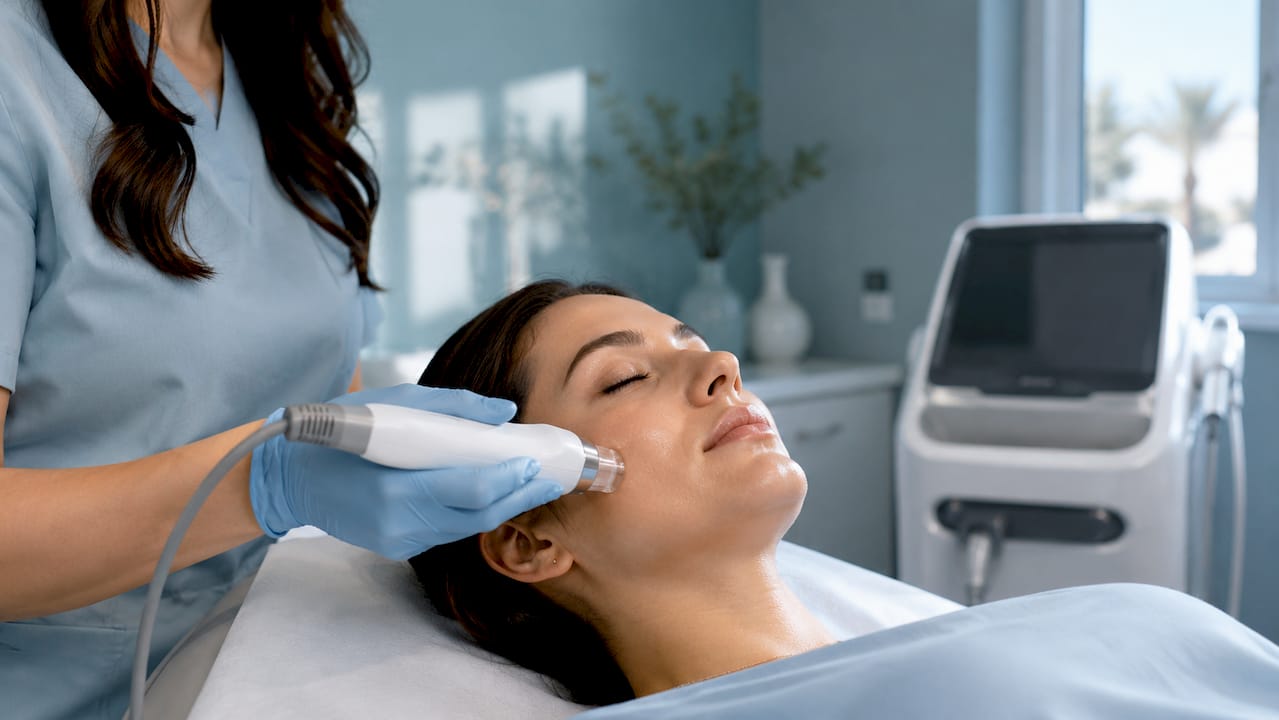
The heat is not applied uniformly across your face. Optimal RF treatment requires personalized energy settings per facial zone, with continuous thermal feedback to keep the dermis in the therapeutic range. Your forehead, for example, receives lower energy settings than your cheeks because the skin is thinner and more sensitive there. This zone-by-zone calibration is what separates a well-administered clinical treatment from a generic one.
One of the most clinically significant advantages of RF is that it does not target pigment. RF treatments are safer than lasers for darker skin tones because the energy bypasses melanin entirely, reducing the risk of post-inflammatory hyperpigmentation. When a skilled practitioner adjusts energy levels, pass count, and cooling for your specific skin tone, the treatment is both safe and effective regardless of your complexion.
Pro Tip: Ask your provider to walk you through the energy settings they plan to use for each zone. A practitioner who can explain this clearly is one who understands the treatment deeply.
What types of radiofrequency skin treatments are available?
Not all RF devices work the same way. The modality your provider recommends depends on your skin concerns, the depth of treatment needed, and the area being treated.
| RF Type | Depth | Best For |
|---|---|---|
| Monopolar RF | Deep dermal and subdermal | Moderate laxity, body contouring |
| Bipolar RF | Superficial to mid-dermis | Delicate areas: neck, under eyes |
| Fractional RF | Targeted zones in dermis | Texture, pores, mild scarring |
| Microneedling RF | Combined dermal channels plus heat | Skin tightening with resurfacing |
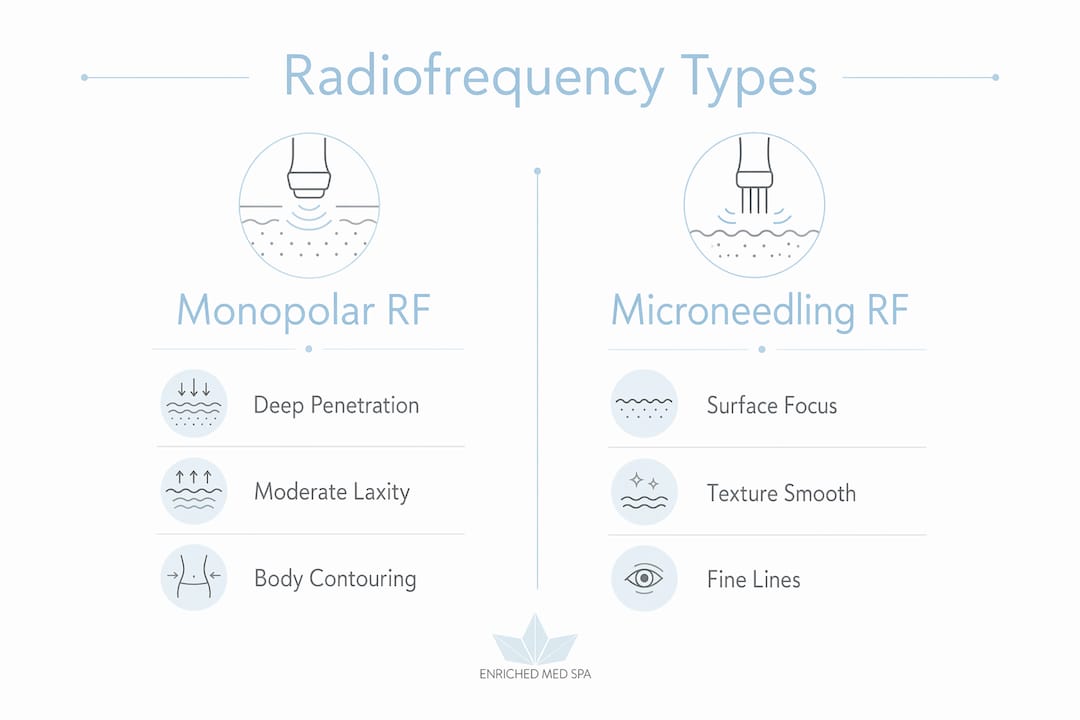
Monopolar RF penetrates the deepest and is well suited for areas with moderate laxity, including the lower face and neck. Bipolar RF uses two electrodes to confine energy to a shallower depth, making it a better fit for the periorbital area and other delicate zones. Fractional RF delivers energy in a grid pattern, leaving surrounding tissue intact to speed recovery. Microneedling RF combines physical micro-channels with thermal energy, addressing both surface texture and deeper collagen loss simultaneously.
At-home RF devices are widely marketed, but the comparison with clinical devices is not straightforward. At-home RF devices show modest improvements with consistent use over 8–12 weeks, but their power output is significantly lower than professional machines. Professional devices produce stronger, longer-lasting collagen stimulation. Think of at-home devices as a maintenance supplement, not a replacement for clinical treatment.
Pro Tip: If you are considering RF versus microneedling RF, discuss your skin texture concerns with your provider. Microneedling RF adds a resurfacing benefit that standard RF alone does not deliver.
What to expect during and after a radiofrequency facial
The treatment experience
Most clients describe the sensation as warmth, similar to a hot stone massage, with occasional brief pulses of deeper heat. The device moves continuously across your skin, and your provider adjusts settings in real time based on your feedback. Sessions typically run 30–60 minutes depending on the area treated.
A typical treatment protocol
Standard protocols follow a clear structure:
- Consultation and skin assessment. Your provider evaluates skin laxity, tone, and any contraindications before recommending a device or modality.
- Skin preparation. The face is cleansed and a conductive gel or coupling fluid is applied to help the device glide and transmit energy evenly.
- Zoned treatment. The provider works through each facial zone systematically, adjusting energy and pass count per area.
- Cooling and post-care. A soothing serum or cooling mask is applied. Most clients leave with mild pinkness that resolves within a few hours.
- Follow-up sessions. Standard protocols involve 2–6 sessions, some up to 9, spaced 1–4 weeks apart. Results can last 1–3 years with maintenance.
Side effects and realistic timelines
Common side effects are mild and transient, typically redness and slight swelling that resolve within a few hours. More serious complications, including burns and scarring, have been reported, particularly with RF microneedling. The FDA safety communications on RF microneedling emphasise the importance of discussing risks with a qualified provider before treatment. This is not a reason to avoid the treatment. It is a reason to choose your clinic carefully.
Results build gradually. Visible improvements are most clear after 6–9 sessions, with collagen remodelling continuing for weeks to months post-treatment. Stopping treatments leads to a gradual return to baseline laxity over time, which is why maintenance sessions every 3–6 months are advised to sustain collagen density.
“RF results are cumulative. Clients who commit to a full series and maintain with periodic sessions see the most meaningful, lasting change.”
Pro Tip: Schedule your post-treatment care routine before your first session. Using a peptide serum and broad-spectrum SPF daily between appointments supports collagen production and protects your investment.
Who is an ideal candidate and what are the safety considerations?
RF skin tightening works best for a specific profile of client. Understanding where you fit helps you set realistic expectations from the start.
Ideal candidates include:
- Adults aged 25–55 with mild to moderate skin laxity
- Those noticing early jowling, a softening jawline, or crepey neck skin
- Clients seeking preventative collagen support before significant laxity develops
- Individuals with any skin tone, including darker complexions, who want a pigment-safe option
- Those who prefer non-surgical options with minimal recovery time
RF is not the right fit for everyone. Advanced sagging or deep jowling responds poorly to RF alone, and a surgical consultation is advisable in those cases. RF treatments are valuable adjuncts to non-surgical rejuvenation, but they are not equivalent substitutes for a surgical facelift in patients with severe laxity.
Contraindications to discuss with your provider:
- Pregnancy
- Pacemakers or implanted electrical devices
- Metal implants in the treatment area
- Active skin infections or open wounds
- Poorly controlled inflammatory skin conditions such as rosacea or eczema flares
“RF is colourblind. When parameters are personalised correctly, it is one of the most inclusive skin treatments available.”
Reviewing the different types of facials and how RF fits within a broader skin health plan is a useful step before your first consultation.
How much does a radiofrequency facial typically cost?
Radiofrequency facial cost varies based on several factors, and understanding them helps you budget realistically.
Factors that influence pricing:
- Device and modality. Microneedling RF sessions cost more than standard RF because the technology is more complex and the treatment is more intensive.
- Treatment area. Full-face treatments cost more than targeted zones like the neck or under-eye area.
- Clinic location and expertise. Medical aesthetics clinics in urban centres like Toronto or Woodbridge typically charge more than suburban or rural providers, reflecting overhead and practitioner credentials.
- Number of sessions. Single sessions are available, but most clinics offer package pricing for a full series, which reduces the per-session cost meaningfully.
- Maintenance. Ongoing sessions every 3–6 months add to the annual cost but are necessary to sustain results.
Compared to surgical alternatives, RF skin tightening is significantly more affordable and carries none of the surgical risks or recovery time. Compared to injectables like Botox or Juvederm, RF addresses structural skin quality rather than volume or muscle movement. Many clients combine RF with injectables for a more complete result, which is a conversation worth having with your provider. You can explore skin treatment options to understand how these approaches complement each other.
Key takeaways
Radiofrequency skin tightening delivers real, measurable collagen improvement when administered correctly, but results require multiple sessions, consistent maintenance, and realistic expectations.
| Point | Details |
|---|---|
| RF heats the dermis precisely | Temperatures of 40°C–43°C stimulate collagen contraction and new collagen production safely. |
| Multiple sessions are required | Standard protocols involve 2–9 sessions; visible results build over weeks to months post-treatment. |
| Maintenance sustains results | Sessions every 3–6 months prevent a return to baseline laxity and preserve collagen density. |
| RF suits all skin tones | The treatment bypasses pigment, making it safer than laser for darker complexions when personalised correctly. |
| Advanced laxity needs a different approach | Severe sagging responds poorly to RF alone; surgical consultation is advisable in those cases. |
What I have learned from watching clients go through RF treatment
After seeing many clients move through RF treatment series, the pattern I notice most is the gap between expectation and experience in the first few sessions. Clients often expect to see a dramatic lift after session one or two. What they actually see is subtle. The skin feels slightly firmer, perhaps a little more “held,” but the visible change is modest. That is not a failure. That is the biology working exactly as it should.
The clients who get the most from RF are the ones who treat it like a long-term investment rather than a quick fix. They show up for every session, they use their SPF and peptide serums between appointments, and they come back for maintenance. The ones who drop off after two sessions and declare it “didn’t work” are usually the ones who expected surgery-level results from a non-surgical treatment.
I also think the professional versus at-home device conversation is worth having honestly. At-home RF tools are not useless, but they are not clinical treatment. If you are spending money on an at-home device hoping to replicate what a professional machine delivers, you will likely be disappointed. Use it as a supplement between clinic visits, not as a replacement.
Finally, provider selection matters more than device brand. The best RF device in the hands of an undertrained provider will underperform. Ask about training, ask about the specific device being used, and ask to see before-and-after photos from clients with a similar skin profile to yours. That conversation tells you more than any brochure.
— Felix
Explore professional RF treatments at Enrichedmedspa
Enrichedmedspa offers professional radiofrequency skin tightening as part of a broader suite of non-surgical skin lifting treatments at their Woodbridge and East Gwillimbury clinics. Their experienced practitioners personalise every treatment plan to your skin tone, laxity level, and goals. For clients who want to combine RF with injectables, Enrichedmedspa also offers Botox, Nucieva, Xeomin, and dermal fillers including Juvederm and Teosyal. Understanding how these options work together is easier when you start with the right consultation. If you are weighing your options, their guide on Botox vs. fillers is a helpful starting point. Book a consultation to find out which treatments suit your skin and your timeline.
FAQ
What is a radiofrequency facial?
A radiofrequency facial is a non-invasive skin treatment that uses electromagnetic waves to heat the dermis, stimulating collagen and elastin production to firm and tighten the skin without surgery.
How many RF facial sessions do you need to see results?
Most protocols involve 2–9 sessions spaced 1–4 weeks apart, with visible improvements building over 4–12 weeks post-treatment and becoming most clear after a full series.
Is radiofrequency safe for all skin tones?
Yes. RF does not target pigment, making it safer than many laser treatments for darker skin tones when energy settings are personalised correctly by a qualified provider.
Does a radiofrequency facial hurt?
Most clients describe the sensation as warmth similar to a hot stone massage, with brief pulses of deeper heat. Discomfort is generally mild and manageable throughout the session.
How long do radiofrequency facial results last?
Results typically last 1–3 years depending on the number of sessions completed and individual skin ageing. Maintenance sessions every 3–6 months are recommended to sustain collagen density over time.