
If you’re preparing for your first microneedling session, or even your third, the questions are often the same. What do I stop using? How long does recovery take? What happens if I get it wrong? Knowing how to prepare for microneedling properly is not just about avoiding discomfort. It directly affects how safely your skin heals and how clearly your results show up. This guide walks you through everything you need to know, from weeks before your appointment to the days that follow, so you can walk in with confidence and walk out with the best possible outcome.
Table of Contents
- Key takeaways
- How to prepare for microneedling: why it matters
- Skin prep in the weeks before your session
- What to do on treatment day
- Post-microneedling care for optimal healing
- Common mistakes that slow your results
- My take on preparation and what I’ve seen work
- Ready to take the next step with Enrichedmedspa?
- FAQ
Key takeaways
| Point | Details |
|---|---|
| Stop actives early | Discontinue retinoids and exfoliants at least 3 to 7 days before your session to reduce skin sensitivity. |
| Arrive clean and bare | Come to your appointment with no makeup, sunscreen, or active skincare products on your face. |
| Recovery takes 24 to 48 hours | Redness and warmth are normal and typically resolve within one to two days; visible effects clear in five to seven days. |
| Reintroduce actives cautiously | Wait 7 to 14 days after treatment before resuming retinoids or acids, based on how your skin feels, not the calendar. |
| Space your sessions properly | Allow at least three to four weeks between treatments so collagen remodelling can complete its work. |
How to prepare for microneedling: why it matters
Microneedling works by creating thousands of controlled micro-injuries across the skin’s surface. These tiny channels trigger your body’s natural wound-healing response, stimulating collagen and elastin production over the weeks that follow. The result, when done well, is firmer texture, reduced fine lines, and a more even tone.
Many clients come to us noticing the early signs of aging: subtle volume loss, congested pores, or uneven pigmentation that nothing topical has fully addressed. Microneedling sits in a different category from a chemical peel or a hydrating facial. It creates real, physical change in the dermis, which means the state of your skin at the time of treatment genuinely affects your healing and your results.
When skin is compromised before the appointment, whether from recent sun exposure, active inflammation, or the lingering effects of strong exfoliants, the risk of adverse reactions increases. Those can include prolonged redness, hyperpigmentation, or an extended recovery. The good news is that nearly all of these risks are preventable with straightforward preparation.
One area where provider expertise makes all the difference is skin tone. Proper depth calibration for darker skin types is critical to minimising post-inflammatory hyperpigmentation. If you have medium to deeper skin, choosing a practitioner with specific experience across a range of skin tones is not optional. It is the single most protective factor in your outcome.
Pro Tip: Before booking, ask your provider directly about their experience treating your skin type. A skilled provider will welcome the question.
Skin prep in the weeks before your session
Think of the two weeks before your appointment as a preparation window. Your goal is to arrive with a skin barrier that is intact, calm, and free of active irritation. Here is a step-by-step microneedling prep approach to get there.
-
Stop topical retinoids at least three to seven days before your session. Retinoids thin the epidermis and increase sensitivity, which means retinoids before microneedling raise the likelihood of irritation, peeling, and uneven healing. Some providers recommend stopping even earlier if you use prescription-strength tretinoin.
-
Pause exfoliants and acids in the same window. This includes AHAs, BHAs, vitamin C in high concentrations, and any physical scrubs. Avoid chemical peels for at least two to four weeks prior, as they leave skin temporarily sensitised and compromise the barrier you need intact.
-
Protect your skin from the sun. Sunburned or recently tanned skin is too reactive for microneedling and will heal poorly. Stay out of direct sun and apply a broad-spectrum SPF 30 or higher daily for the two weeks leading up to your appointment.
-
Avoid hair removal on the treatment area. Waxing, threading, or depilatory creams in the days before your session can irritate the follicle and increase sensitivity. Leave at least five to seven days between any removal procedure and your microneedling appointment.
-
Review your medications with your provider. If you have taken isotretinoin (commonly known as Accutane), wait at minimum six months before treatment, as it significantly impairs wound healing and raises the risk of scarring. Your provider needs to know about this.
Below is a quick reference for product and activity timing before your session.
| Product or activity | When to stop |
|---|---|
| Topical retinoids | 3 to 7 days before |
| AHAs, BHAs, and acids | 3 to 7 days before |
| Chemical peels | 2 to 4 weeks before |
| Waxing or threading | 5 to 7 days before |
| Isotretinoin (Accutane) | 6 to 12 months before |
| NSAIDs (ibuprofen, aspirin) | 2 to 3 days before |
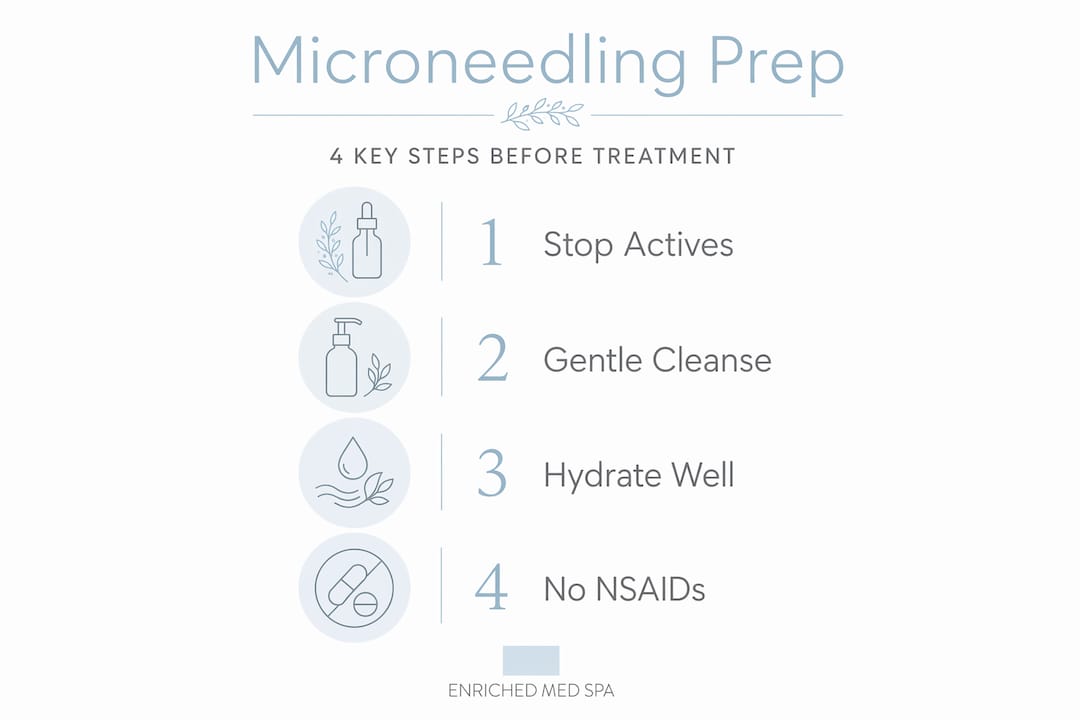
Pro Tip: If your skin feels tight, flaky, or reactive in the week before your appointment, contact your provider. Rescheduling a session is always the wiser choice over treating compromised skin.
Staying hydrated and maintaining a gentle, barrier-supporting routine in the lead-up also makes a difference. Stick to a non-comedogenic cleanser, a fragrance-free moisturiser, and your SPF. That is all your skin needs during this window.
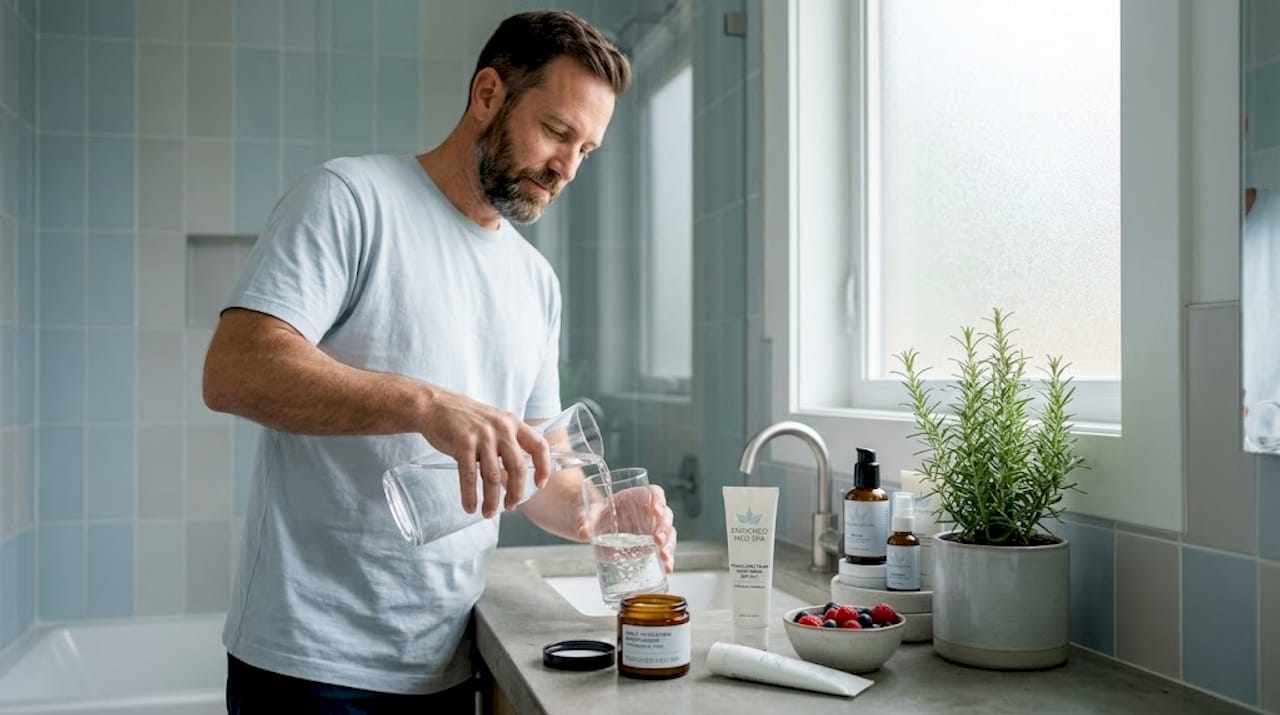
Avoid taking NSAIDs before microneedling such as ibuprofen or aspirin in the two to three days before your session. These affect platelet function, which plays a direct role in wound healing, and may increase bruising. Acetaminophen is a safe alternative if you need pain relief.
What to do on treatment day
The morning of your appointment, keep things simple. Your skin should be clean, bare, and free of any product. This is what we recommend:
- Cleanse gently with your regular fragrance-free cleanser and do not apply anything afterward. No moisturiser, no SPF, no makeup, no serum.
- Do not shave the treatment area that morning. A close shave the day of your appointment adds micro-irritation to skin that is about to undergo a procedure.
- Skip your morning workout. Intense exercise raises core body temperature and increases circulation to the skin. Both can contribute to more pronounced inflammation during treatment.
- Avoid alcohol the night before and the morning of. Alcohol dehydrates the skin and may affect how the skin responds to treatment.
- If anything has changed since your last appointment, whether a new prescription, a skin flare-up, or unexpected sun exposure, tell your provider before they begin. They can adjust the approach or recommend rescheduling if needed.
Topical anaesthetic is commonly applied at the clinic before your session, which makes the procedure much more comfortable. Do not apply numbing cream at home unless your provider has specifically instructed you to and given you guidance on timing and quantity. Unsupervised application carries its own risks, including systemic absorption if overapplied.
Mentally, set realistic expectations. The sensation is often described as a mild scratching or vibrating feeling. The duration depends on the area treated, but most facial sessions run between 30 and 60 minutes from start to finish.
Post-microneedling care for optimal healing
Aftercare is where many people slip up, often by resuming their normal routine too quickly. The skin is physically more permeable after microneedling, meaning it absorbs both beneficial and harmful substances more readily. What you put on your face in the days after treatment matters.
Here is a step by step microneedling aftercare approach to follow:
-
Expect redness and warmth for 24 to 48 hours. Social downtime after microneedling is typically one to two days. Redness fades to a lighter pink by days two and three. Light flaking is possible around days three to five. This is all part of the normal healing process.
-
Keep makeup and active products off your face for at least 48 hours. Your skin has open micro-channels during this period. Makeup introduces bacteria and potential irritants directly into those channels.
-
Cleanse gently, twice daily. Use lukewarm water and a gentle, sulphate-free cleanser. Avoid anything with fragrance, alcohol, or exfoliating agents.
-
Moisturise with a barrier-supportive product. Look for ingredients like hyaluronic acid, ceramides, or panthenol. These support healing without overwhelming the skin.
-
Apply a mineral sunscreen once your skin has calmed. Broad-spectrum SPF 30 or higher is non-negotiable. Newly treated skin is significantly more vulnerable to UV damage, which can trigger pigmentation changes.
-
Wait before reintroducing actives. A symptom-based approach to resuming retinoids and acids is safer than counting days. Wait until redness, tightness, and flaking have fully resolved. That is usually seven to fourteen days, but it varies.
Pro Tip: If you are unsure whether your skin has healed enough to resume actives, run a patch test on a small area first. No reaction after 24 hours is a good sign.
Common mistakes that slow your results
Even with good intentions, certain patterns show up again and again in clients who feel their results are underwhelming or their recovery is longer than expected.
- Spacing sessions too closely. Collagen remodelling continues for months after each session. Booking treatments less than three to four weeks apart does not accelerate results. It risks fibrosis and delays proper healing.
- Treating already-irritated skin. Active acne breakouts, eczema flares, sunburn, and open sores are all contraindications. Proceeding anyway increases infection risk and the likelihood of hyperpigmentation.
- Resuming actives too soon. Vitamin C, glycolic acid, and retinoids on a skin barrier that has not yet healed can trigger prolonged redness and peel in ways that feel like a complication rather than a product reaction.
- Skipping sun protection post-treatment. This is the most commonly overlooked aftercare step and the one most likely to compromise your results long-term.
Pro Tip: Hydration and quality sleep genuinely accelerate skin recovery. Aim for seven to eight hours the nights following your treatment and increase your water intake for the first few days.
Your provider’s technique matters more than needle depth alone. A practitioner who adjusts their approach to your skin’s specific treatment needs will consistently produce better results than one who uses a one-size approach.
My take on preparation and what I’ve seen work
In my experience, the clients who see the clearest results are rarely the ones who push for the deepest setting or the most frequent sessions. They are the ones who come in with calm, well-hydrated skin, who have followed their pre-treatment guidance, and who are patient during recovery.
I’ve seen clients arrive with skin that still has traces of retinoid use, or who mention a beach holiday from just a few days prior. The temptation is to proceed anyway, especially if the appointment has been on the calendar for weeks. But that is where outcomes start to diverge. Treating prepared skin versus reactive skin makes a measurable difference, both in how the session feels and in the results that follow.
What I find clients often underestimate is the skin condition before treatment and how heavily it influences everything that comes after. Preparation is not a formality. It is the foundation.
The other thing I hear regularly is frustration about the reintroduction phase. People feel fine by day three and want to go straight back to their full routine. The skin can look healed before it is fully healed. The micro-channels close quickly, but the deeper repair continues for days afterward. That two-week caution around actives is not overcautious. It protects the investment you just made.
Open communication with your provider is the simplest and most underused resource you have. If something feels off at any stage, ask.
— Felix
Ready to take the next step with Enrichedmedspa?
At Enrichedmedspa, we work with clients at every stage of their skin health journey, from a first microneedling session to ongoing treatment programmes designed around their specific concerns. Our team in Woodbridge and East Gwillimbury brings clinical expertise and a patient-first approach to every appointment.
If you’re exploring your skin treatment options, we can help you identify where microneedling fits, and whether complementary treatments like Botox or dermal fillers might support a more complete result. Book a consultation with us to get personalised guidance, honest expectations, and a protocol built around your skin.
FAQ
How long before microneedling should I stop retinol?
Stop topical retinoids three to seven days before your microneedling session. Prescription-strength tretinoin may require a longer pause. Retinoids thin the epidermis and raise skin sensitivity, which increases the risk of irritation during and after treatment.
Can I wear makeup the day of my microneedling appointment?
No. Arrive with completely clean, bare skin and no products applied. Makeup, sunscreen, and skincare products can introduce bacteria into the micro-channels created during treatment, raising the risk of irritation or infection.
How long does recovery take after microneedling?
Most people experience redness and warmth for 24 to 48 hours, similar to mild sunburn. Visible effects resolve within five to seven days for the majority of clients. Light flaking around days three to five is normal and part of the healing process.
When can I use acids and actives again after microneedling?
Use a symptom-based approach rather than a fixed timeline. Wait until redness, tightness, and flaking have fully cleared, which is typically seven to fourteen days. Reintroducing actives too soon can cause prolonged irritation and compromise your results.
How often should I book microneedling sessions?
Space sessions at least three to four weeks apart, and in most cases four to six weeks is recommended. Collagen remodelling continues for months after each treatment, and rushing appointments undermines that process and may cause harm.
Recommended
- Preparing For Microneedling Anti-ageing Treatment
- Microneedling: how it revives skin safely and effectively
- The Ultimate Buyer’s Guide to Home Microneedling Kits – Botox Laser Hair Removal OxyGeneo Medi Facial Microneedling – Enriched Med Spa – Vaughan Woodbridge Maple Vellore Village
- Microneedling Vaughan | Botox Vaughan | Vampire Facial