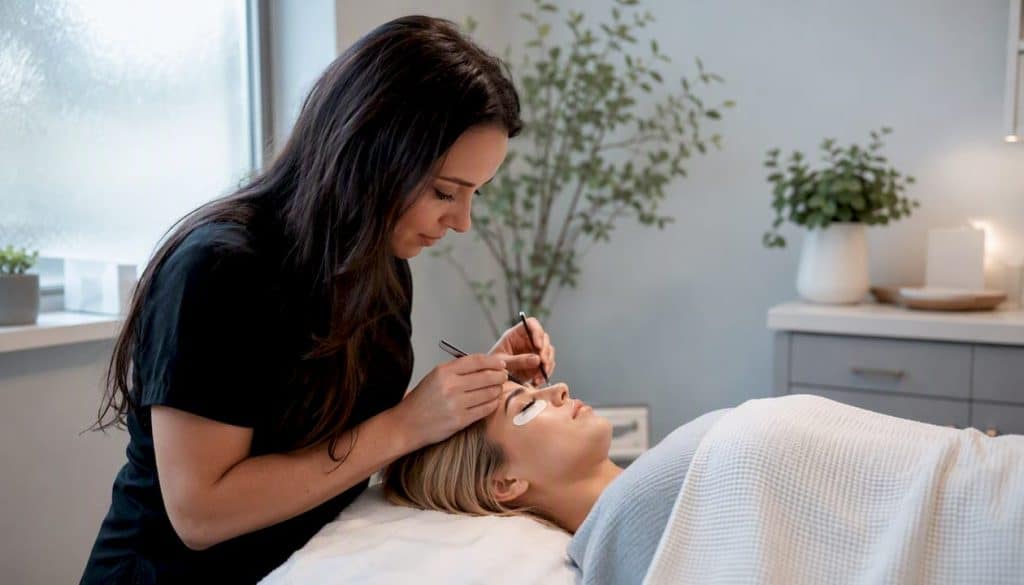
Eyelash enhancement is an umbrella term for any non-surgical or minimally invasive method used to make lashes look fuller, longer, or darker, and it spans several distinct approaches that work in completely different ways. Some methods coax your own lashes into a longer growth cycle. Others add pigment, fibres, or entirely new lashes onto what you already have. Understanding which category you’re actually looking at matters more than most people realize, because “eyelash enhancement” alone tells you almost nothing about permanence, cost, or risk.
The main approaches you’ll encounter are:
- Prescription topical serums like bimatoprost (sold as Latisse), which alter the lash growth cycle
- Over-the-counter growth serums, cosmetic formulations with variable ingredients and evidence
- Eyelash extensions, individual or strip fibres glued to existing lashes
- Lash lifts and tints, which curl and darken your natural lashes temporarily
- Lash line micropigmentation (also called a lash enhancement tattoo or invisible eyeliner), which deposits pigment between the lash roots
- Eyelash transplantation, a surgical option that relocates hair follicles to the lash line
As a general rule, reach for an at-home product when your goals are cosmetic and your eyes are healthy. Book a consultation with a clinician when you have a diagnosed eye condition, wear contact lenses, take medications that affect the eye area, or want a prescription-strength result like bimatoprost.
Key Takeaways
Eyelash enhancement works best when the method is matched to your maintenance tolerance, eye health, and how permanent a result you actually want.
| Point | Details |
|---|---|
| Definition reminder | Eyelash enhancement covers serums, extensions, lifts/tints, micropigmentation, and transplantation, not one single treatment. |
| Match method to lifestyle | Choose serums or lifts for low maintenance, extensions for instant drama, micropigmentation for years-long results. |
| Safety reminder | See a clinician before starting bimatoprost or if you have glaucoma, eye pressure issues, or contact lens sensitivity. |
| Next step | Book a consultation to review your eye health history before committing to any semi-permanent option. |
Table of Contents
- What is eyelash enhancement, really? Breaking down the main methods
- How each method works and when you’ll see results
- Risks, side effects, and when to see a clinician
- What eyelash enhancement costs and how much upkeep it needs
- Choosing the right eyelash enhancement for your goals
- What to expect during a consultation and when to involve a doctor
- A clinic-eyed look at what actually works
- Ready to talk through your options?
- Frequently asked questions
- Sources
What is eyelash enhancement, really? Breaking down the main methods
The Aesthetic Society groups eyelash enhancement under one heading precisely because so many different techniques get lumped into casual conversation. That’s useful for marketing, less useful for you when you’re trying to decide what to actually book. Here’s what each method changes, where it happens, and who tends to be the best fit.
Prescription serums (bimatoprost/Latisse). This is a topical solution applied nightly along the upper lash line with a small applicator. It changes length, thickness, and pigmentation of your existing lashes over weeks of consistent use. It requires a prescription in Canada and is best suited to people who want a gradual, natural-looking improvement to lashes they already have, rather than a dramatic instant change.
Over-the-counter serums. These sit in the same product category conceptually but vary enormously in formulation. Some contain prostaglandin-like compounds without the same testing bimatoprost has undergone, so results and safety profiles are inconsistent across brands, as research on serum-based enhancements points out. Treat marketing claims on these products with a healthy dose of skepticism.
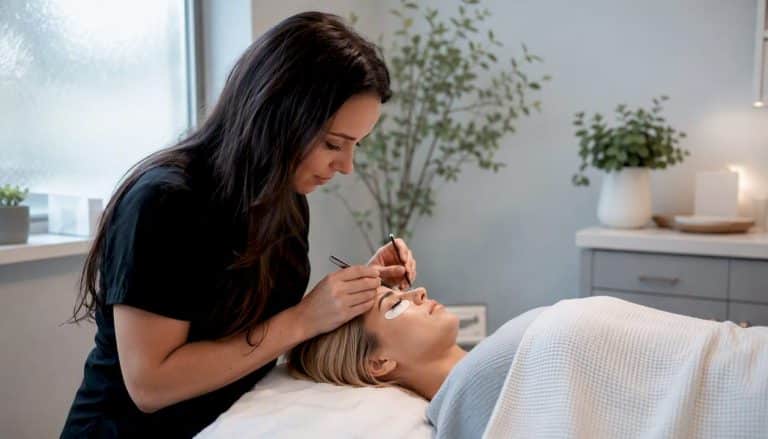
Eyelash extensions. Individual synthetic, silk, or mink-style fibres are glued to each natural lash by a trained technician, or applied as a strip for a faster, temporary effect. Extensions change length and fullness instantly and dramatically, which makes them popular for events, but they require ongoing fills roughly every two to three weeks, as outlined by All About Vision’s overview of extension pros and cons.
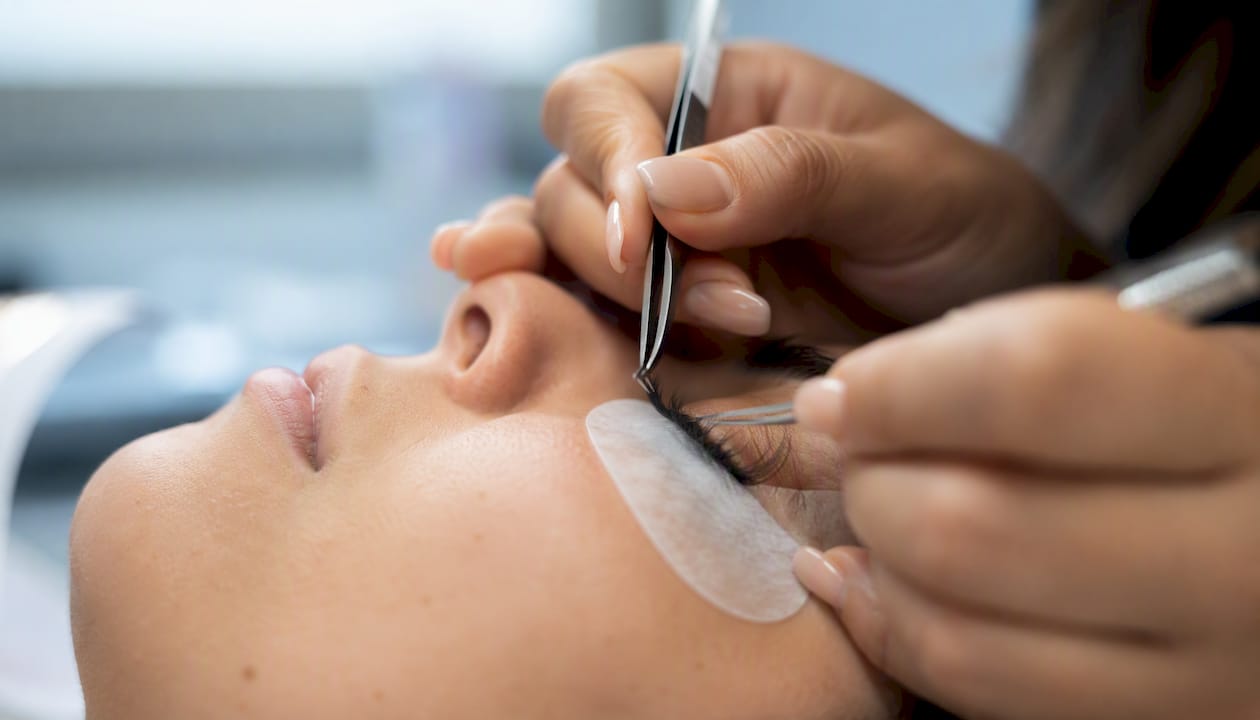
Lash lifts and tints. A lift uses a chemical solution to curl your natural lashes upward, similar to a perm, while a tint darkens them. Both are done in a salon chair in under an hour and change the shape and colour of what you already have without adding volume. This is a good middle ground for someone who wants low daily maintenance but isn’t ready for a permanent commitment.
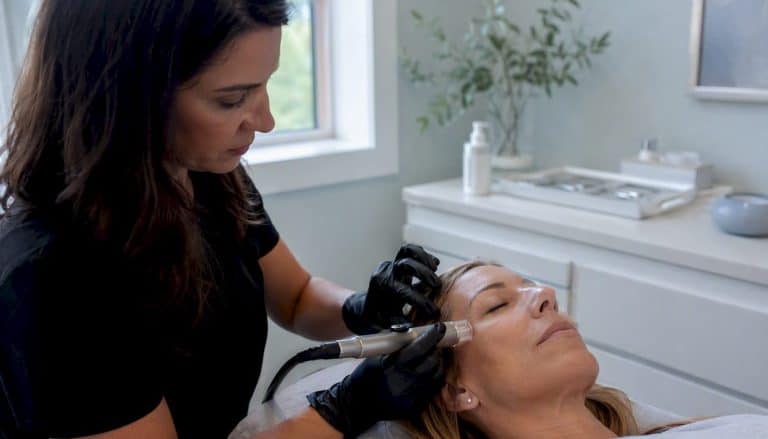
Lash line micropigmentation. Often marketed as a lash enhancement tattoo or invisible eyeliner, this technique deposits pigment between the lash roots to create the illusion of denser lashes rather than a bold eyeliner line, a distinction PMU practitioners are careful to draw out. It’s semi-permanent, typically fading over one to three years.
Eyelash transplantation. A surgical procedure that relocates hair follicles, usually from the scalp, to the lash line. It’s the most invasive option on this list and is generally reserved for significant lash loss from trauma, medical conditions, or over-plucking, rather than for cosmetic enhancement alone.
How each method works and when you’ll see results
The mechanism behind bimatoprost is worth understanding because it explains both the timeline and the eventual plateau. Bimatoprost is a prostaglandin analogue that extends the anagen (growth) phase of the lash cycle and increases the number of hairs actively growing at once, which is also how it thickens and darkens lashes over time.
Results don’t appear overnight with any topical product, and lash lifts sit at the opposite end of the spectrum with immediate, same-day change.
| Method | Time to first visible change | Time to peak/full result |
|---|---|---|
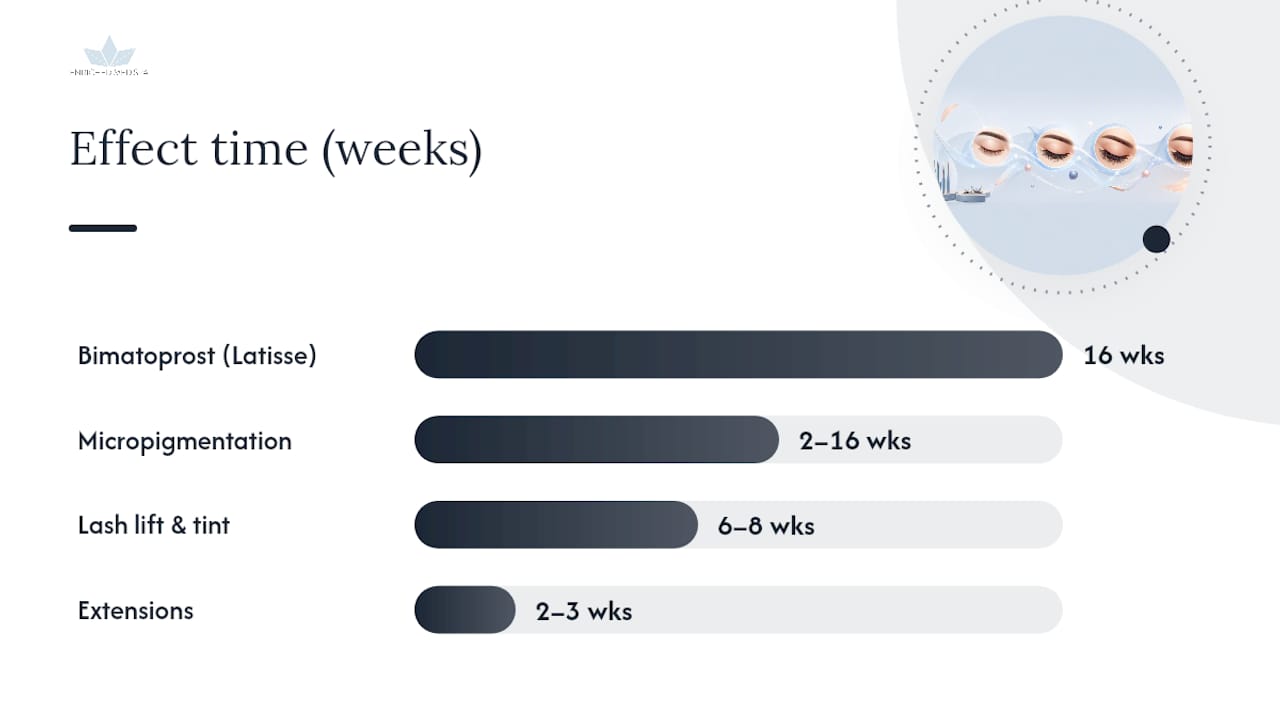
| Bimatoprost (Latisse) | 16 weeks | 16 weeks |
| OTC serums | Varies widely, often matches natural lash growth cycle | Inconsistent |
| Lash lift and tint | Immediate | Immediate |
| Extensions | Immediate | Immediate |
| Micropigmentation | Immediate after healing | 2-16 weeks post-healing |
Pro Tip: If you’re using a prescription serum, take a smartphone photo of your lashes on day one under the same lighting each week. It’s the easiest way to actually track the gradual change instead of relying on memory, which tends to undersell slow progress.
Clinical trials on dermal bimatoprost 0.03% found statistically significant increases in lash length, thickness, and darkness compared with a vehicle control over 16 weeks of nightly use, based on both clinician-rated Global Eyelash Assessment scores and objective image analysis, according to peer-reviewed trial summaries. That’s a meaningfully longer commitment than most people expect walking into a pharmacy for a serum.
Lash lifts typically hold their curl for six to eight weeks, roughly matching your natural lash growth cycle. Extensions last as long as the natural lash they’re glued to, usually two to three weeks before noticeable gaps appear. Micropigmentation and transplantation sit furthest along the permanence scale, lasting years rather than weeks.
Risks, side effects, and when to see a clinician
Every method on this list carries some risk, and the risk profile shifts depending on whether you’re dealing with a topical chemical, an adhesive, a needle, or a surgical procedure.
- Prescription serums: eyelid skin darkening, iris pigmentation changes (rare, mostly reported with ophthalmic use), and mild itching or redness at the application site
- OTC serums: unpredictable irritation because formulations aren’t standardized, and some products carry the same prostaglandin-related risks as prescription versions without matching oversight
- Extensions: adhesive allergy, eyelid irritation, and infection risk if application isn’t done with sterile technique
- Lash lifts and tints: chemical burns or allergic reaction to the tint dye, usually from skipping a patch test
- Micropigmentation: pigment migration, uneven healing, or dissatisfaction with colour or placement
- Transplantation: the usual surgical risks, including infection, scarring, and graft failure
Watch for red flags that go beyond normal, temporary irritation: persistent redness that doesn’t settle within a day or two, swelling that spreads, any change in vision, or pain rather than mild discomfort. Any of those warrants a call to your eye doctor or the clinician who performed the treatment, not a wait-and-see approach.
Pro Tip: Before any procedure involving adhesive, tint, or pigment, ask specifically for a patch test 24 to 48 hours in advance, applied to your inner forearm or behind the ear. A salon or clinic that skips this step or seems annoyed by the request is telling you something about their standards.
Because OTC serums aren’t held to the same evidence bar as prescription bimatoprost, and because eye-area adhesives and colourants carry their own regulatory nuances, it’s worth asking any provider directly what product lines they use and whether those products are approved for use near the eye.
What eyelash enhancement costs and how much upkeep it needs
Cost shape varies as much as the methods themselves, and the sticker price on day one rarely tells the whole story.
- Prescription bimatoprost: an ongoing monthly product cost, since results reverse once you stop applying it
- OTC serums: generally cheaper per bottle, but often replaced or abandoned due to inconsistent results
- Extensions: an initial full-set appointment followed by fills every two to three weeks, which adds up quickly over a year, a point raised clearly in industry trade coverage of extension costs
- Lash lifts and tints: a single appointment repeated every six to eight weeks
- Micropigmentation: a higher upfront cost with an optional touch-up session and then years before it needs redoing
- Transplantation: the highest single-procedure cost, with follow-up visits but no ongoing maintenance in the way serums or extensions require
If you’re comparing extensions to a serum on a strict annual basis, the fill schedule for extensions often ends up costing more over twelve months than a nightly serum routine, even though the serum feels like the slower, less exciting option in month one.
Choosing the right eyelash enhancement for your goals
Matching the method to your actual lifestyle matters more than picking whatever looks best in a before-and-after photo. A clinic comparison of lash enhancement options frames the decision around safety profile, longevity, and how much maintenance you’re realistically willing to sustain.
| Dimension | Serums (Rx/OTC) | Lash lift & tint | Extensions | Micropigmentation |
|---|---|---|---|---|
| What it changes | Length, thickness, colour of natural lashes | Curl and colour | Length, volume | Colour density between lashes |
| How it’s applied | Nightly at home | In-salon chemical treatment | Glued in-clinic or salon | Pigment implanted by a technician |
| Time to results | 16 weeks | Immediate | Immediate | Immediate after healing |
| How long it lasts | Reverses when stopped | six to eight weeks | two to three weeks between fills | one to three years |
| Downtime/aftercare | None, daily routine | Avoid water/makeup for 24 hours | Avoid oil-based products, rubbing | Several days of healing |
| Main risks | Skin darkening, irritation | Chemical burn, allergic reaction | Adhesive allergy, infection | Pigment migration, uneven healing |
Before committing to any in-clinic option, ask the practitioner about their training and credentials, which products they use and whether those are approved for eye-area application, and how they handle allergic reactions if one occurs mid-appointment. Walk away from anyone who skips the patch test, gets evasive about ingredients, or pressures you to book before you’ve had a real consultation.
What to expect during a consultation and when to involve a doctor
A thorough clinic intake covers more ground than most people expect. Reviewers typically ask about your eye health history, whether you wear contact lenses, your natural eyelid anatomy and skin sensitivity, current medications, any history of allergic reactions, and what specific look you’re hoping to achieve.
For bimatoprost specifically, a prescriber will check for glaucoma, eye pressure issues, or any history of eye inflammation before prescribing, since the same active ingredient used ophthalmically can affect intraocular pressure. Expect a short follow-up conversation around the 12 to 16 week mark to assess how your lashes have responded, based on the timeline established in bimatoprost trial data.
Aftercare instructions differ by method but share a common thread: keep the area clean, avoid oil-based cleansers if you have extensions since oil breaks down adhesive, resist the urge to rub your eyes, and show up for scheduled follow-ups rather than skipping them once things look fine.
Pro Tip: Write down your current eye conditions, medications, and any past reactions to cosmetics before your appointment. A five-minute list at home saves fifteen minutes of back-and-forth in the chair and gives your clinician a clearer picture to work from.
A clinic-eyed look at what actually works
Many clients who come to us asking about lash enhancement are really asking a simpler question underneath: how do I look a little more awake without adding another twenty-minute step to my morning? That reframes the decision quite a bit. For that client, a lash lift and tint or a prescription serum tends to fit better than extensions, because both work with what they already have rather than requiring ongoing appointments every few weeks.
We tend to favour serums for people who are patient and want a subtle, cumulative change, and we’ll flag anyone with a history of eye pressure issues or glaucoma to their prescriber before starting bimatoprost, since that conversation belongs with an eye care provider, not a spa consultation. Lifts and tints work well as a lower-commitment option for clients testing the waters before considering anything semi-permanent.
Micropigmentation earns its place for clients who’ve made peace with a longer-term commitment and want to stop thinking about their lash line entirely for a year or more. It’s not the right starting point for someone unsure of the look they want, because correcting a tattoo is a slower, more involved process than letting a lift grow out. We’re candid with clients about that trade-off upfront, because setting expectations early avoids disappointment later. None of these options are guaranteed to look identical from one person to the next. Eyelid shape, natural lash density, and skin sensitivity all shift the outcome, which is exactly why an assessment before committing matters more than the marketing photos on any product box.
If your goals extend beyond the lash line and you’re curious about softening the whole upper eye area, treatments like a brow lift approach or a broader look at non-surgical enhancements are worth exploring alongside lash-specific options.
Ready to talk through your options?
If you’re weighing lash enhancement against other ways to refresh the eye area, our team can walk you through what’s realistic for your skin, your lash health, and your schedule. Many clients pairing lash work with subtler facial treatments ask about dermal fillers for the under-eye or cheek area, since a tired-looking eye zone is often about more than lashes alone. Booking a consultation costs you nothing but a conversation, and it’s the fastest way to find out which method actually fits your eyes rather than guessing from a product label.
Frequently asked questions
What is eyelash enhancement in simple terms?
Eyelash enhancement is any non-surgical or minimally invasive method used to make lashes appear fuller, longer, or darker, including prescription serums, extensions, lifts, tints, and micropigmentation.
How long does eyelash enhancement last?
It depends entirely on the method. Serum-based results reverse once you stop applying them, lifts and tints last six to eight weeks, extensions need fills every two to three weeks, and micropigmentation can last one to three years.
Is a lash line tattoo the same as eyeliner?
No. Lash line micropigmentation deposits pigment between the roots of your lashes for subtle density, while traditional eyeliner tattoo creates a visible line along the lash margin.
Do I need a prescription for eyelash growth serums?
Bimatoprost, sold as Latisse, requires a prescription in Canada. Many over-the-counter serums don’t, but their formulations and evidence vary widely.
Who shouldn’t get eyelash extensions?
Anyone with a known adhesive allergy, active eye infection, or very fragile natural lashes should discuss alternatives with a professional before booking a full set.
This article is general information, not a substitute for advice from a qualified doctor. Consult a qualified healthcare professional about your own circumstances before acting on anything here.
Sources
- Eyelash Enhancement & Lengthening | The Aesthetic Society
- Clinical review on bimatoprost for eyelash growth (review / trial summaries)
- Journal review on serum-based enhancements and regulatory/safety concerns
- Eyelash Extension Pros and Cons — All About Vision
- Cosmetic lash enhancement: which option is safest and most effective? — Salisbury Plastic Surgery